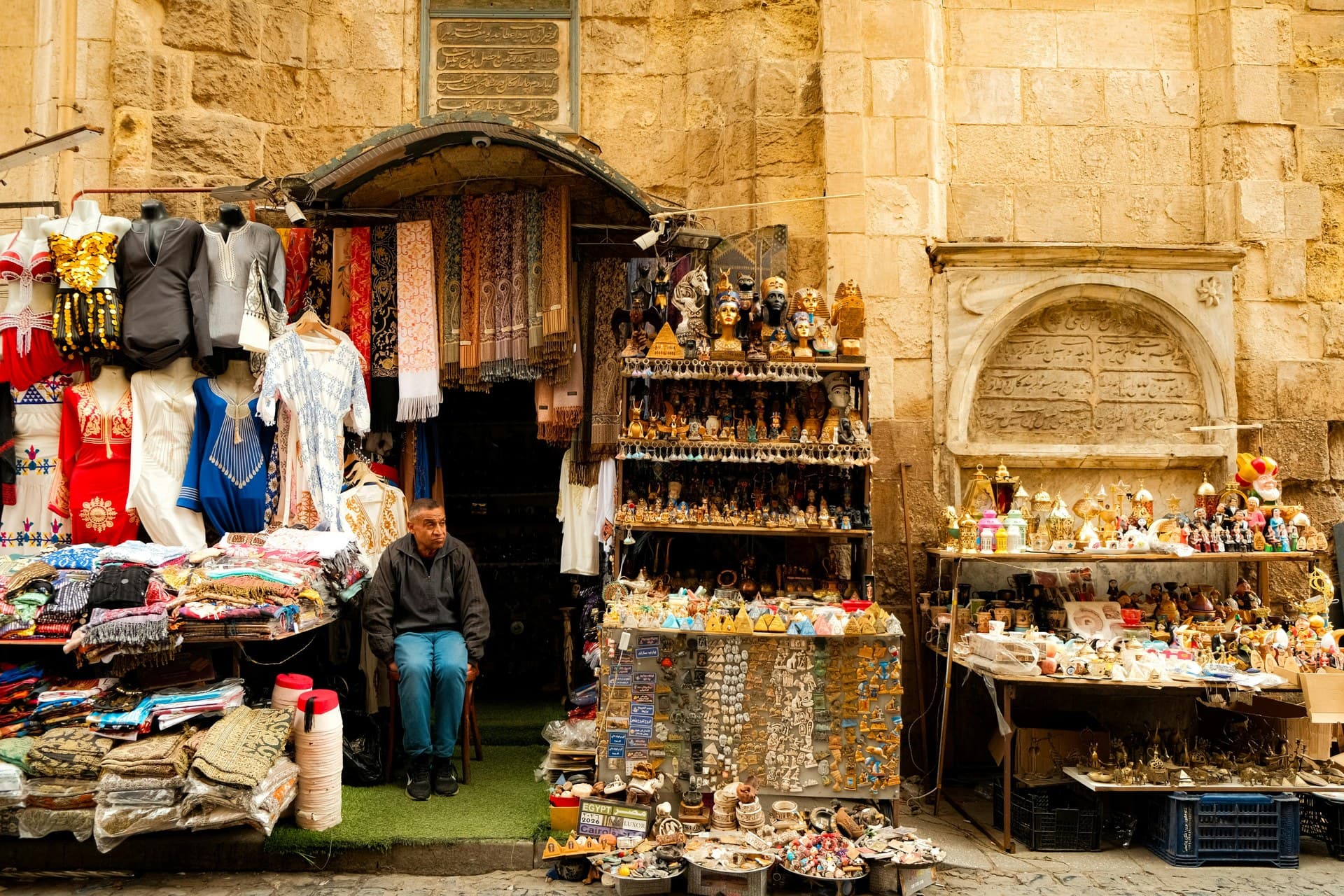
Egypt is not a country with a dress code for visitors, and nobody will stop you at the airport. But it is socially conservative outside the beach resorts, and what you wear affects how comfortable you are — both physically and in how people deal with you.
The practical version, for both men and women, is: loose clothes that cover your shoulders and knees, closed shoes, and something warm for the evening.
At the temples and archaeological sites
There is no shade at the Giza plateau, none at the Valley of the Kings, and none on the terraces at Hatshepsut's temple. Sun protection is the whole problem.
Loose cotton or linen with long sleeves is cooler than a t-shirt, not hotter — it keeps the sun off your skin and lets air move. A wide-brimmed hat does more than sunscreen. Sunglasses matter because the limestone glare is genuinely hard on the eyes.
Footwear is the thing people get wrong most often. Temple ground is uneven cut stone, loose rubble and sand, often with steps and ramps and no handrail. Broken-in closed walking shoes are worth more than anything else in your case. Sandals are for the boat and the hotel.
At mosques, churches and synagogues
Everyone covers shoulders and knees. Women should carry a scarf for their head — you will need it at the Mosque of Muhammad Ali and at al-Azhar, and it takes two seconds to put on.
Shoes come off at mosque doors. That makes socks worth having, because stone floors in summer are hot and in winter are cold.
The same standard applies at the churches and the synagogue in Coptic Cairo and at Saint Catherine's Monastery, which is a working monastic community and enforces it.
Most sites keep wraps at the entrance for people who arrive unprepared, but relying on that means wearing something borrowed in the heat.
In the cities
Cairo is a big, cosmopolitan city and you will see the full range of dress on the street. Visitors are not expected to look local. But covered shoulders and knees will make you less conspicuous in Khan el-Khalili and the older quarters, and less conspicuous generally means less hassled.
Shorts on men are normal at the coast and unusual in central Cairo. Nobody will comment, but light trousers are more comfortable anyway.
For dinner, Egyptian restaurants are relaxed. A few of the top-end hotel restaurants have a smart-casual expectation — check if it matters to you.
The cold nobody packs for
Egypt is a desert, and deserts lose their heat after sunset. This catches out almost every first-time visitor.
From November to February, evenings in Cairo and Luxor are cool and nights are cold. The deck of a Nile cruise boat after dark is cold in any month once the boat is moving. A balloon flight launches before dawn in genuinely cold air. And the White Desert at night in winter goes close to freezing.
One real jacket — not a cardigan — earns its space in the case.
At the Red Sea
The resorts at Hurghada, Sharm el-Sheikh and Marsa Alam operate like beach resorts anywhere: swimwear at the pool and the beach, cover up to walk through the lobby.
Outside the resort compounds — in the towns, in Dahab's streets, in local shops — the normal Egyptian standard applies again.
A rash vest is worth packing for snorkelling. It saves your back from burning while you are face-down for an hour, and it means less sunscreen going into the reef.
Reef shoes matter in Dahab and anywhere with a rocky shore entry.
A short packing list that covers it
If you want the whole thing as a list:
- Loose long-sleeved shirts and light trousers or long skirts
- One warm layer — a real jacket if you are travelling between November and February
- A scarf, for mosques and for wind-blown sand
- A wide-brimmed hat and proper sunglasses
- Broken-in closed walking shoes, plus sandals for the boat
- Socks, for mosque floors
- Swimwear and a rash vest if the Red Sea or a cruise pool is on the itinerary
- A refillable water bottle and a power bank