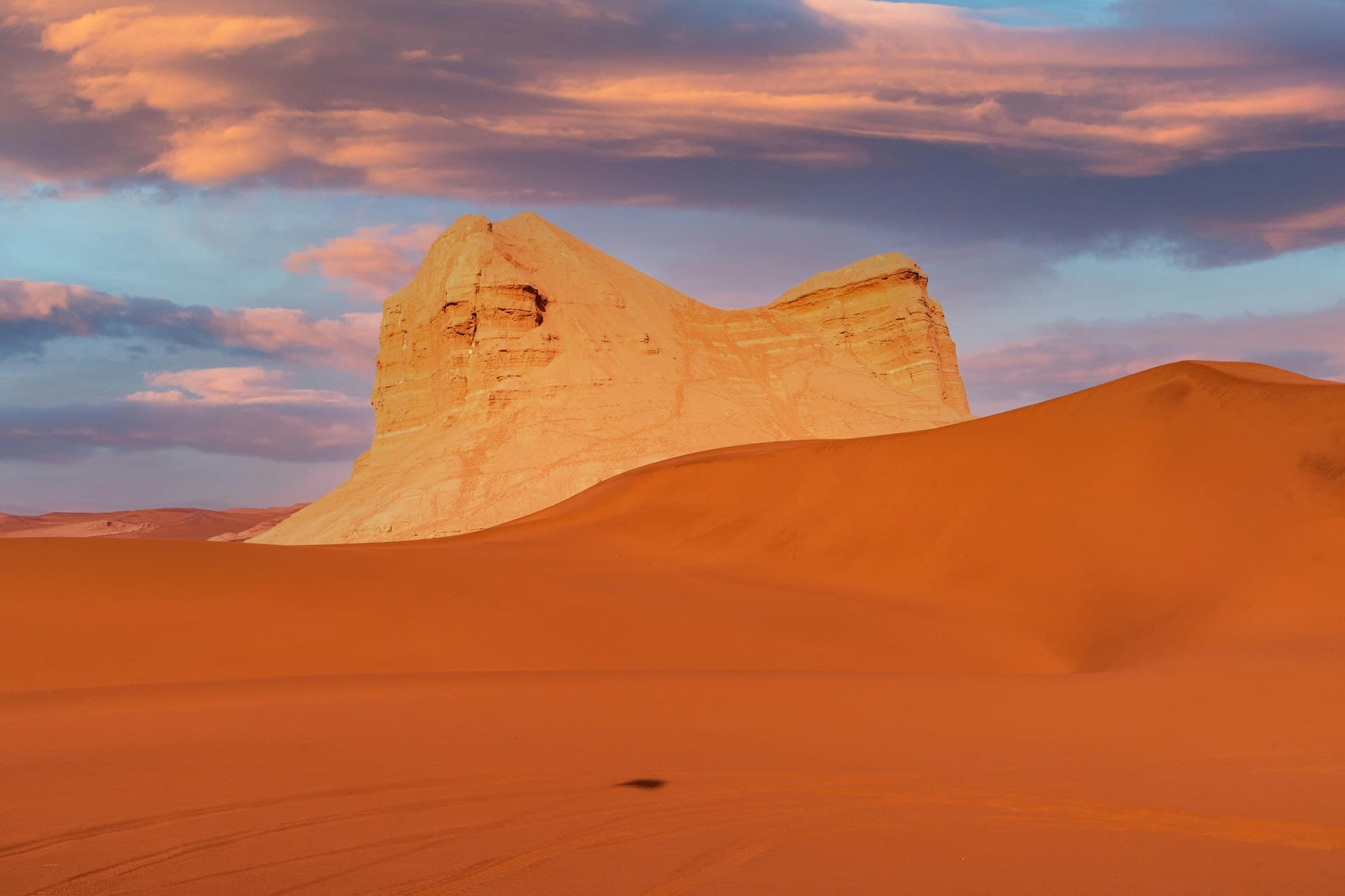
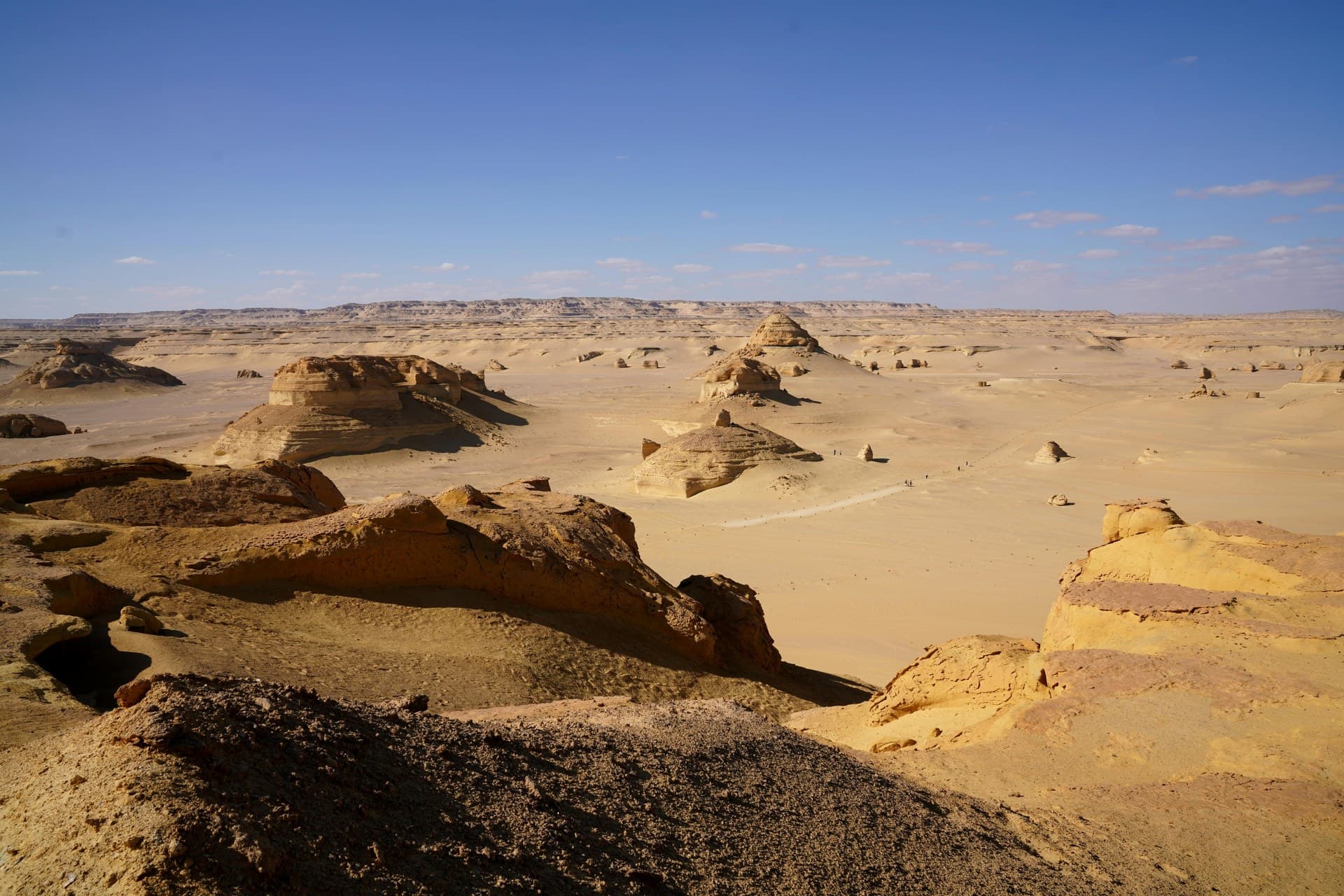
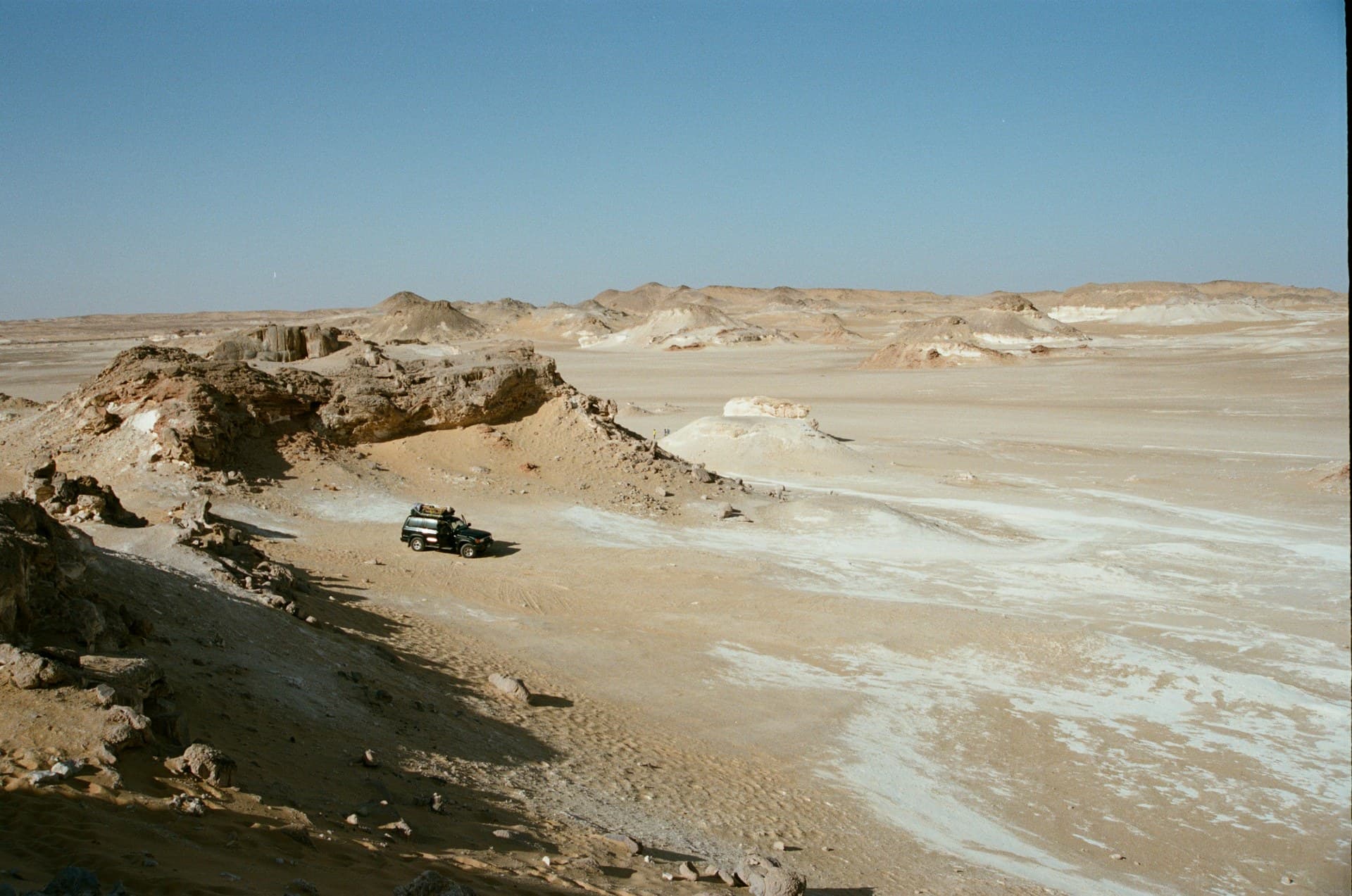
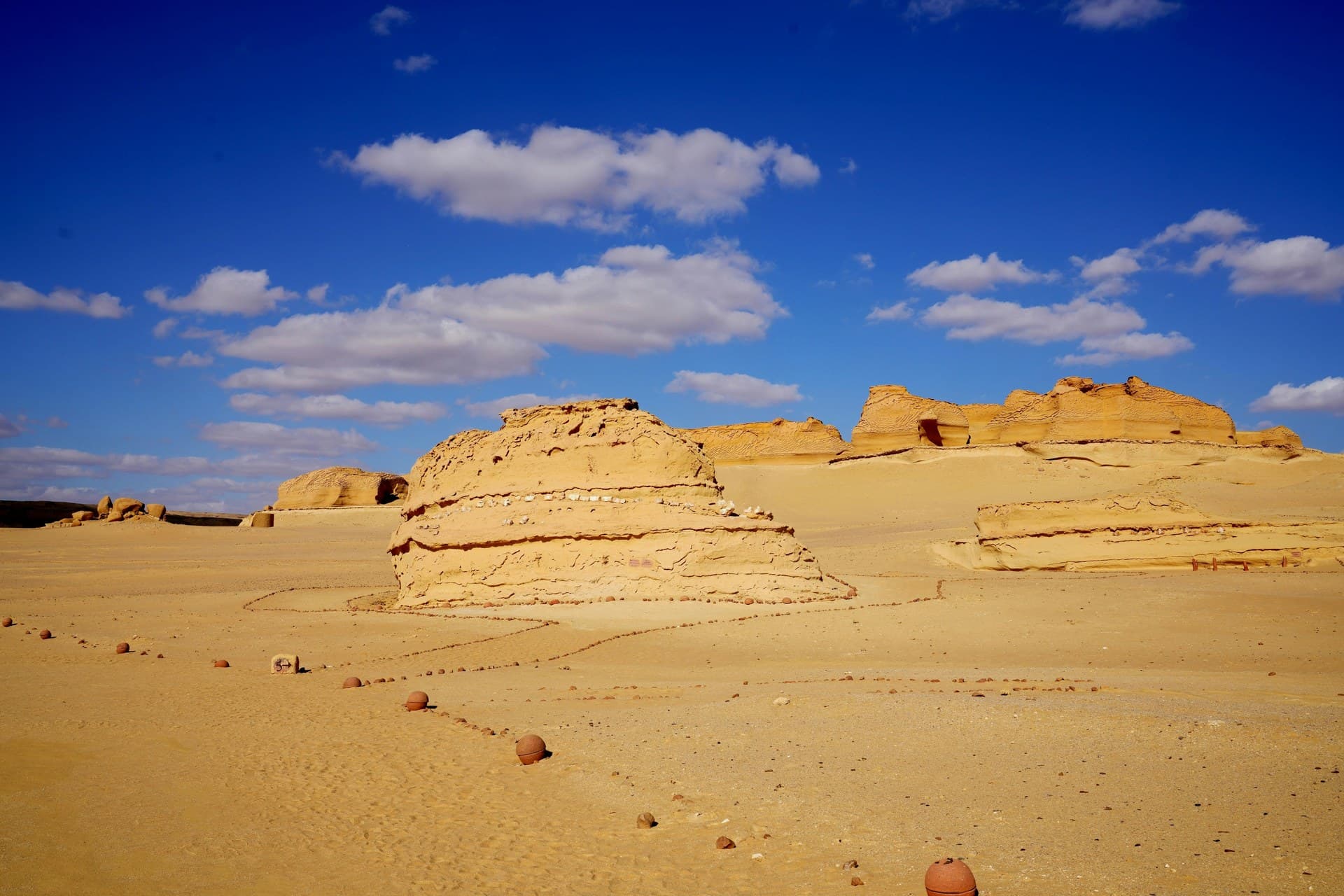
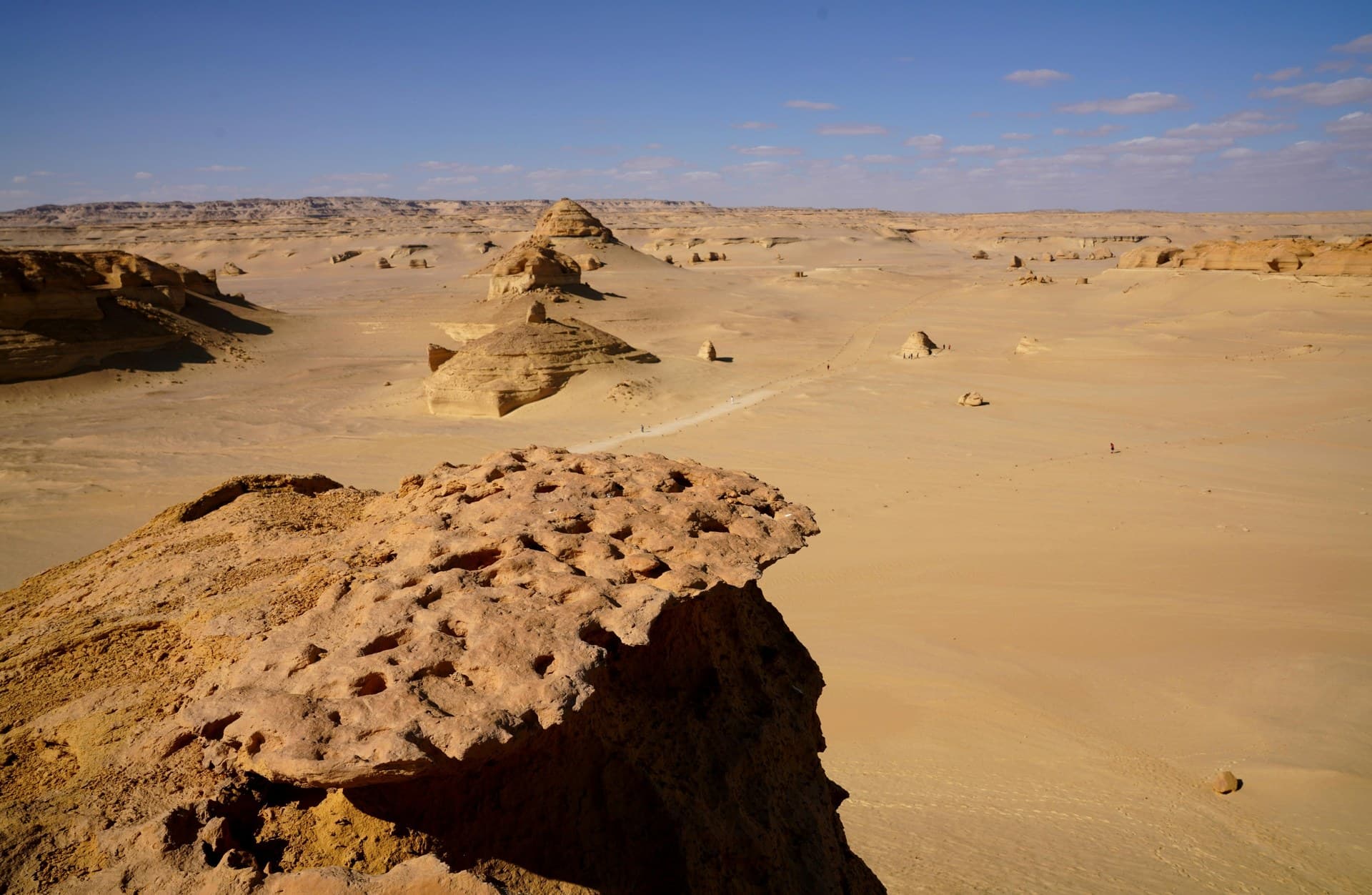
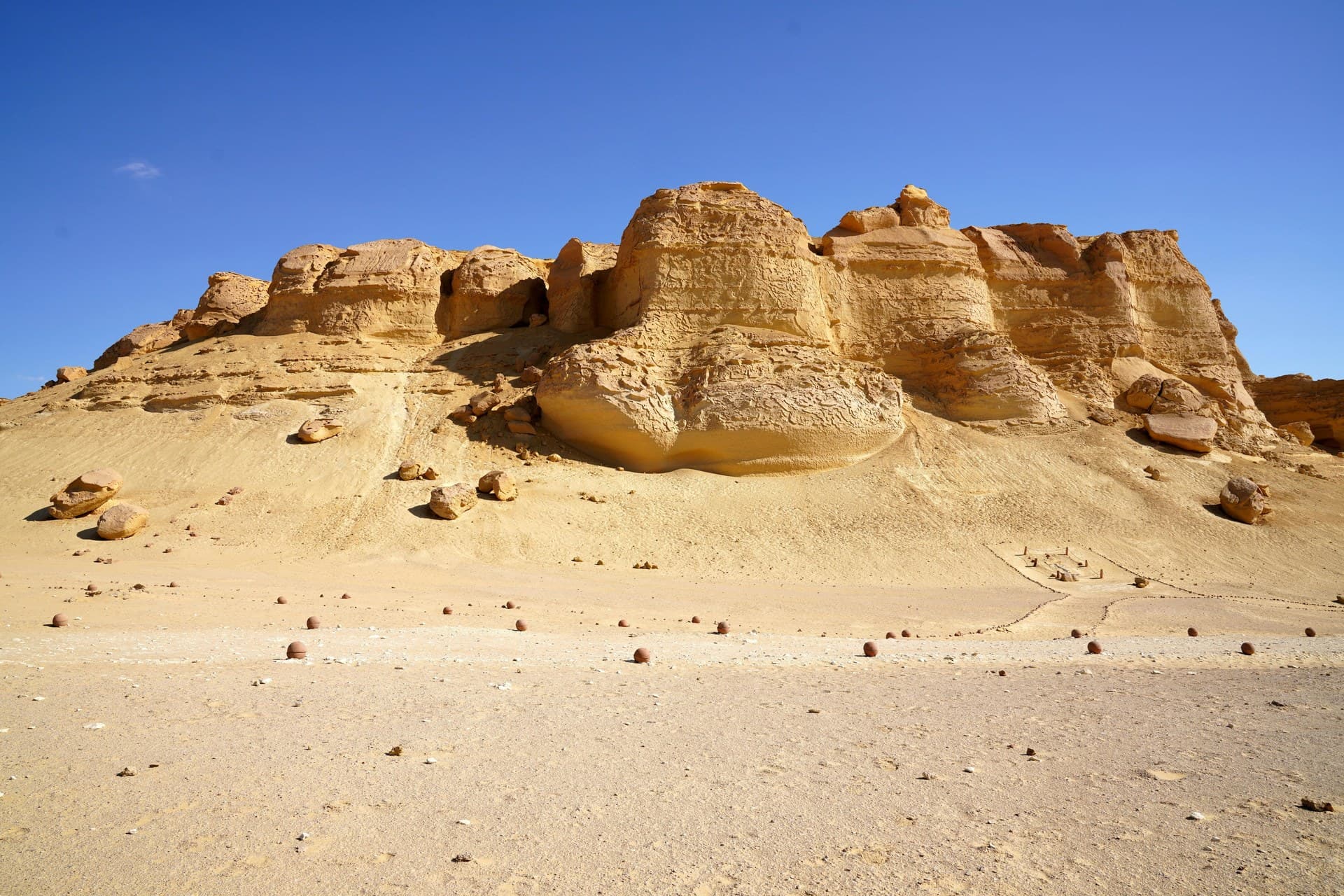
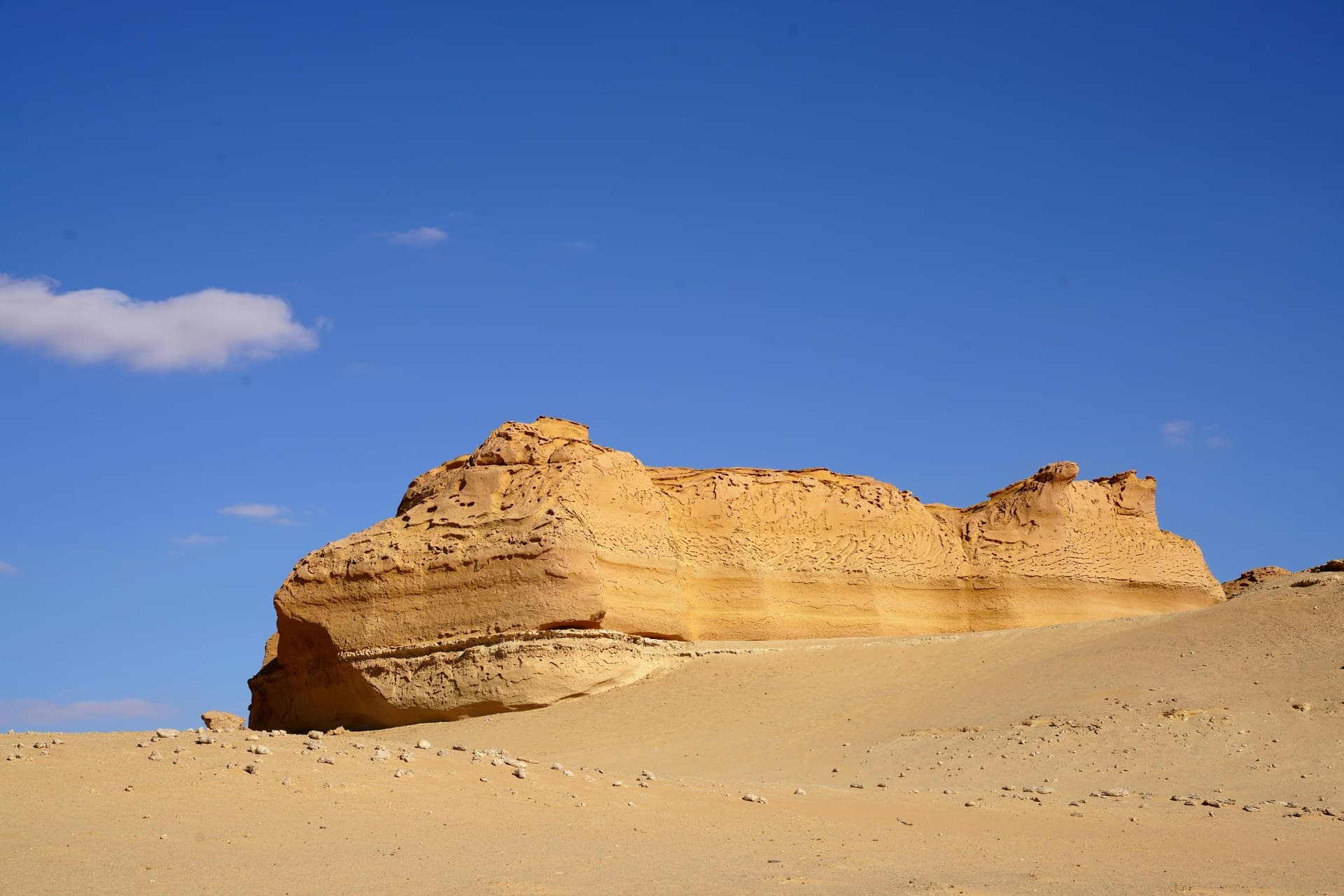
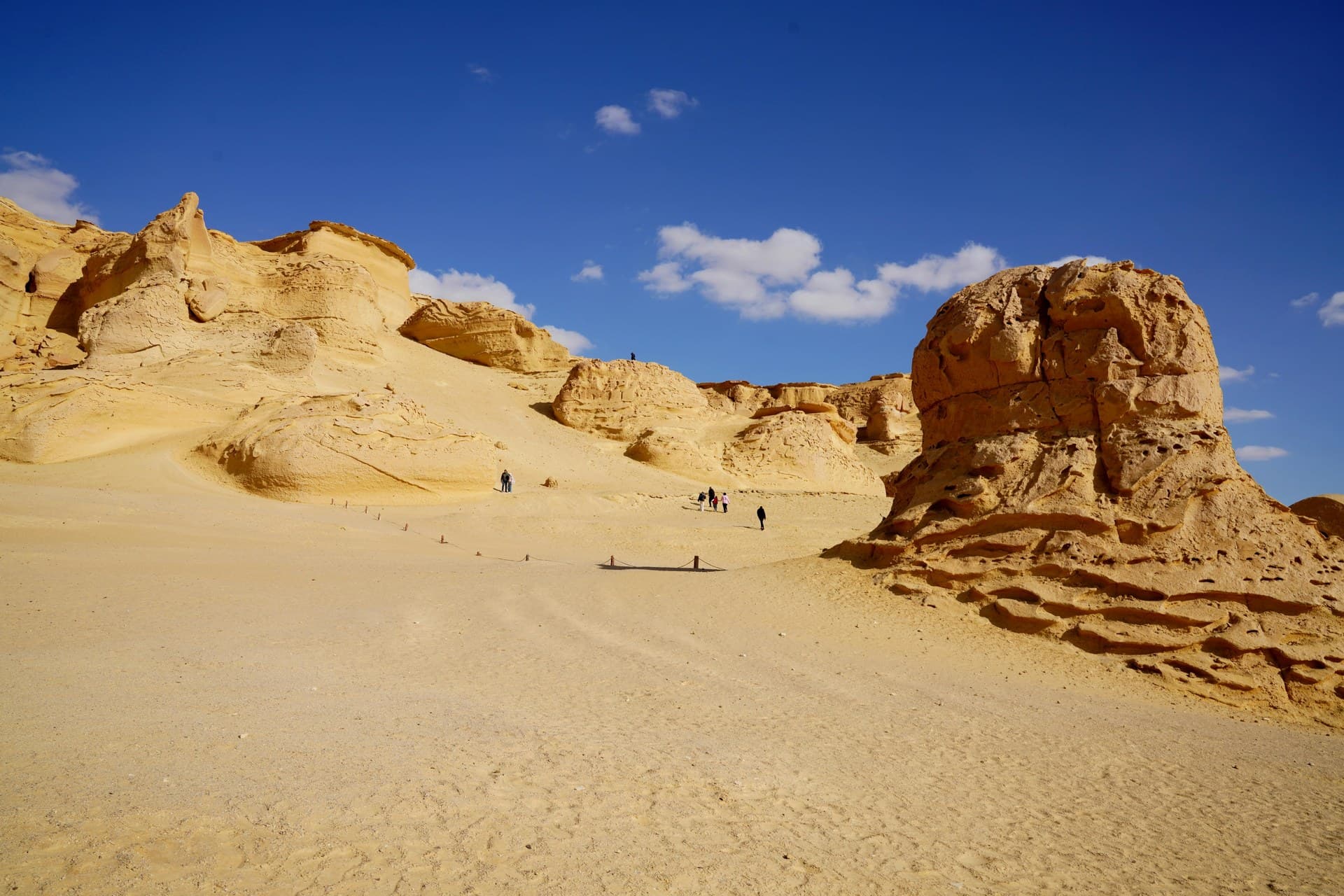
The chalk was laid down when this was a shallow sea in the Cretaceous period. The formations are the result of wind erosion working on rock of uneven hardness over a very long time — soft chalk cut away, harder caps left standing on stems.
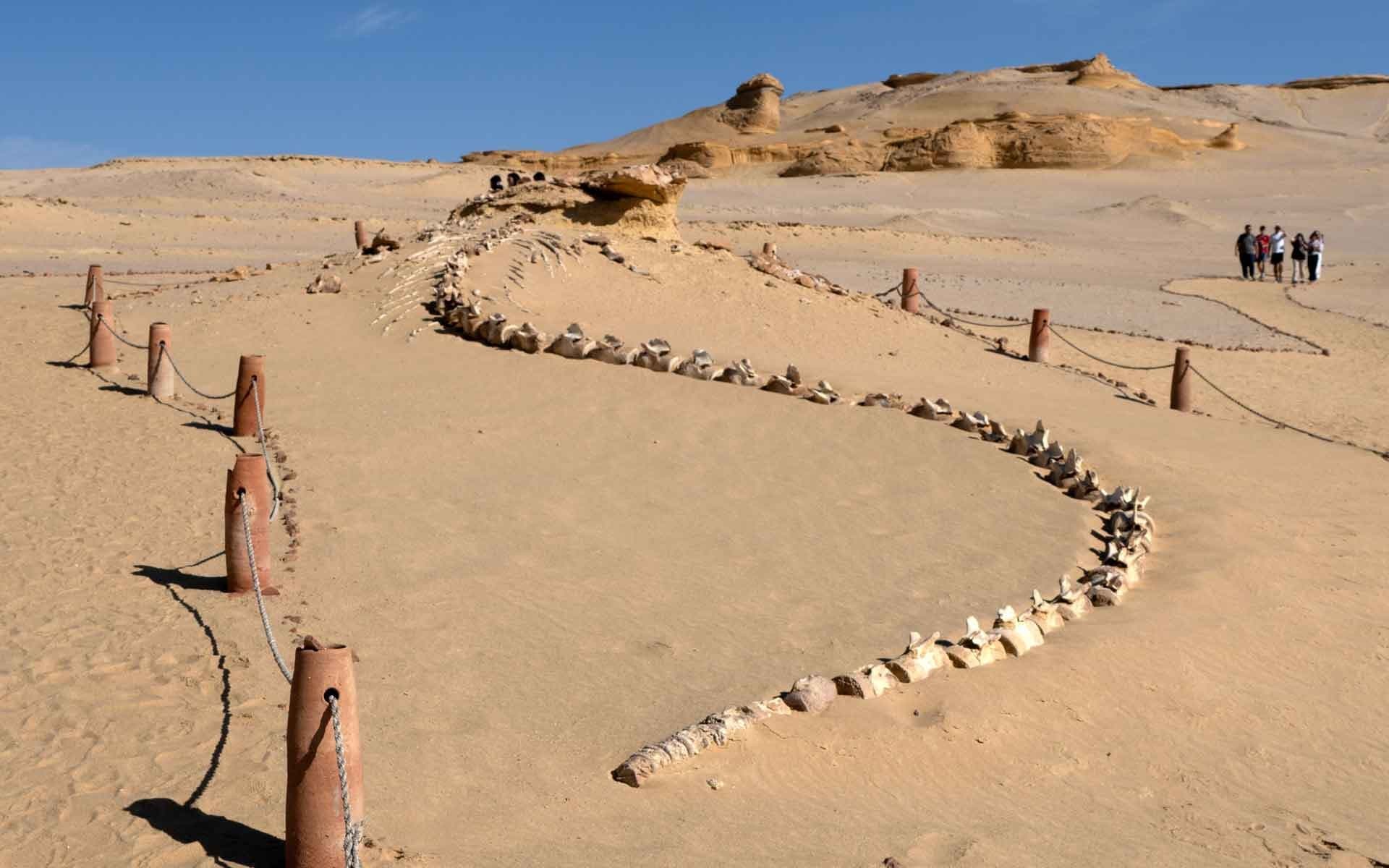
The chalk is, quite literally, the floor of that vanished sea: it is built from the shells of countless marine micro-organisms that settled here — which is why the ground is scattered with marine fossils, and why the rock is soft enough for wind to sculpt.
The formations have working names — the Mushroom, the Chicken, the Tents — passed between drivers and guides, and the wind is still at work: the same erosion that carved them is slowly unmaking them and cutting new ones.
The area was designated a protected national park in 2002, which brought rules about camping, driving and litter that are worth respecting.
The Western Desert oases along this route — Bahariya, Farafra, Dakhla, Kharga — have been inhabited for millennia and were part of a caravan network linking the Nile to the Sahara.