Attraction

The Temple of Hatshepsut

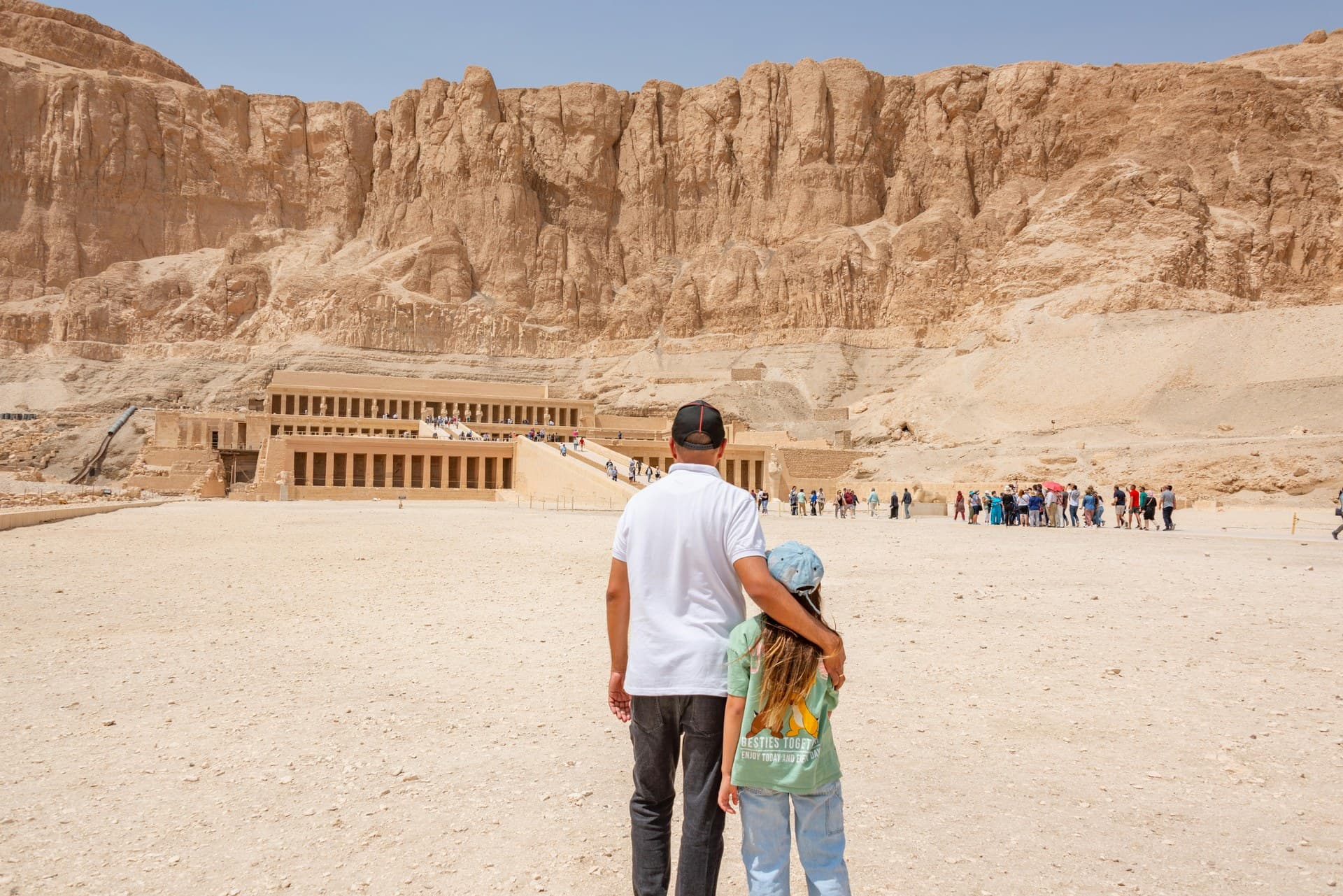
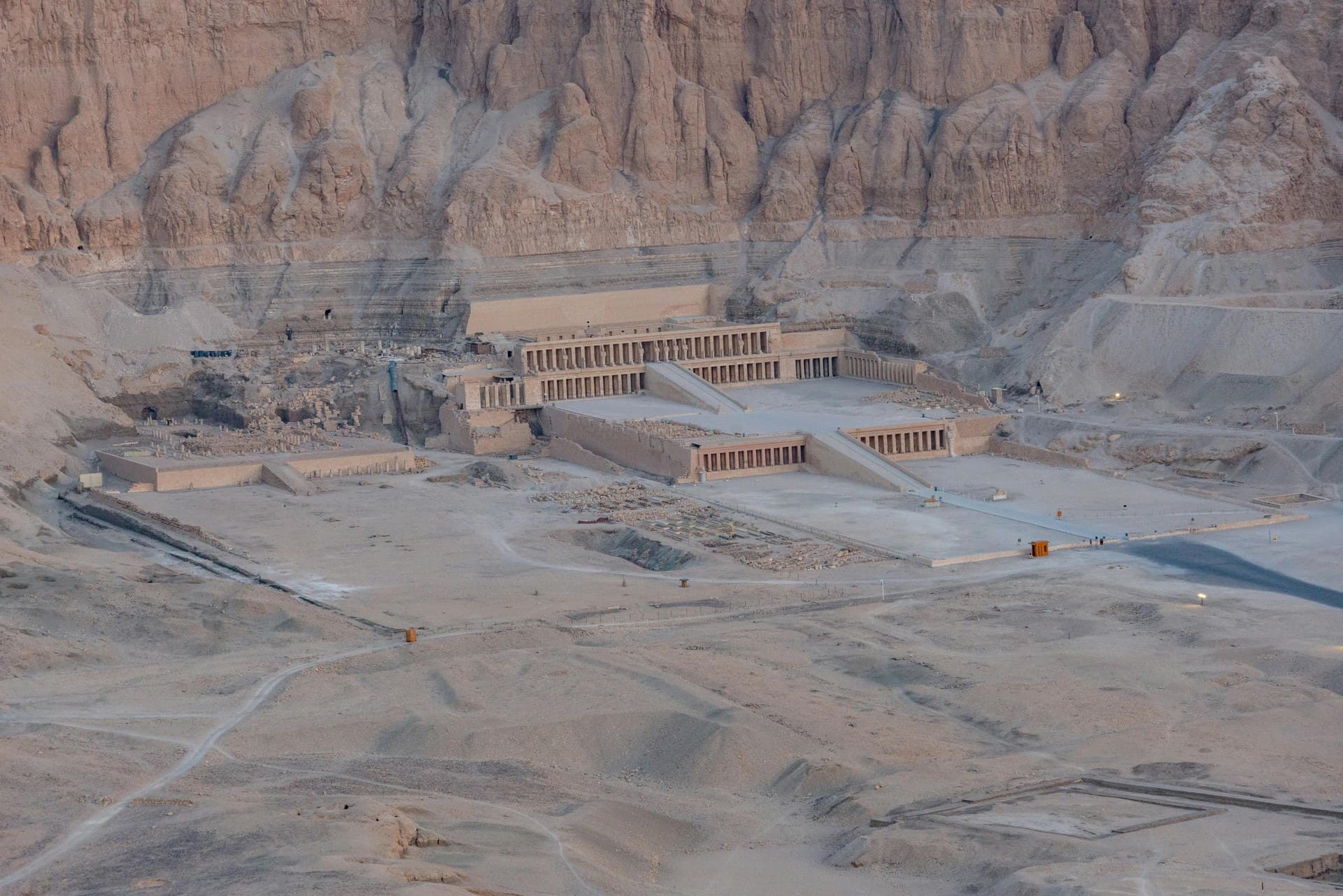
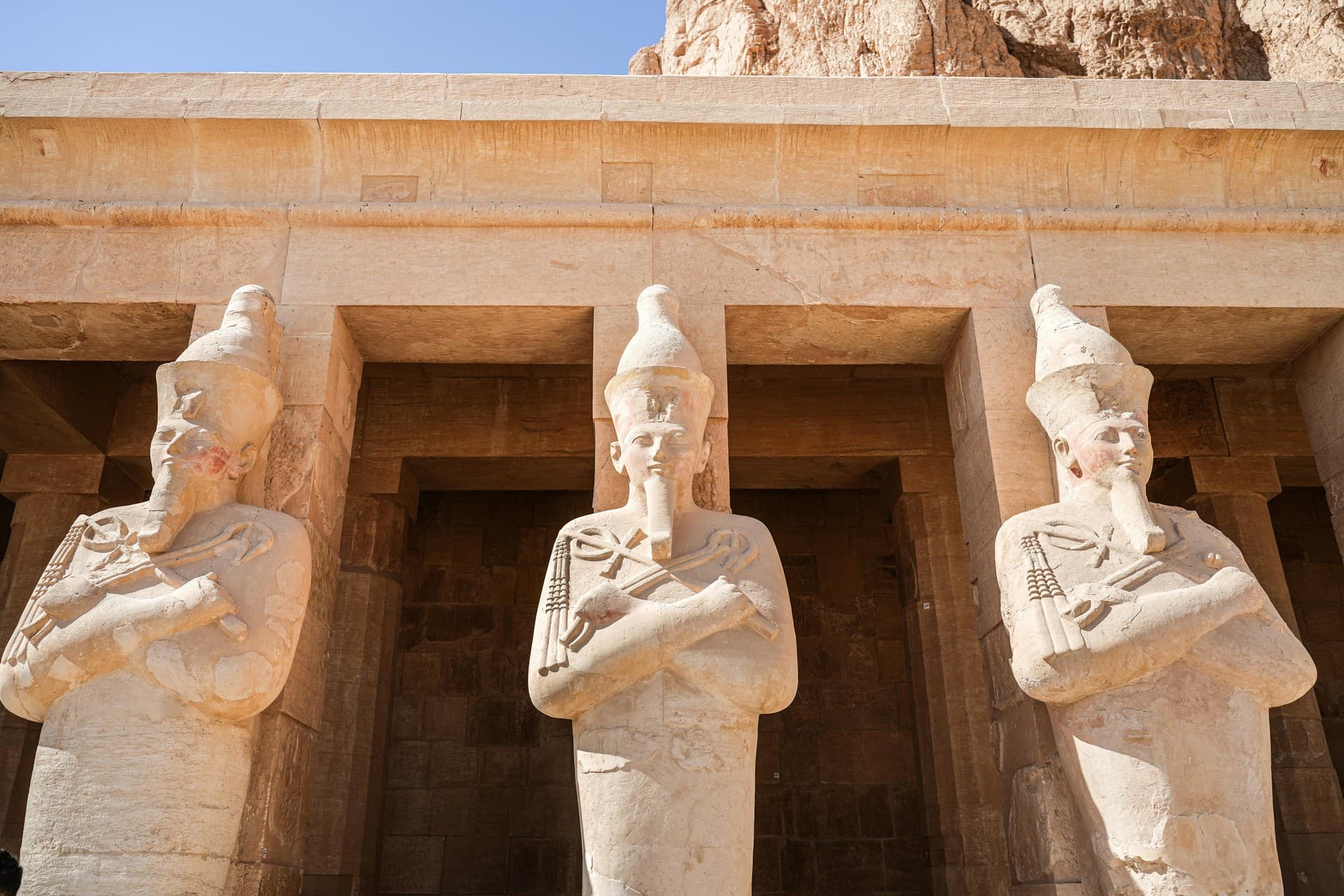
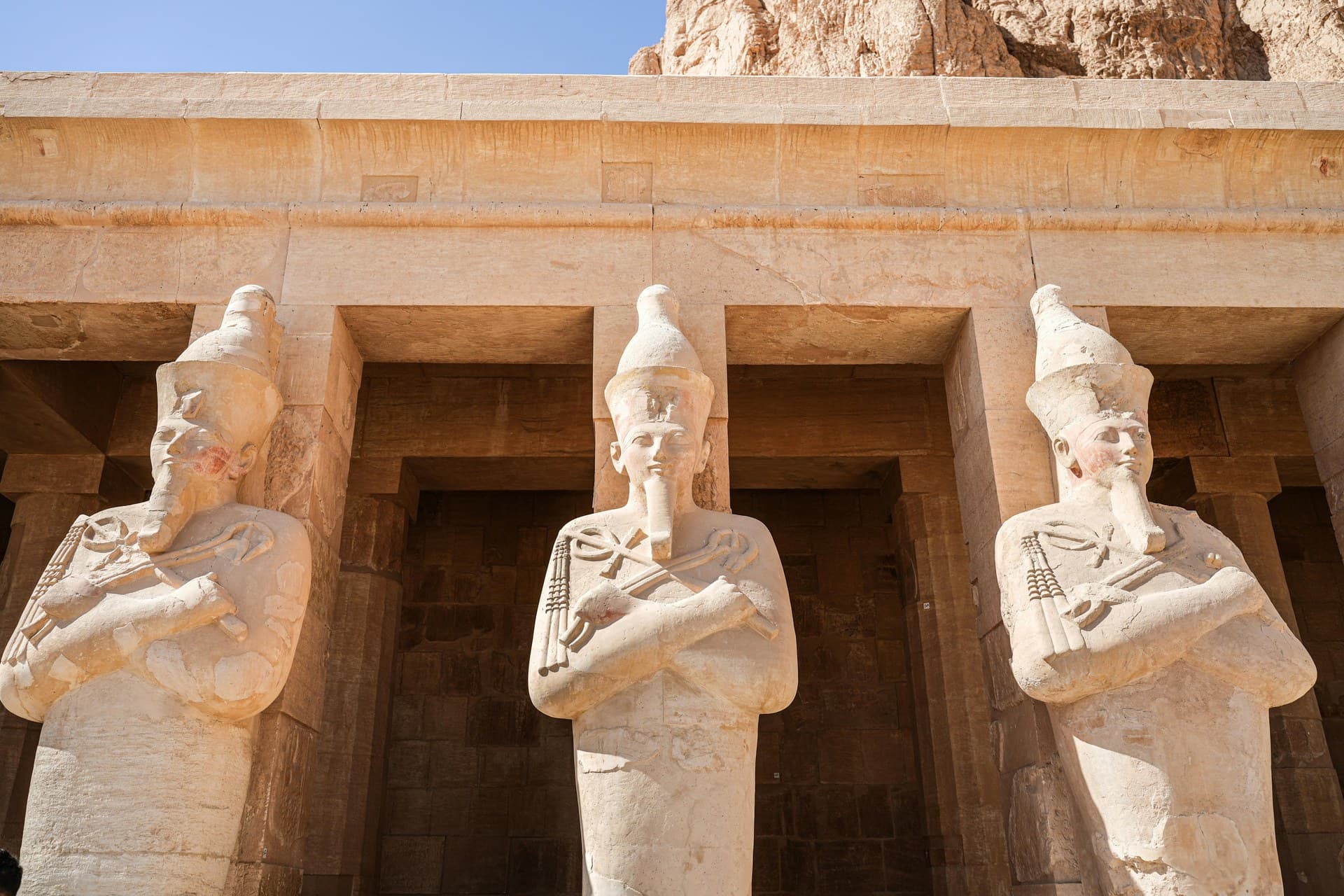
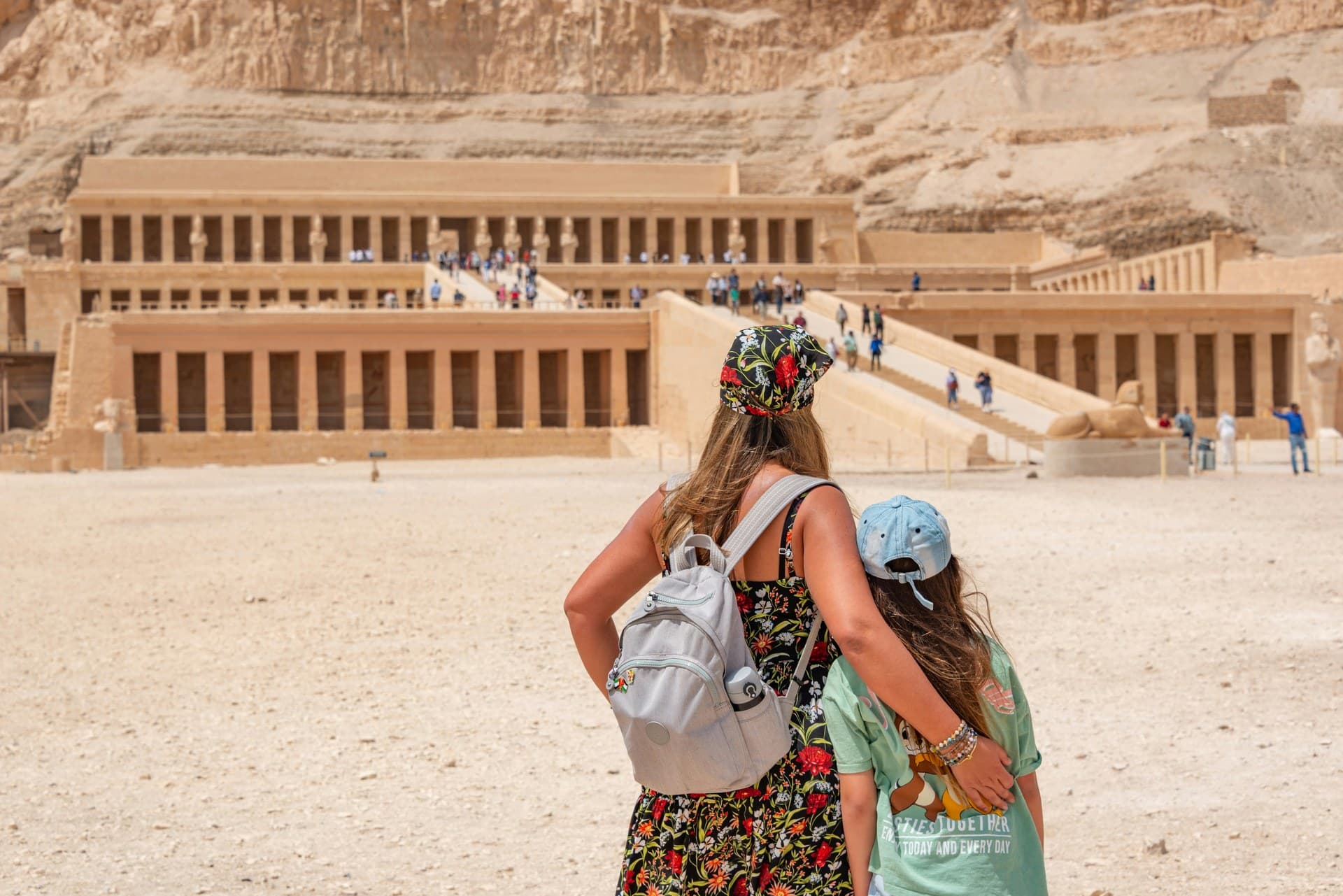
Three colonnaded terraces cut into a cliff wall at Deir el-Bahari — the mortuary temple of the woman who ruled Egypt as king.

The three colonnaded terraces of the Temple of Hatshepsut set against the cliffs at Deir el-Bahari
RecommendedTempleLuxor

Overview

The Temple of Hatshepsut is built straight into the base of a sheer cliff at Deir el-Bahari, on the Luxor west bank. Three wide terraces rise on ramps, each fronted by a plain colonnade.

It looks nothing like any other ancient Egyptian building. People routinely describe it as modern-looking, and the comparison is fair.

Why visit The Temple of Hatshepsut

The architecture is the reason. Where almost every other Egyptian temple is a dense sequence of enclosed halls, this one is horizontal, open and severe — long lines of square pillars answering the horizontal strata of the cliff behind it. The relationship between the building and the rock is the design.

The Punt colonnade on the middle terrace carries one of the most interesting relief sequences in Egypt: a record of a trading expedition to the land of Punt, with the ships, the cargo, the incense trees being carried aboard in baskets, and portraits of the Puntite ruler and his wife.

And there is the story. Hatshepsut ruled as pharaoh in her own right in the 15th century BC, was depicted as a king, and was systematically erased from monuments after her death — her name chiselled out, her images destroyed. You can see the damage on the walls. It is one of the few places where you can watch a political decision being carried out on stone.

History of The Temple of Hatshepsut

Hatshepsut was regent for her young stepson Thutmose III and then took the full titles of a pharaoh. She reigned for roughly two decades, in a period of prosperity and trade rather than conquest.

The temple was designed by Senenmut, her chief official, and built against the cliff opposite Karnak — deliberately aligned with it across the river.

Senenmut is a story in himself: a man of modest origins who accumulated more titles than almost any official of the New Kingdom, tutor to the royal daughter, with a tomb nearby whose ceiling carries one of the earliest astronomical charts known. His closeness to the female king fed gossip even in antiquity — a famous piece of period graffiti says so crudely — and speculation ever since.

The cliffs here kept one more secret: in 1881, in a tomb shaft just south of the temple, the mummies of many of the New Kingdom's greatest rulers — Seqenenre, Thutmose III, Ramesses II among them — were found stacked together, hidden by priests centuries after their burials, when the Valley of the Kings could no longer be protected.

After her death, her monuments were attacked and her name removed from king lists, apparently in the later reign of Thutmose III. The temple was later used as a Coptic monastery, which is the origin of the modern name Deir el-Bahari, meaning northern monastery.
What to see at The Temple of Hatshepsut

  • The three terraces and the ramps between them
  • The Punt colonnade, recording the expedition to the land of Punt
  • The birth colonnade, asserting Hatshepsut's divine parentage
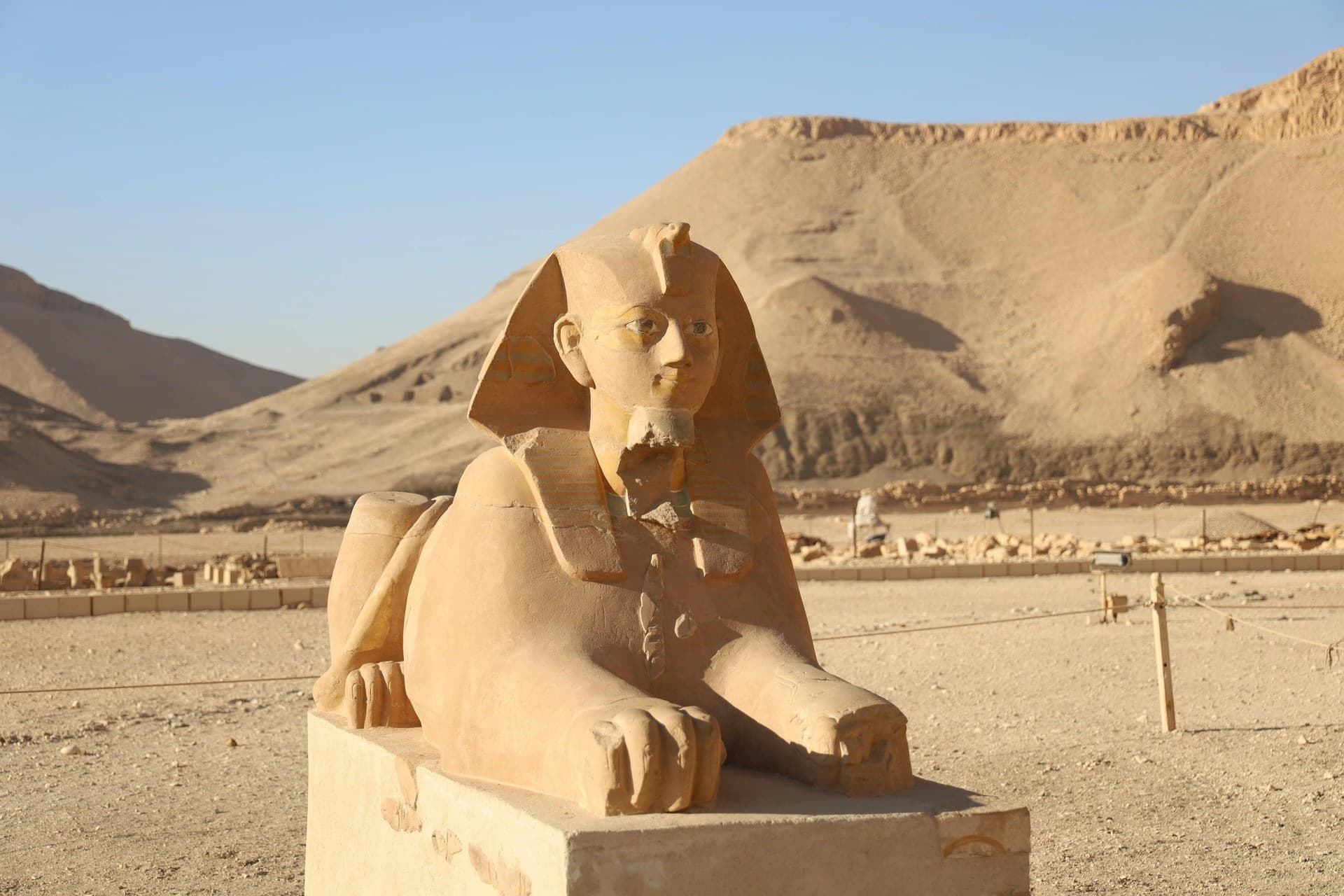
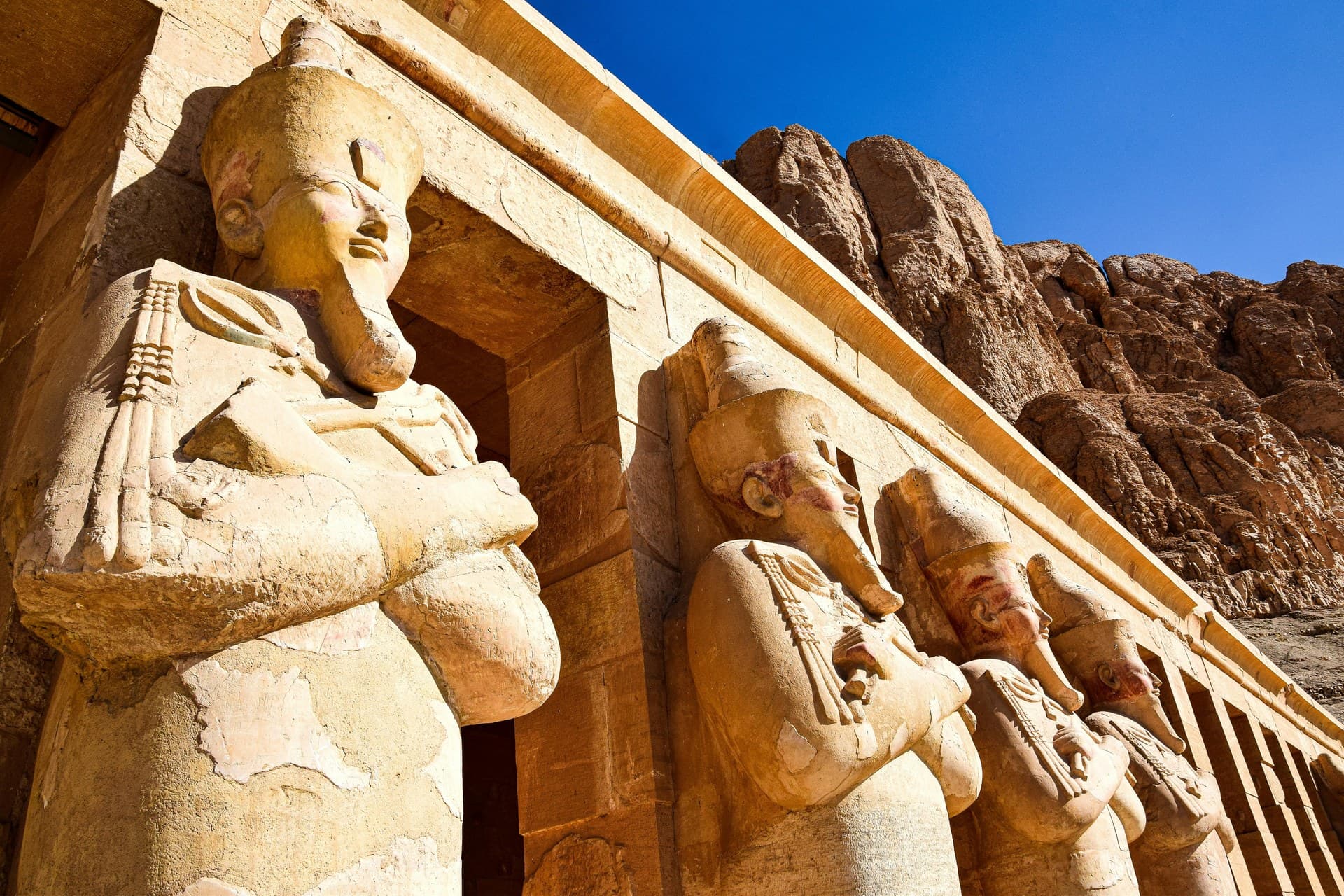
  • The chapel of Hathor with its Hathor-headed columns, the goddess's face with cow's ears
  • The deliberate erasures of Hatshepsut's name and image
  • The view back across the west bank from the upper terrace

Best time to visit The Temple of Hatshepsut

Early morning. By mid-morning the rock face radiates heat and the terraces are punishing.

Opening Hours and Tickets

Opening hours: Daytime hours with seasonal variation.

A single admission ticket at the entrance. A shuttle to the temple front is charged separately and is inexpensive.

Opening hours and ticket prices may change. Please confirm the latest details before visiting.

How to get to The Temple of Hatshepsut

On the Luxor west bank at Deir el-Bahari, minutes by road from the Valley of the Kings. Reached with a driver or on a west-bank tour.

Nearby Attractions

Tours that include The Temple of Hatshepsut

Luxury Cairo, Luxor and Aswan Package

Luxury Cairo, Luxor and Aswan Package

An upscale private journey that combines Cairo highlights, a polished Luxor stay, and a refined Aswan finish.

Classic Cairo and Luxor Private Tour

Classic Cairo and Luxor Private Tour

A first-time Egypt itinerary that balances Cairo icons with Luxor's major temple sites over one well-paced private journey.

06 Days Cairo to Luxor Tour

06 Days Cairo to Luxor Tour

Experience the essence of Egypt in just six days on this immersive journey from Cairo to Luxor. Begin in the capital, where you’ll stand before the legendary Pyramids of Giza, explore the Grand Egyptian Museum, and wander through the historic Citadel and the lively Khan El Khalili Bazaar. Then, fly south to Luxor to uncover the monumental temples of Karnak and Luxor, glide above the ancient city in a hot air balloon, and walk through the Valley of the Kings. This thoughtfully designed itinerary combines expert guidance, seamless travel, and a perfect balance of history and culture for an unfor

4 Night Luxor to Aswan Nile Cruise

4 Night Luxor to Aswan Nile Cruise

A classic Nile cruise itinerary with temple visits, river views, and a comfortable four-night rhythm.

4-Day Nile Cruise from Aswan to Luxor

4-Day Nile Cruise from Aswan to Luxor

Set sail on a captivating 4-day Nile cruise from Aswan to Luxor, where the ancient world unfolds before your eyes. Journey along the legendary Nile River and uncover Egypt’s most iconic temples and monuments. Begin in Aswan with visits to the High Dam and the enchanting Philae Temple, then continue to Kom Ombo and Edfu to explore magnificent sanctuaries dedicated to ancient gods. As you sail northward, reach Luxor—the open-air museum of Egypt—home to the grand Karnak and Luxor Temples and the royal tombs of the Valley of the Kings. With expert-guided tours, comfortable accommodations, and full

4 Day 3 Night Nile Cruise from Aswan to Luxor

4 Day 3 Night Nile Cruise from Aswan to Luxor

Set sail on a remarkable 4-day, 3-night Nile cruise from Aswan to Luxor, where the grandeur of ancient Egypt unfolds before your eyes. Journey along the legendary Nile River aboard a comfortable cruise ship, visiting some of the most iconic archaeological sites in the world. Discover the enchanting Temple of Philae in Aswan, the twin sanctuaries of Kom Ombo, and the magnificent Temple of Horus in Edfu. Continue to Luxor to explore the Valley of the Kings, the Temple of Hatshepsut, and the colossal statues of Memnon on the West Bank, before concluding your adventure at the awe-inspiring Karnak

Travel Tips Before Visiting

There is no shade at all. The temple faces east into a rock amphitheatre that traps heat. This is the hottest stop on a west-bank morning and the argument for doing the whole circuit early. The shuttle from the car park is worth it — the approach is a long, exposed, uphill walk. Find the Punt reliefs deliberately. They are behind the colonnade on the middle terrace, south of the ramp. Start there before the groups stack up — it is the one wall everyone eventually crowds. Look for Hatshepsut, then for her absence. Compare an intact figure of Thutmose III with a chiselled-out silhouette beside it and the story snaps into focus; once you have seen one erasure you will see them everywhere. The upper terrace is sometimes restricted. Access to the sanctuary at the top has opened and closed over the years; do not build the visit around it.