Luxor is built on the ancient city of Thebes, and it splits cleanly along the river. The east bank, where the sun rises, held the temples of the living city. The west bank, where it sets, held the tombs and the mortuary temples.
That division is still the most useful way to plan two days here.
The east bank
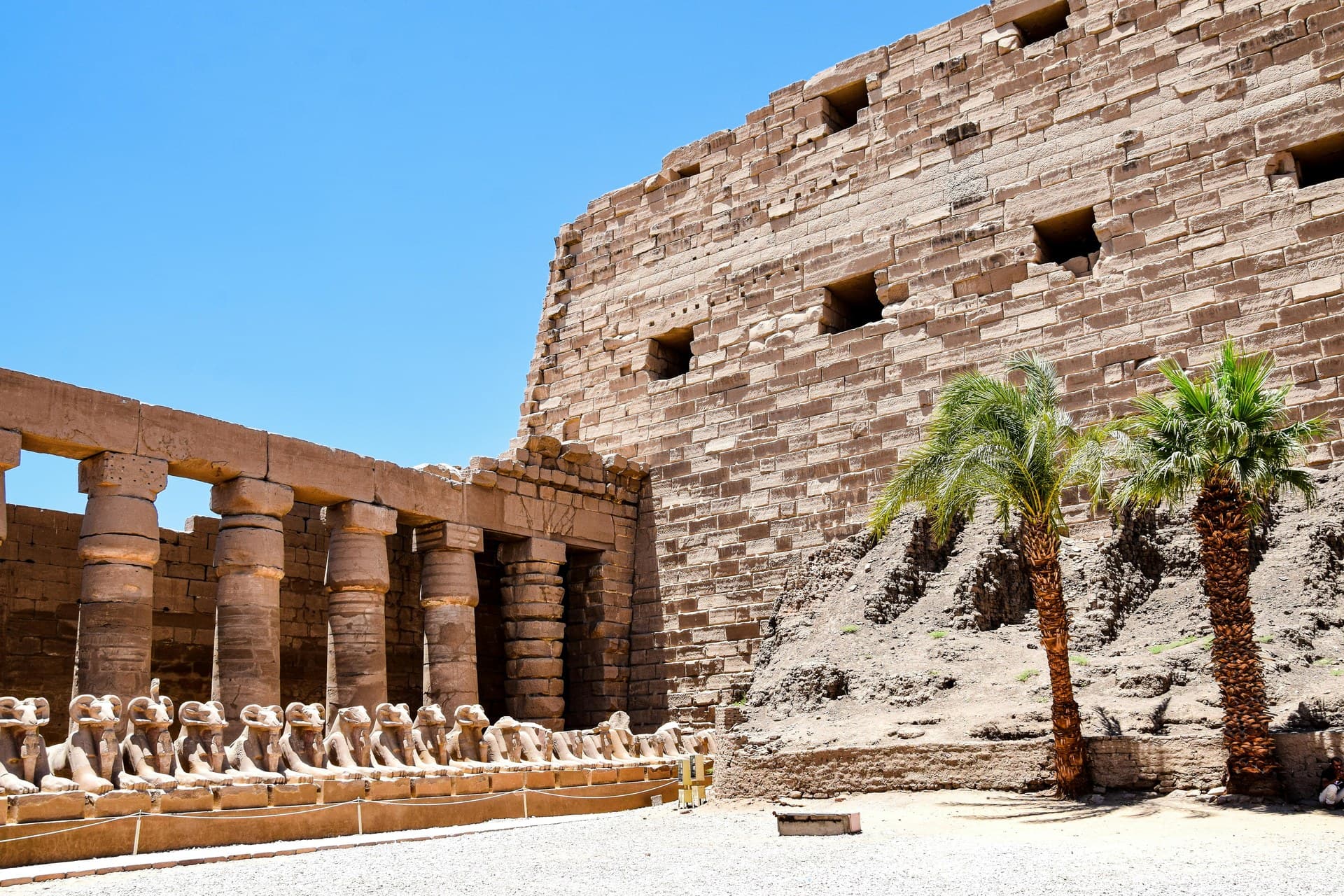
Karnak is the largest religious complex ever built and the reason most people come to Luxor. It is not one temple but a walled precinct built and rebuilt over roughly two thousand years, and the Hypostyle Hall is the single most impressive interior space in Egypt. Luxor Temple sits in the middle of the modern town, at the end of the corniche. It is smaller, far more legible, and it is floodlit after dark — the one major Egyptian site that is genuinely better at night.The Avenue of Sphinxes runs between the two, nearly three kilometres of it, excavated and reopened along its whole length.
Both are walkable from most east-bank hotels, which makes Luxor one of very few Egyptian destinations where you can sightsee without a car.
The west bank
The Valley of the Kings is the headline: more than sixty rock-cut royal tombs, a rotating handful open on any day, with painted decoration that survives in a way nothing above ground does.
Hatshepsut's temple at Deir el-Bahari is a few minutes away by road, on the other side of the same ridge — three colonnaded terraces built straight into a cliff.The Colossi of Memnon are a ten-minute roadside stop on the way in.
And Medinet Habu is the one most itineraries skip and most repeat visitors name as their favourite — the best surviving painted colour of any large temple in Egypt, usually almost empty.
The order that works
Day one, west bank, starting at opening. The valley is a stone bowl with no shade that stores heat all day, and the tombs get hot and airless by late morning. First entry is a completely different experience. Valley of the Kings, then Hatshepsut, then Medinet Habu if you have the stamina, with the Colossi as a stop between. Day two, east bank. Karnak in the morning — it is large, mostly unshaded, and much better before the coaches. Then rest through the middle of the day. Then Luxor Temple after sunset.That order gets you the two hardest sites in the coolest hours and finishes with the best-lit one. Doing it the other way round means Karnak at midday and the west bank in the afternoon, which is the worst version of both.
Adding a balloon
A sunrise balloon flight over the west bank is the one add-on in Luxor that is genuinely worth the early start. Pick-up is between roughly 3.30 and 5am depending on the season, you are airborne before the sun clears the eastern cliffs, and you land near the sites.
Book it for the morning you are doing the west bank anyway — you come down with the day already started rather than losing one.
What else is worth your time
If you have a third day, two things stand out:
Both need a driver and half a day, and both are quieter than anything on the standard circuit.
- Dendera — about an hour north, and the best temple ceiling in Egypt, cleaned back to its original deep blue and gold. It is not on the cruise route, which is why it stays quiet.
- The Ramesseum and Deir el-Medina — Ramesses II's own mortuary temple, and the village where the men who cut and painted the royal tombs actually lived, with their own tombs above it.