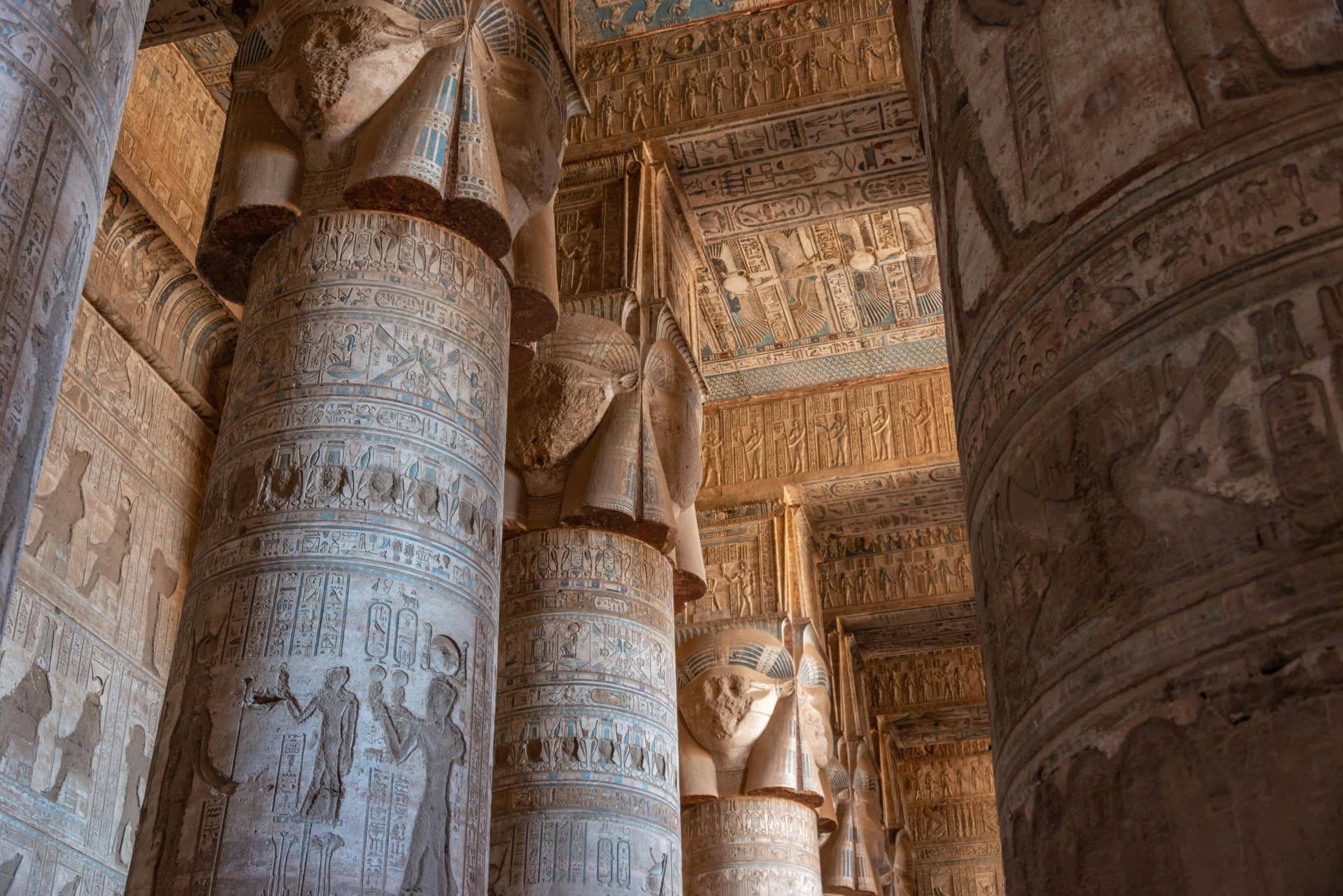
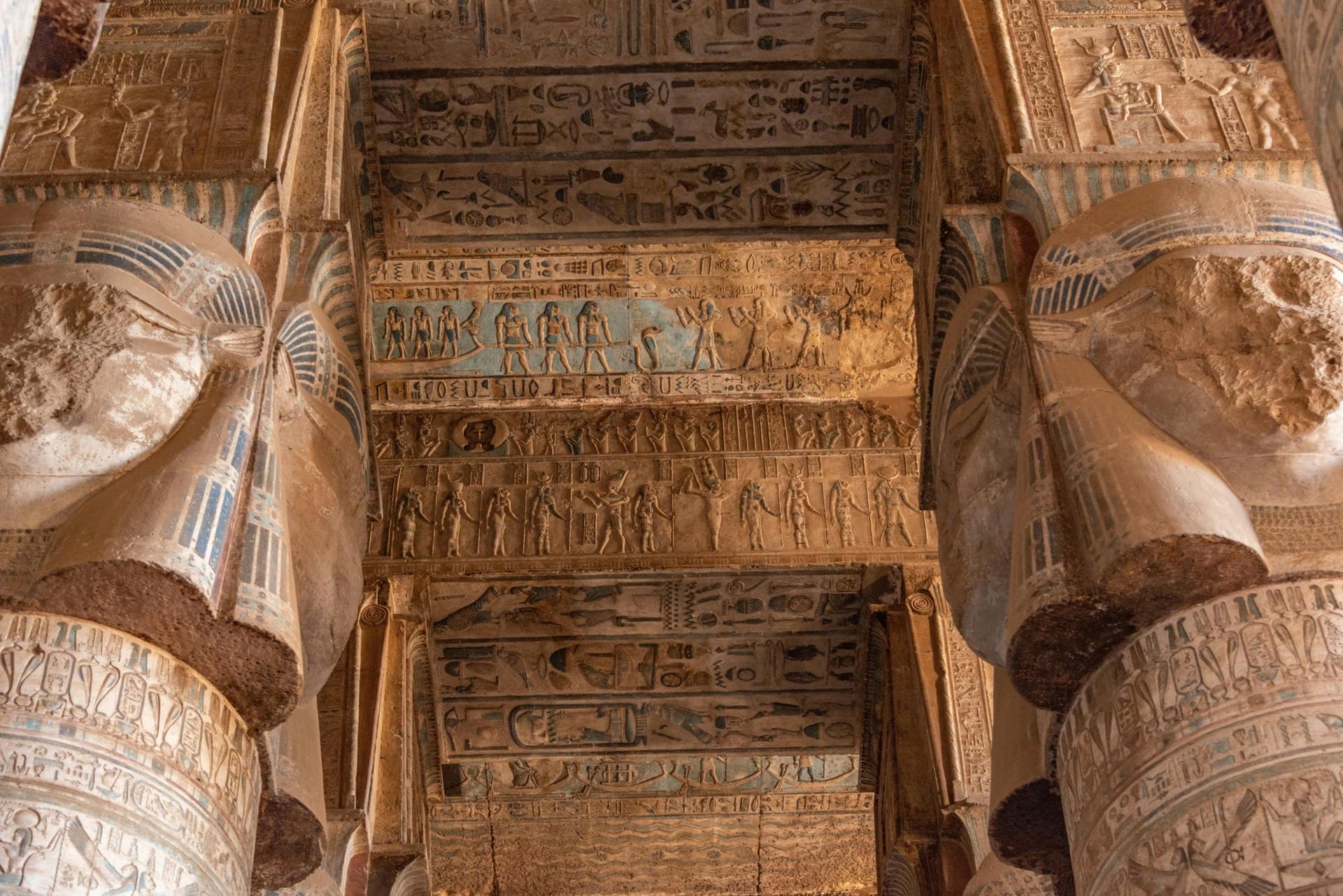
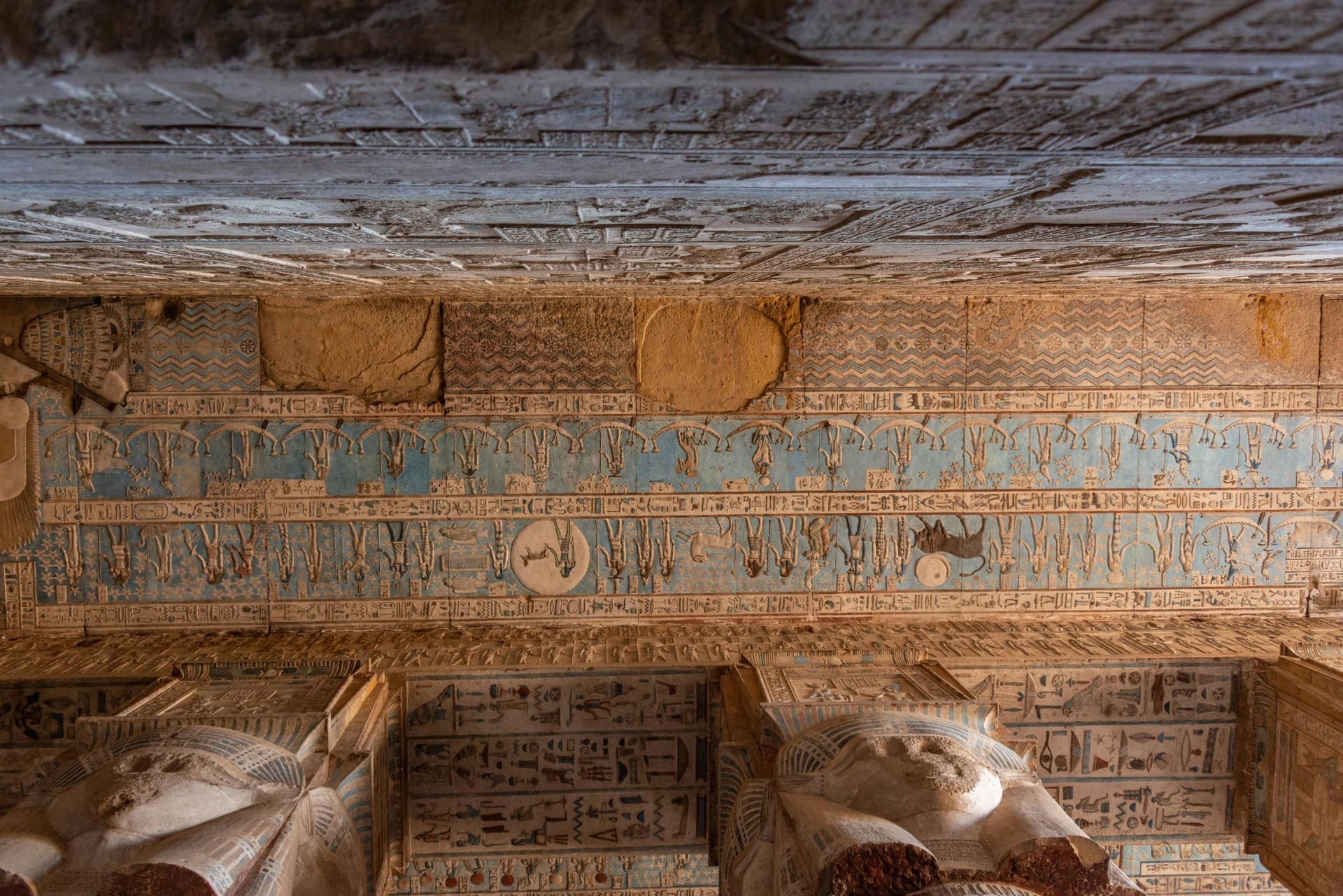
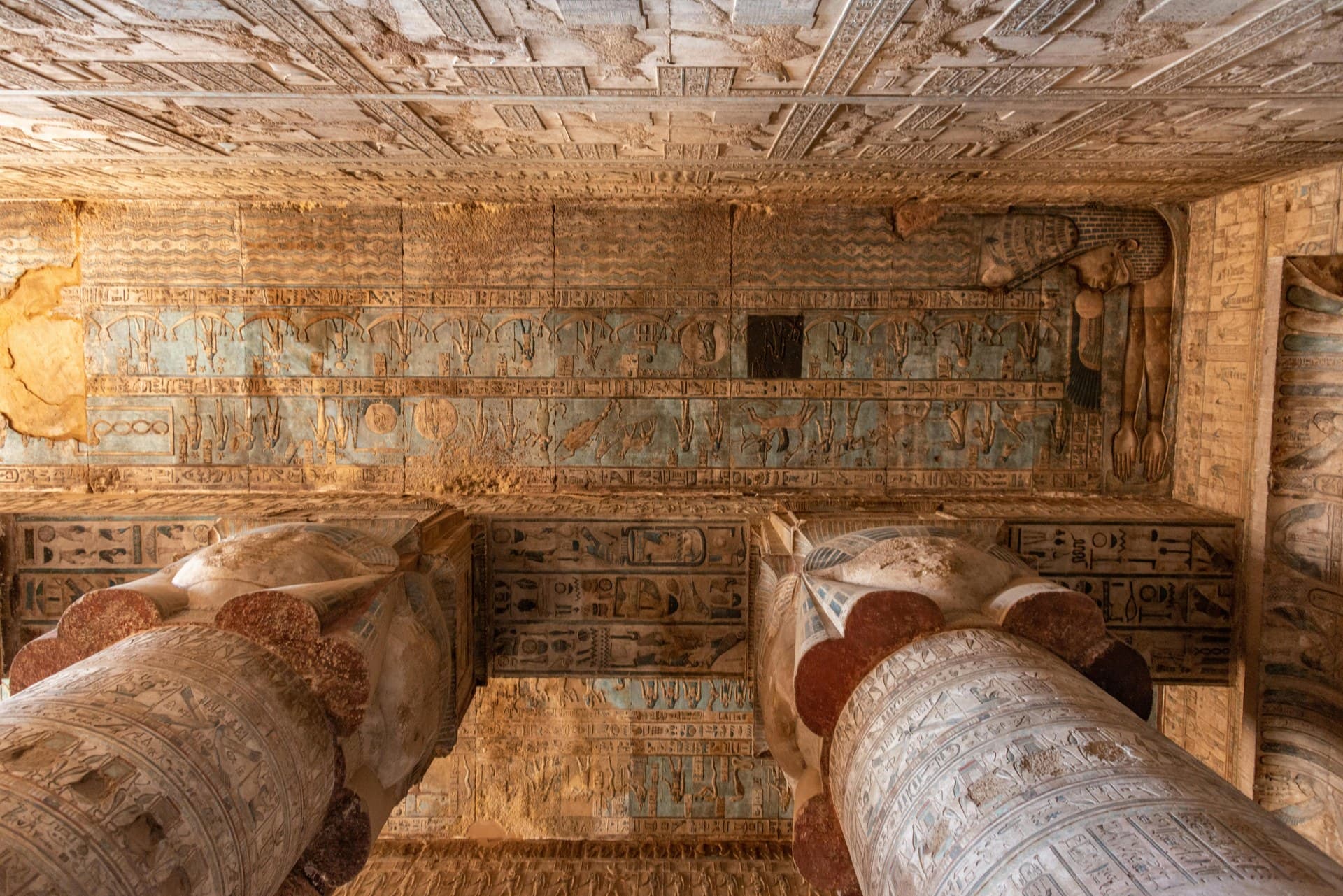
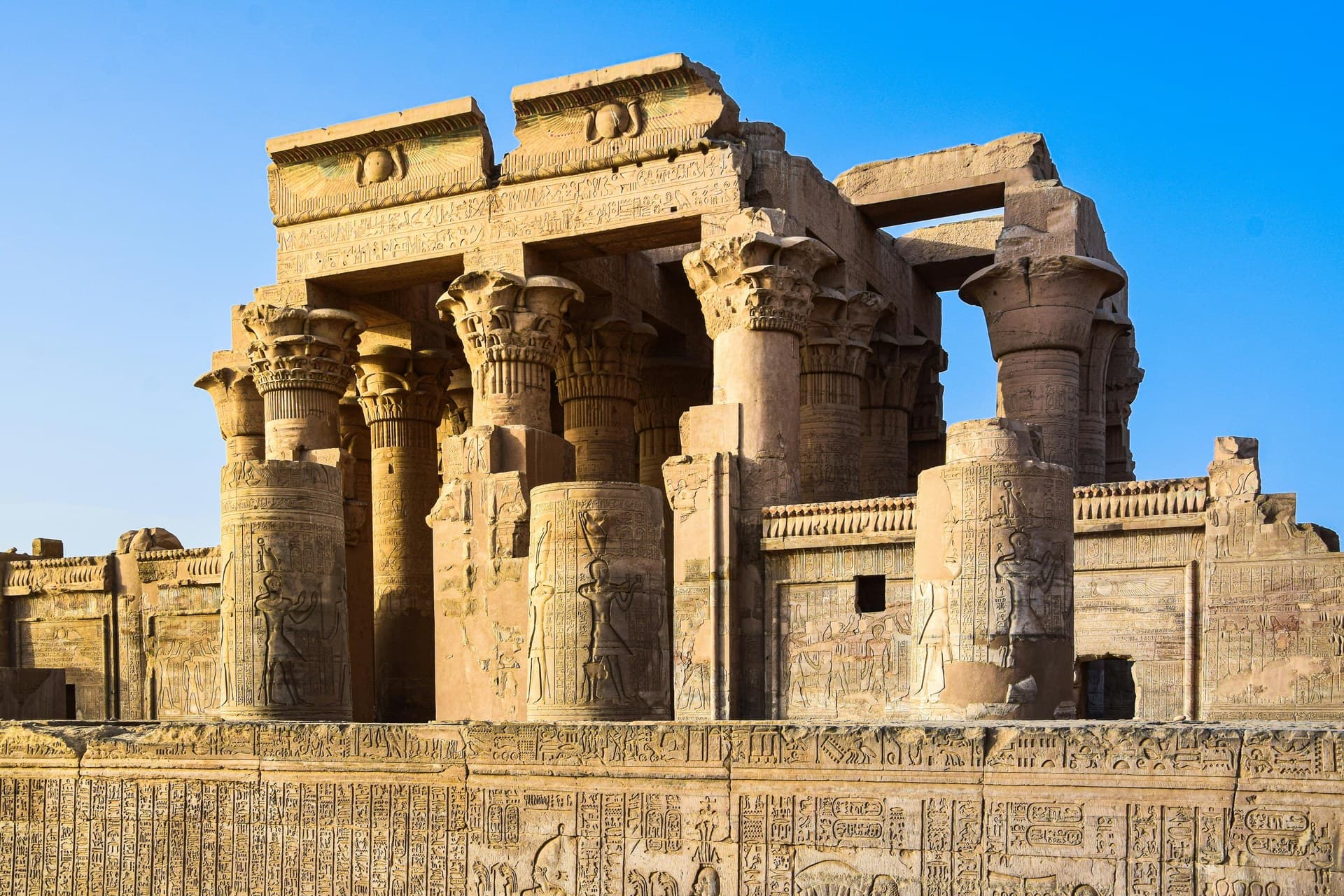
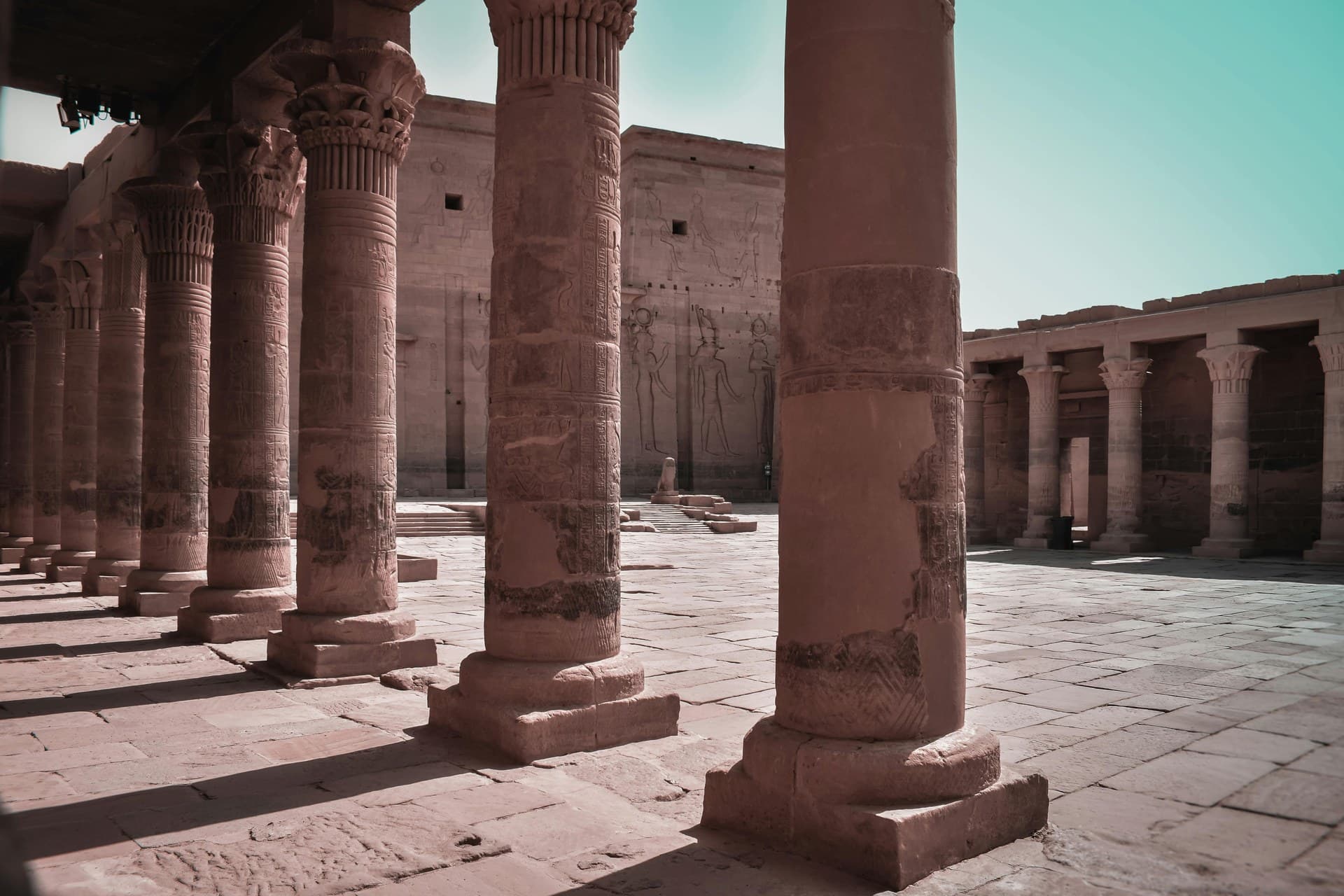
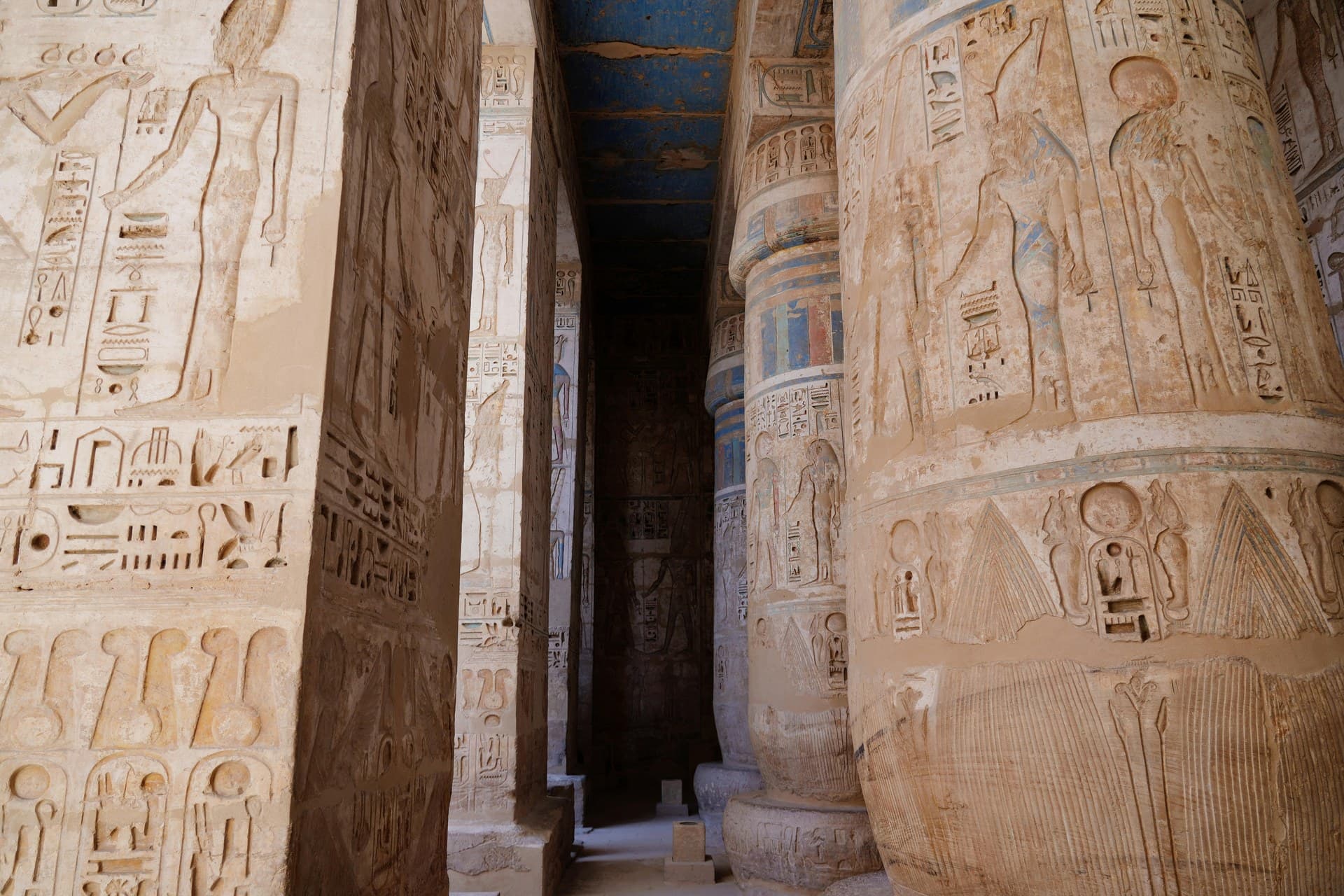
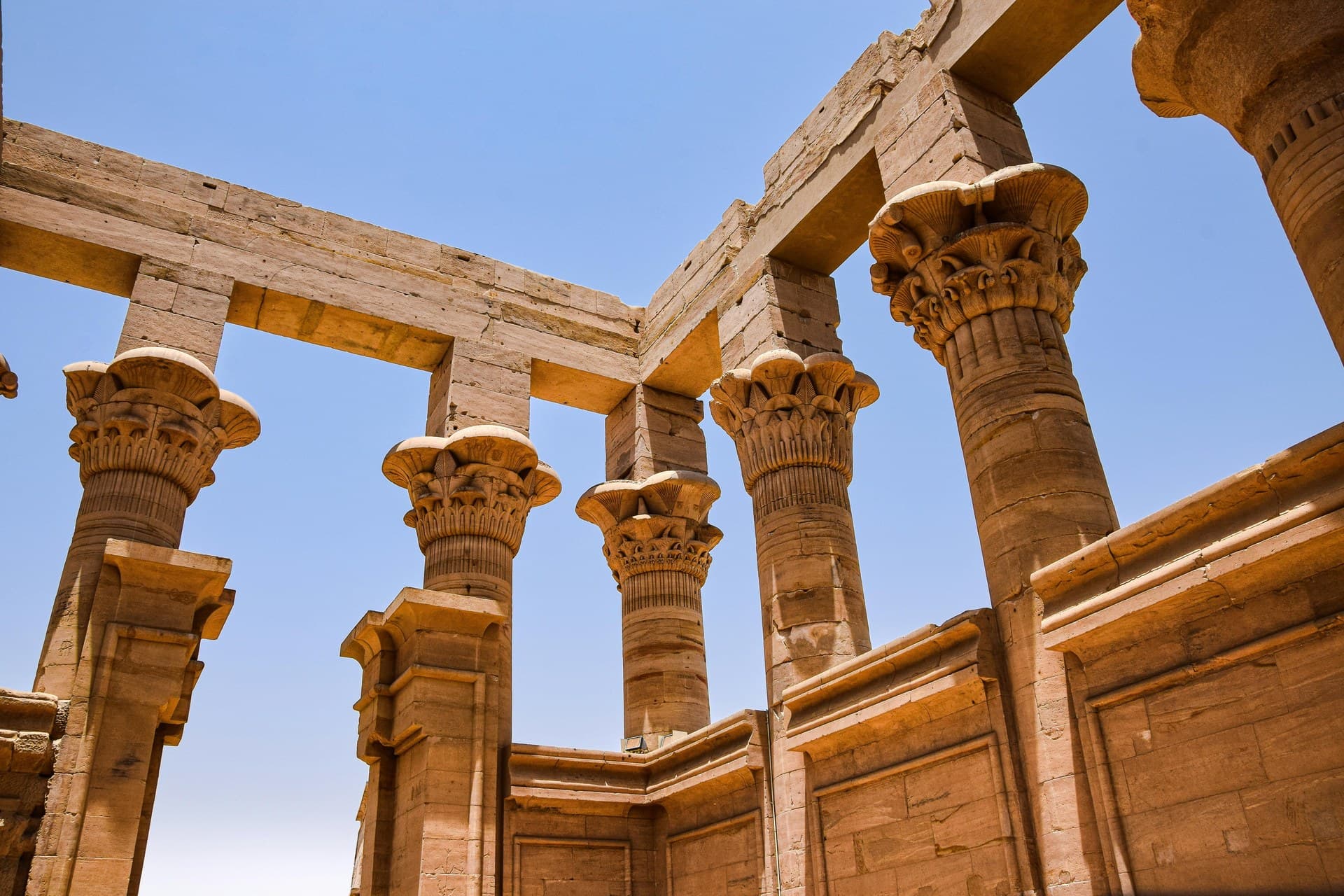
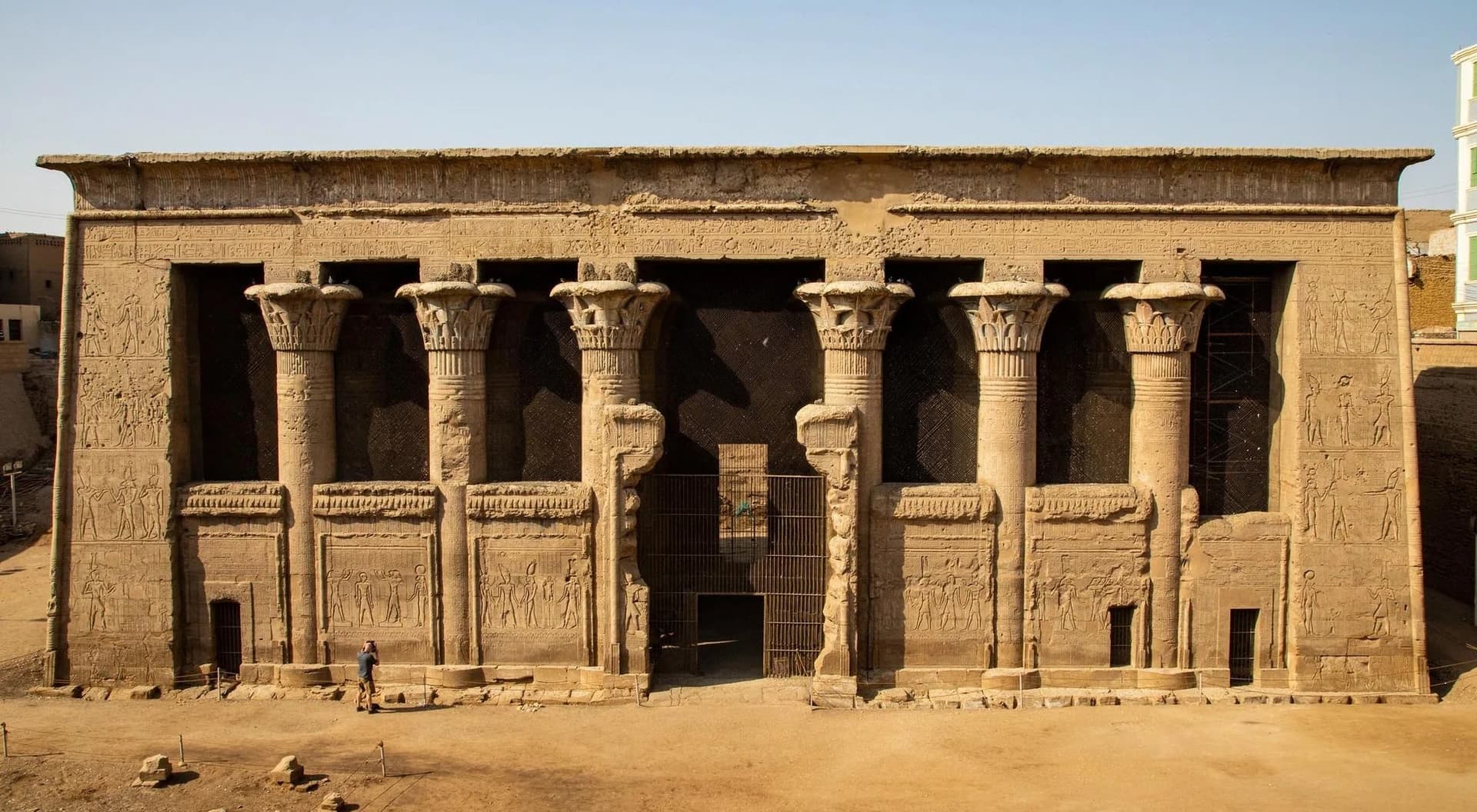
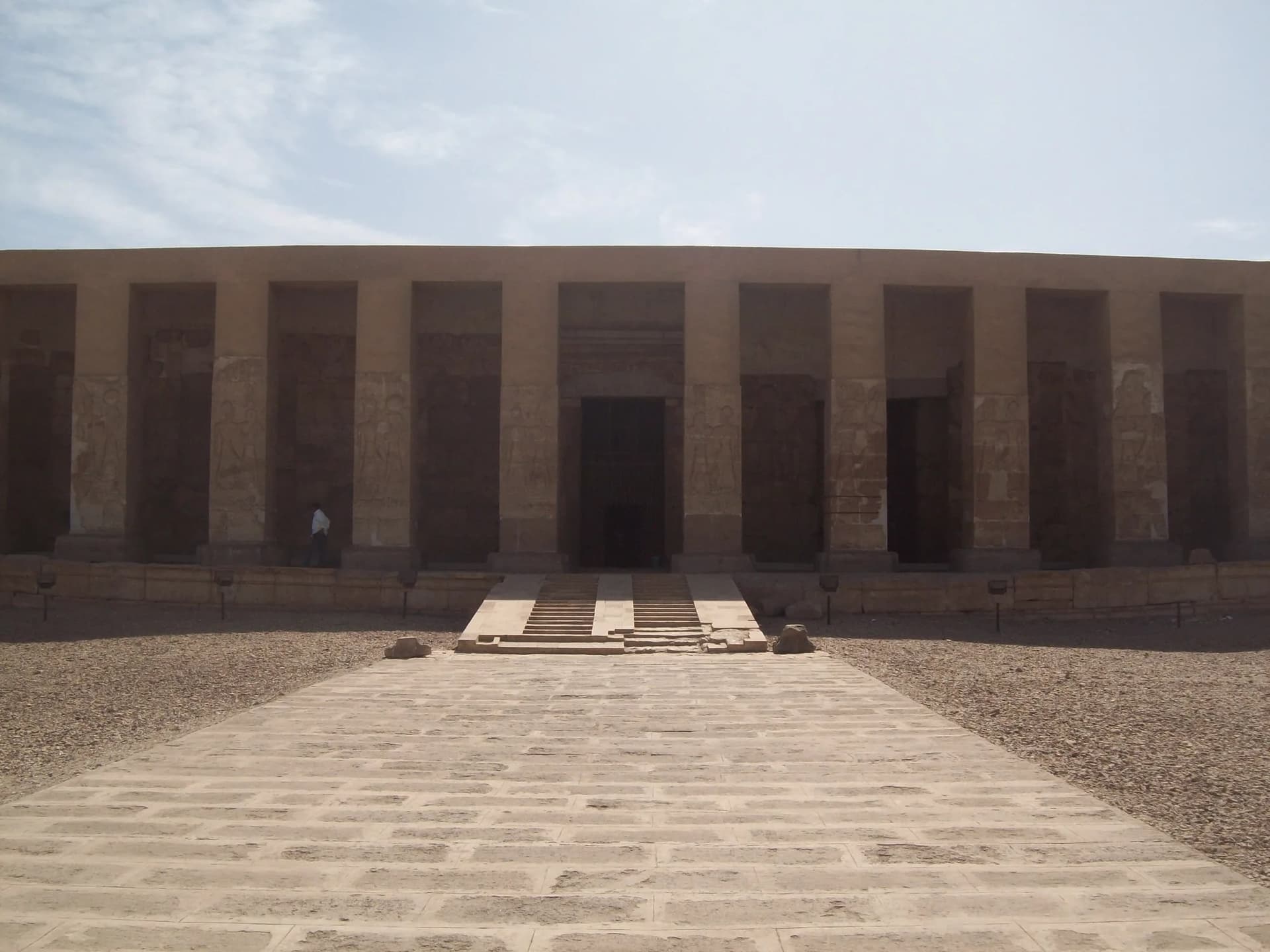
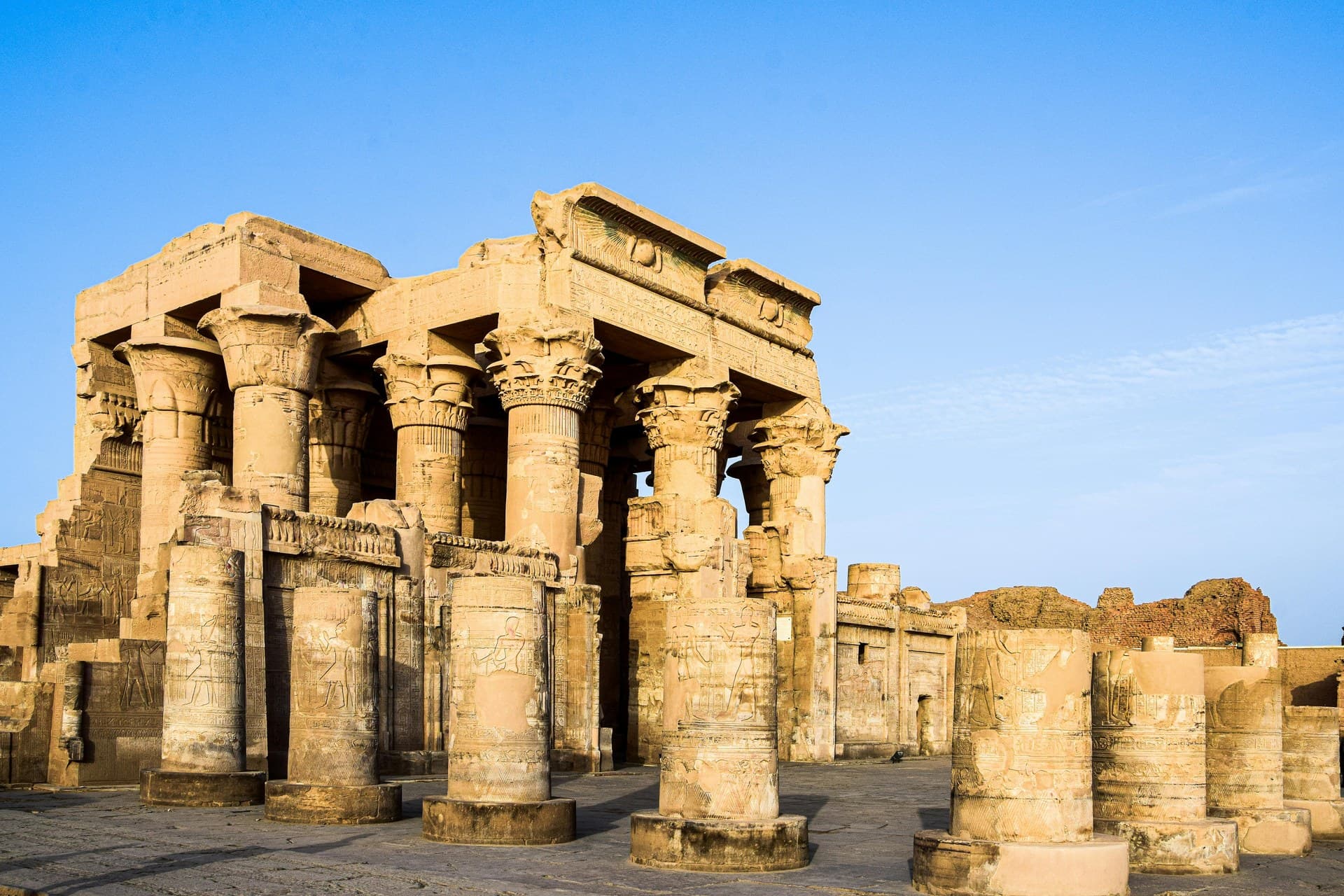
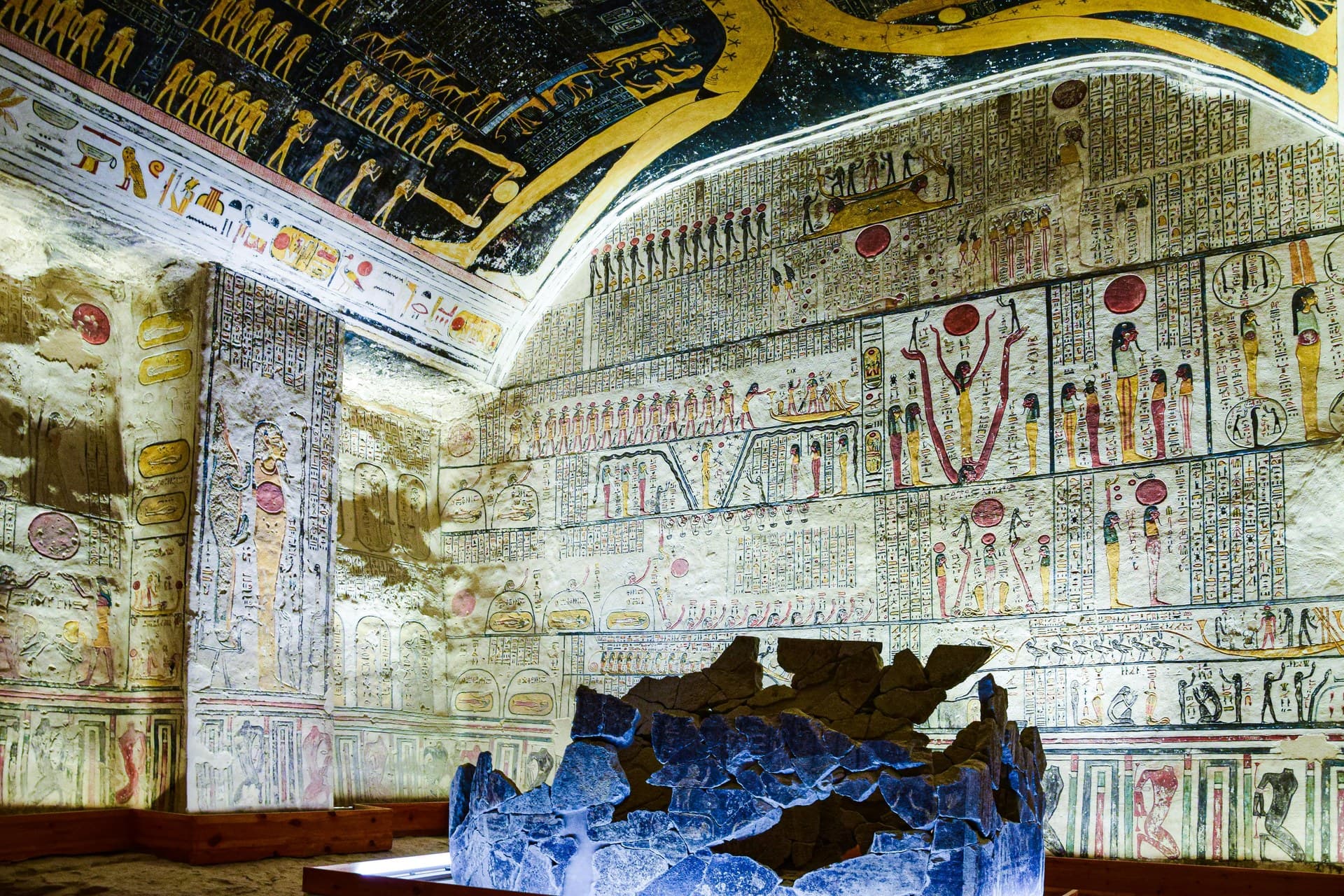
The temple as it stands is Ptolemaic and Roman, built between roughly the first century BC and the first century AD, on a site used for far longer.
The Cleopatra relief carries a political argument: her son Caesarion is shown as a grown pharaoh making offerings — a claim in stone that Egypt had a legitimate king of its own. Augustus, who had the boy killed, went on decorating the same temple anyway; the empire absorbed the building rather than defacing it.
Dendera also had a reputation for healing. A mudbrick sanatorium stood in the enclosure, where pilgrims came to sleep, bathe in and drink water sanctified by the goddess — one of the clearest surviving examples of an Egyptian temple working as a place of cure.
The original zodiac ceiling relief from the roof chapel was removed in 1821 and is in the Louvre; a cast is in place at Dendera.
In the Christian period the temple was occupied and partly converted, and much of the smoke damage cleaned off in the modern restoration came from centuries of habitation inside the halls.
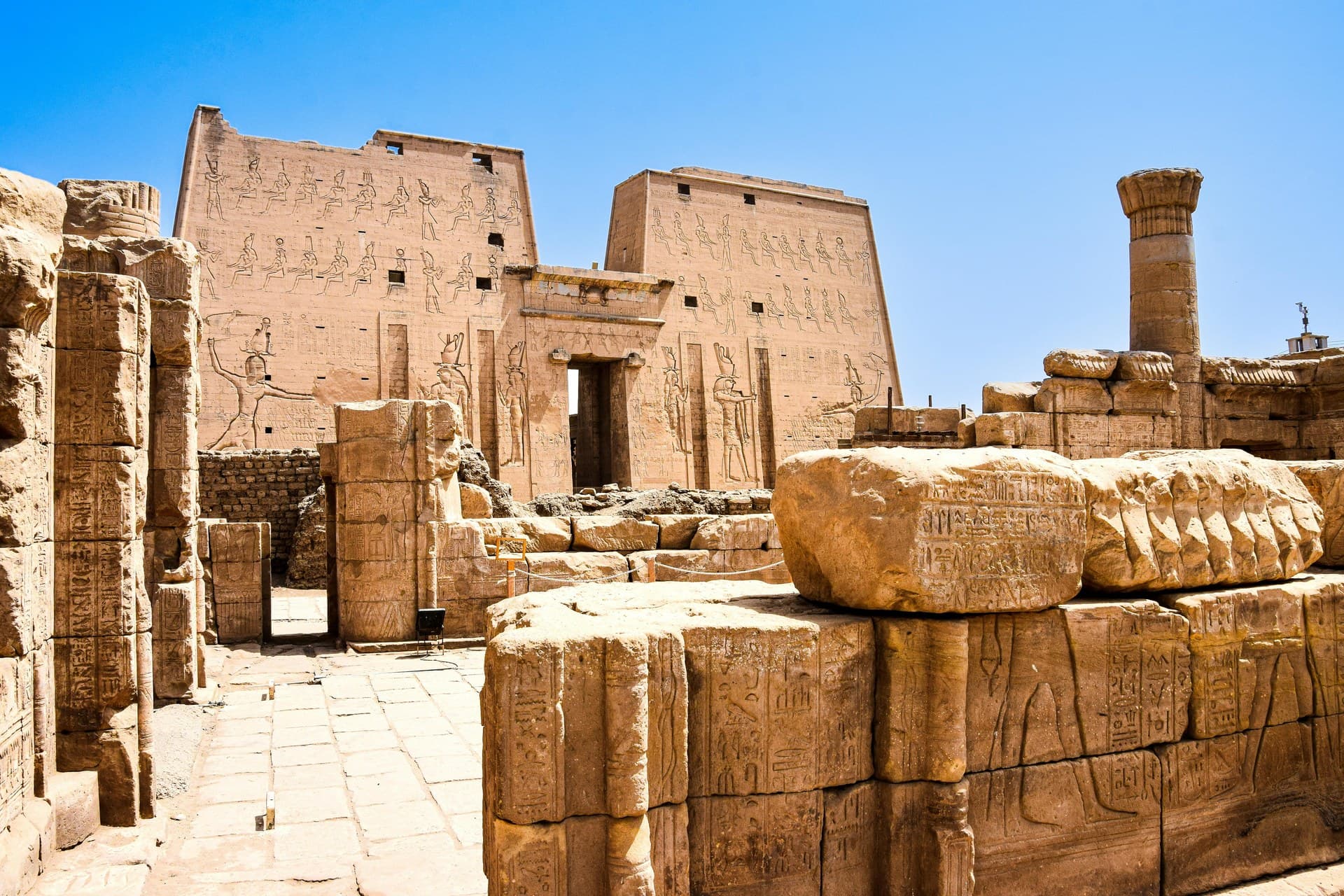
Dendera and Edfu were ritually linked: the image of Hathor travelled upriver from here to Edfu each year for the Festival of the Beautiful Meeting.