Attraction

Luxor Temple

A temple in the middle of a living city, built for a festival rather than a god, and the one major Egyptian site that is better after dark.

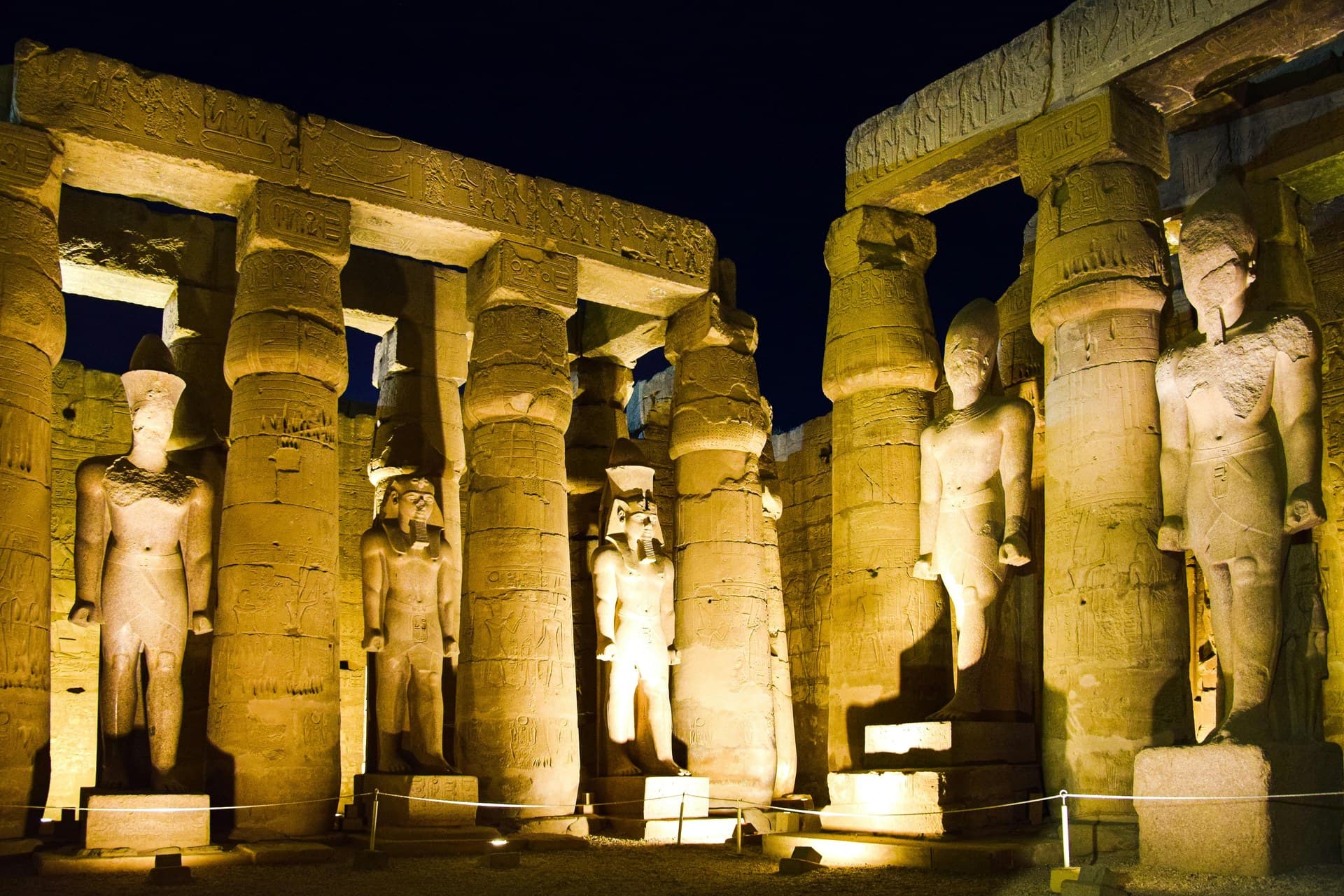
The colonnade and pylon of Luxor Temple lit at dusk on the east bank of the Nile
Most PopularTempleLuxor

Overview

Luxor Temple sits in the middle of modern Luxor, at the end of a corniche, surrounded by the town rather than out in the desert. You can walk to it from most hotels on the east bank.

It is smaller and far more legible than Karnak — one long axis you can walk from pylon to sanctuary in twenty minutes — and it is the single best evening visit in Egypt.

Why visit Luxor Temple

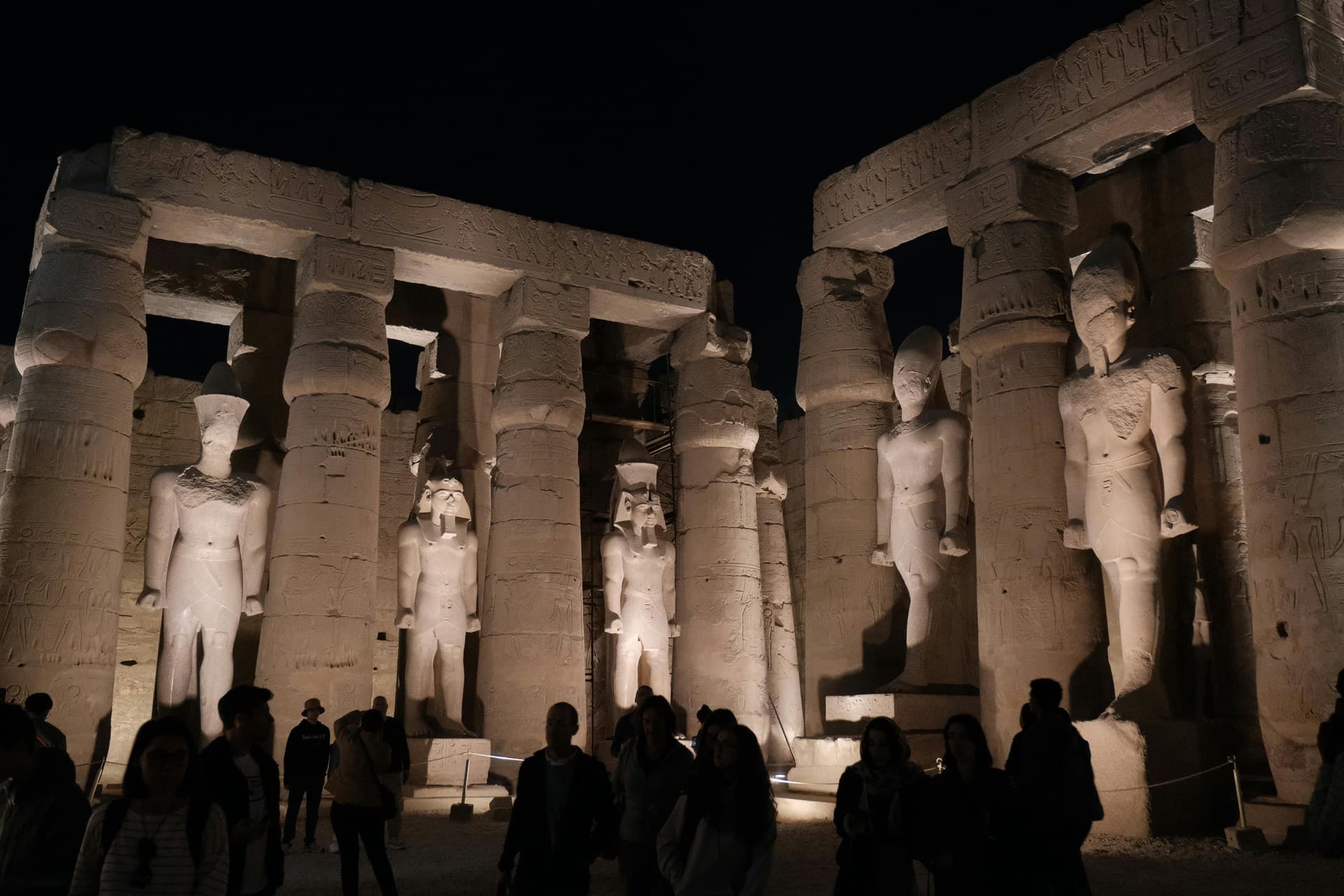
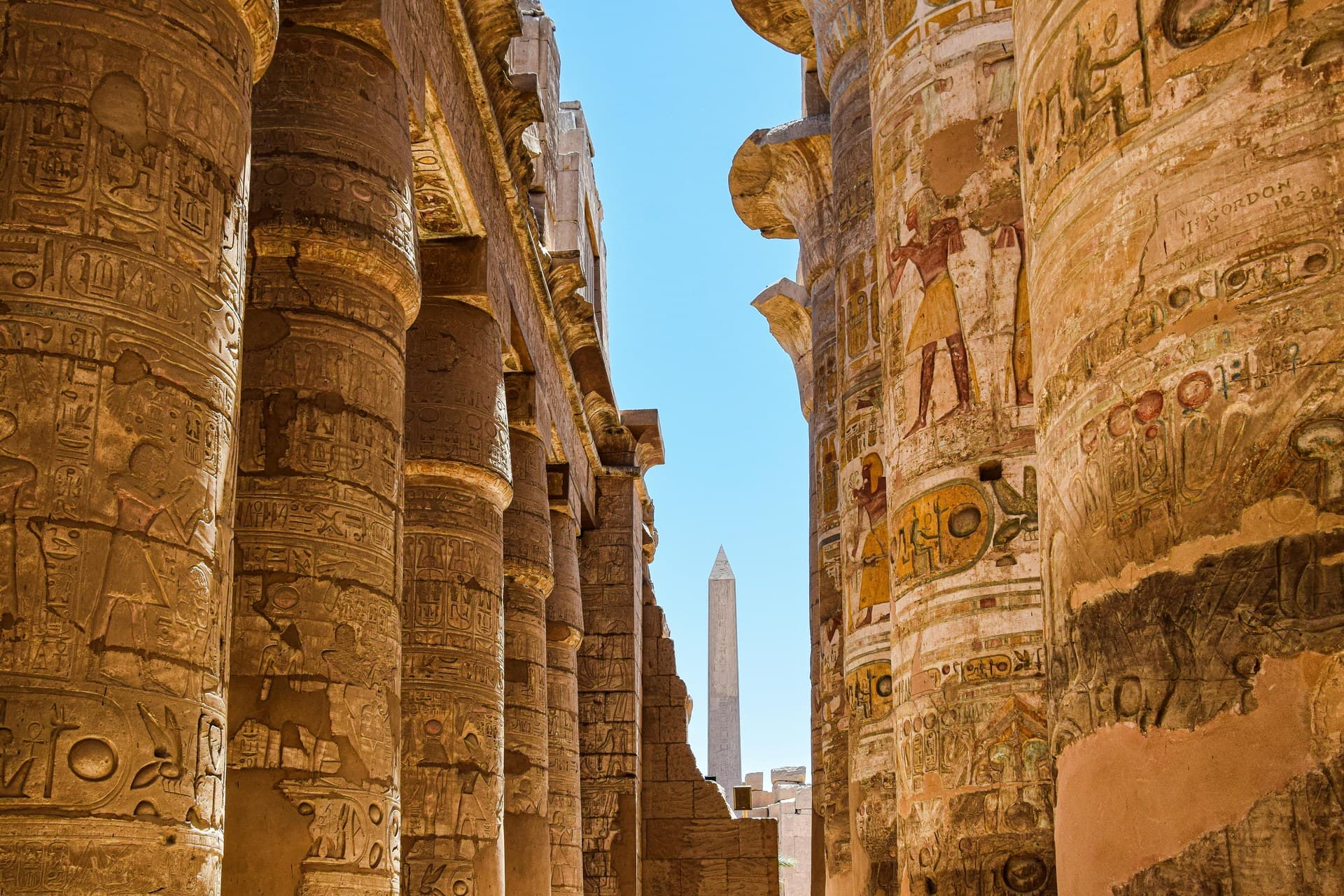
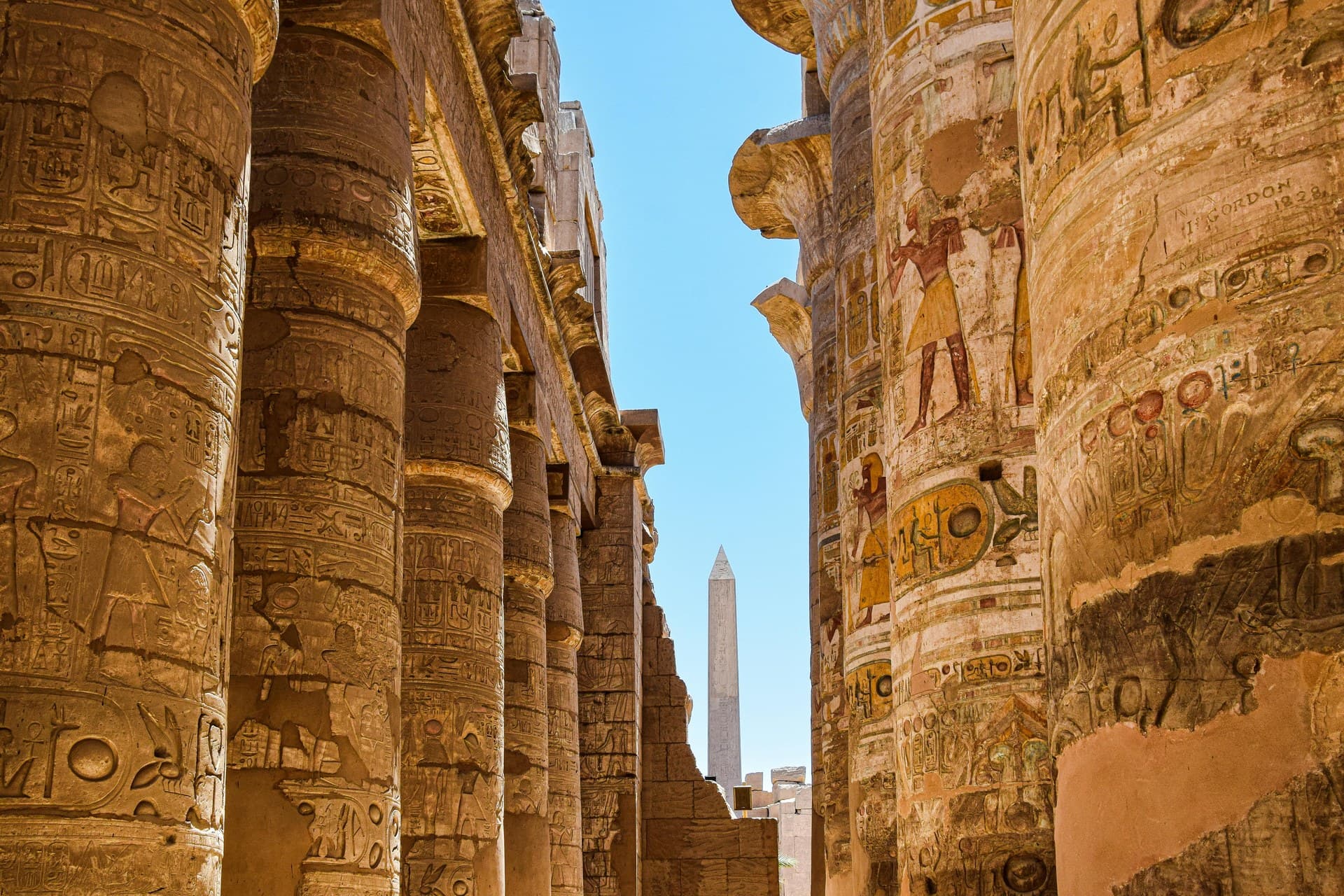
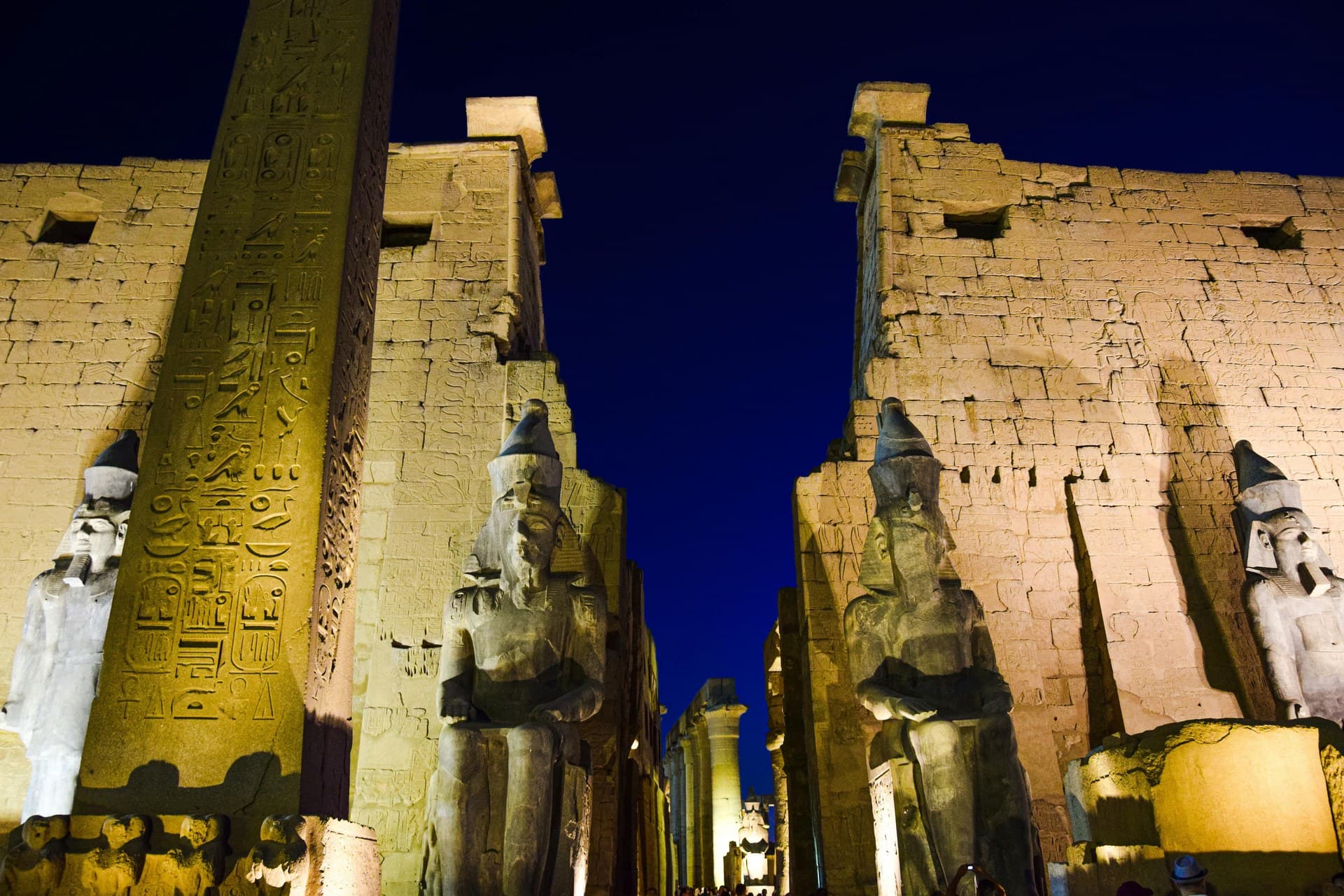
It is floodlit at night, and it is one of the very few Egyptian sites where the lighting has been done thoughtfully rather than blasted at the stone. The colonnade of Amenhotep III after dark, with the columns picked out and the sky black above them, is the image most people take home from Luxor.

It also does something no other Egyptian temple does as clearly: it shows you continuous religious use for three and a half thousand years, stacked in one building. Pharaonic sanctuary, a chapel converted by Roman soldiers with the painted plaster still visible over the reliefs, a Christian church, and a working mosque built high up on the accumulated debris — all of it still standing in the same walls.

The Avenue of Sphinxes runs from its front gate. It once connected Luxor Temple to Karnak, nearly three kilometres north, and it has been excavated and reopened along its whole length.

History of Luxor Temple

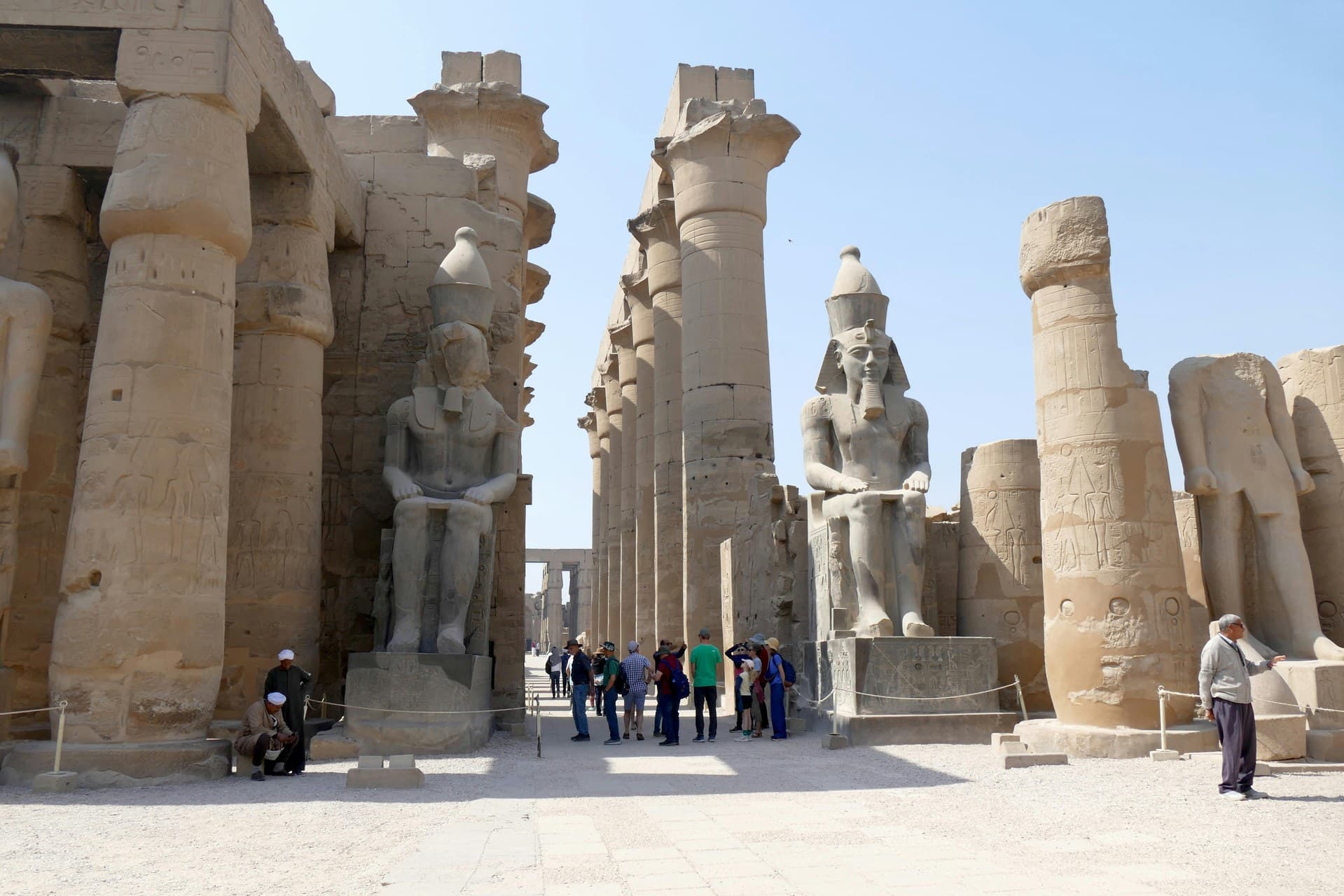
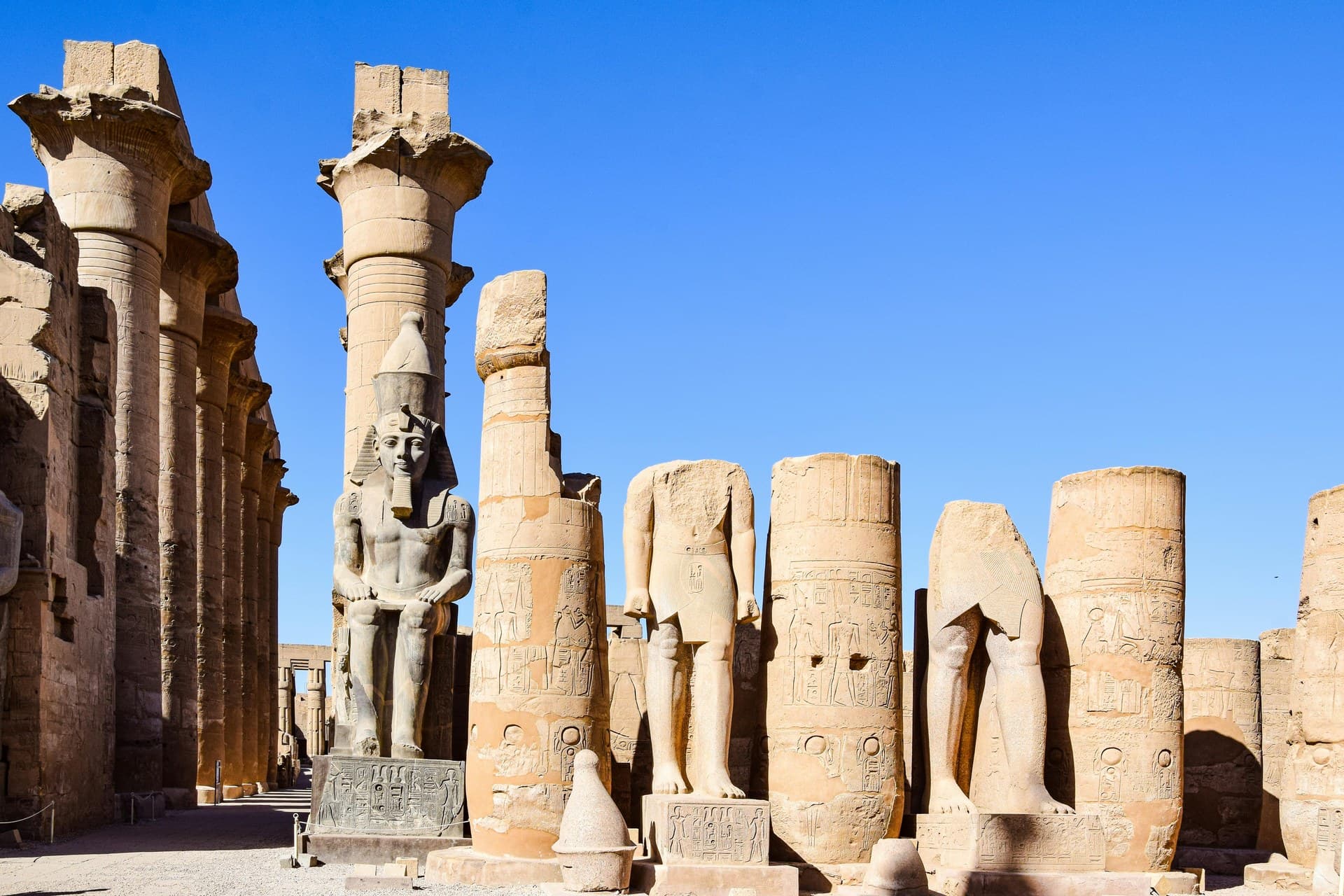
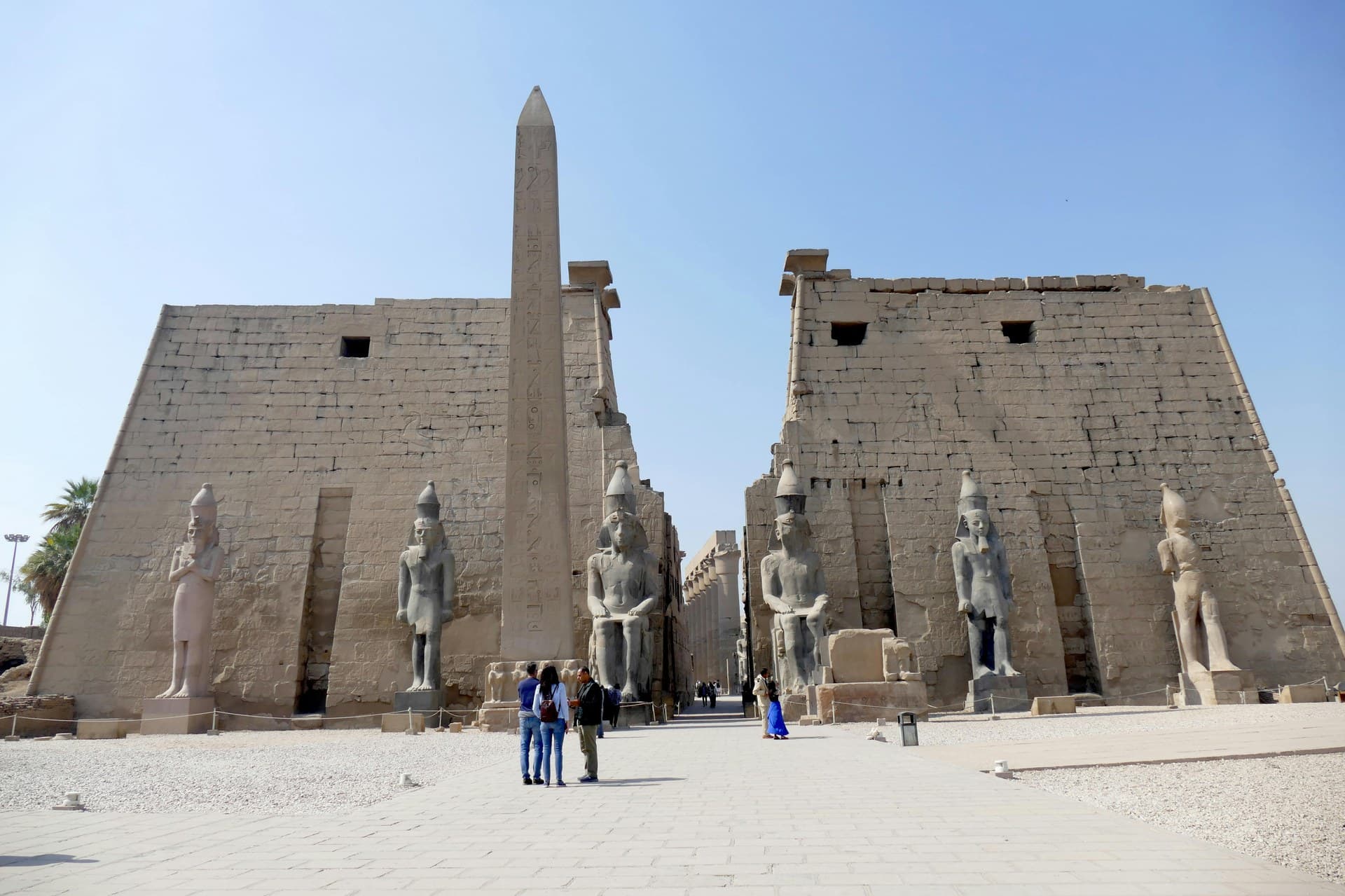
The temple was built mainly by Amenhotep III in the 14th century BC and extended by Ramesses II, who added the great forecourt, the pylon and the colossal seated statues of himself at the entrance.

Its resident god was Amun in a particular form — Amenemopet, Amun of Opet — but the building's real purpose was the Opet festival, when the images of the Theban gods were carried in procession from Karnak to Luxor to renew the king's divine kingship. The temple is, in effect, a destination for an annual parade.

One of the pair of obelisks that stood at the entrance is still in place. The other was given to France in the nineteenth century and stands in the Place de la Concorde in Paris. Above the eastern side of the forecourt sits the mosque of Abu Haggag, built when the temple was buried nearly to its capitals — which is why its door is now several metres above the excavated ground.

In January 1989 work in the sun court of Amenhotep III uncovered a pit of statues buried in antiquity. Twenty-six came out of it, barely weathered, including a near-perfect quartzite figure of the king. They are now shown together in the Luxor Museum.

Around AD 300 the temple stood inside a Roman legionary fortress, and the chamber beyond the hypostyle hall was replastered and painted for the imperial cult — Diocletian and his co-emperors over the pharaonic relief. The American Research Center in Egypt conserved it in the 2000s.
What to see at Luxor Temple

  • The colonnade of Amenhotep III, floodlit after dark
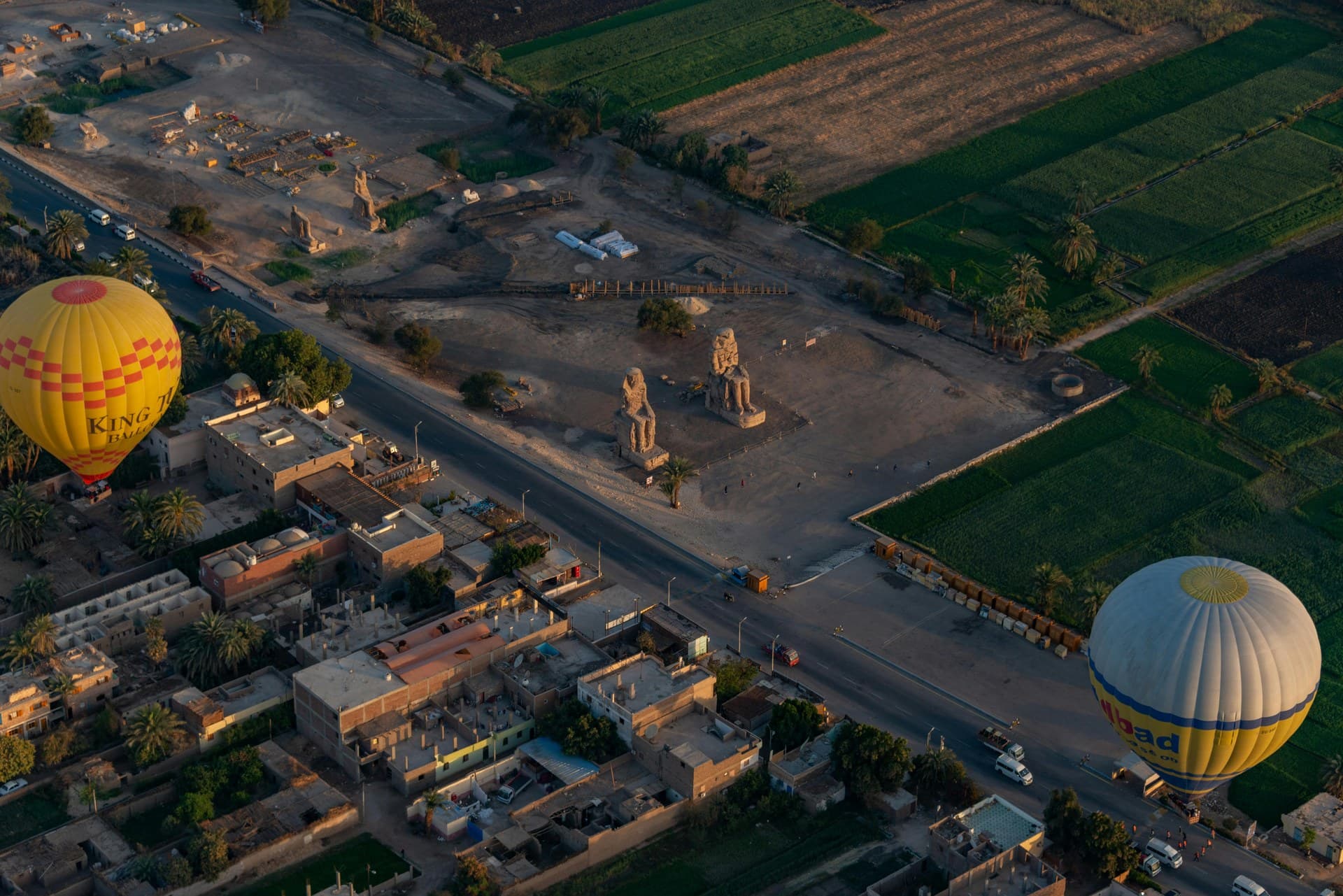
  • The pylon and seated colossi of Ramesses II at the entrance
  • The surviving obelisk, whose twin stands in Paris
  • The Roman chapel with painted plaster over pharaonic relief
  • The mosque of Abu Haggag, its doorway stranded high on the old ground level
  • The Avenue of Sphinxes running north towards Karnak
  • The granite barque shrine, rebuilt by Alexander the Great, who appears on it in pharaonic dress
  • The birth room, carved with the divine birth of Amenhotep III

Best time to visit Luxor Temple

After sunset. The temple is at its best floodlit, and it is also the coolest time to walk it.

Opening Hours and Tickets

Opening hours: Open into the evening, later than most Egyptian sites. Check current closing time locally.

A single admission ticket bought at the entrance. The Avenue of Sphinxes is a separate walk and has at times been ticketed separately.

Opening hours and ticket prices may change. Please confirm the latest details before visiting.

How to get to Luxor Temple

In the centre of Luxor on the east bank, on the corniche. Walkable from most east-bank hotels; a few minutes by taxi or calèche from anywhere in town.

Nearby Attractions

Tours that include Luxor Temple

Luxury Cairo, Luxor and Aswan Package

Luxury Cairo, Luxor and Aswan Package

An upscale private journey that combines Cairo highlights, a polished Luxor stay, and a refined Aswan finish.

Classic Cairo and Luxor Private Tour

Classic Cairo and Luxor Private Tour

A first-time Egypt itinerary that balances Cairo icons with Luxor's major temple sites over one well-paced private journey.

06 Days Cairo to Luxor Tour

06 Days Cairo to Luxor Tour

Experience the essence of Egypt in just six days on this immersive journey from Cairo to Luxor. Begin in the capital, where you’ll stand before the legendary Pyramids of Giza, explore the Grand Egyptian Museum, and wander through the historic Citadel and the lively Khan El Khalili Bazaar. Then, fly south to Luxor to uncover the monumental temples of Karnak and Luxor, glide above the ancient city in a hot air balloon, and walk through the Valley of the Kings. This thoughtfully designed itinerary combines expert guidance, seamless travel, and a perfect balance of history and culture for an unfor

4 Night Luxor to Aswan Nile Cruise

4 Night Luxor to Aswan Nile Cruise

A classic Nile cruise itinerary with temple visits, river views, and a comfortable four-night rhythm.

4-Day Nile Cruise from Aswan to Luxor

4-Day Nile Cruise from Aswan to Luxor

Set sail on a captivating 4-day Nile cruise from Aswan to Luxor, where the ancient world unfolds before your eyes. Journey along the legendary Nile River and uncover Egypt’s most iconic temples and monuments. Begin in Aswan with visits to the High Dam and the enchanting Philae Temple, then continue to Kom Ombo and Edfu to explore magnificent sanctuaries dedicated to ancient gods. As you sail northward, reach Luxor—the open-air museum of Egypt—home to the grand Karnak and Luxor Temples and the royal tombs of the Valley of the Kings. With expert-guided tours, comfortable accommodations, and full

4 Day 3 Night Nile Cruise from Aswan to Luxor

4 Day 3 Night Nile Cruise from Aswan to Luxor

Set sail on a remarkable 4-day, 3-night Nile cruise from Aswan to Luxor, where the grandeur of ancient Egypt unfolds before your eyes. Journey along the legendary Nile River aboard a comfortable cruise ship, visiting some of the most iconic archaeological sites in the world. Discover the enchanting Temple of Philae in Aswan, the twin sanctuaries of Kom Ombo, and the magnificent Temple of Horus in Edfu. Continue to Luxor to explore the Valley of the Kings, the Temple of Hatshepsut, and the colossal statues of Memnon on the West Bank, before concluding your adventure at the awe-inspiring Karnak

Travel Tips Before Visiting

Come after dark. If you can only visit once, make it the evening. Luxor Temple is floodlit, and the lighting is the whole argument for seeing it at night — confirm the evening opening when you plan the day rather than assuming it. It is a twenty-minute walk from most east-bank hotels. One of the few Egyptian sites where you genuinely do not need a car. Do not do it on the same trip as Karnak in the same hour. Karnak in the morning, Luxor Temple in the evening, is the right shape for a day. Back to back they blur together. Come back in daylight if you can. The floodlights pick out the columns and colossi; the carving in the sanctuary and the Roman chamber reads far better by day. The floor is uneven. You walk down into the excavated temple from street level, on broken ancient paving, dark between the lit areas at night.