Attraction

Karnak Temple

The largest religious building ever raised, added to by thirty pharaohs across two thousand years — and the only site in Egypt that is genuinely too big to see in one visit.

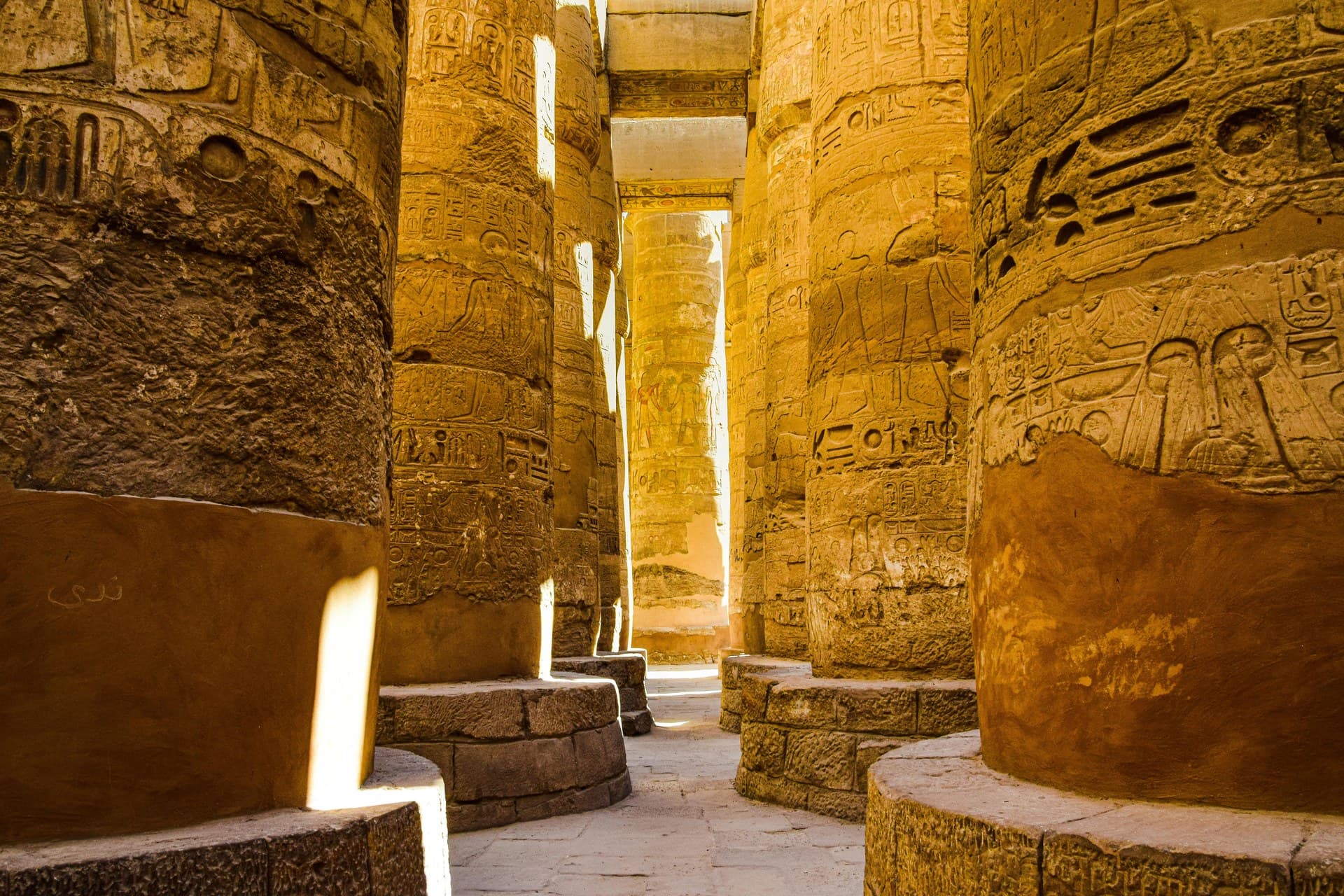
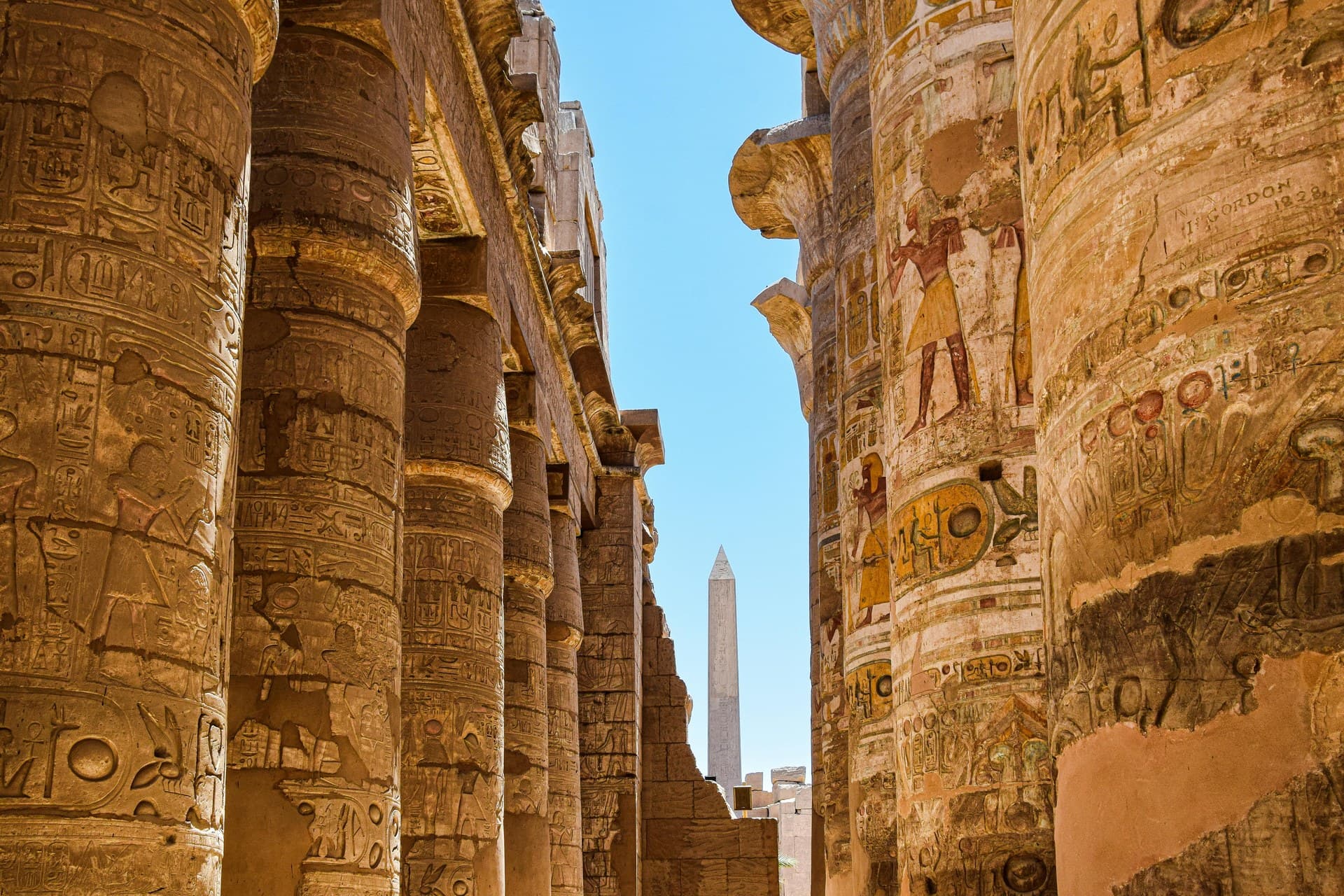
The massive sandstone columns of the Great Hypostyle Hall at Karnak, Luxor, lit by low sun
Most PopularTempleLuxor

Overview

Karnak is not a temple. It is a walled precinct of about two square kilometres holding temples, chapels, pylons, obelisks, a sacred lake and the accumulated building work of roughly thirty pharaohs over two thousand years.

The part visitors see is the Precinct of Amun-Re, which is itself the largest religious building ever constructed. Two neighbouring precincts, those of Mut and Montu, are mostly closed.

Why visit Karnak Temple

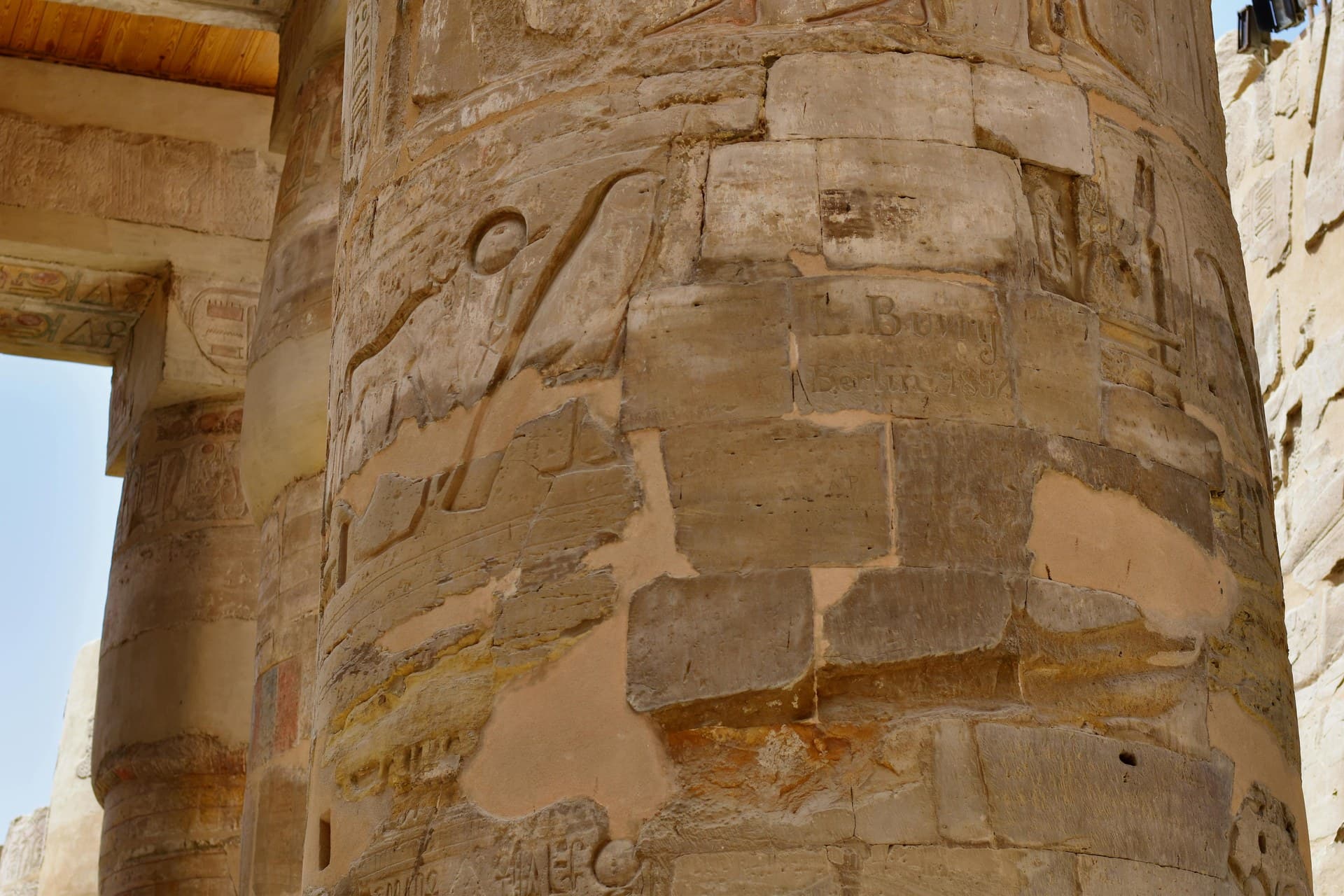
The Great Hypostyle Hall is the single most overwhelming interior in Egypt, and photographs consistently fail at it. One hundred and thirty-four columns stand in sixteen rows across an area of about five thousand square metres; the twelve down the central aisle rise to roughly twenty metres and are wide enough that several people cannot link arms around one. It was roofed. Standing in it, the thing you understand is that you were never meant to see the far wall.

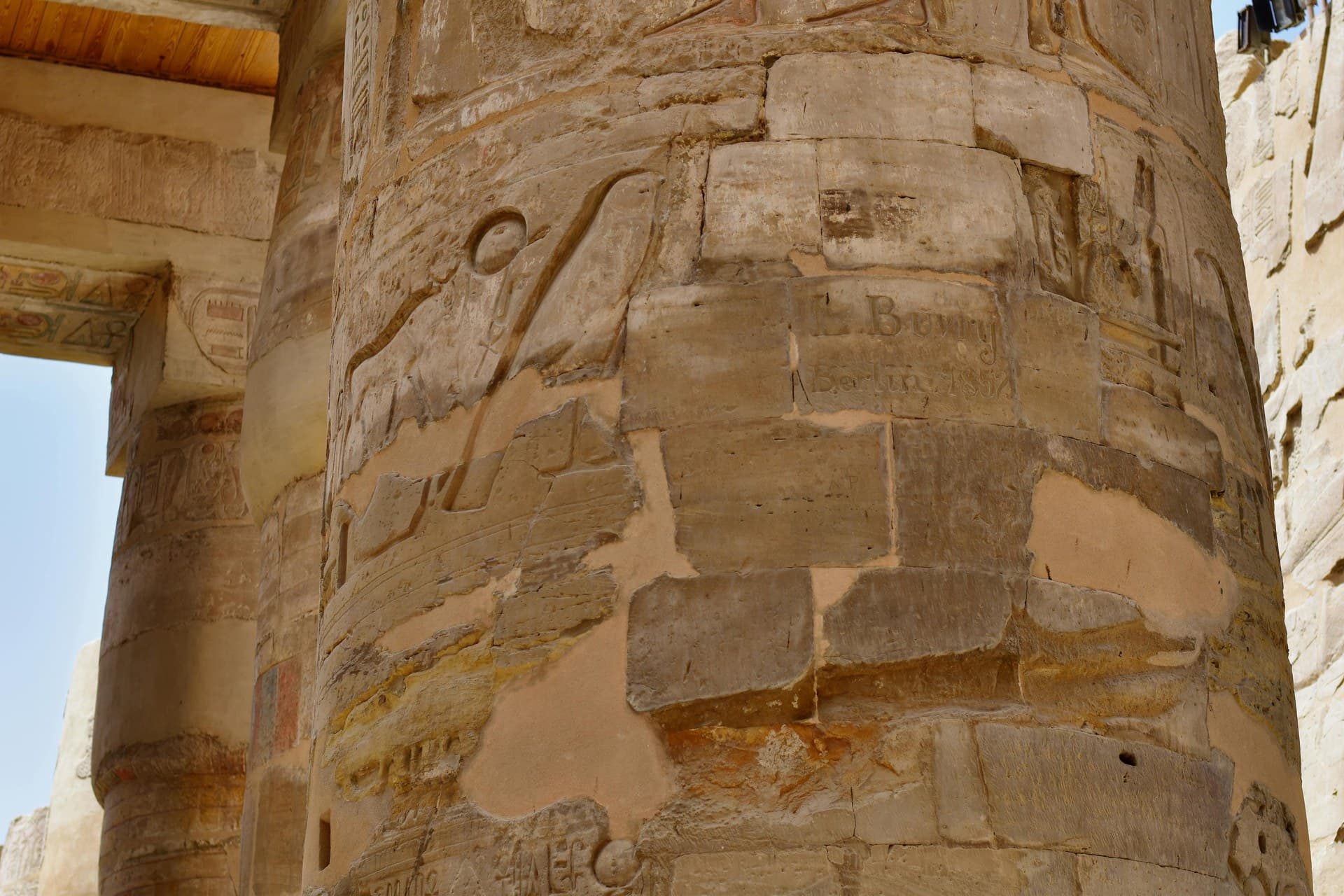
The scale of time is the other reason. Almost every pharaoh who mattered added something here and defaced or re-carved what a predecessor had added. You can see Hatshepsut's obelisk with the lower section walled up by Thutmose III, and blocks from Akhenaten's suppressed Aten temple reused as rubble inside a later pylon. Karnak is the argument, in stone, between one dynasty and the next.

And it still holds the tallest ancient obelisk standing in Egypt — Hatshepsut's, at about twenty-nine metres, cut from the Aswan granite quarry. Its fallen twin lies on its side near the Sacred Lake, where you can walk the length of it and read the inscription at eye level.

History of Karnak Temple

Building began in the Middle Kingdom, around the twentieth century BC, and continued into the Ptolemaic period. The site was in continuous religious use for longer than the span between the Ptolemies and now.

Amun-Re rose with Thebes itself. As the city became the capital of the New Kingdom, its local god became the state god, and the wealth of an empire was spent here — Thutmose III's conquests, Seti I's and Ramesses II's building programmes, and the endowments of a priesthood that grew powerful enough to rival the crown.

The Great Hypostyle Hall was begun under Seti I and finished by Ramesses II in the thirteenth century BC. The ten pylons were added by different kings in different directions, which is why the complex grows along two axes rather than one.

The first pylon, the one you walk through at the entrance, was never finished. The mudbrick construction ramp is still piled against the inside face — the clearest surviving evidence anywhere of how Egyptians actually raised a wall of this size.

The temple was the destination of the annual Opet procession, when the images of the Theban gods travelled to Luxor Temple along the avenue of sphinxes and back. That avenue, nearly three kilometres of it, has been excavated along its whole length and reopened.
What to see at Karnak Temple

  • The Great Hypostyle Hall — 134 columns, and the reason to come
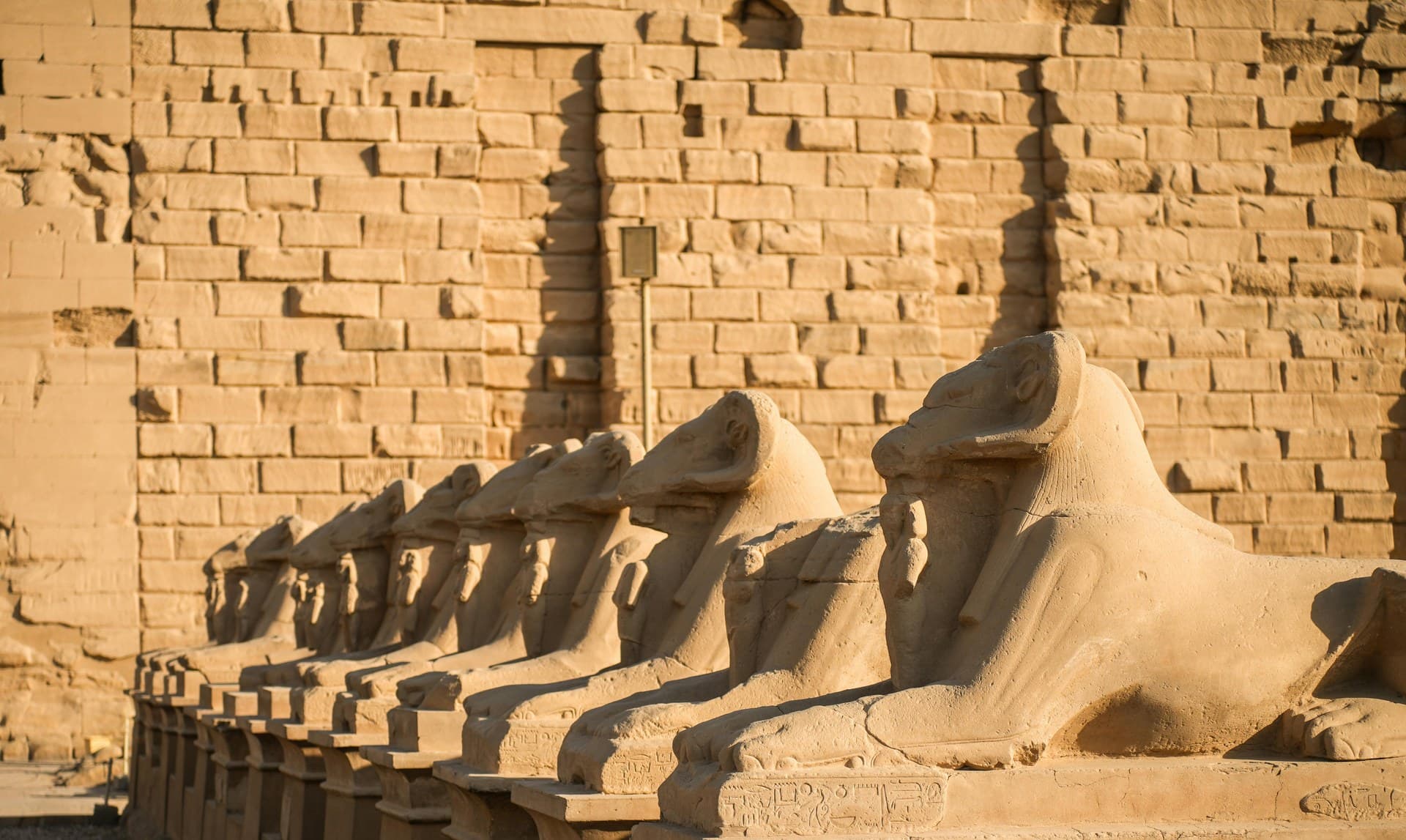
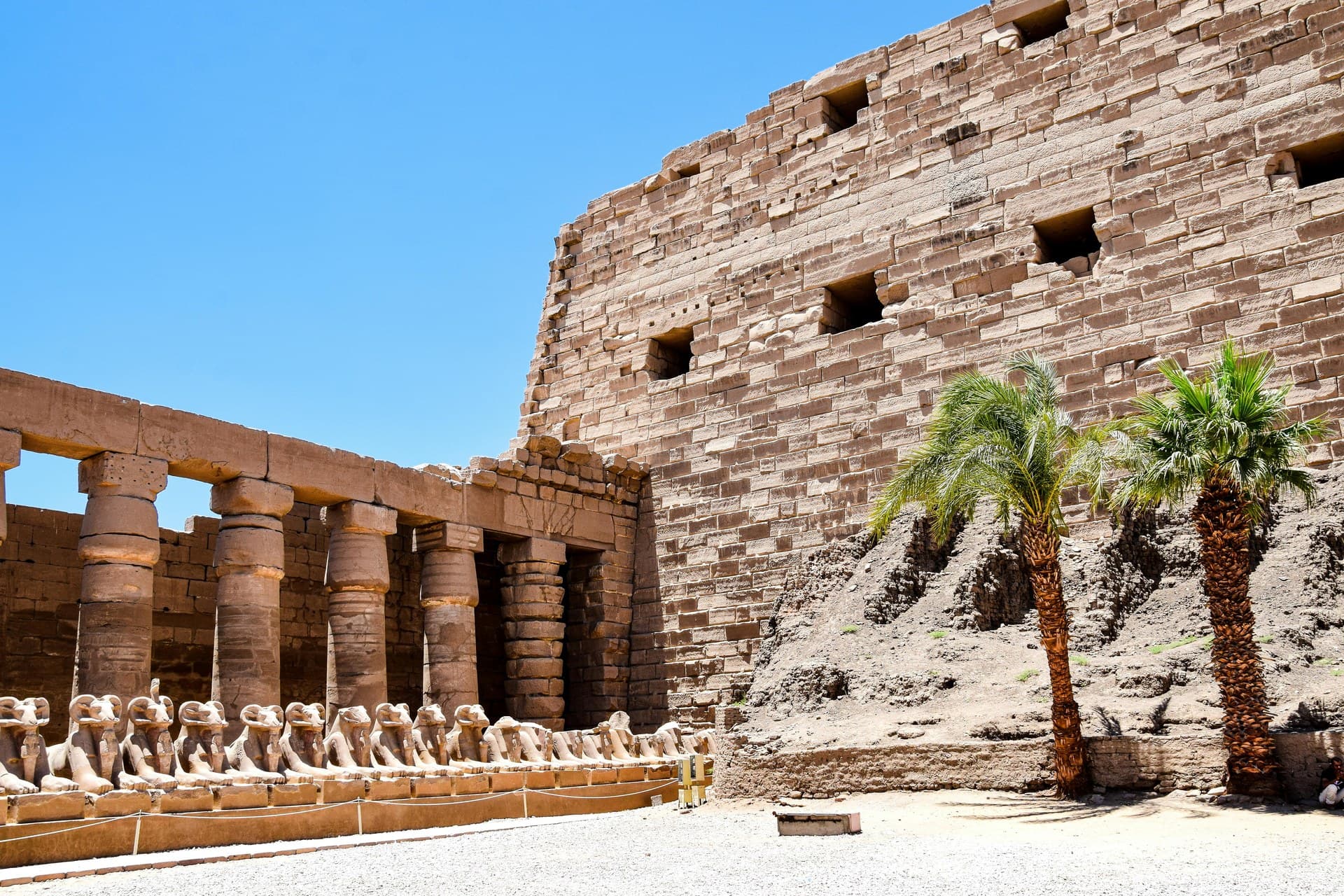
  • The avenue of ram-headed sphinxes at the entrance
  • Hatshepsut's standing obelisk, the tallest in Egypt, and its fallen twin by the lake
  • The Sacred Lake, and the granite scarab beside it
  • The Festival Hall of Thutmose III, with columns shaped like tent poles
  • The unfinished first pylon and the mudbrick ramp still leaning against it
  • The Open Air Museum, holding the reconstructed White Chapel of Senusret I
  • The battle reliefs of Seti I on the outer north wall of the Hypostyle Hall
  • The Cachette Court, where thousands of statues were found buried

Best time to visit Karnak Temple

At opening, before the coaches. October to April for comfort; in summer only the first hour of the day is reasonable.

Opening Hours and Tickets

Opening hours: Daytime hours with seasonal variation. The sound and light show runs in the evening on its own schedule.

A general admission ticket at the entrance. The Open Air Museum is a separate ticket bought at the same place, and the evening sound and light show is ticketed separately again.

Opening hours and ticket prices may change. Please confirm the latest details before visiting.

How to get to Karnak Temple

About three kilometres north of central Luxor on the east bank. A few minutes by taxi or calèche from the corniche hotels; walkable in cool weather.

Nearby Attractions

Tours that include Karnak Temple

Luxury Cairo, Luxor and Aswan Package

Luxury Cairo, Luxor and Aswan Package

An upscale private journey that combines Cairo highlights, a polished Luxor stay, and a refined Aswan finish.

Classic Cairo and Luxor Private Tour

Classic Cairo and Luxor Private Tour

A first-time Egypt itinerary that balances Cairo icons with Luxor's major temple sites over one well-paced private journey.

06 Days Cairo to Luxor Tour

06 Days Cairo to Luxor Tour

Experience the essence of Egypt in just six days on this immersive journey from Cairo to Luxor. Begin in the capital, where you’ll stand before the legendary Pyramids of Giza, explore the Grand Egyptian Museum, and wander through the historic Citadel and the lively Khan El Khalili Bazaar. Then, fly south to Luxor to uncover the monumental temples of Karnak and Luxor, glide above the ancient city in a hot air balloon, and walk through the Valley of the Kings. This thoughtfully designed itinerary combines expert guidance, seamless travel, and a perfect balance of history and culture for an unfor

4 Night Luxor to Aswan Nile Cruise

4 Night Luxor to Aswan Nile Cruise

A classic Nile cruise itinerary with temple visits, river views, and a comfortable four-night rhythm.

4-Day Nile Cruise from Aswan to Luxor

4-Day Nile Cruise from Aswan to Luxor

Set sail on a captivating 4-day Nile cruise from Aswan to Luxor, where the ancient world unfolds before your eyes. Journey along the legendary Nile River and uncover Egypt’s most iconic temples and monuments. Begin in Aswan with visits to the High Dam and the enchanting Philae Temple, then continue to Kom Ombo and Edfu to explore magnificent sanctuaries dedicated to ancient gods. As you sail northward, reach Luxor—the open-air museum of Egypt—home to the grand Karnak and Luxor Temples and the royal tombs of the Valley of the Kings. With expert-guided tours, comfortable accommodations, and full

4 Day 3 Night Nile Cruise from Aswan to Luxor

4 Day 3 Night Nile Cruise from Aswan to Luxor

Set sail on a remarkable 4-day, 3-night Nile cruise from Aswan to Luxor, where the grandeur of ancient Egypt unfolds before your eyes. Journey along the legendary Nile River aboard a comfortable cruise ship, visiting some of the most iconic archaeological sites in the world. Discover the enchanting Temple of Philae in Aswan, the twin sanctuaries of Kom Ombo, and the magnificent Temple of Horus in Edfu. Continue to Luxor to explore the Valley of the Kings, the Temple of Hatshepsut, and the colossal statues of Memnon on the West Bank, before concluding your adventure at the awe-inspiring Karnak

Travel Tips Before Visiting

Go at opening, and go first. Karnak takes the coaches from about nine. The first hour is quiet, cool, and the light rakes across the Hypostyle Hall from the side, which is when the carving reads. Do not try to see all of it. Two hours covers the main axis properly. Four hours covers it and the Open Air Museum. Trying to walk every chapel produces a blur and sore feet. The Open Air Museum needs a separate ticket bought at the main entrance, not at its own gate — and it is easy to miss entirely. The White Chapel inside it is the finest carving on the whole site. Walk out to the Sacred Lake and turn round. The best single view of the complex is from the far side of the lake looking back, and most groups never go that far. The evening sound and light show is a separate visit with its own ticket and timing. It walks you through the complex after dark, which is a genuinely different experience from the day visit — but it is not a substitute for one. There is very little shade on the main axis. Water, hat, and treat a midday visit in summer as a bad idea rather than a hardship.