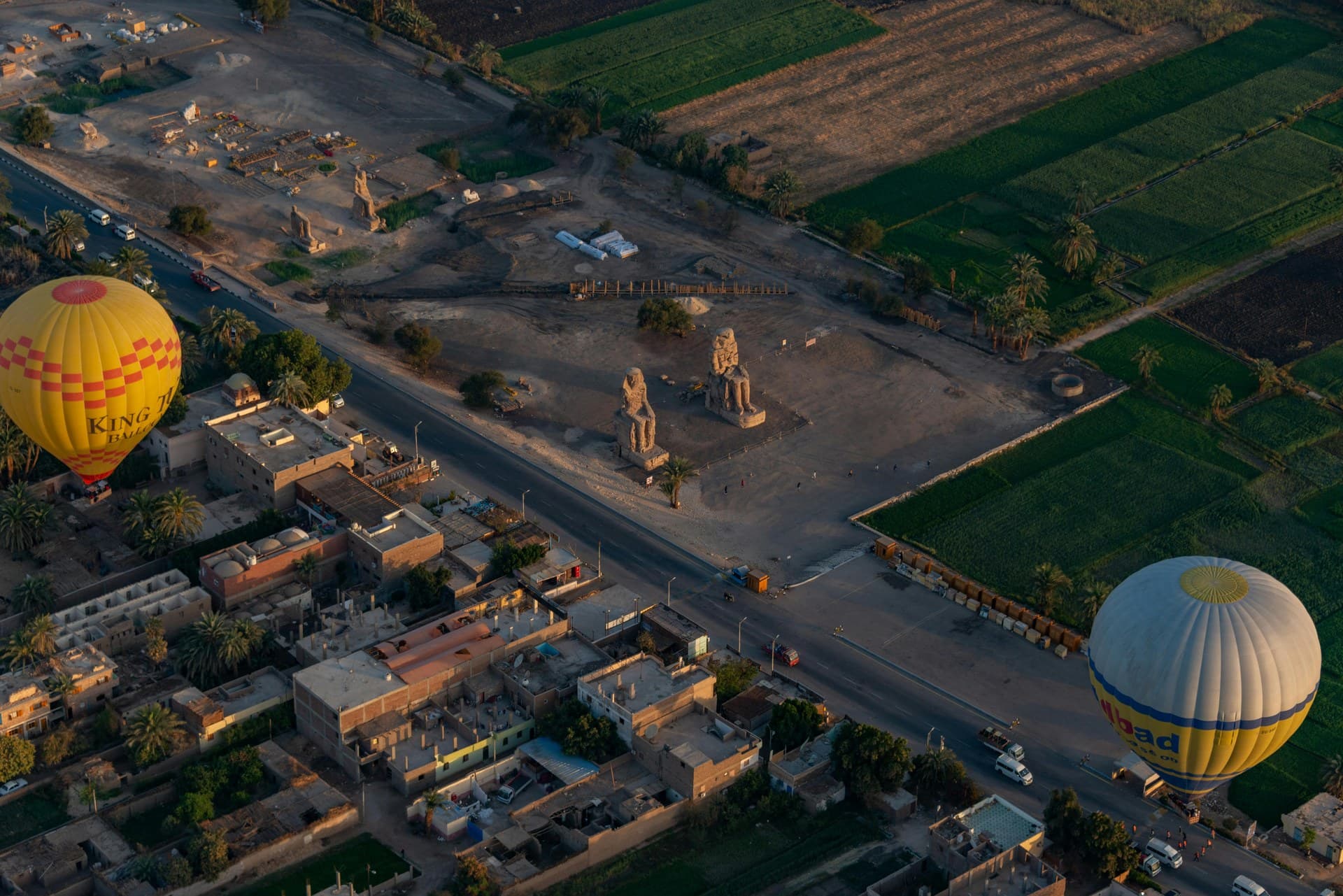
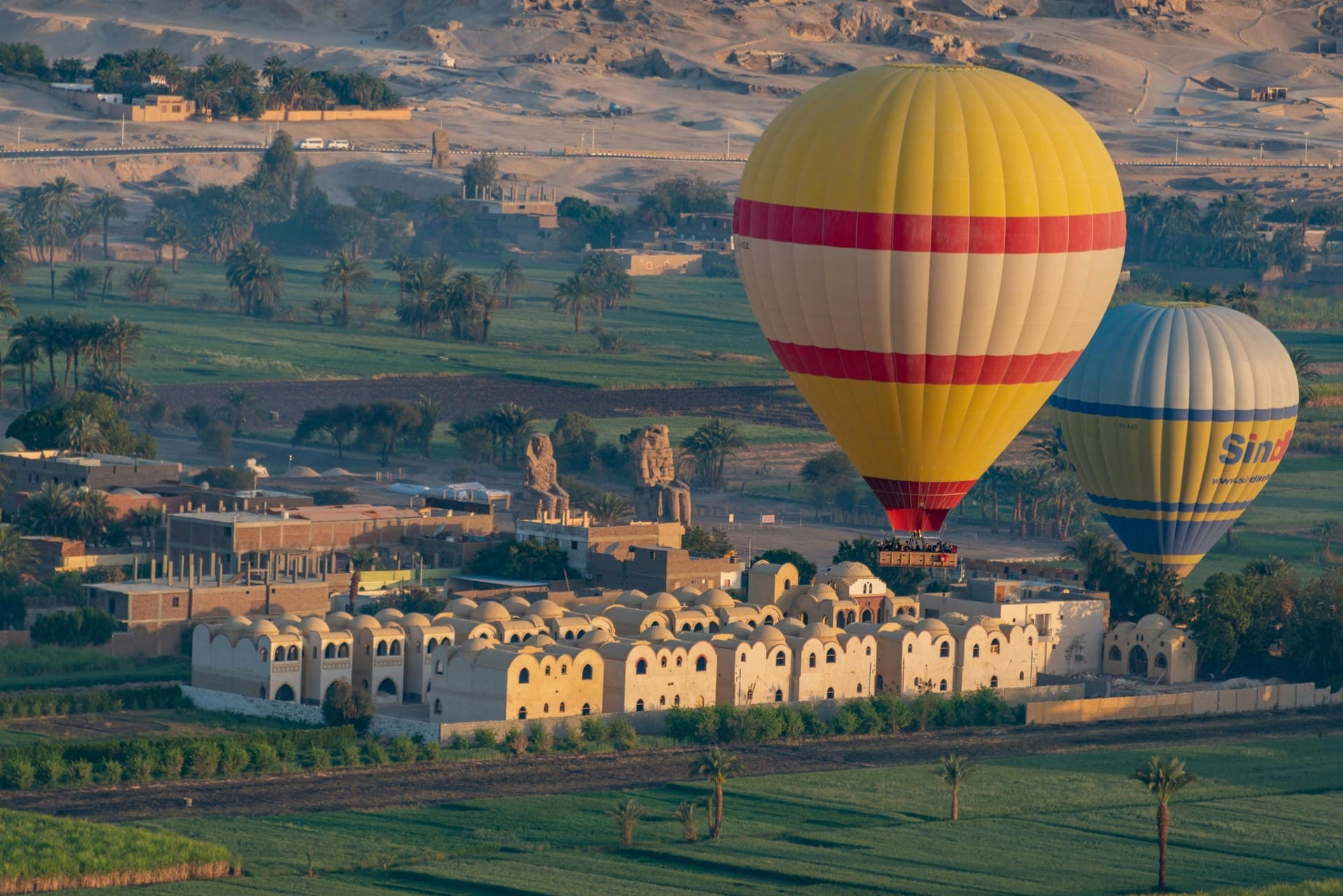
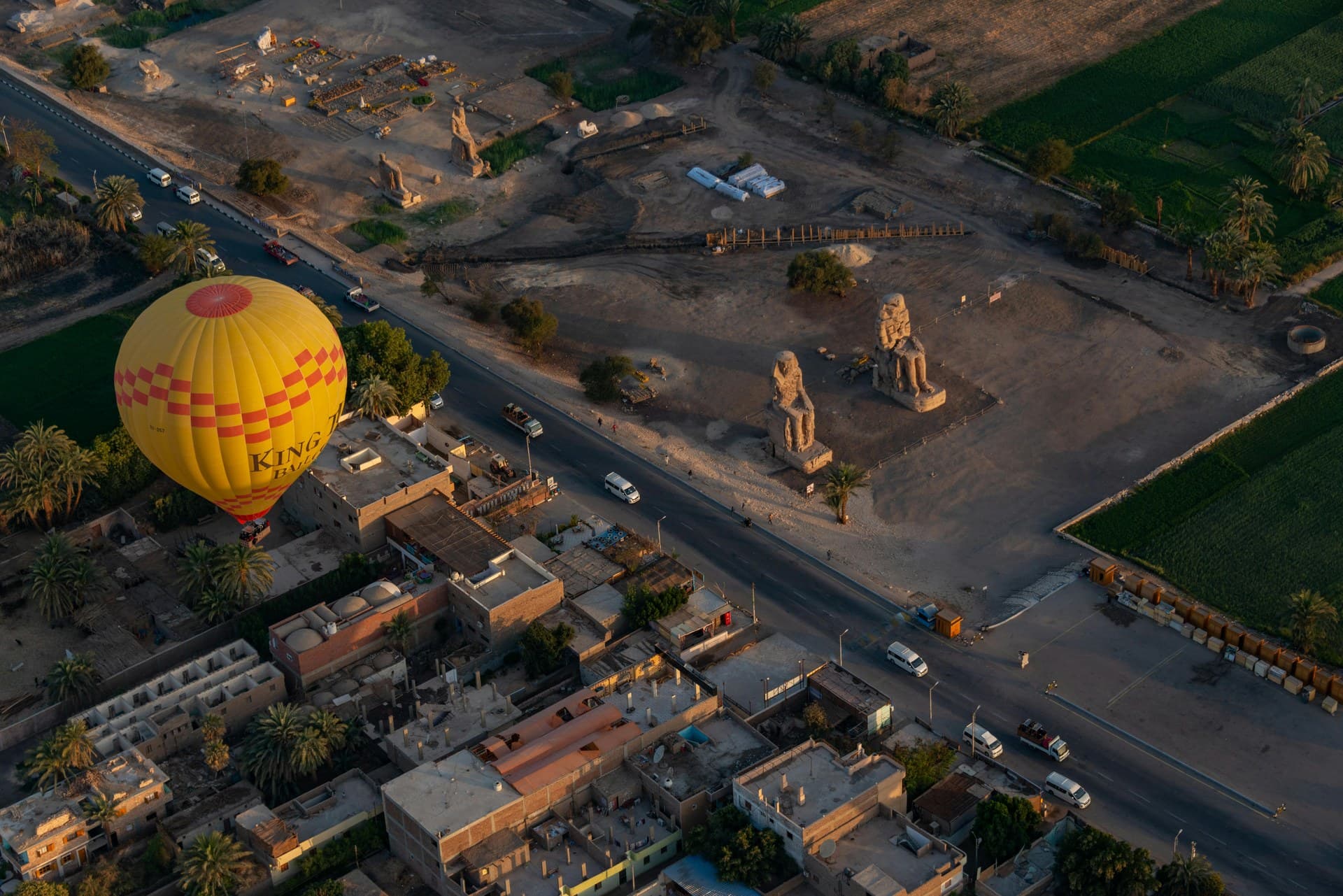
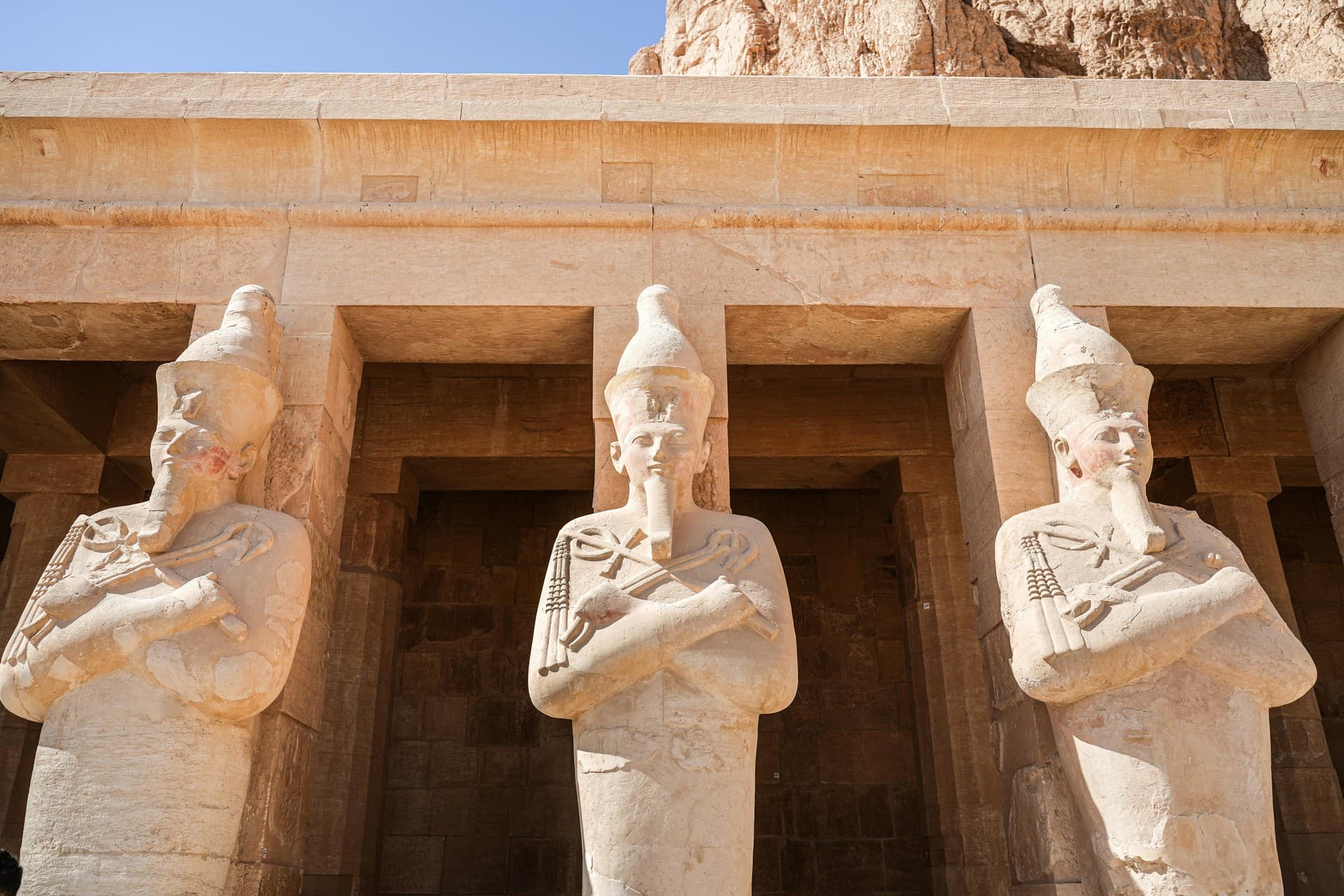
Both statues depict Amenhotep III, seated, with smaller figures of his mother and his wife Tiye beside his legs. They were cut from quartzite and hauled to the site.
Each figure was carved from a single enormous block, quarried near modern Cairo and moved some six hundred kilometres upstream — a feat of logistics that impressed the ancients themselves, and one still argued about, which for objects in the region of seven hundred tonnes apiece is fair.
The song had celebrity witnesses. The emperor Hadrian came to hear it with his court in 130 AD, and the court poet Julia Balbilla carved commemorative verses into the stone that can still be read today.
The temple behind them covered an enormous area and was decorated with hundreds of statues. Its stone was reused extensively by later pharaohs, and the flood plain did the rest.
The name Memnon is Greek, not Egyptian — a misidentification that stuck for two thousand years.