Cairo is roughly 40 kilometres across and moves slowly. The single biggest mistake in a short Cairo itinerary is crossing the city more than once a day — a museum in the morning and the pyramids in the afternoon can lose you two hours in the car.
So group by side. The pyramids and the new museum are west, in Giza. The Citadel, the bazaar and Coptic Cairo are east and south. Do not mix them.
Day one — Giza
Start at the Giza plateau at opening. This is not a preference, it is the difference between a good morning and a hot, crowded one. Give it two to three hours: the three pyramids, the panorama point on the south-west ridge, and the Sphinx with Khafre's valley temple beside it.
Decide about going inside a pyramid before you queue — it is a separate ticket, the passages are steep and low, and the chamber at the end is bare. It is a physical experience, not a visual one.
Then the Grand Egyptian Museum, which is two kilometres away. Allow three hours minimum; most people plan two and need four. The Tutankhamun galleries and the grand staircase are the priorities if you are short.
That is a full day and it is all within a few kilometres. Our Cairo day tours run this pairing as a single day.
Day two — Islamic and Coptic Cairo
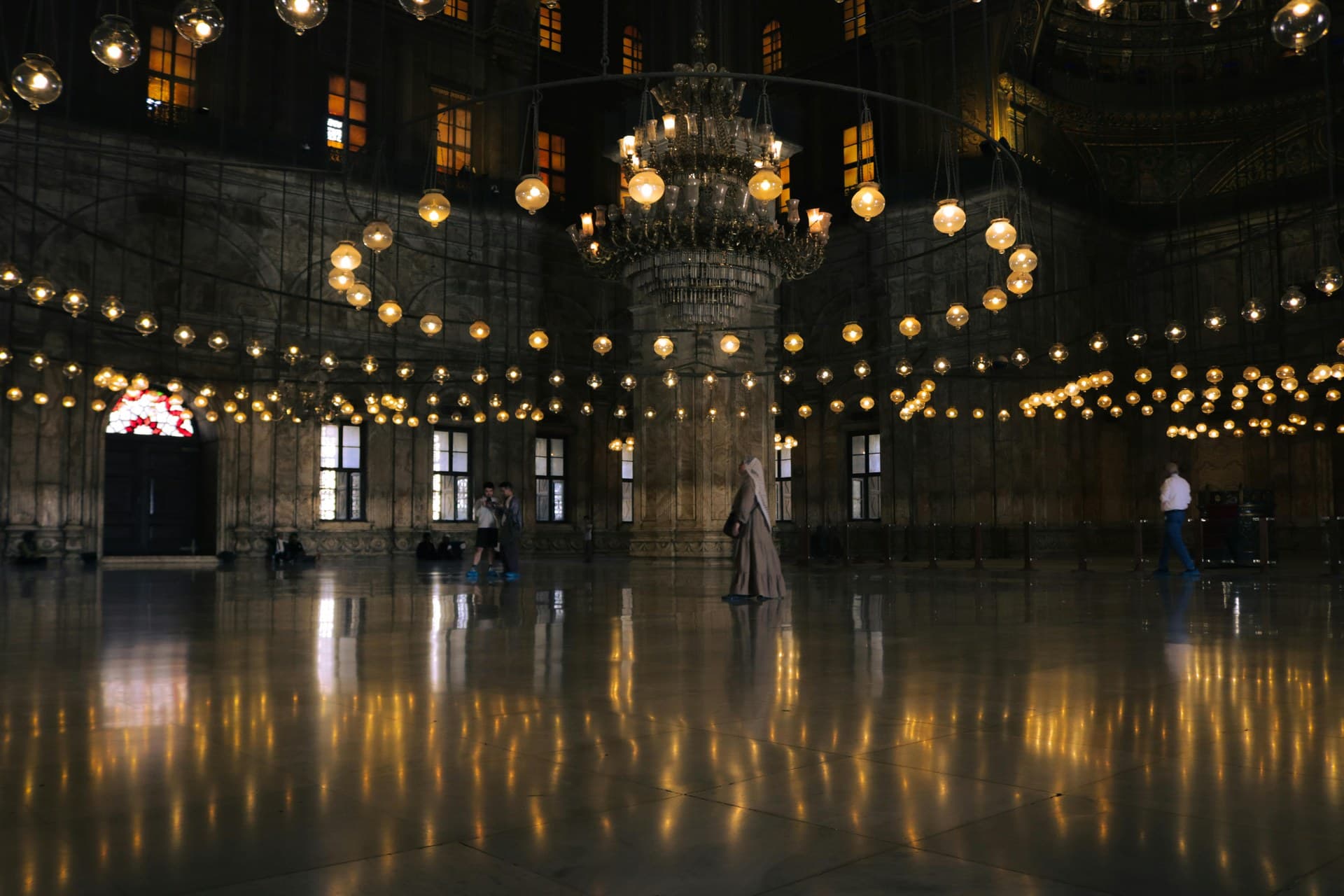
Start at the Citadel, ideally in the morning when the air is clearest — the terrace view across the city, with the pyramids on the horizon on a good day, is the best vantage point in Cairo. The Mosque of Muhammad Ali is inside the same ticket.
Come down to the Sultan Hassan and al-Rifai mosques directly below the Citadel walls, which are among the finest buildings in the city and which most two-day itineraries skip.
Then Coptic Cairo — compact, shaded and entirely walkable, with the Hanging Church, Ben Ezra Synagogue and the Coptic Museum within a few minutes of each other.
Finish at Khan el-Khalili in the evening, when the lanterns are lit. Walk al-Muizz street while you are there — it is effectively an open-air museum of medieval Islamic architecture and it is free.
What this plan leaves out
The Egyptian Museum in Tahrir, which is still a great collection even after Tutankhamun moved to Giza. If you care about Old Kingdom sculpture or the Amarna period, swap it in for part of day two.
Cairo Tower, which is a good hour at sunset if you have an evening free and the air is clear.And Saqqara, which is the real loss.
If you get a third day, spend it at Saqqara
Saqqara is half an hour south of Giza and gets a fraction of the visitors. It holds the Step Pyramid of Djoser — the oldest large stone building anywhere, and the direct ancestor of everything at Giza — plus painted Old Kingdom tombs whose wall scenes survive in a way nothing at Giza does.
Pair it with Dahshur, twenty minutes further, where the Bent Pyramid shows an engineering correction frozen mid-build and the Red Pyramid is the best one in Egypt to go inside — short queue, better interior than Khufu's.
A day of Saqqara and Dahshur is a better third day than anything else Cairo offers.
Practical notes on moving around
A few things that make the difference:
- Traffic peaks in the late afternoon. Plan your longest transfer for the morning.
- Coptic Cairo has a metro station at its gate (Mar Girgis), which makes it one of the few sites you can reach without a car.
- Friday mornings are quiet on the roads; Friday afternoons around the mosques are not.
- Carry small notes — for tips, toilets, and the shoe attendants at mosques.
- Agree camel, horse and photograph prices on the plateau before anything happens. It is the single most common complaint about Giza and it is entirely avoidable.