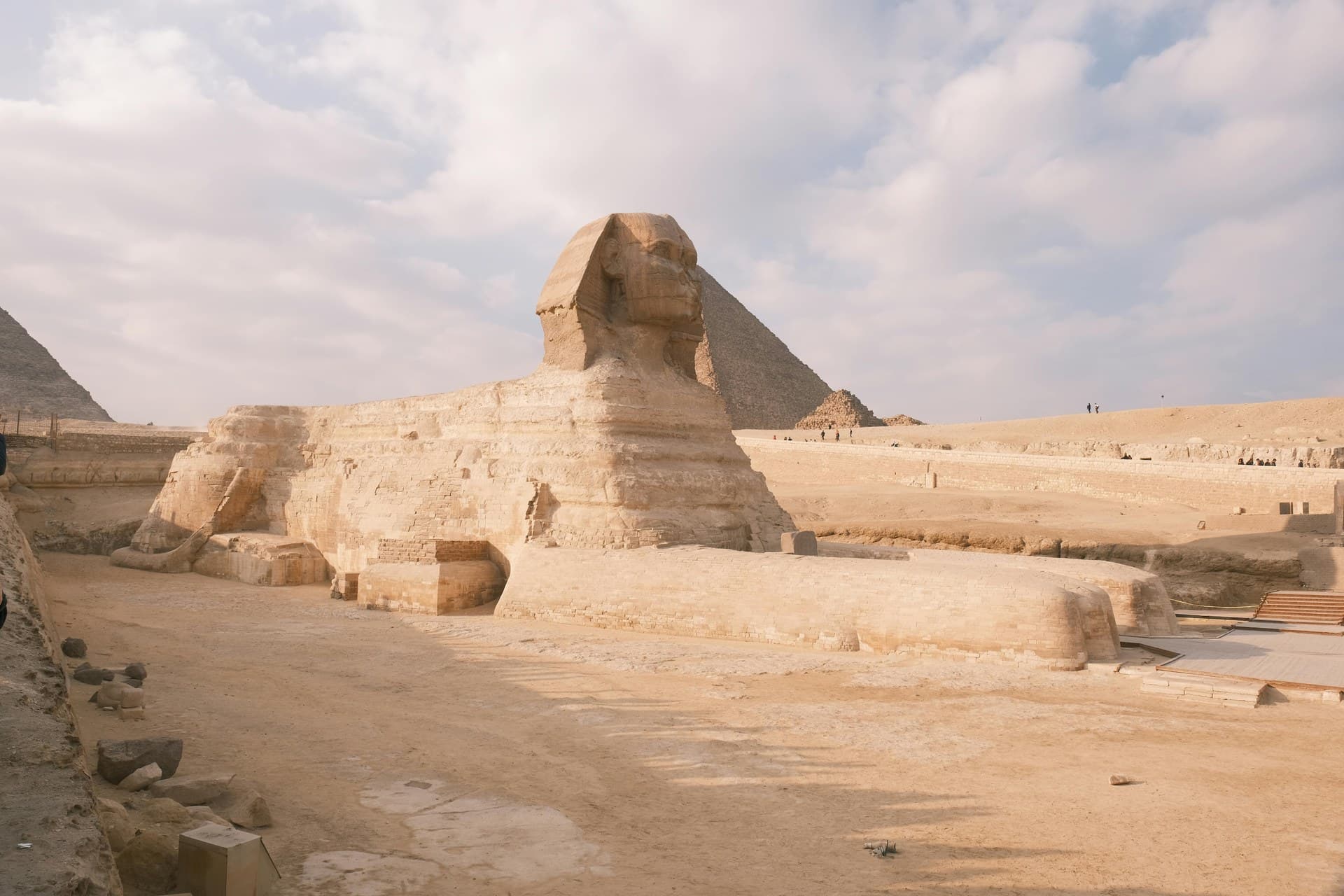
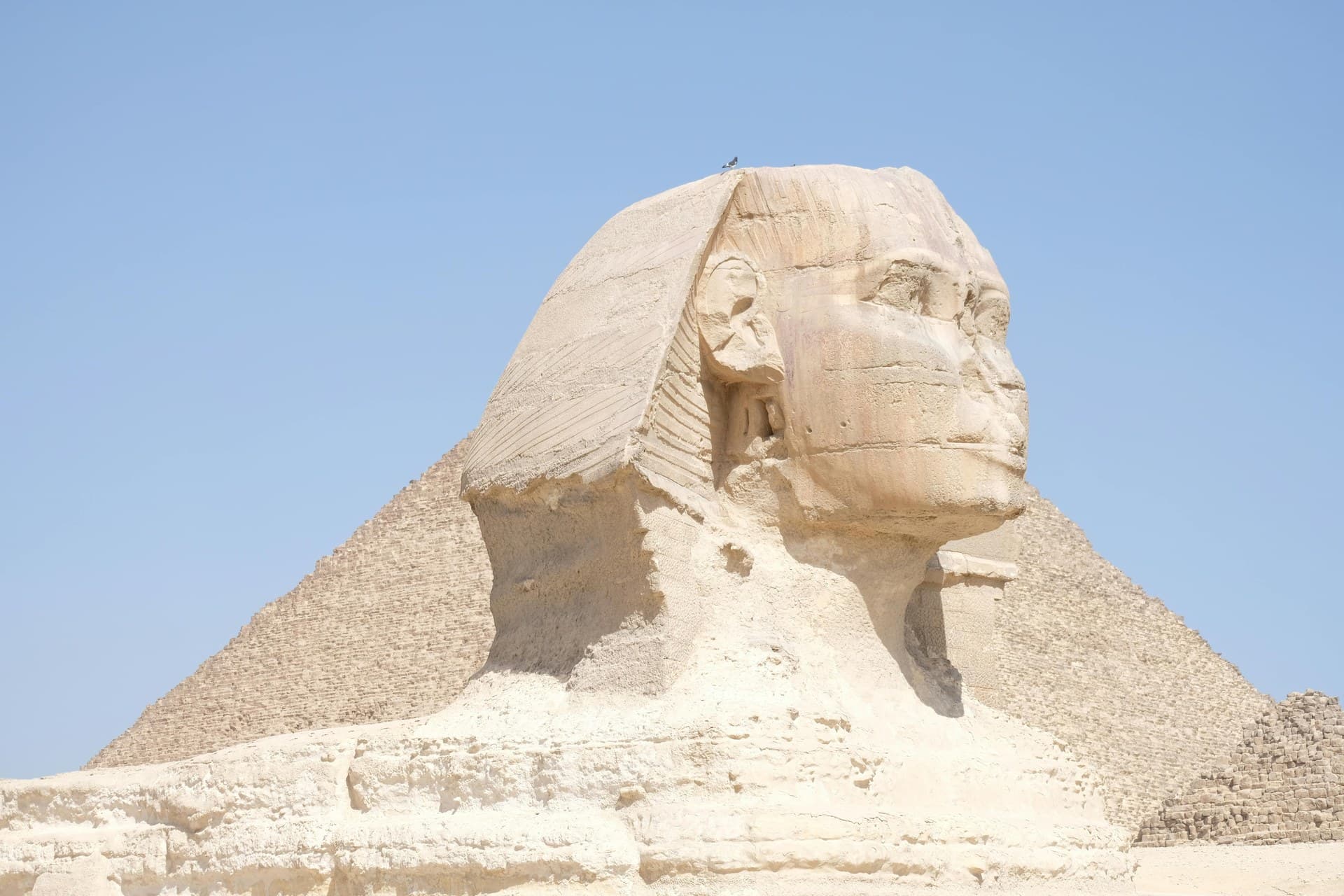
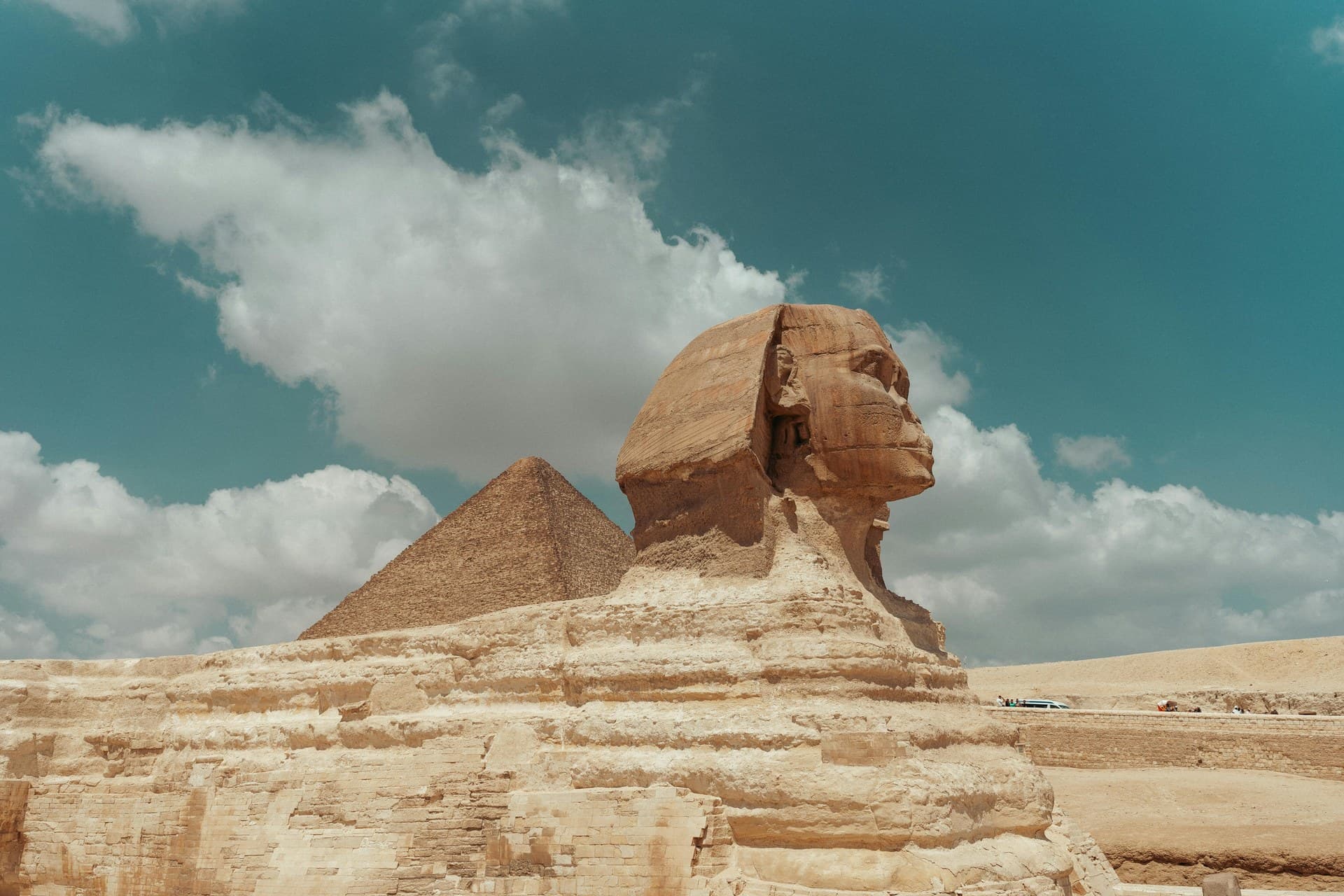
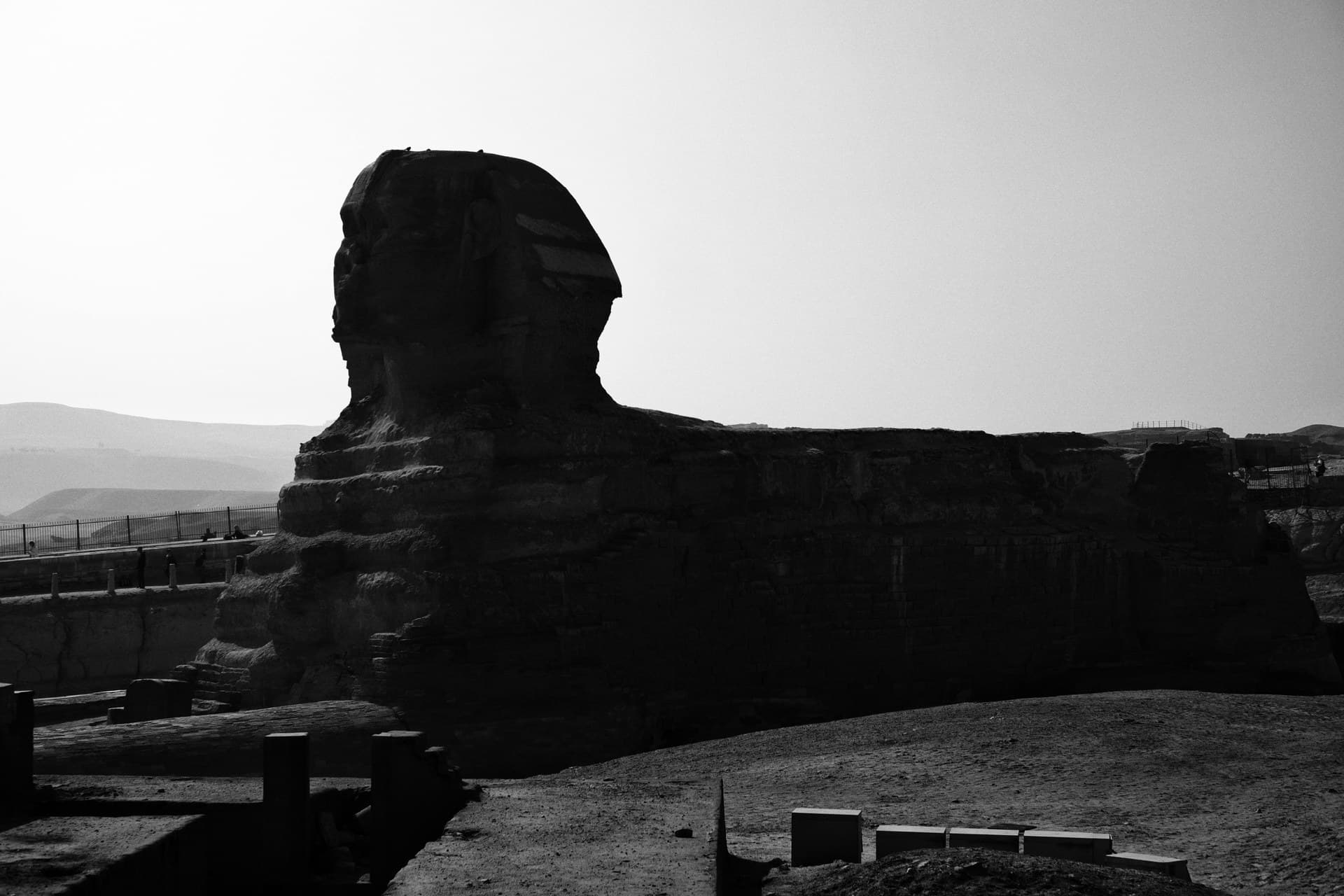
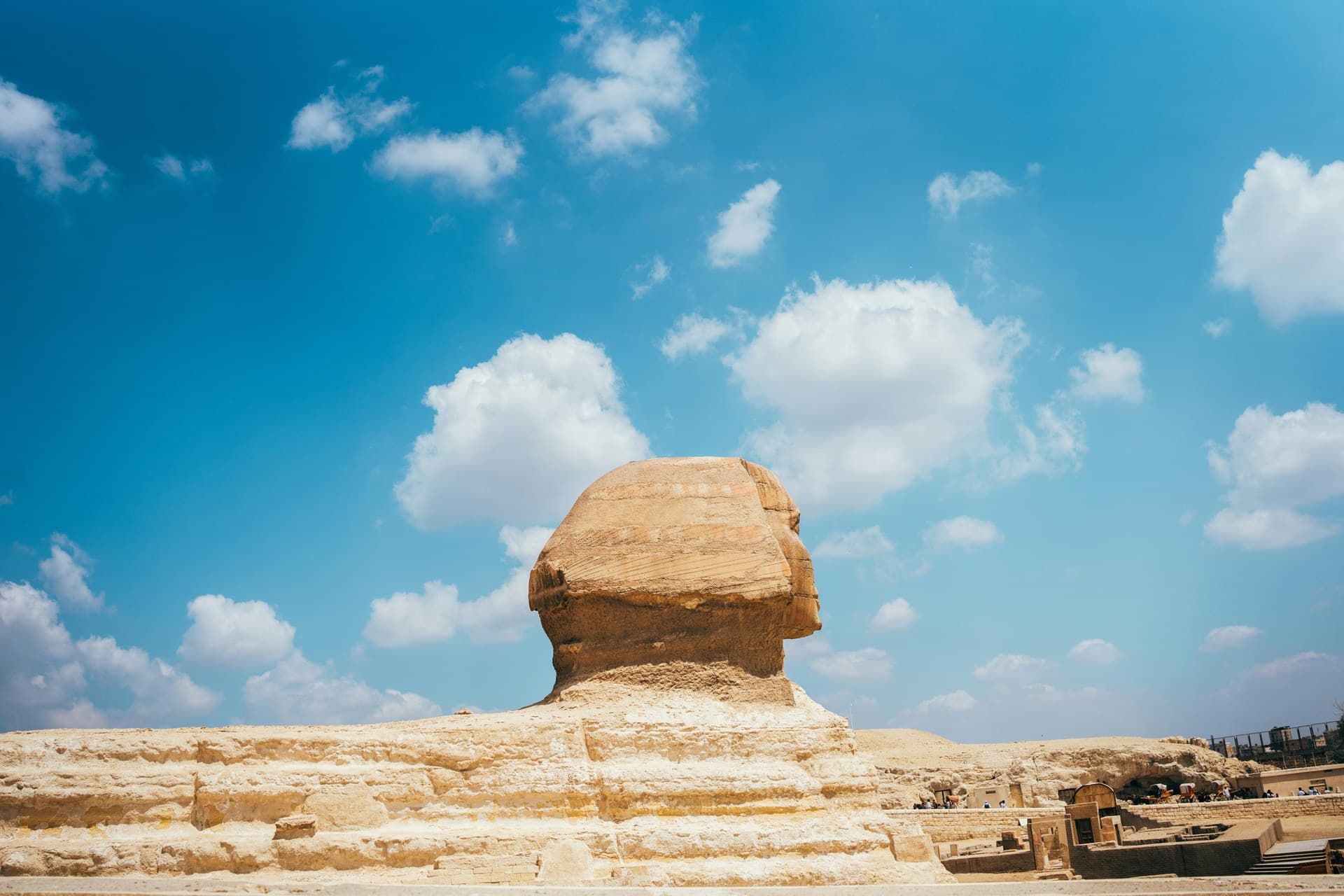
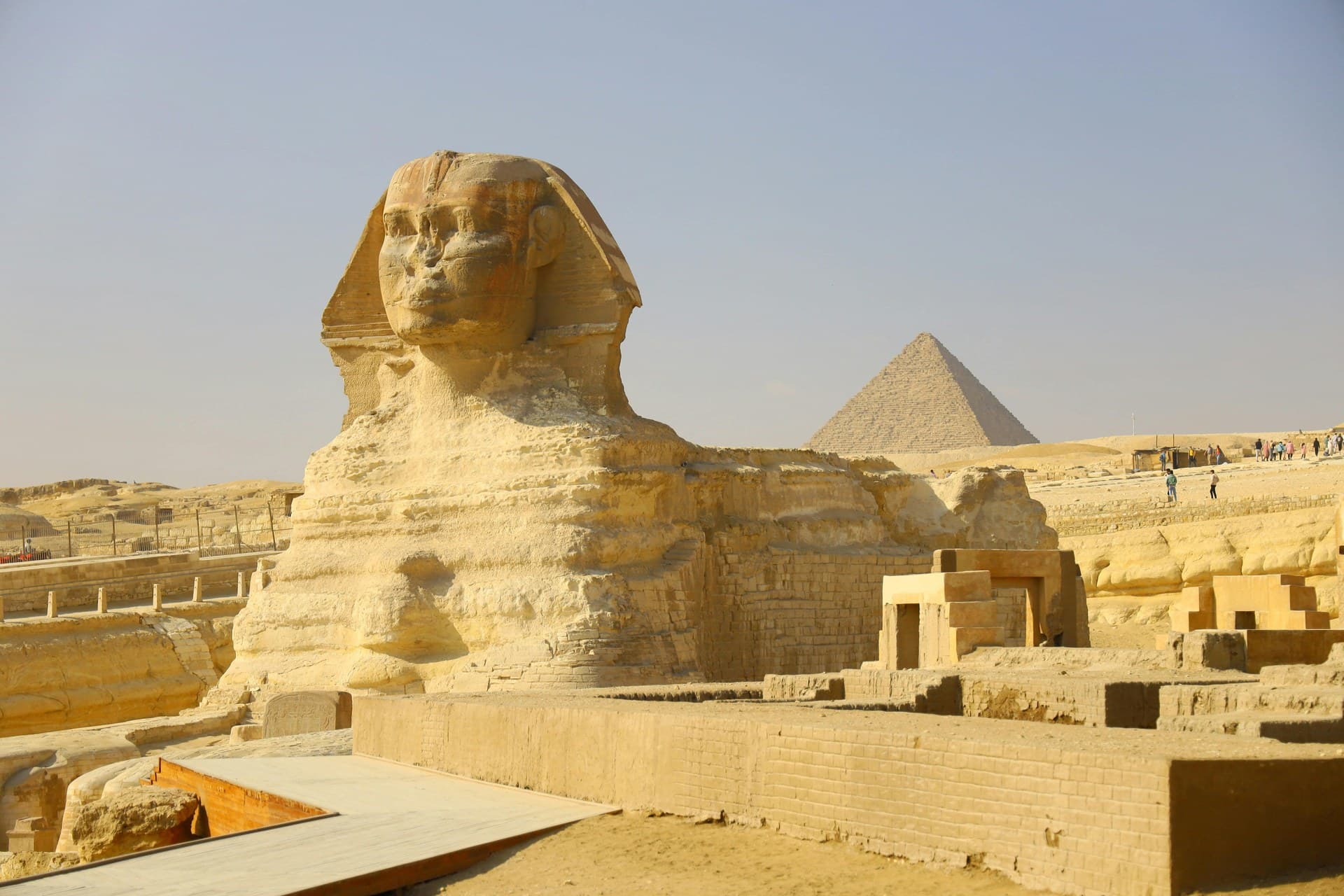
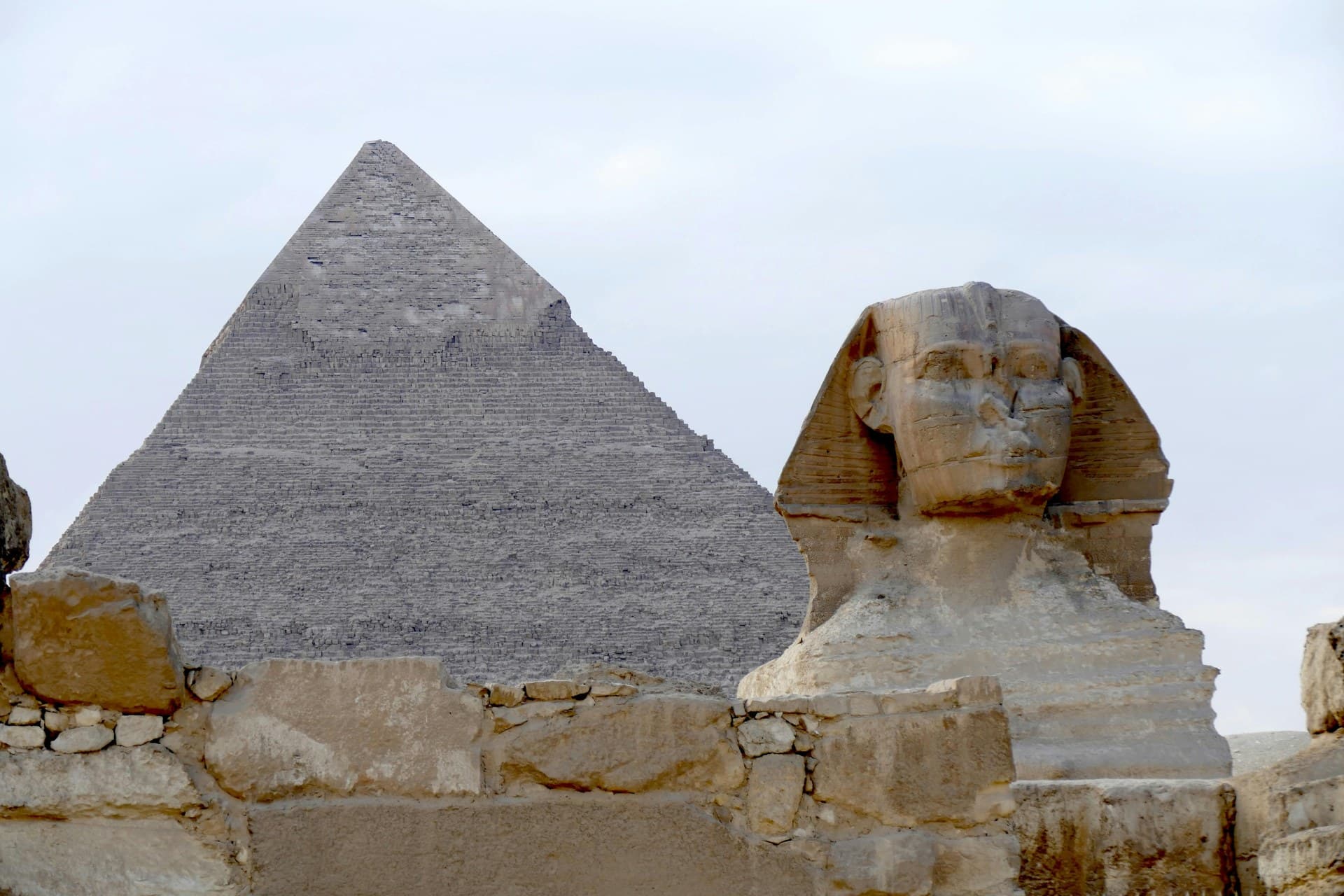
The Sphinx is generally attributed to Khafre, builder of the second pyramid, which places it in the middle of the 26th century BC. It sits at the end of his causeway, alongside his valley temple, and the face is usually read as his. Not every Egyptologist agrees, and the attribution rests on context rather than an inscription.
For most of its existence it has been buried. Sand fills the hollow quickly, and the monument has been dug out at least three times that we know of — by Thutmose IV, again in the Roman period, and comprehensively in the 1920s and 30s. Photographs from the 19th century show it buried to the shoulders.
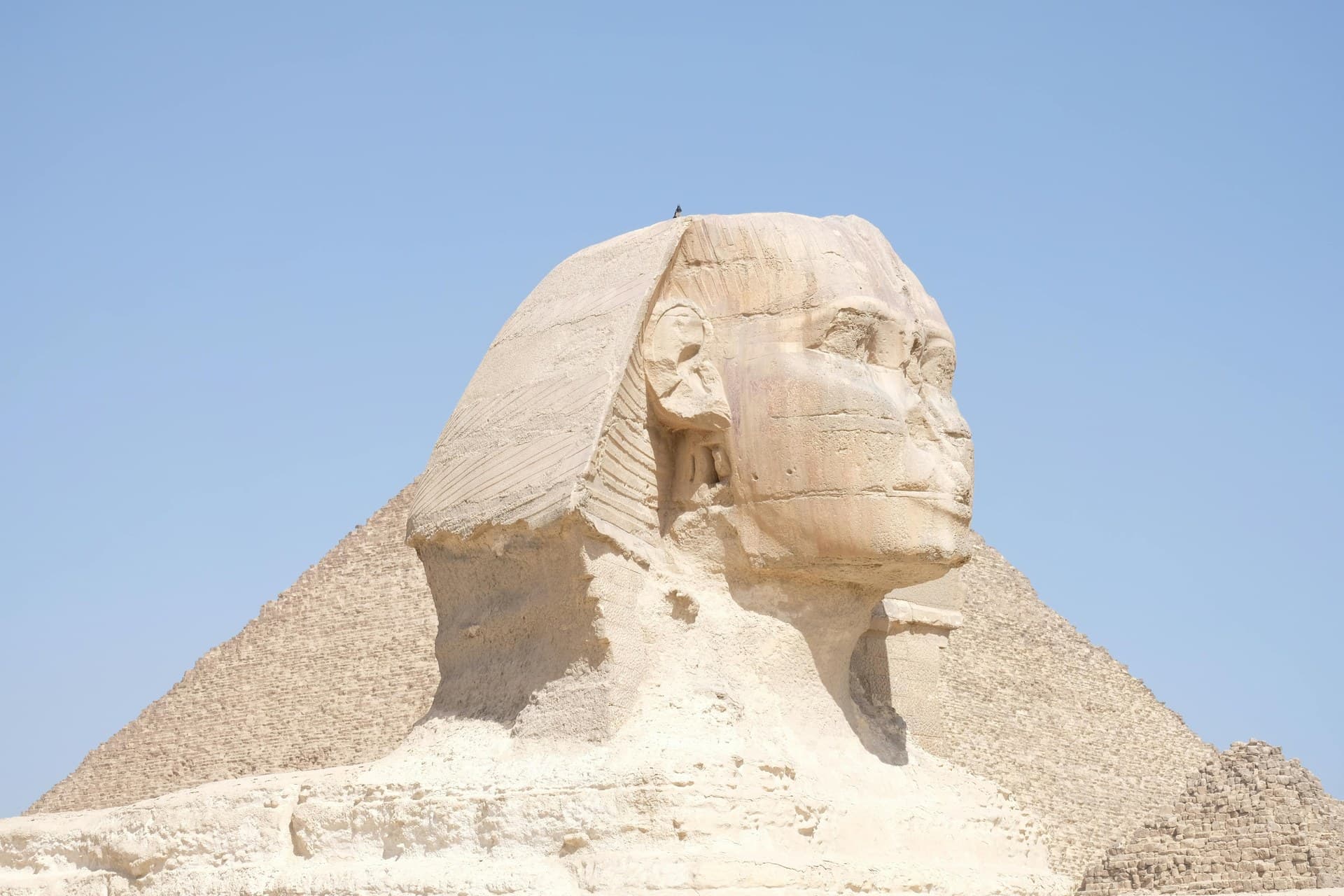
The nose is missing, and the beard, part of which is now in the British Museum. The popular story that Napoleon's soldiers shot it off is not supported by anything: drawings made before the French expedition already show the nose gone.