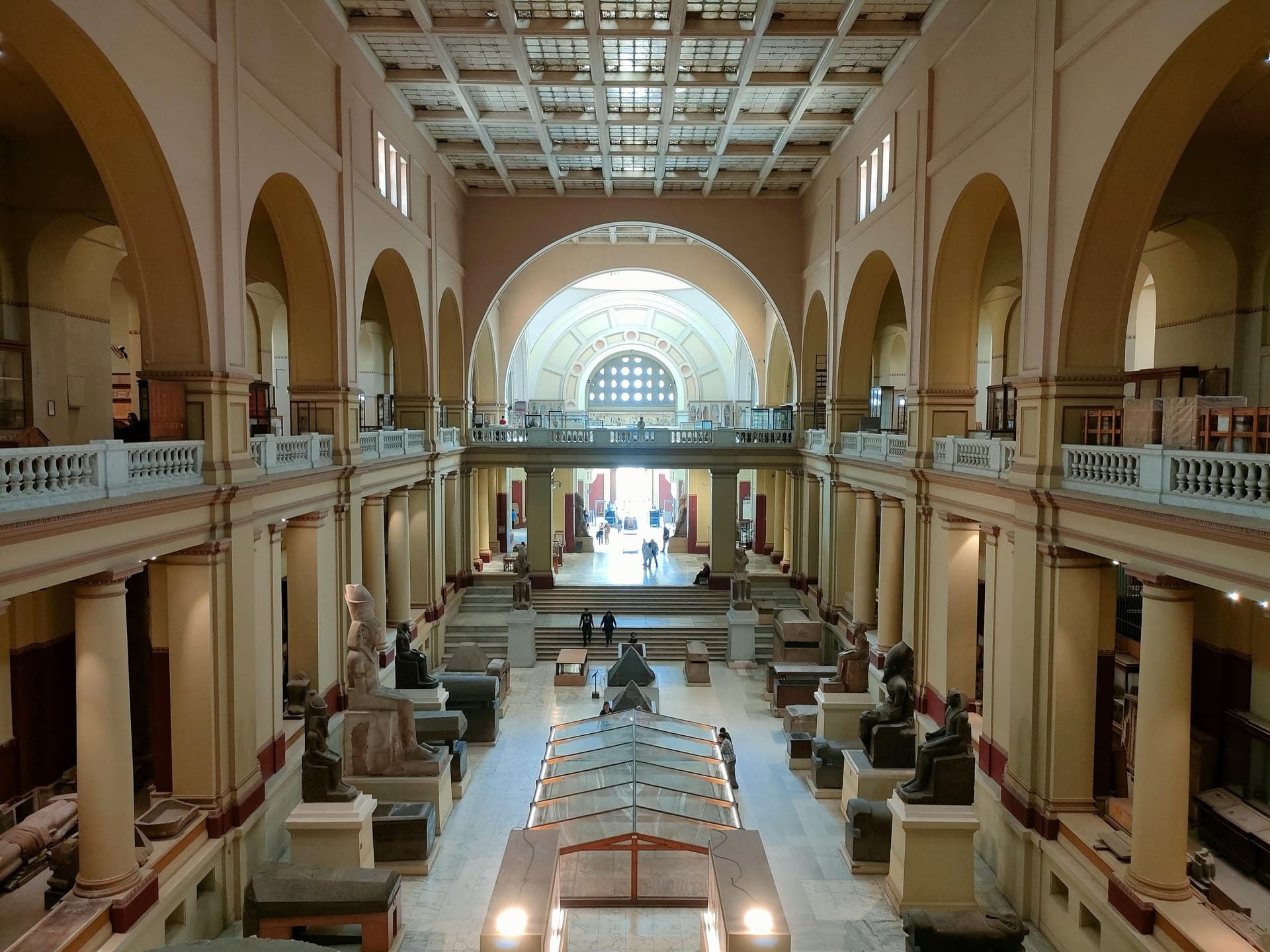
The project was conceived to solve a problem the Egyptian Museum in Tahrir could not: a building from 1902 holding a collection that had grown far past it, with most of it in storage and much of it displayed in conditions no modern museum would accept.
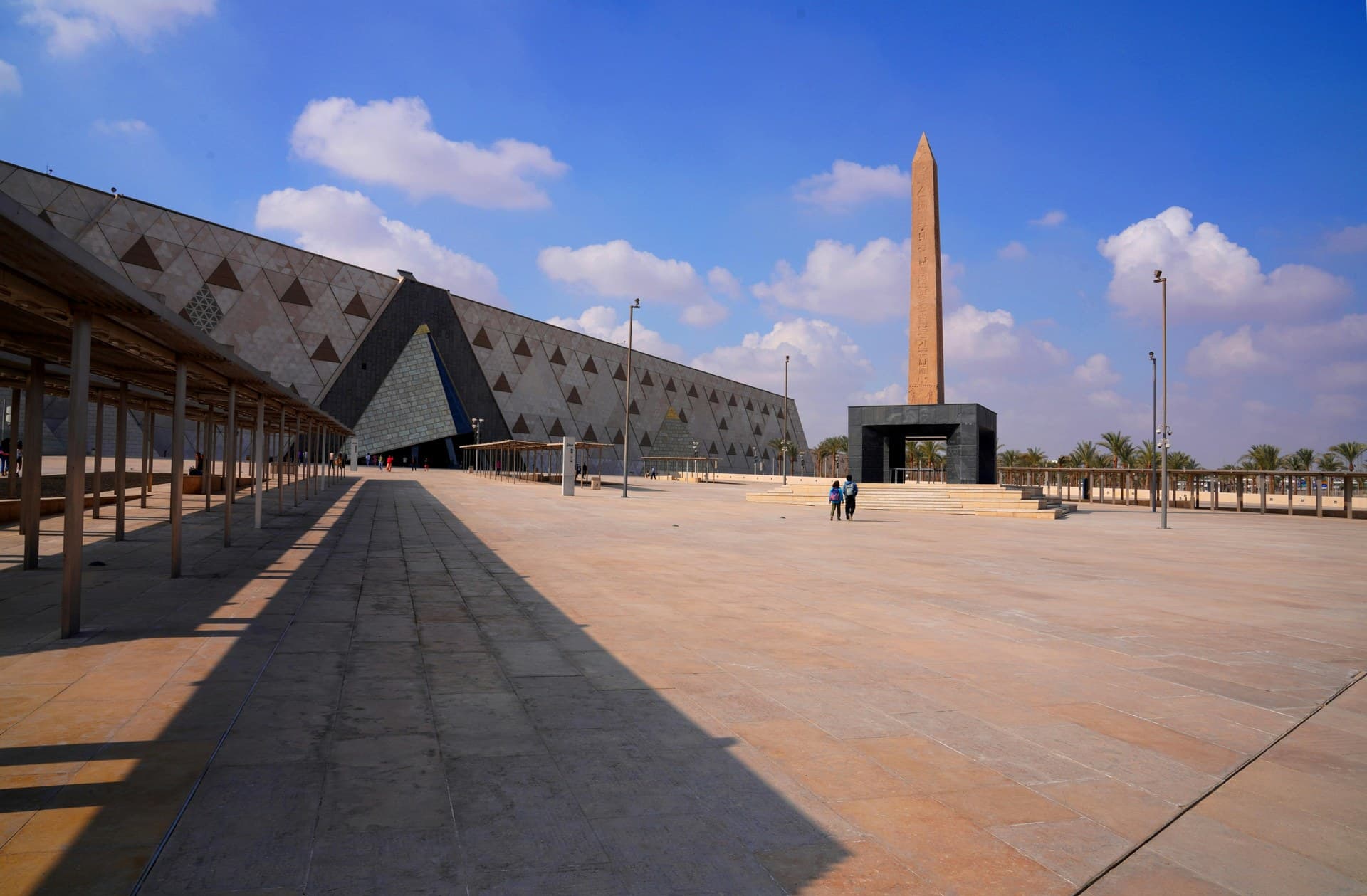
The design came from an open international competition in 2003, won by the Dublin practice heneghan peng architects. Japanese government loans covered much of the build, and the on-site conservation centre treated the Tutankhamun objects Carter cleared between 1922 and 1932 years before any gallery opened.
Construction ran for well over a decade, with the opening pushed back repeatedly. Objects were moved out to the new site in stages — the most publicised being the transfer of Khufu's cedar solar boat, moved whole and overnight across Giza in a purpose-built vehicle from the museum that had been built over its pit.
The colossus of Ramesses II in the atrium had an even longer journey. Excavated at Mit Rahina, the site of ancient Memphis, in 1820, it stood outside Cairo's main railway station from 1955, was moved out to Giza in 2006 and lifted into place indoors in 2018. Twelve galleries took trial visitors from October 2024, ahead of the full opening in November 2025.
The old museum in Tahrir has not closed. It keeps a substantial collection and remains worth visiting; the two are complementary rather than replacements for each other.