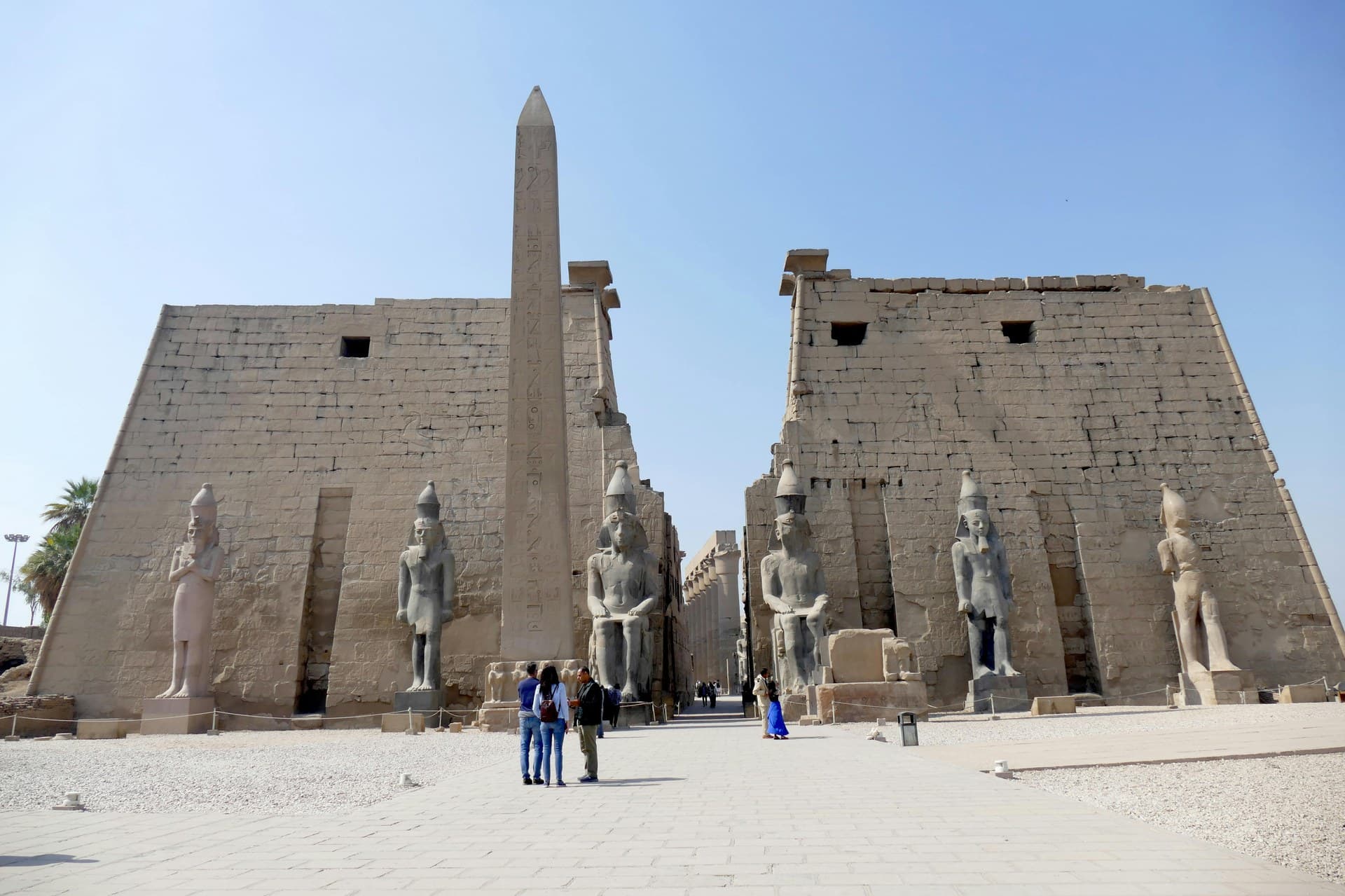
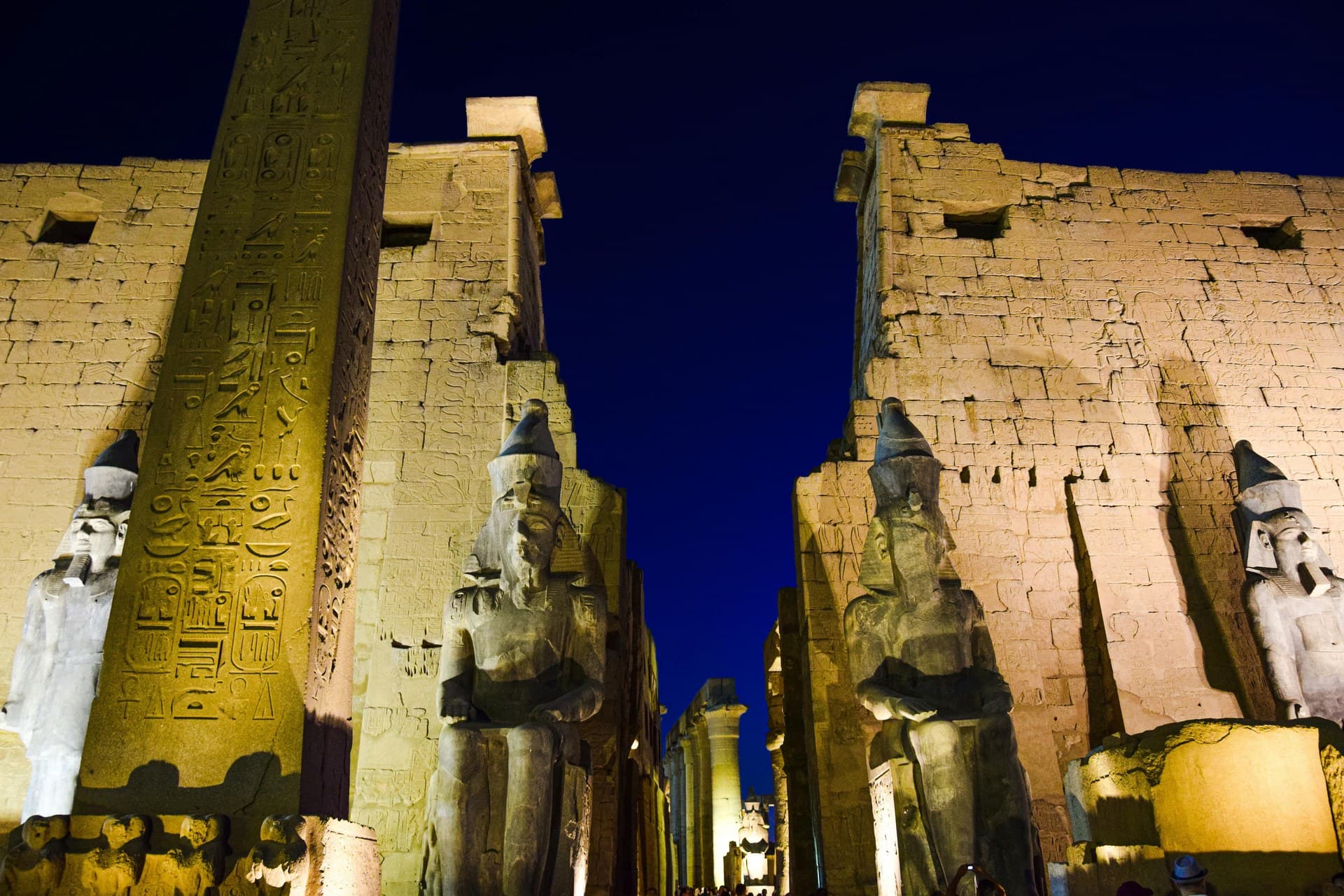
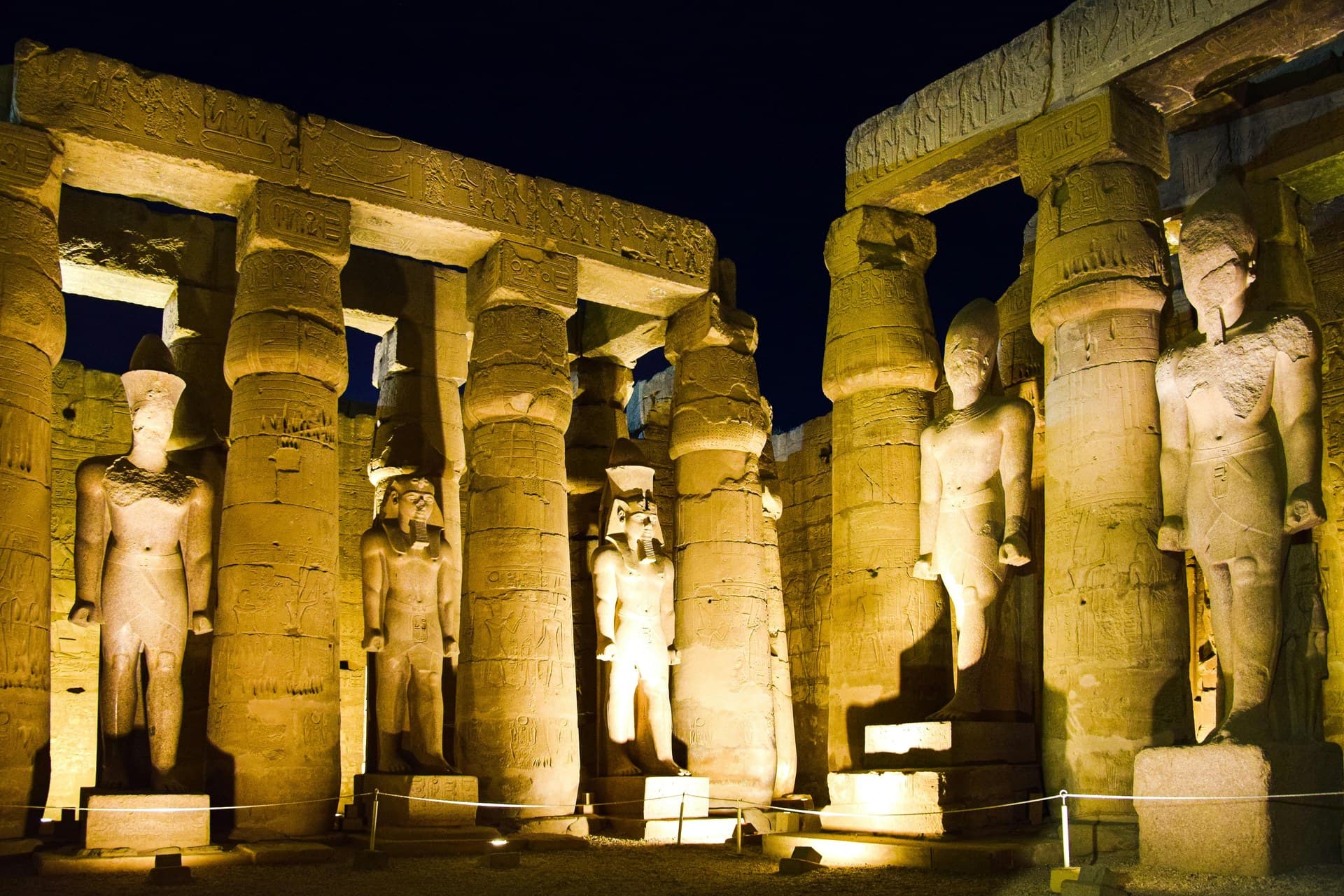
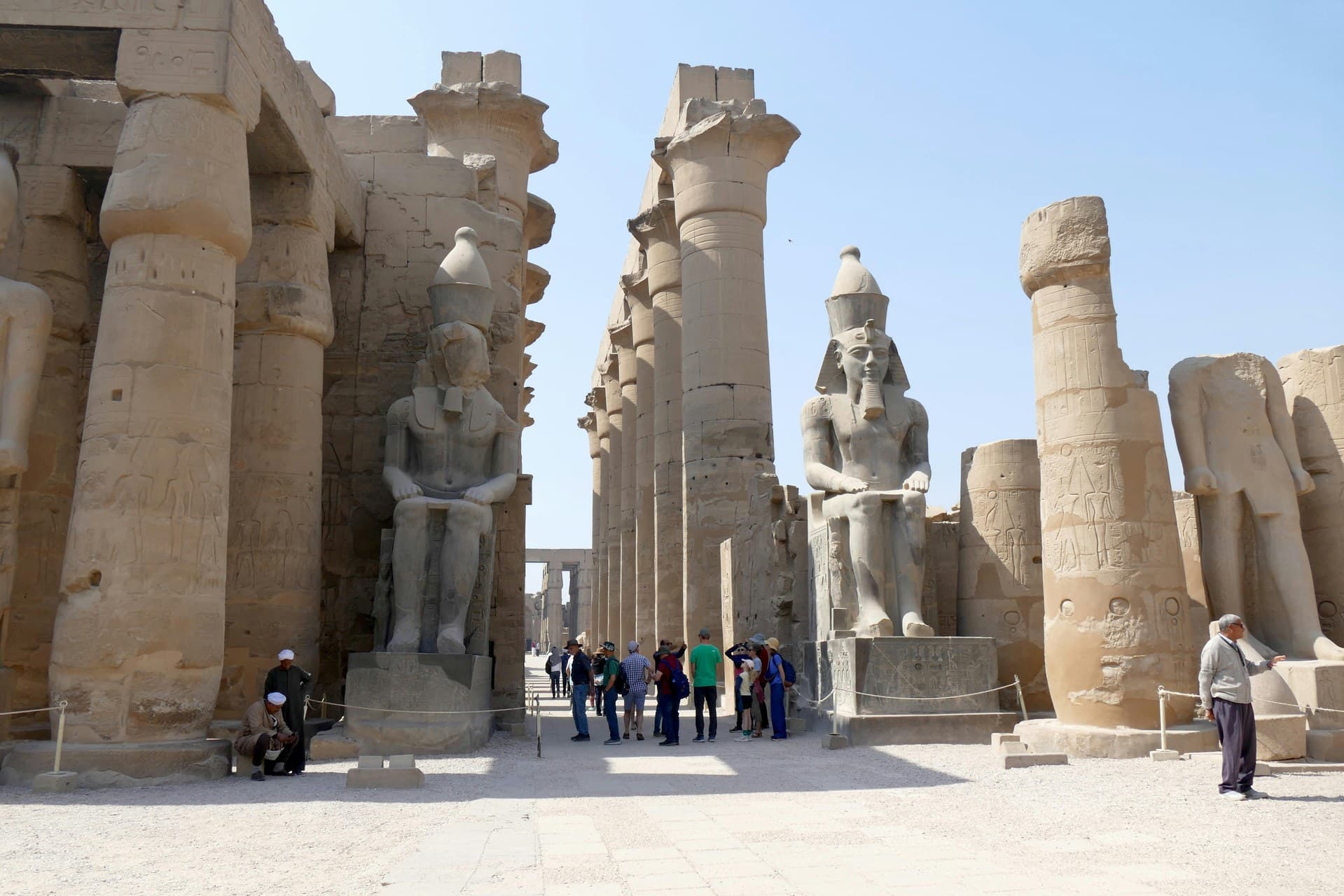
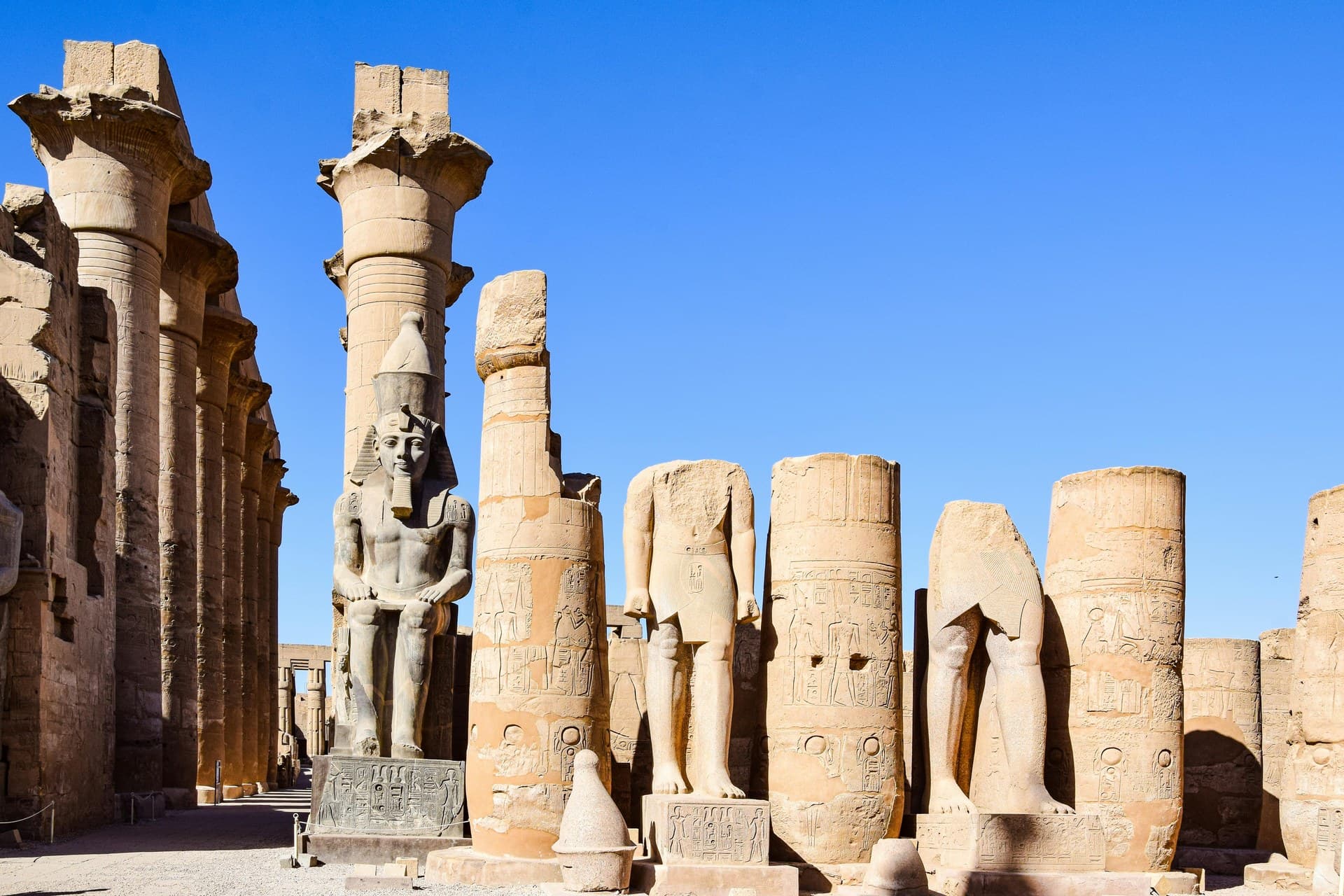
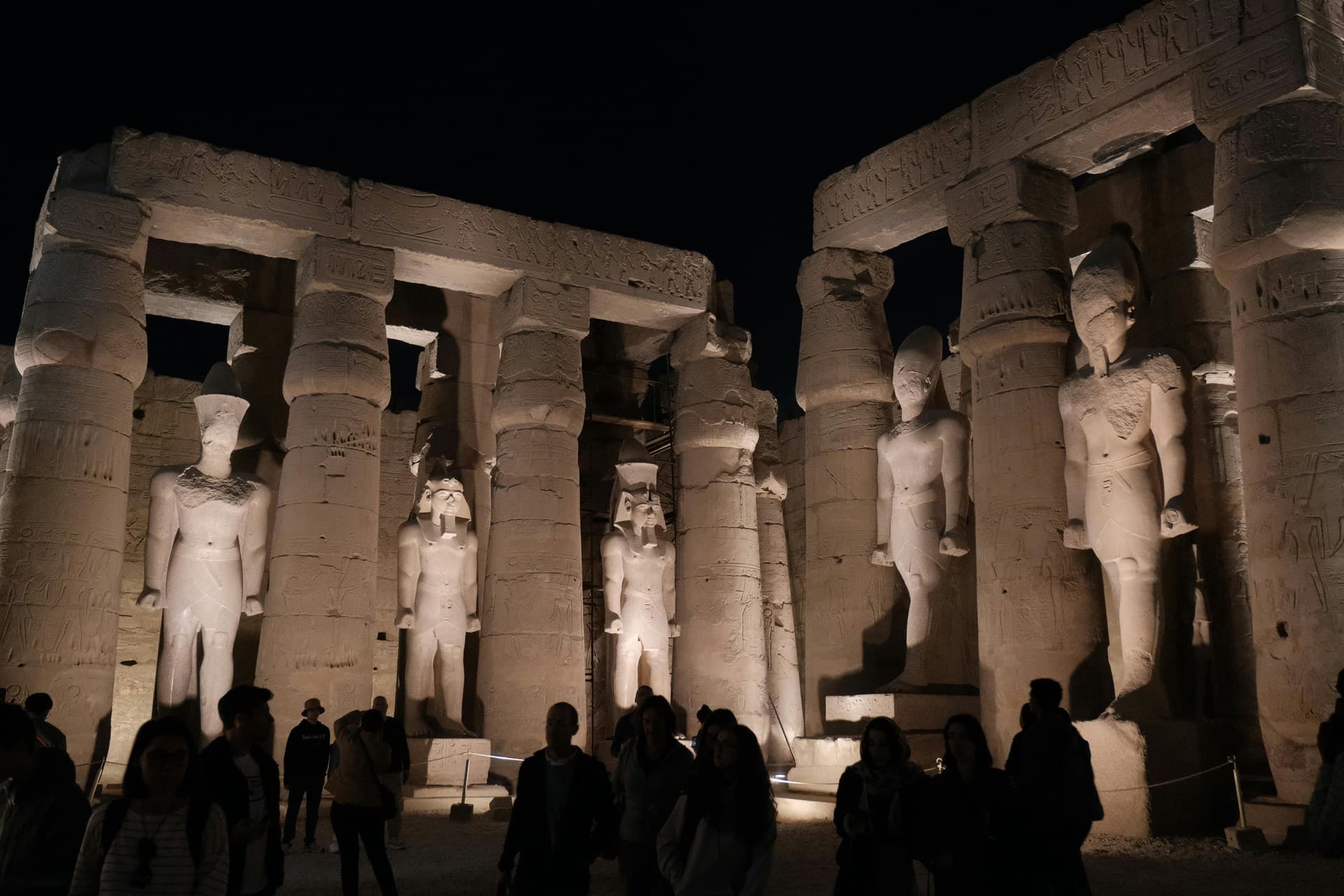
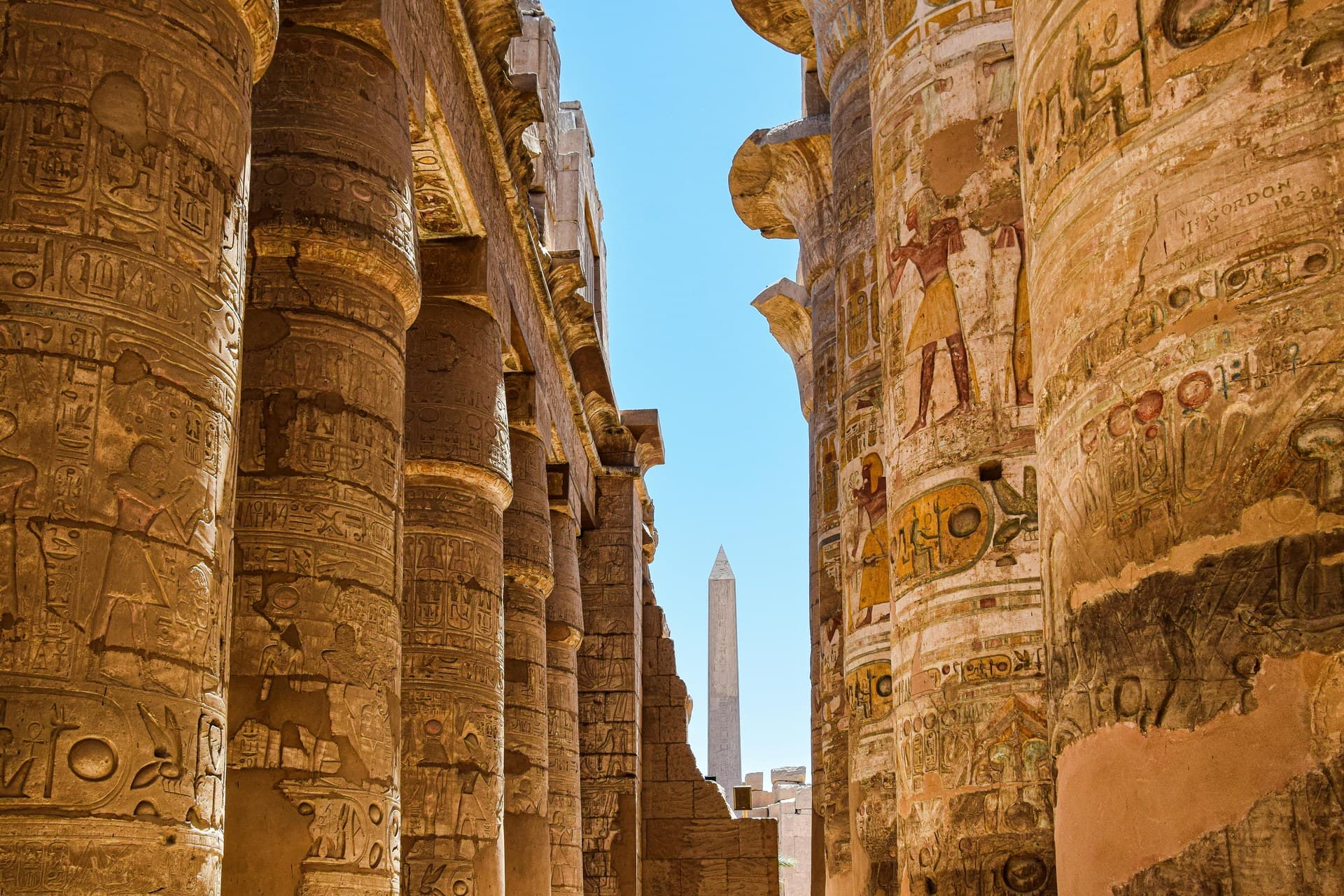
The temple was built mainly by Amenhotep III in the 14th century BC and extended by Ramesses II, who added the great forecourt, the pylon and the colossal seated statues of himself at the entrance.
Its resident god was Amun in a particular form — Amenemopet, Amun of Opet — but the building's real purpose was the Opet festival, when the images of the Theban gods were carried in procession from Karnak to Luxor to renew the king's divine kingship. The temple is, in effect, a destination for an annual parade.
One of the pair of obelisks that stood at the entrance is still in place. The other was given to France in the nineteenth century and stands in the Place de la Concorde in Paris. Above the eastern side of the forecourt sits the mosque of Abu Haggag, built when the temple was buried nearly to its capitals — which is why its door is now several metres above the excavated ground.
In January 1989 work in the sun court of Amenhotep III uncovered a pit of statues buried in antiquity. Twenty-six came out of it, barely weathered, including a near-perfect quartzite figure of the king. They are now shown together in the Luxor Museum.
Around AD 300 the temple stood inside a Roman legionary fortress, and the chamber beyond the hypostyle hall was replastered and painted for the imperial cult — Diocletian and his co-emperors over the pharaonic relief. The American Research Center in Egypt conserved it in the 2000s.