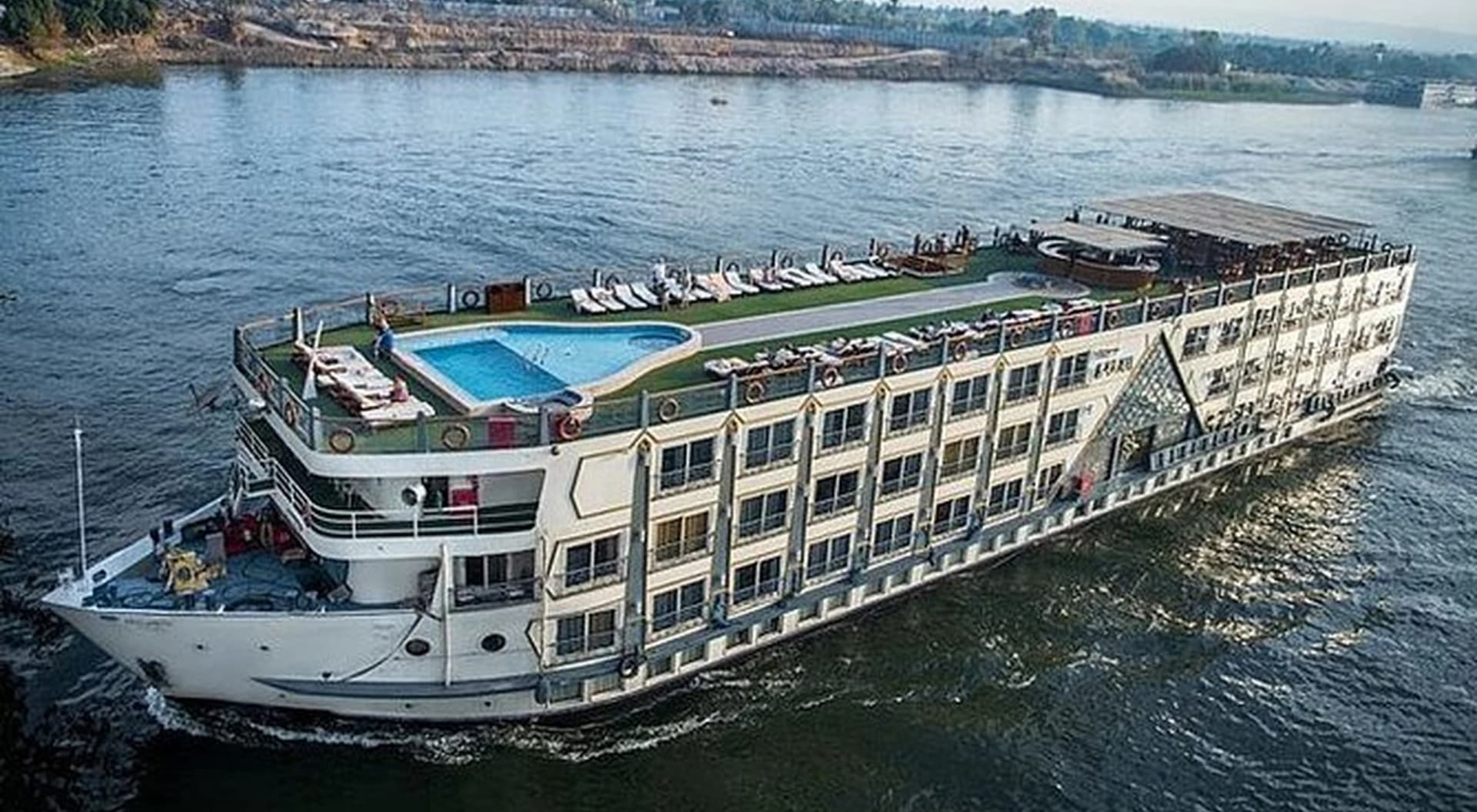
A standard Nile cruise between Aswan and Luxor runs to a fixed rhythm, and it is more or less the same rhythm on every five-star boat on the river. Understanding it before you book prevents the two most common disappointments.
The first is that people expect more time ashore. The second is that people expect the boat to be a hotel they can use however they like.
The shape of a day
- Early — a call, breakfast, and off the boat by seven or eight. Temples are visited before the heat, which is correct and non-negotiable.
- Two to three hours ashore — a guided visit to one or two sites, then back aboard.
- Late morning to afternoon — sailing. This is the largest block of the day.
- Lunch — a buffet at a fixed time, usually while under way.
- Afternoon — more sailing, the sun deck, a pool the size of a large bath, tea.
- Late afternoon — often a second, shorter stop. Kom Ombo is usually taken at dusk, walking up from the mooring.
- Evening — dinner at a fixed time, then whatever entertainment the boat runs. Moored overnight.
The sailing is the product
Add it up and you are ashore for perhaps three hours out of every twenty-four. The rest is on the boat, and most of that is on the deck.
This is not a flaw. The stretch of river between Aswan and Luxor is the reason to be here — a green strip a few fields deep on each side, then desert, with villages, buffalo, feluccas and children shouting from the bank. It does not photograph well and it is the thing people describe when they get home.
If sitting still for four hours sounds like waste rather than holiday, a land tour is a better trip for you.
What the boat controls
Meals are buffets at fixed times. You cannot generally eat at nine because you slept in.
Excursions are group excursions with the boat's guide, on the boat's schedule. Some boats sell private alternatives; ask before you book if that matters.
The order and timing of stops is set by the sailing schedule and the Esna lock queue, which can move things by hours. The lock is a genuine bottleneck and no operator controls it.
Which side of Luxor you get on the last morning is determined by the itinerary, not by you. Ask which one before booking — see east bank or west bank.
What actually differentiates boats
- Cabin count. Sixty cabins and a hundred and fifty cabins are different holidays regardless of stars — it decides queue length, deck space and how a buffet feels.
- Dahabiya or motor boat. A dahabiya has a handful of cabins, sails rather than motors for much of the day, and moors where the big boats cannot. Slower, quieter, and a different trip rather than a better one.
- Deck space per passenger, which nobody advertises and everybody notices.
- Whether the itinerary includes both banks of Luxor, which is the single biggest content difference between two boats at the same price.
Small things worth knowing
- Cabins on the lower deck are cheaper and closer to engine noise; upper deck cabins are quieter.
- The boat moors alongside other boats. You may walk through two other vessels' lobbies to reach land, and your window may look into someone else's cabin.
- Wifi is unreliable on the river and honest operators say so.
- Bring a book. That is not a complaint about the boat; it is the correct equipment for the afternoon.