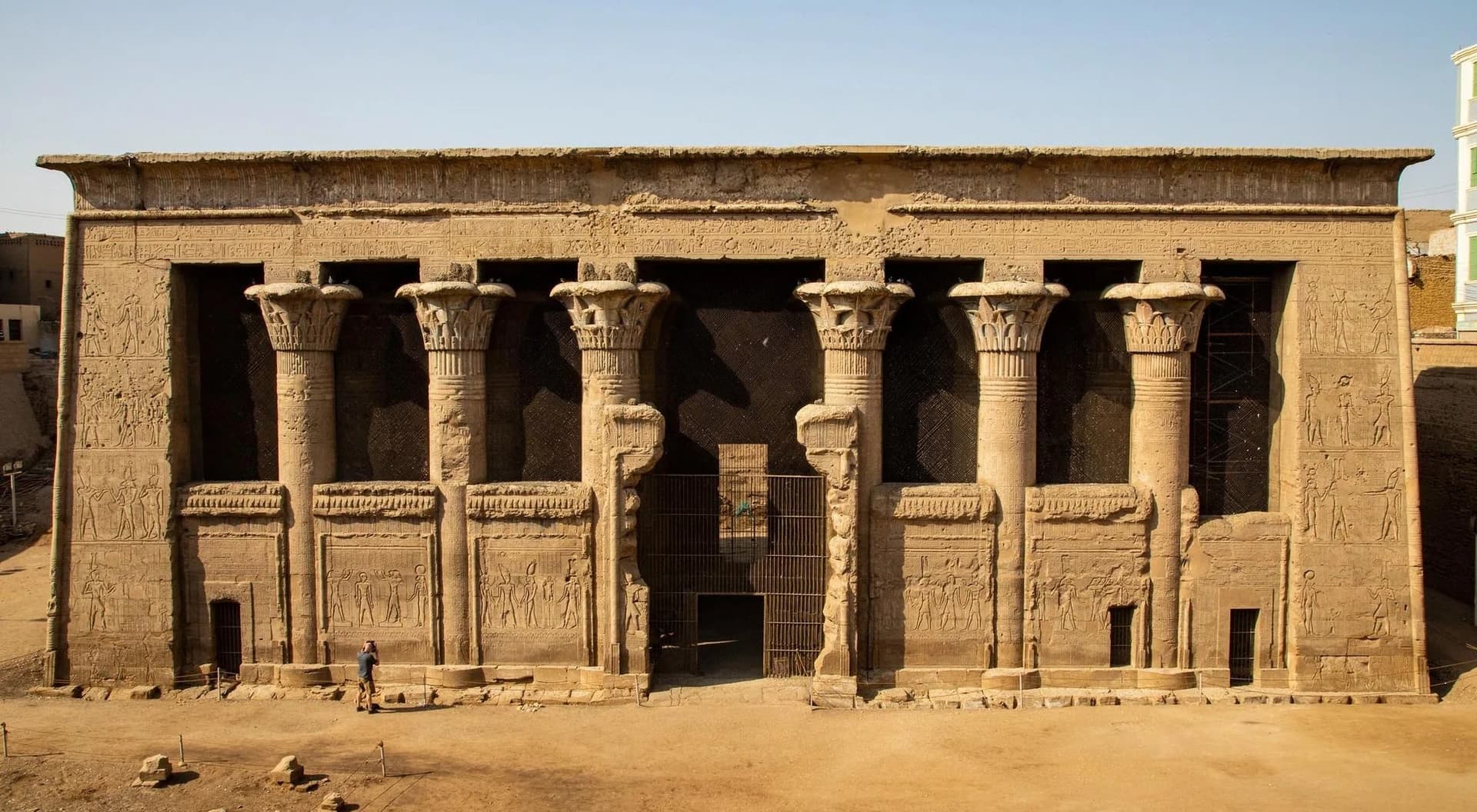
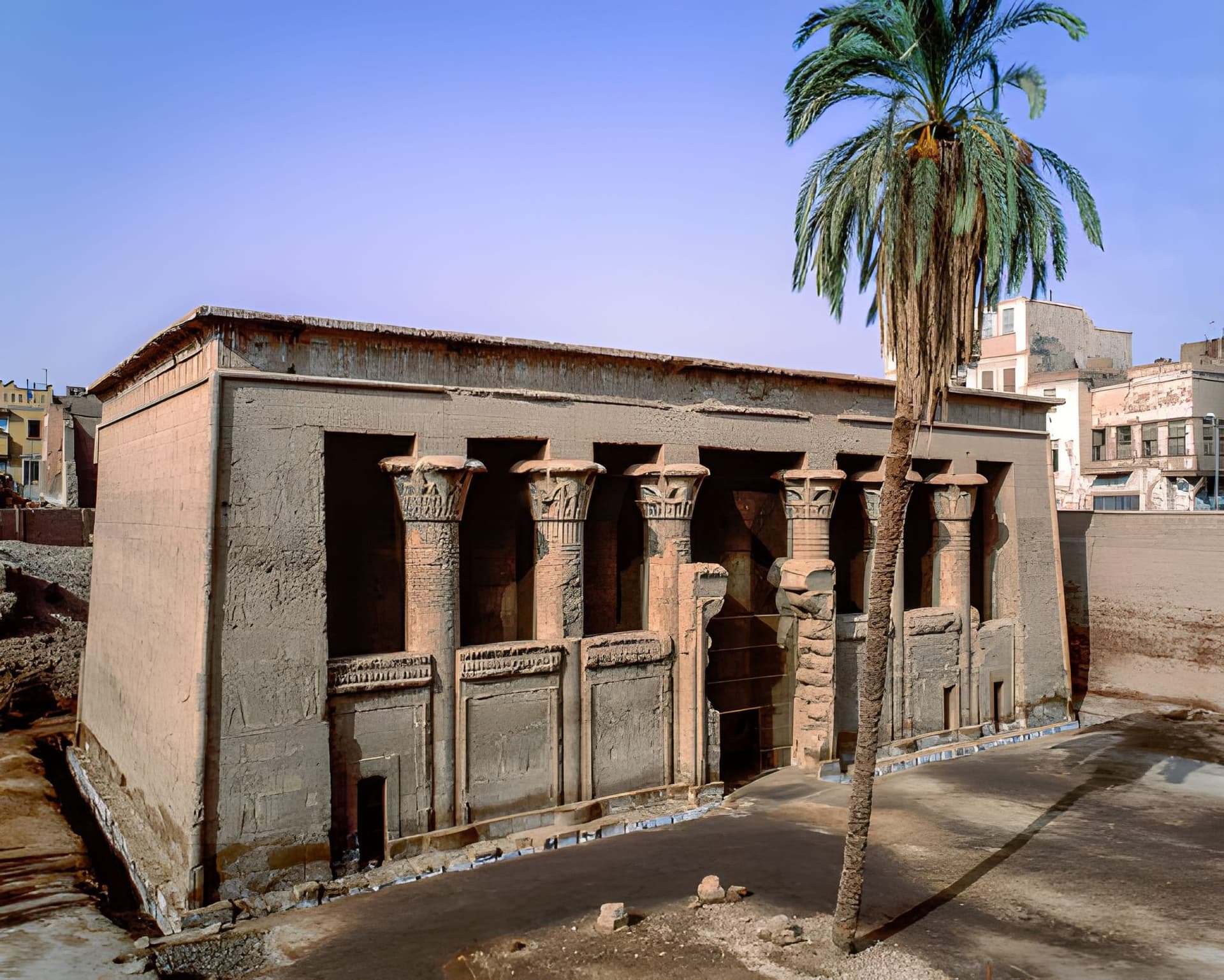
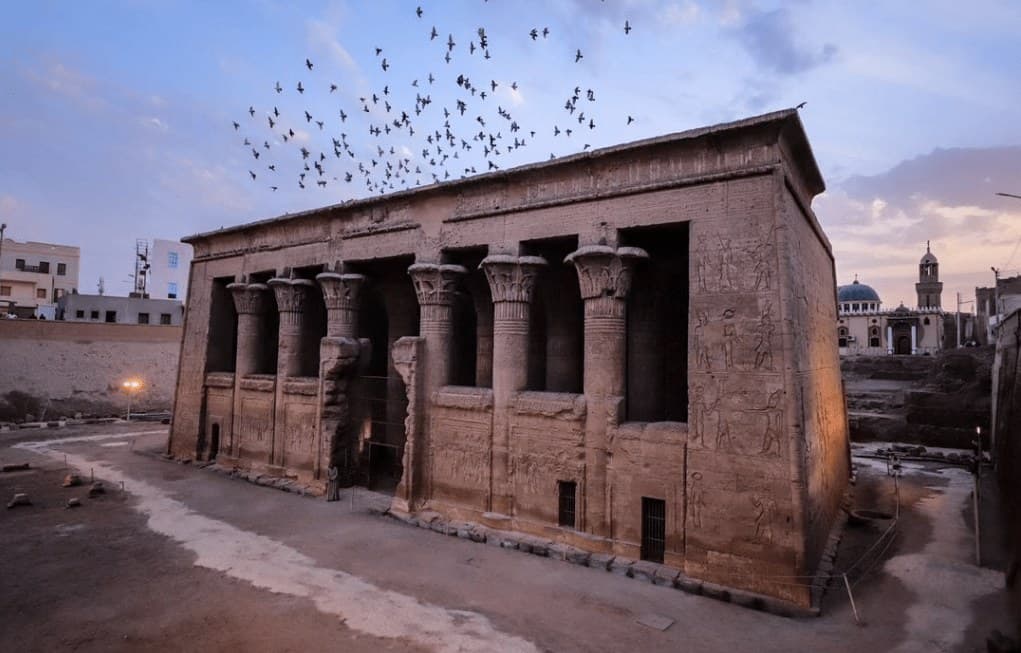
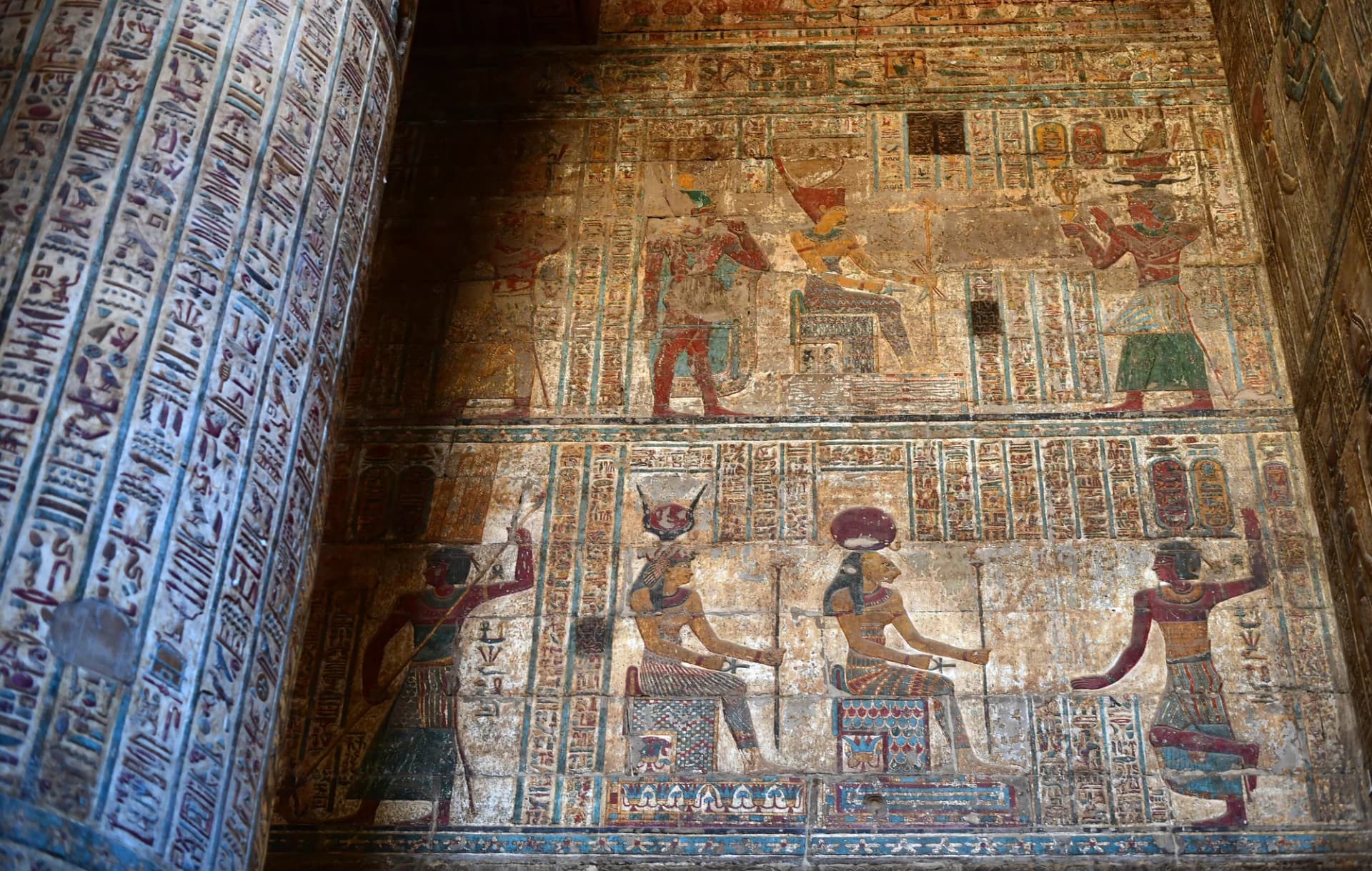
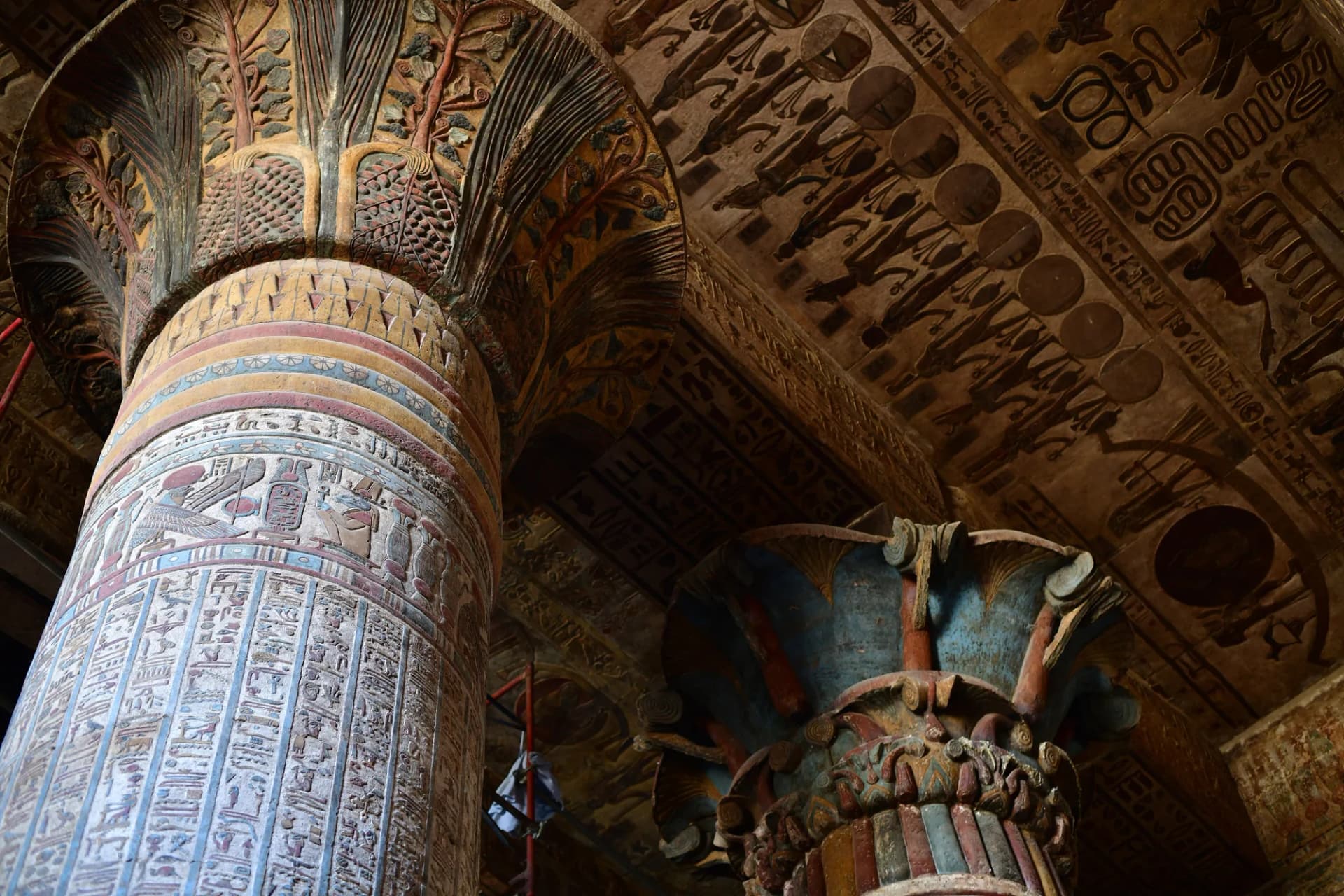
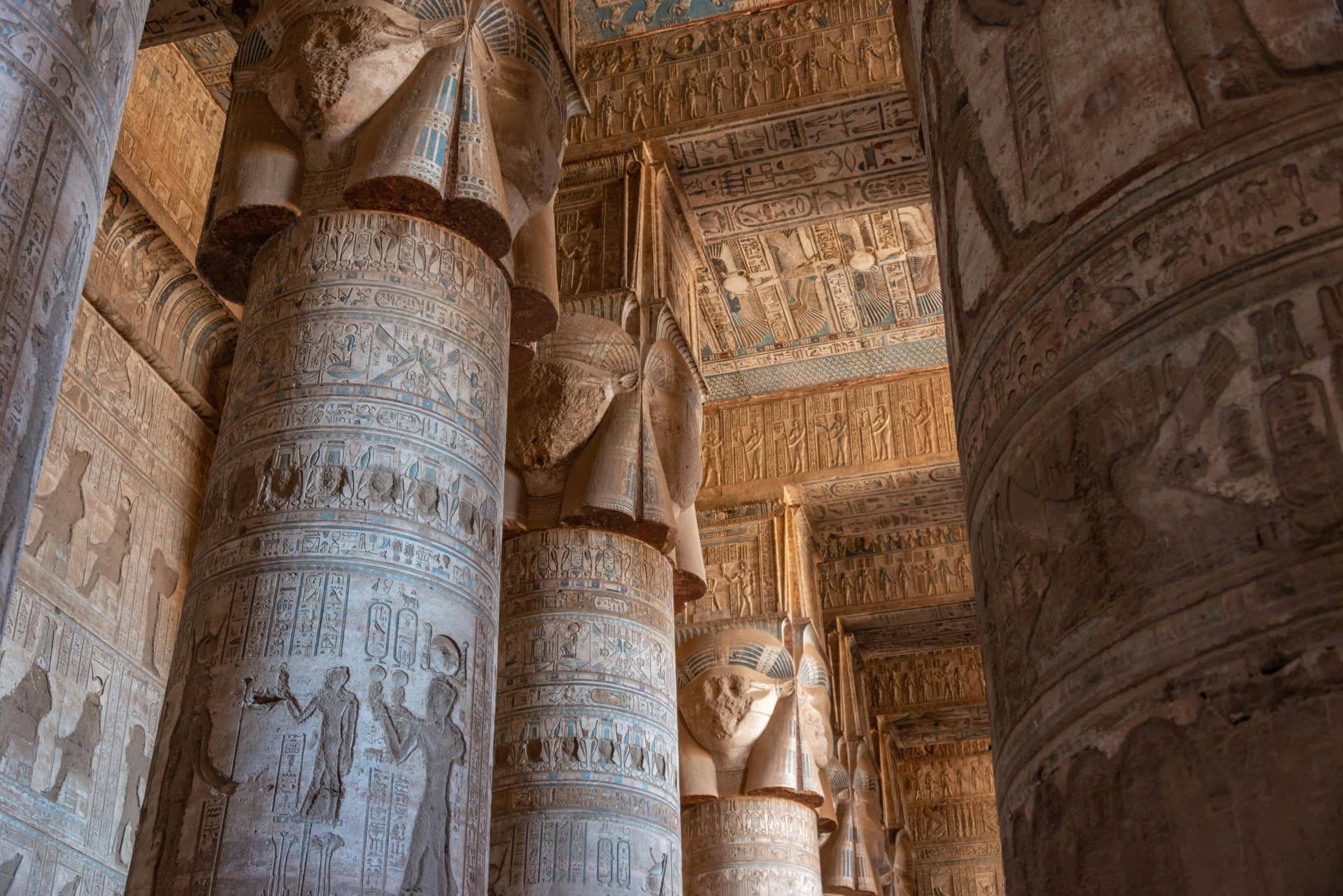
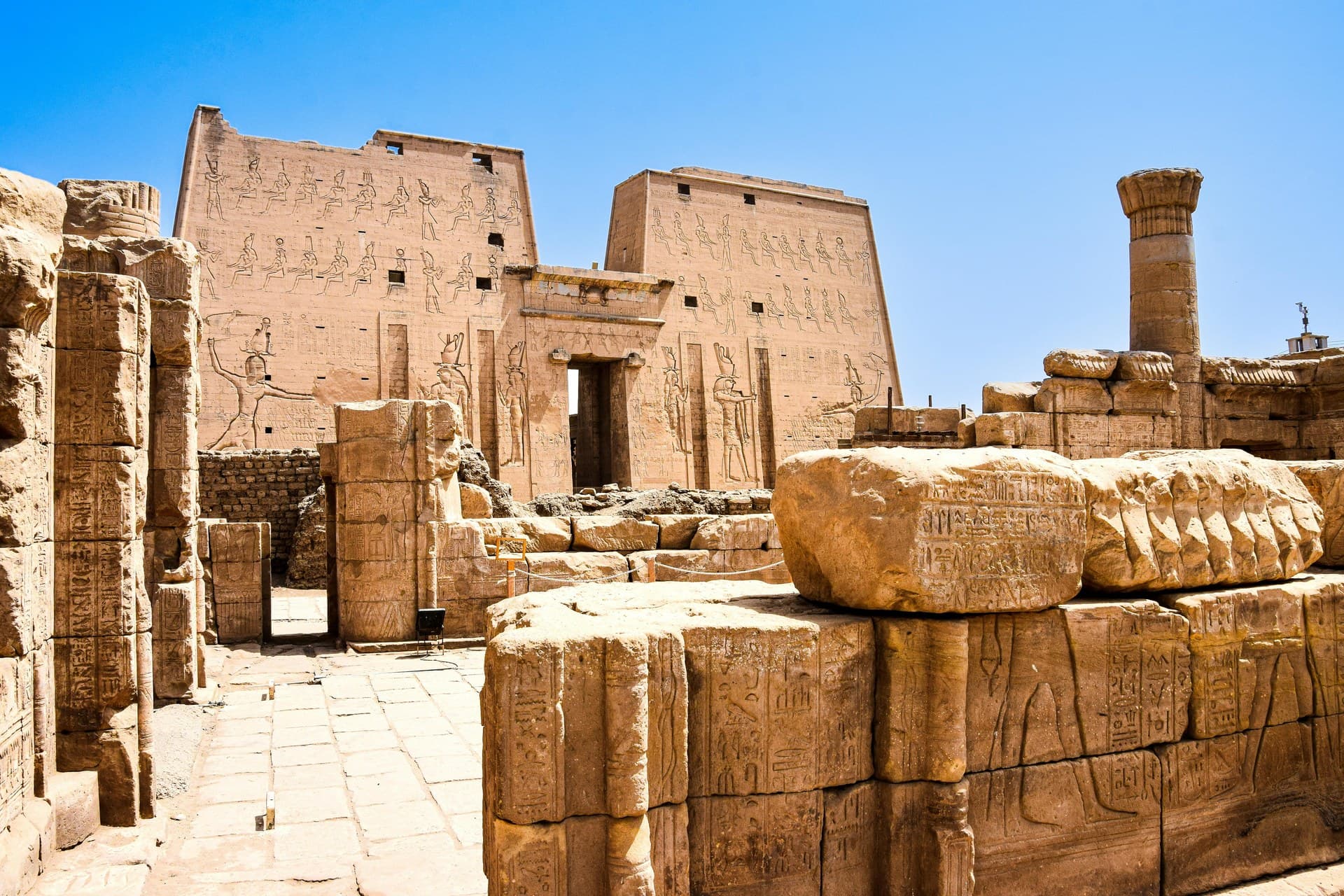
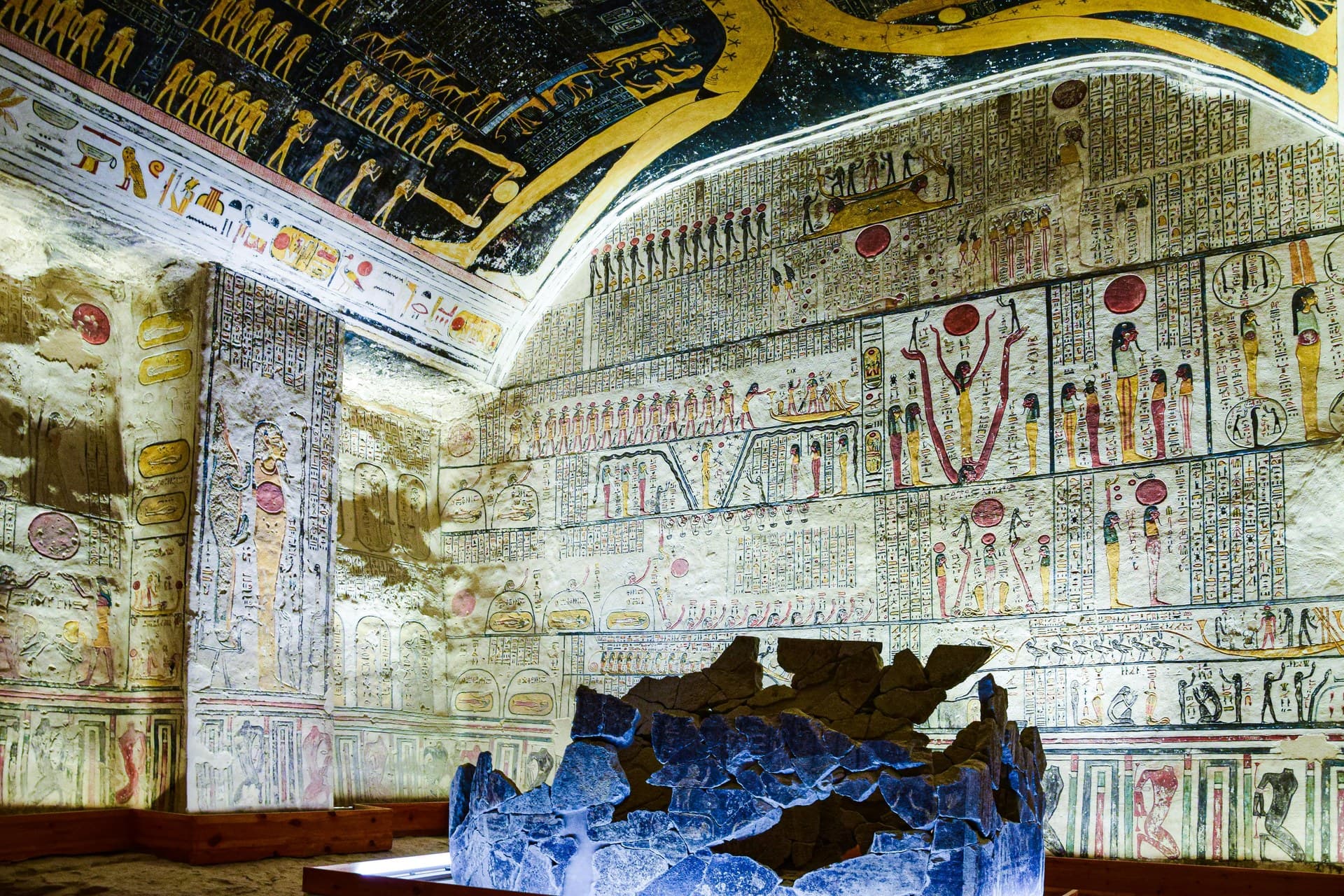
The surviving hall is Roman. Work on it ran through the first to the third centuries AD, with decoration continuing under a succession of emperors, and their cartouches are on the walls in full pharaonic dress.
The temple was dedicated to Khnum, the ram-headed god who was believed to shape human beings on a potter's wheel, together with Neith, Heka, and his consorts Menhit and Nebtu.
The potter's wheel is the key to the texts: the hymns describe Khnum shaping people, animals and even the other gods on his wheel — creation as a craft, endlessly repeated. Esna is the fullest surviving statement of that theology anywhere.
The soot the restorers removed was itself a kind of history: the hall spent part of the nineteenth century as a cotton store, and generations of the town lived, cooked and traded around a temple buried to its capitals. What came off the ceiling was, in effect, two centuries of the town's daily life.
The town simply grew up over it. Debris accumulated around and above the hall for centuries, which buried it, protected it, and left it standing nine metres below the streets that surround it now.