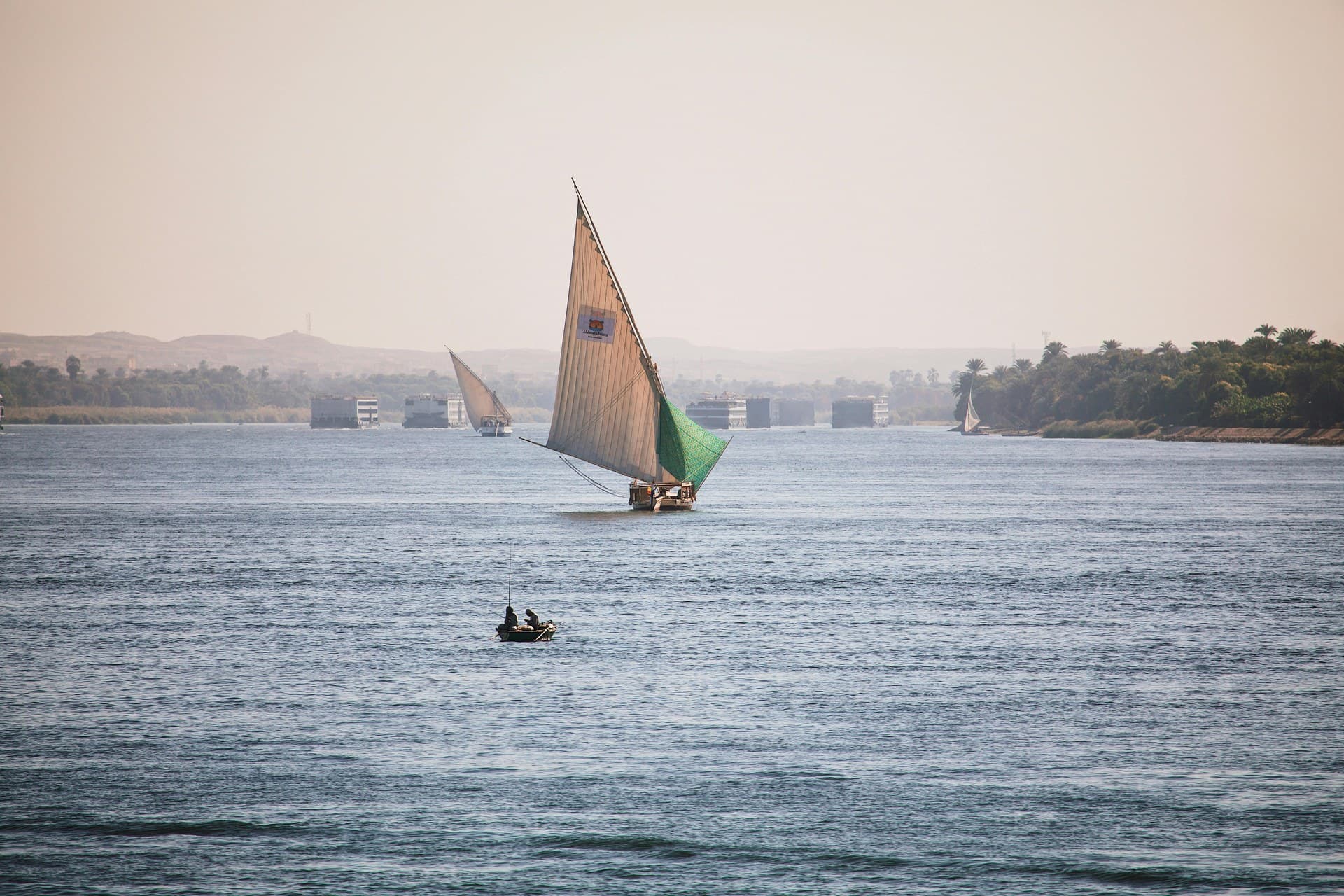
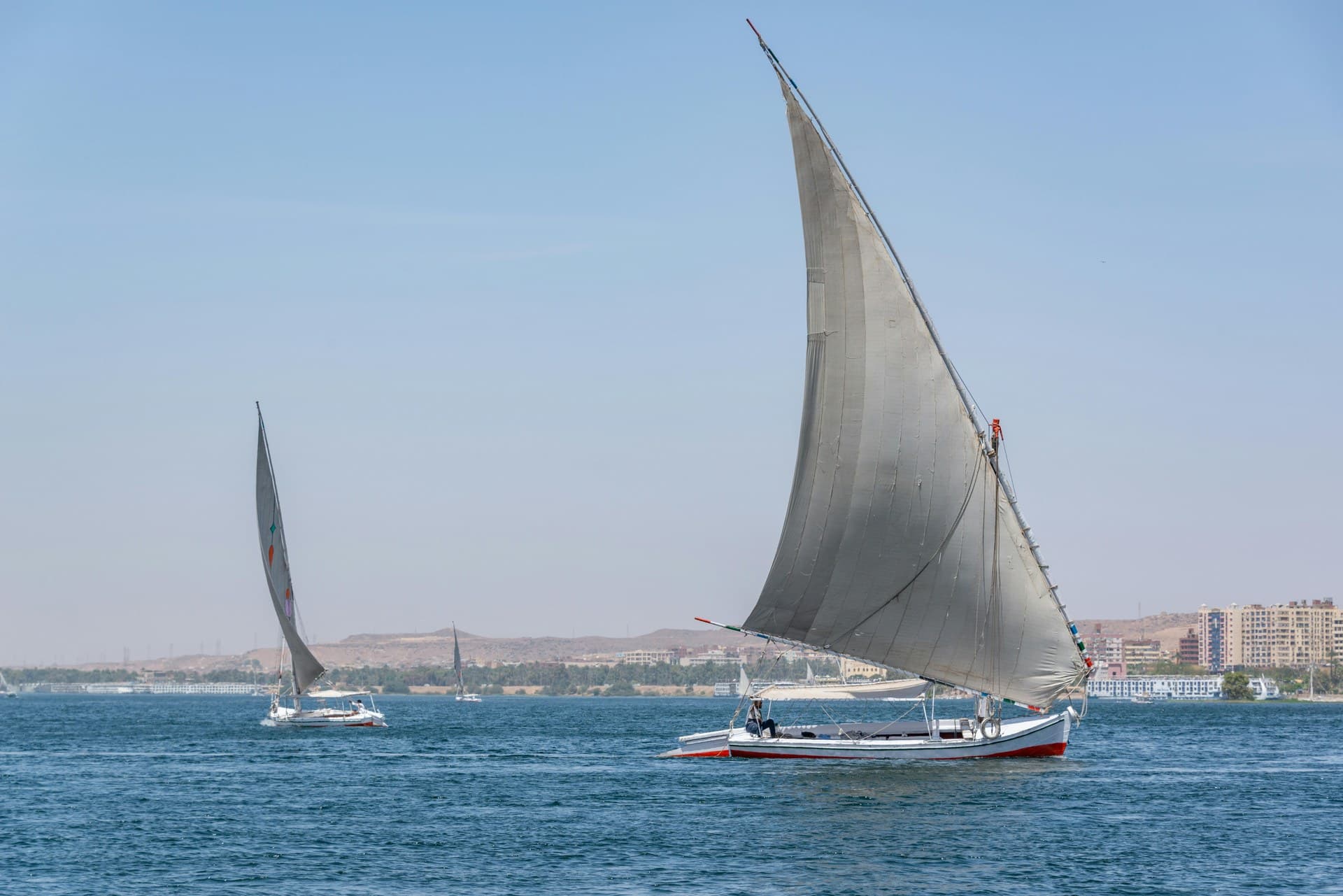
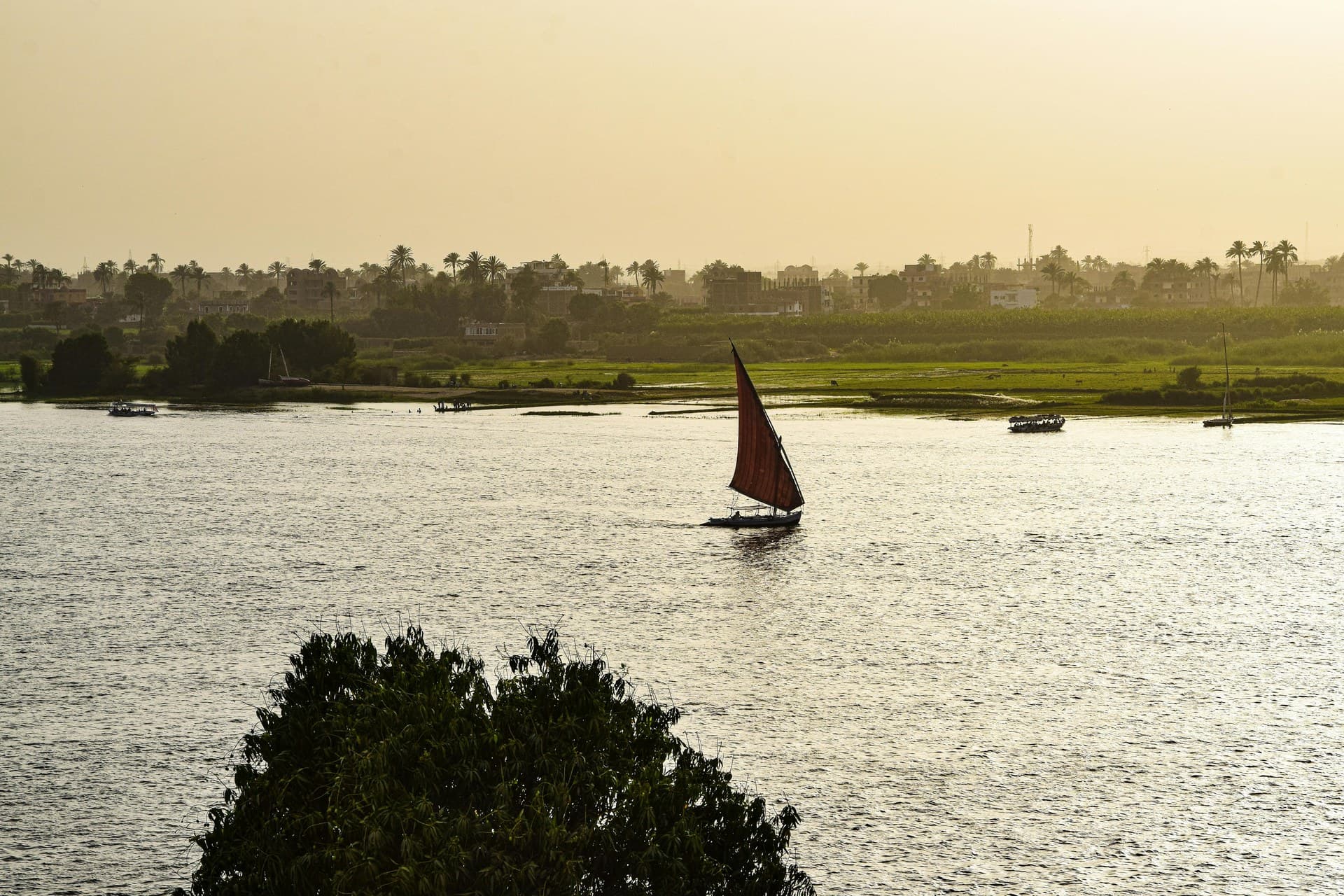
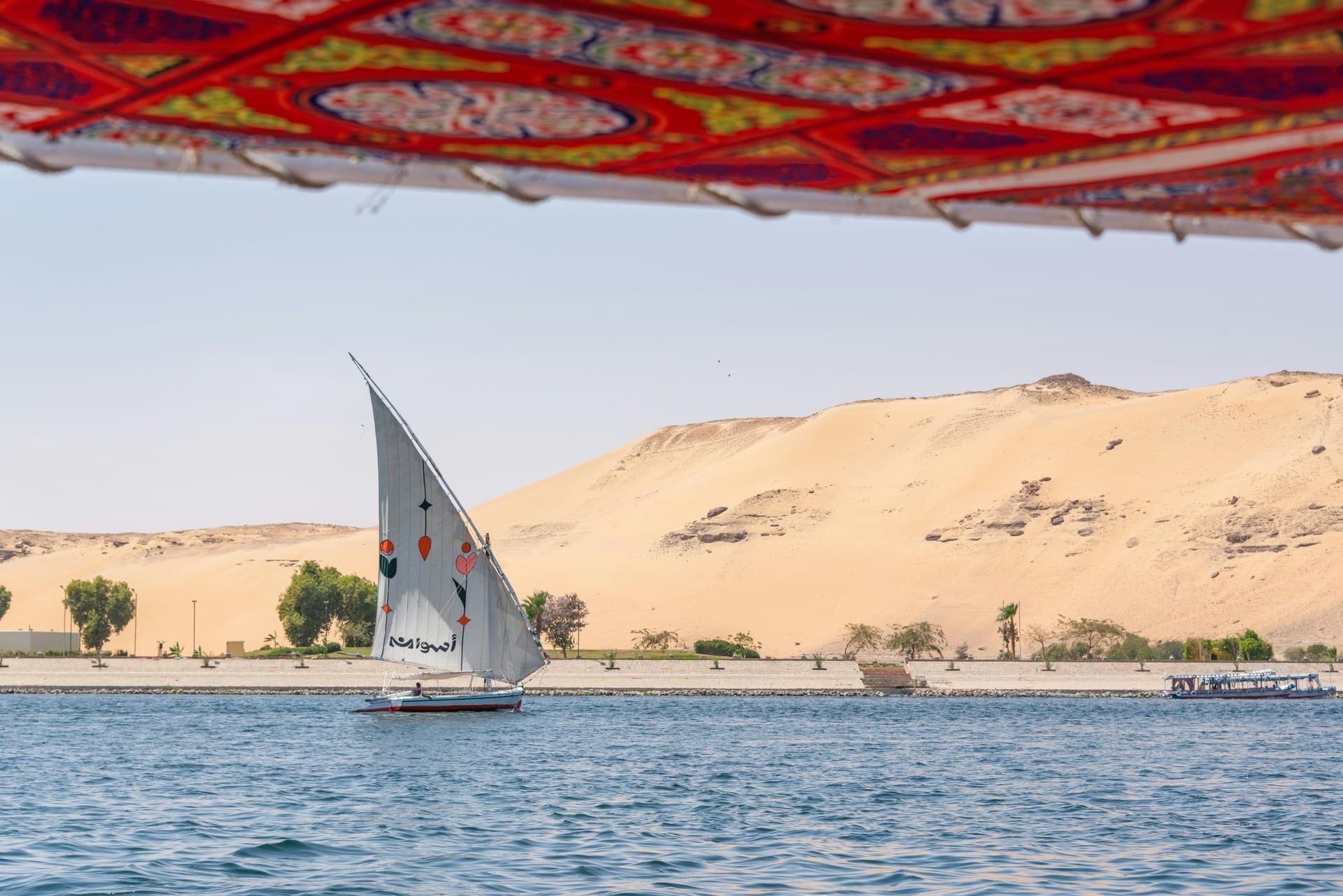
The lateen rig — a triangular sail on a long angled yard — allowed boats to sail against the wind and transformed navigation across the Mediterranean and the Indian Ocean.
On the Nile the system was even simpler than that: the current runs north and the prevailing wind blows south, so a boat could sail upstream and drift downstream. Egyptian hieroglyphs use a boat with a raised sail to write travel south and a boat with a lowered sail to write travel north.
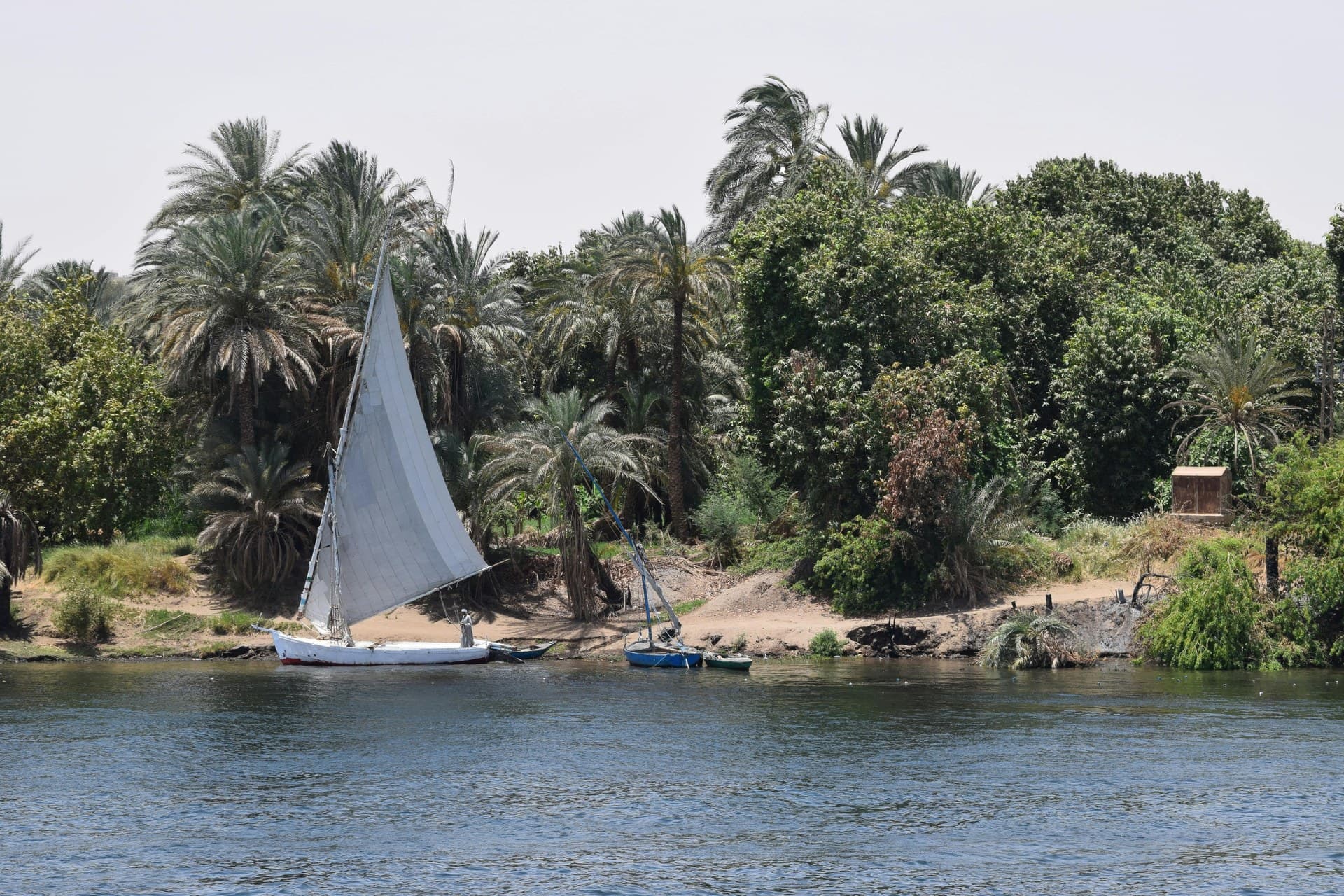
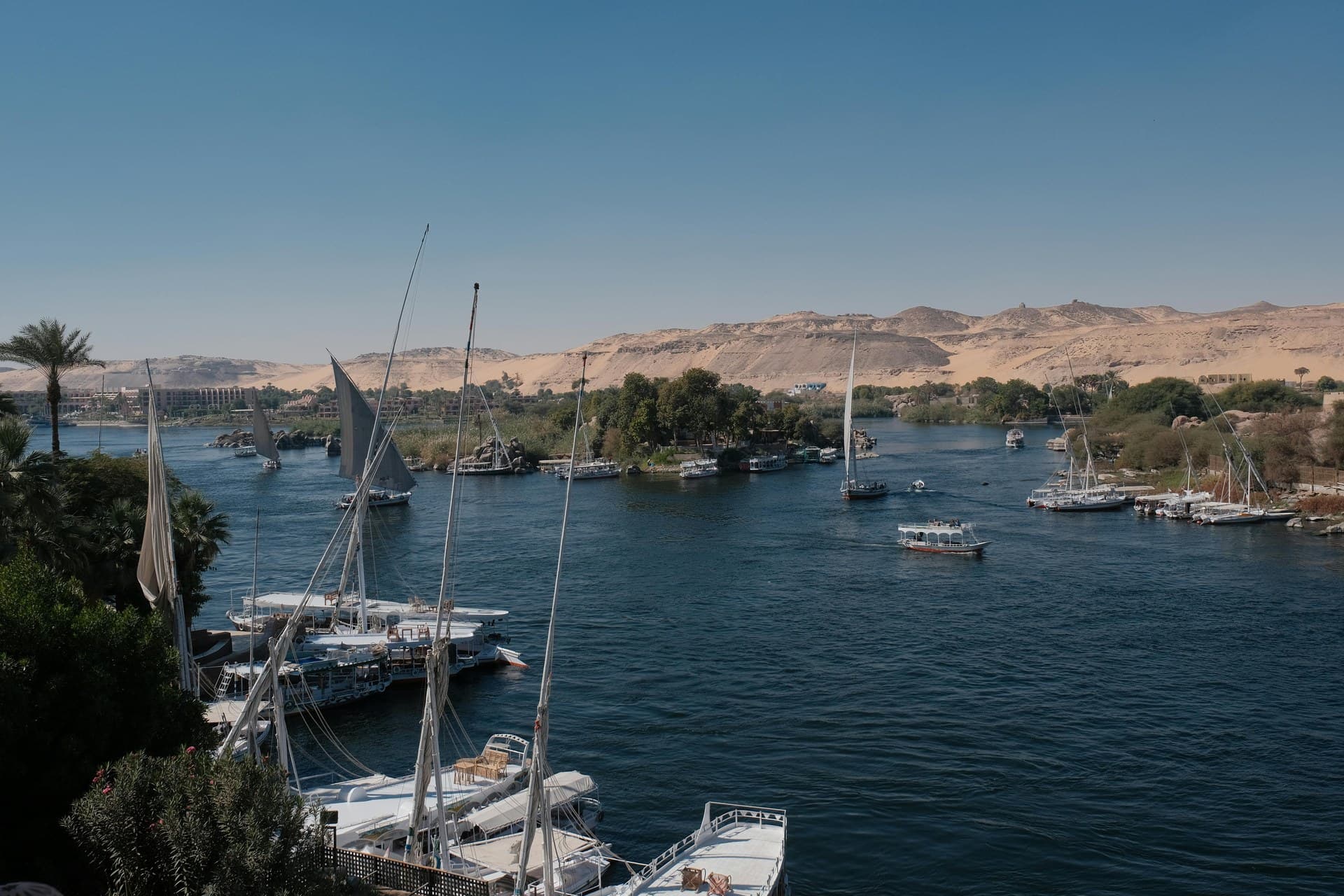
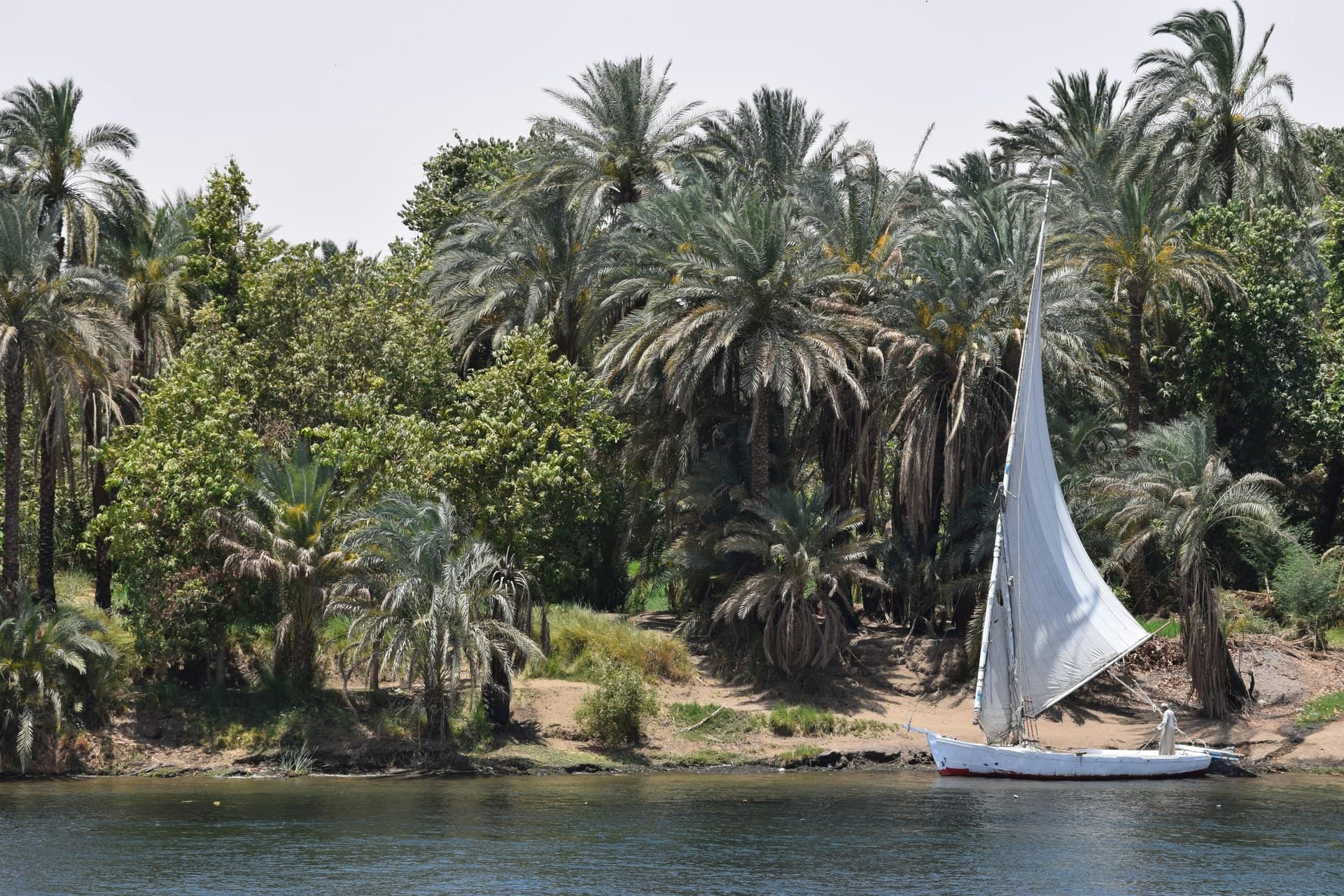
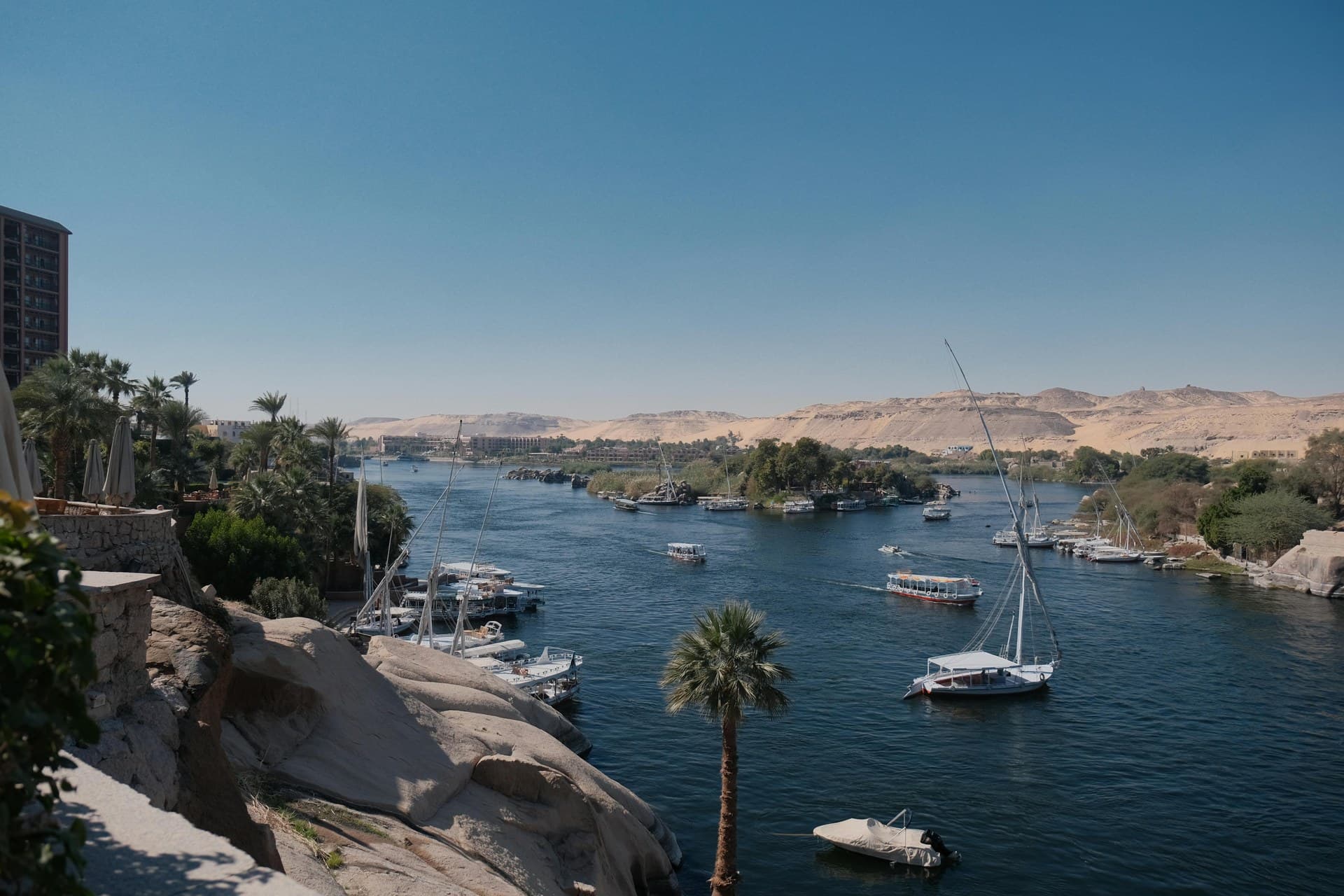
The boat itself barely needs improving: a shallow wooden hull that can nose onto a sandbank, a mast stepped well forward, and one enormous sail that catches the wind moving above the riverbanks. There is no engine, which is the entire point.
Watching a good captain work the Aswan reach is half the pleasure of the hour — long diagonal tacks across the river, the current used when the wind fails, gusts read as they come down between the west-bank dunes. Many of the boats here are sailed by Nubian families who have worked this stretch for generations.
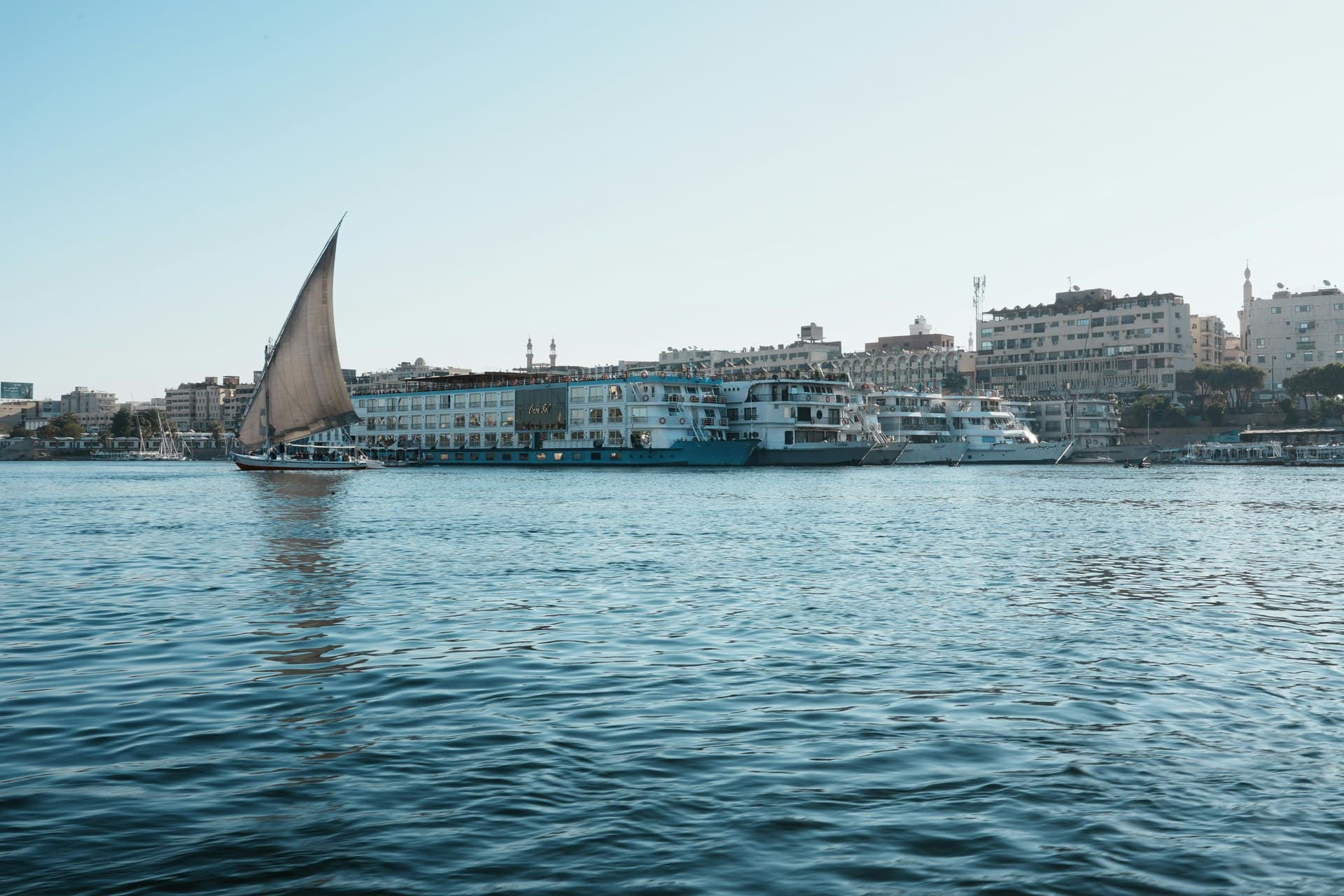
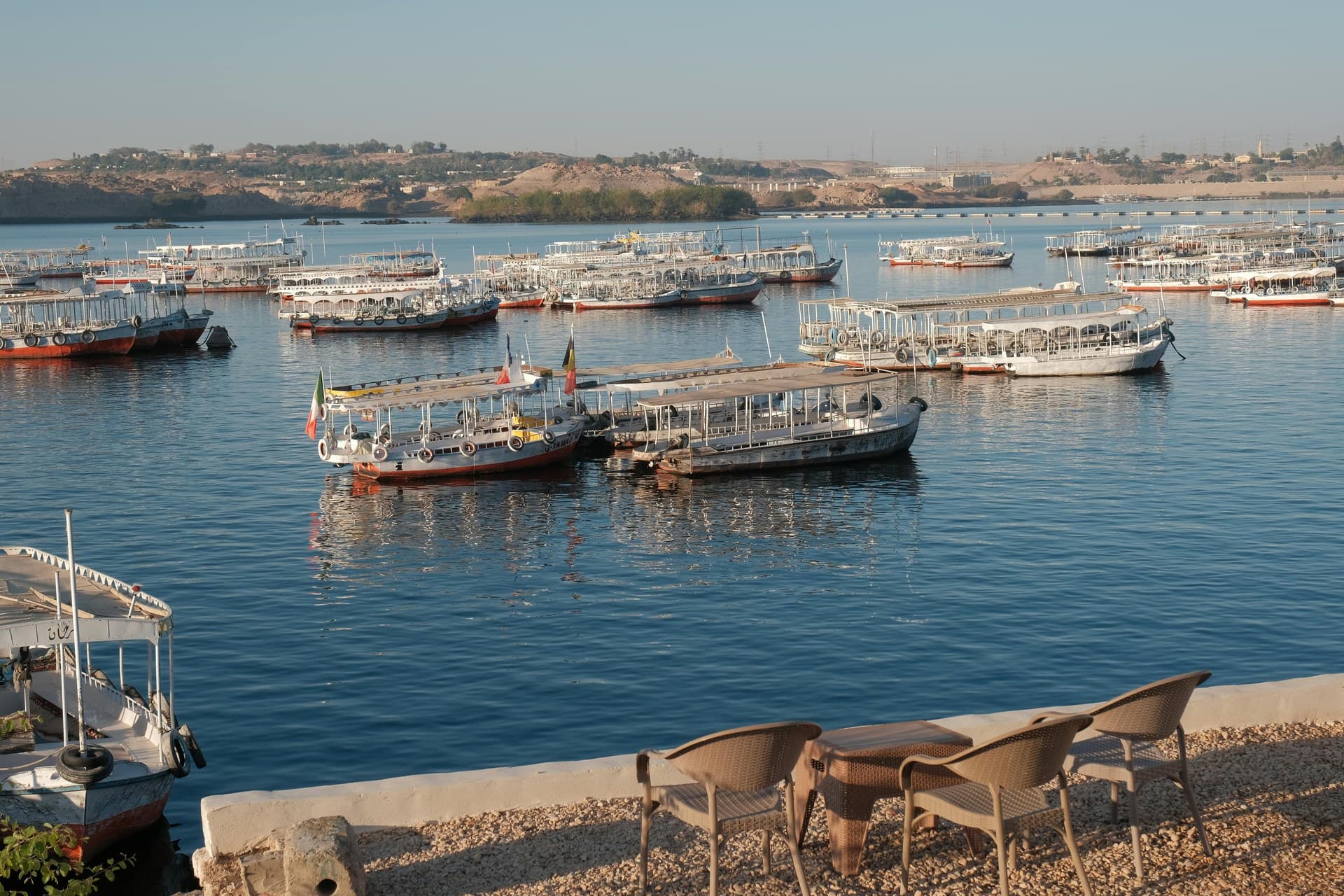
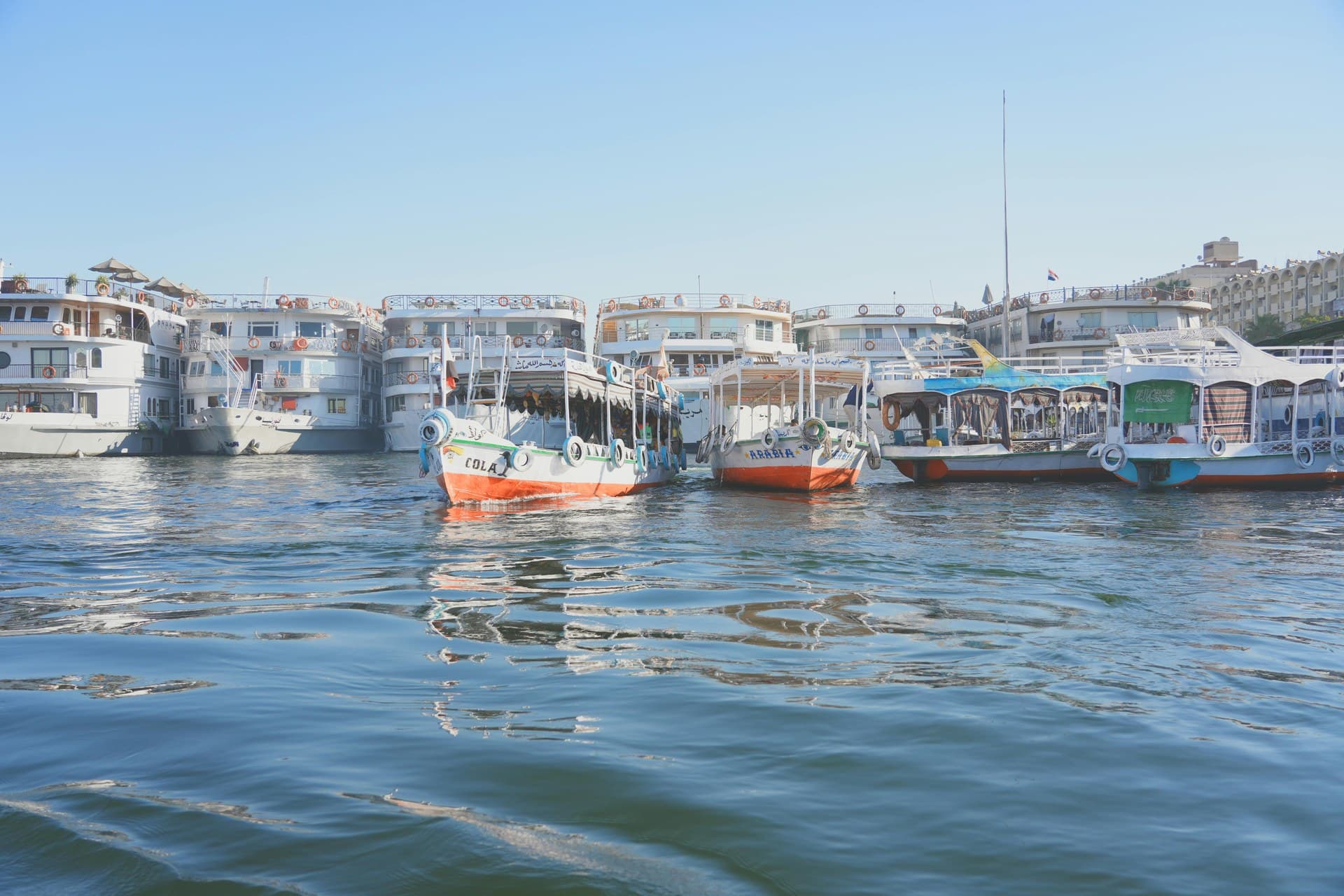
Feluccas still carry goods and people locally, alongside the tourist trade.