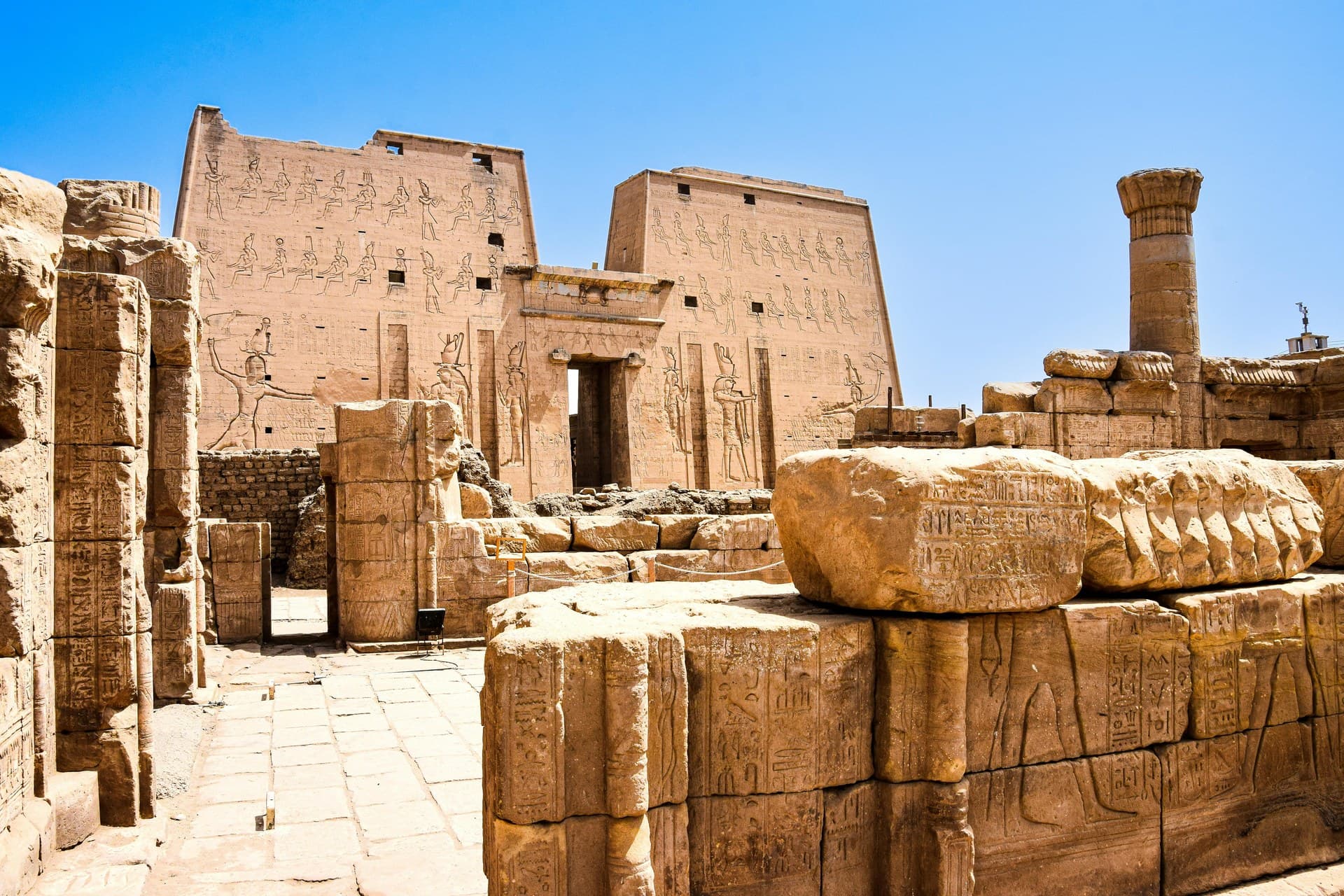
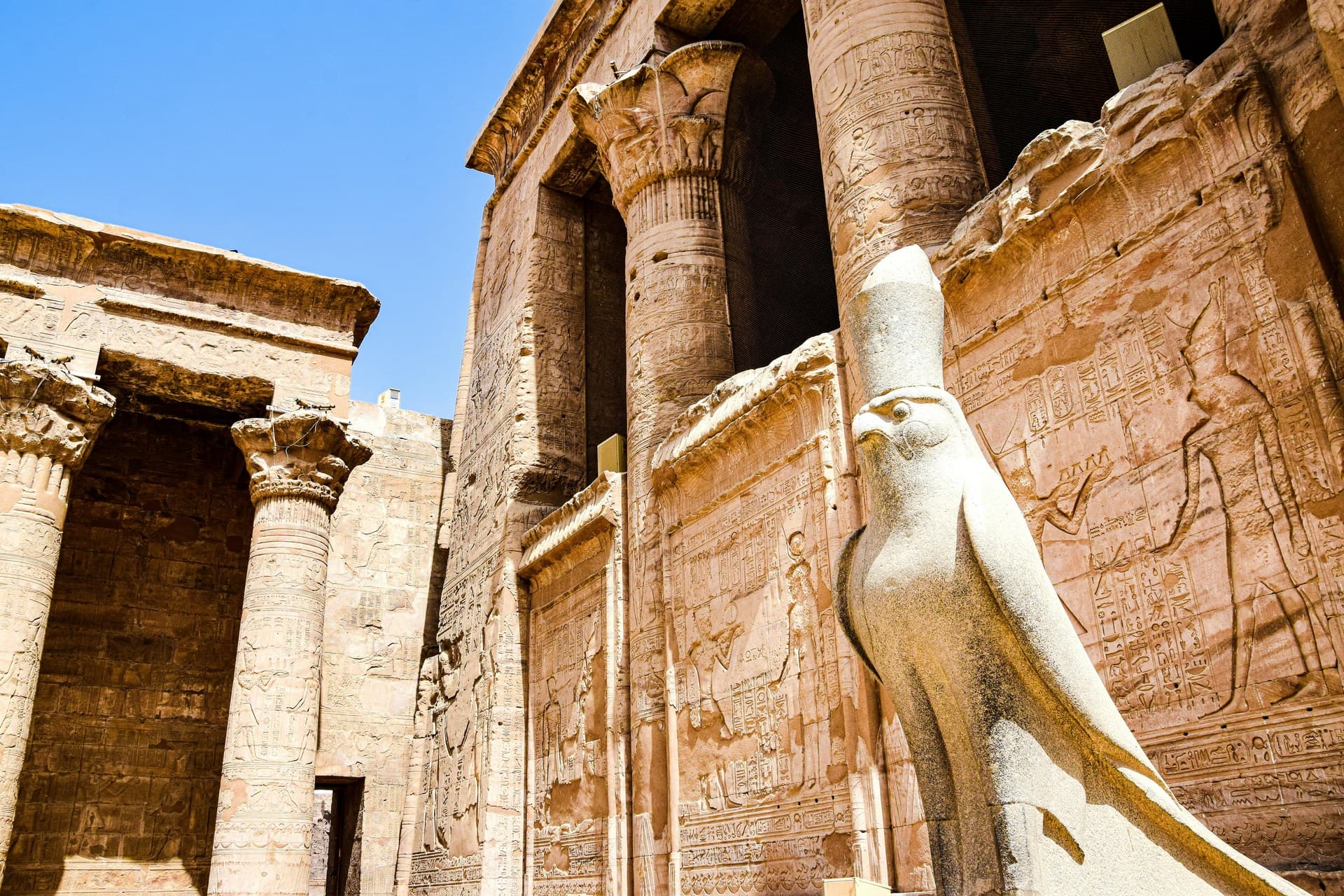
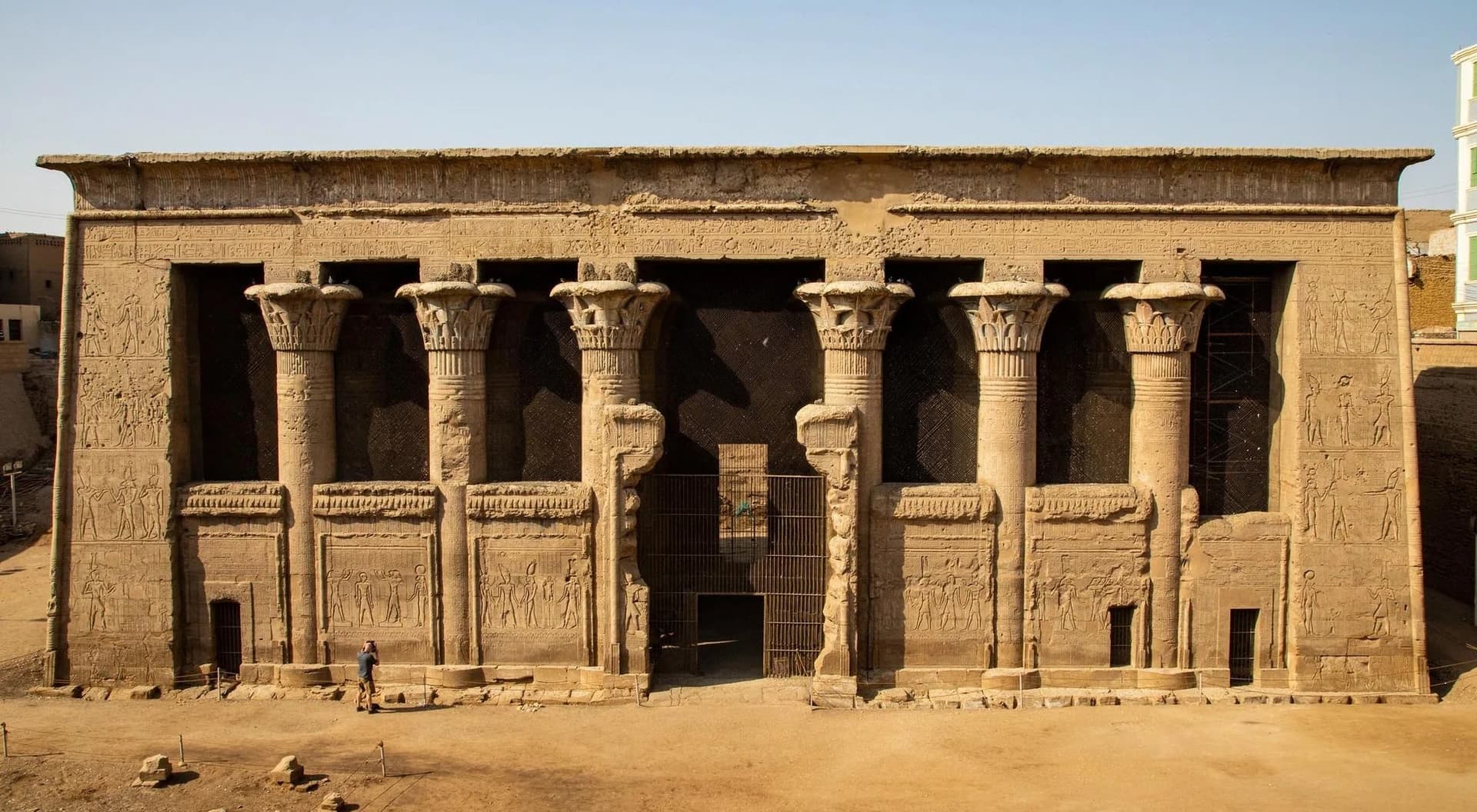
Edfu is Ptolemaic. It was begun in 237 BC and finished around 180 years later, in the reigns of the Greek kings who ruled Egypt after Alexander. That makes it about a thousand years younger than Karnak.
It was built on the site of a much older temple, in the traditional Egyptian style rather than a Greek one — the Ptolemies used Egyptian religious architecture deliberately, to rule as pharaohs.
The work went in stages under different kings. Ptolemy III laid the foundations, the inner rooms were finished under Ptolemy IV in 212 BC, and a revolt in Upper Egypt halted the site for about twenty years. The pylon and enclosure wall were finished only in 57 BC, under Cleopatra VII's father.
It survived because it was buried. Sand and then the village of Edfu covered it almost to the tops of the walls, and it was excavated in the 1860s by Auguste Mariette. Photographs from before the clearance show houses built on the temple roof.
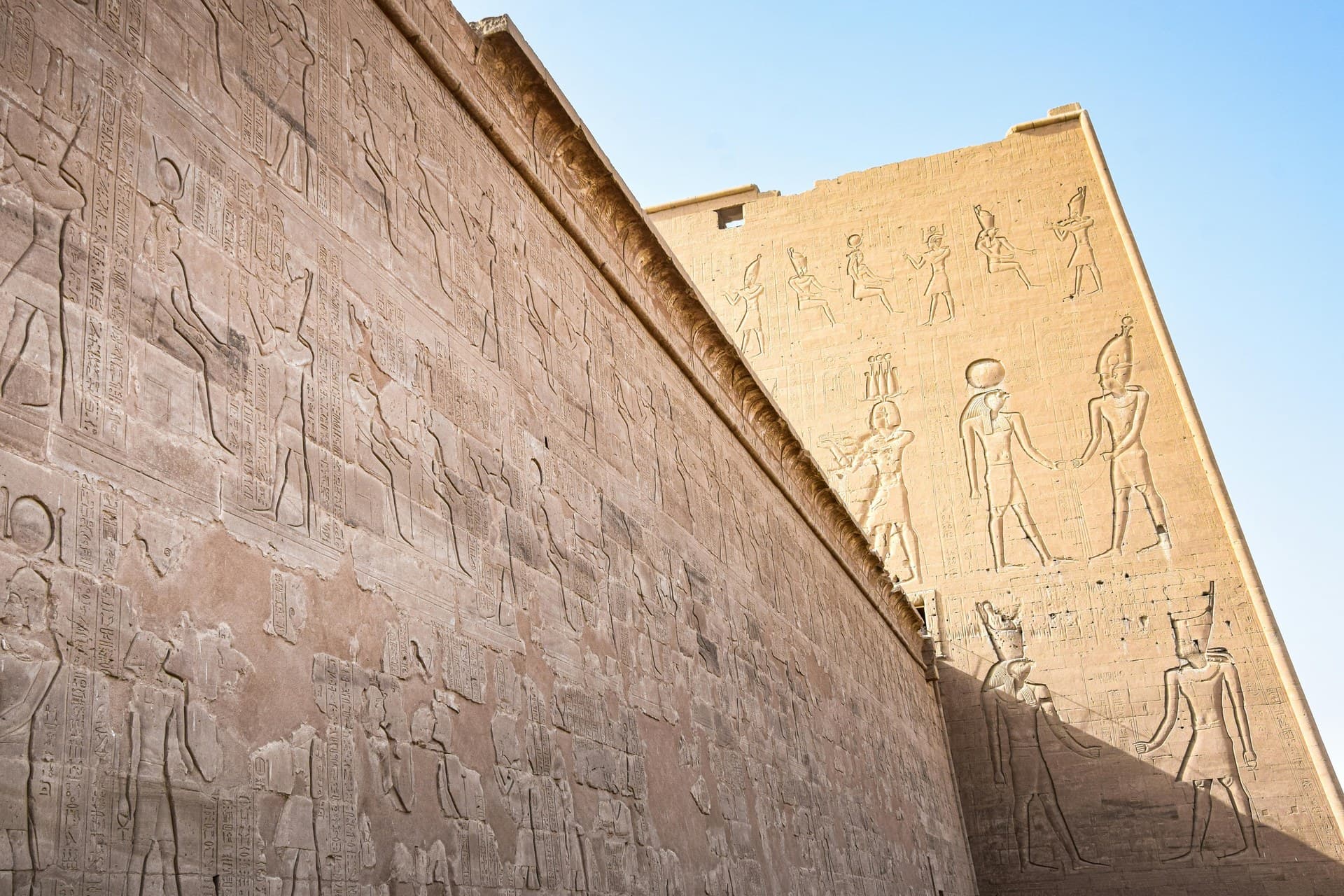
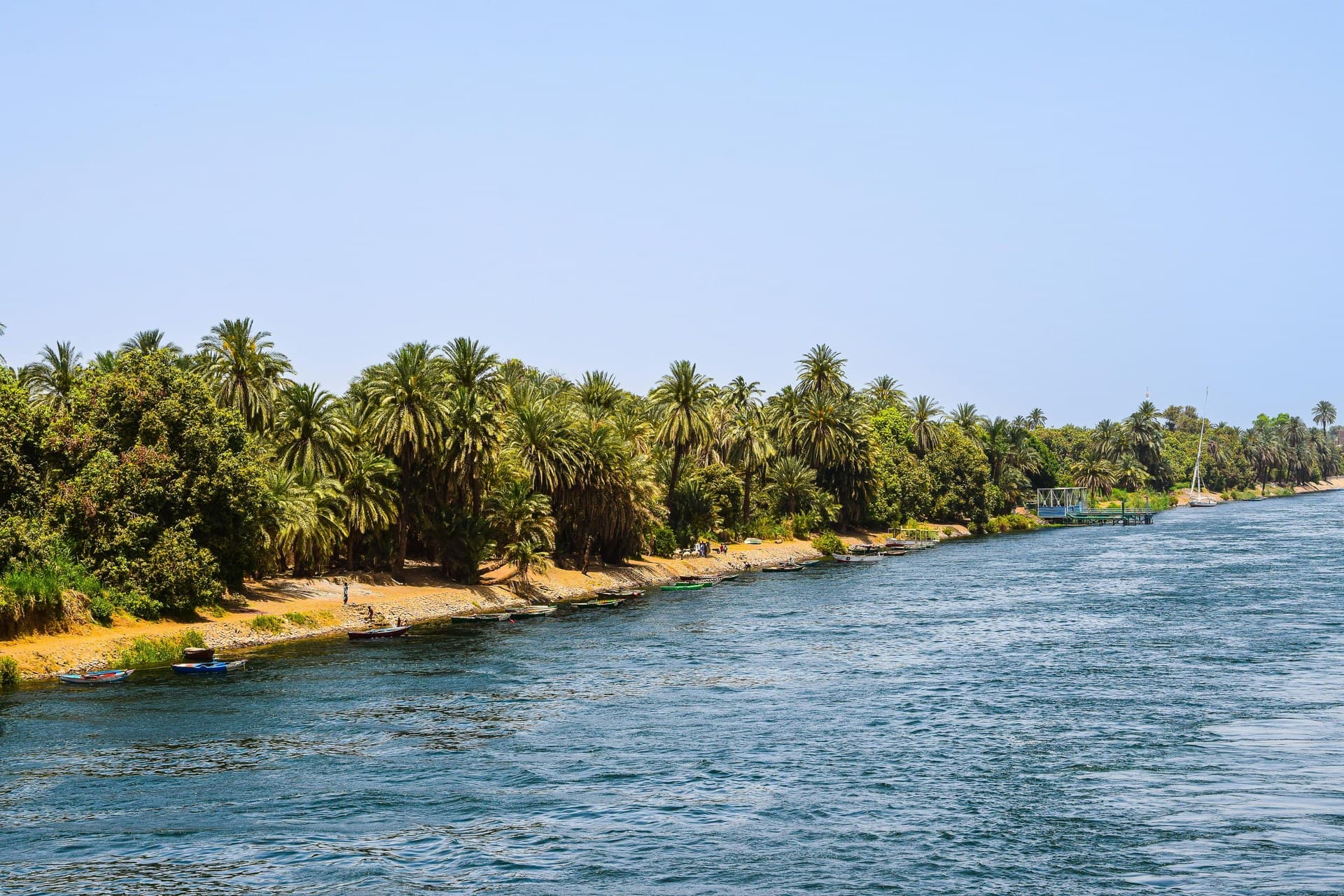
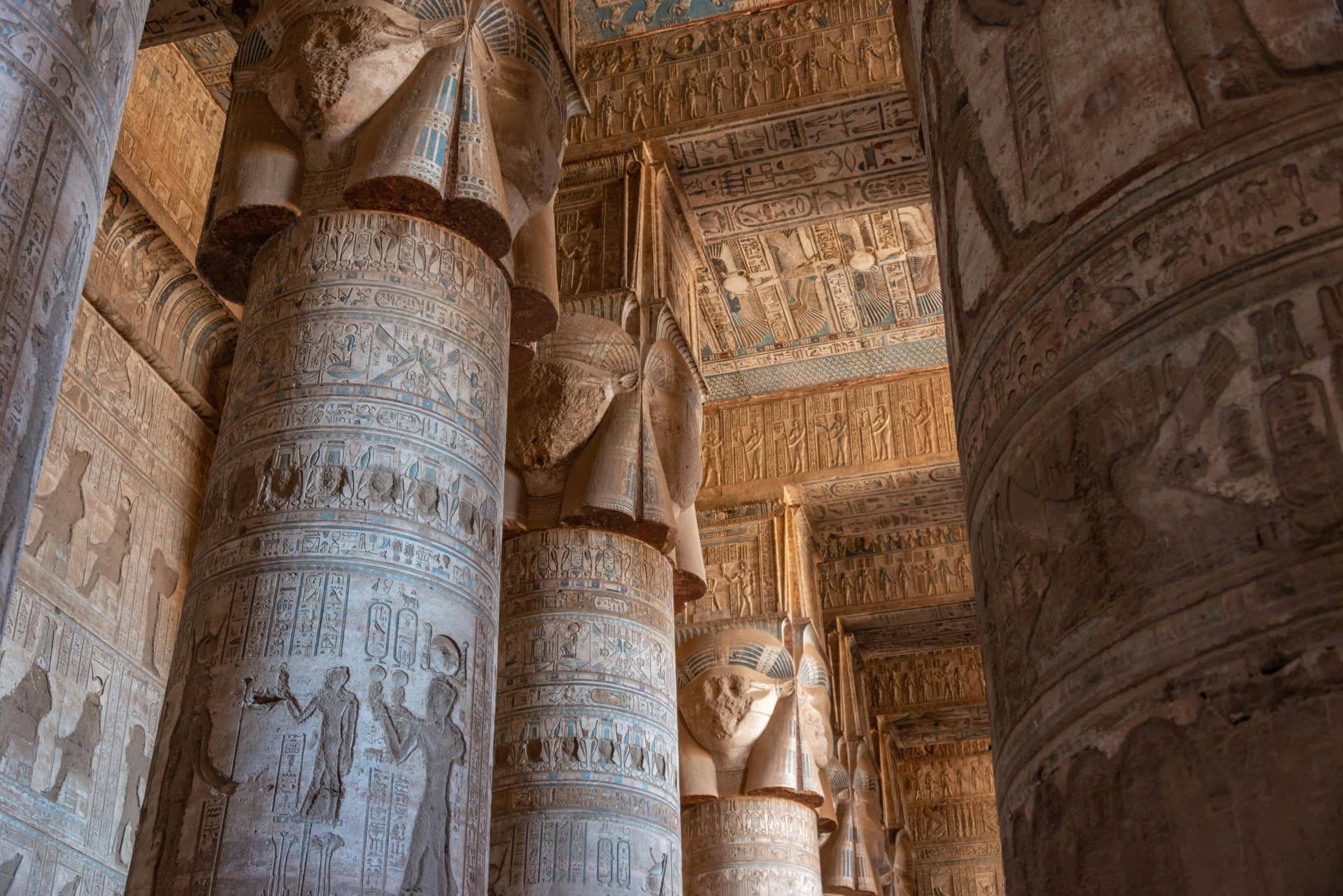
The reliefs record the Festival of the Beautiful Meeting, when the image of Hathor was brought upriver from Dendera each year to be united with Horus of Edfu.
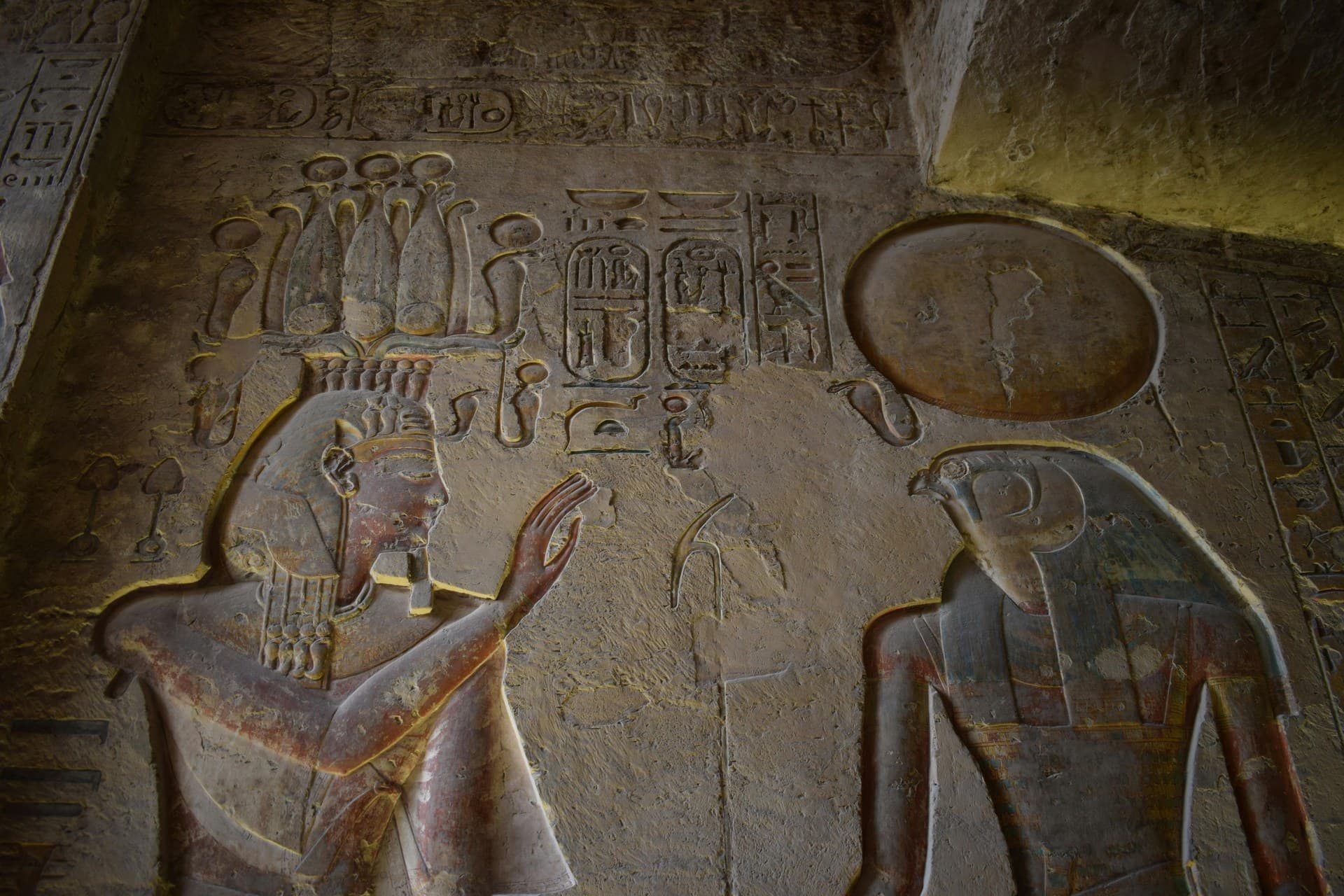
Because so much of it survived, Edfu carries the fullest body of temple texts in Egypt: the building's own account of its mythical foundation, ritual manuals, and a dramatic text on the fight between Horus and Seth, who appears as a deliberately undersized hippopotamus. Publishing them took the French Institute in Cairo fourteen volumes and four decades, from 1892.