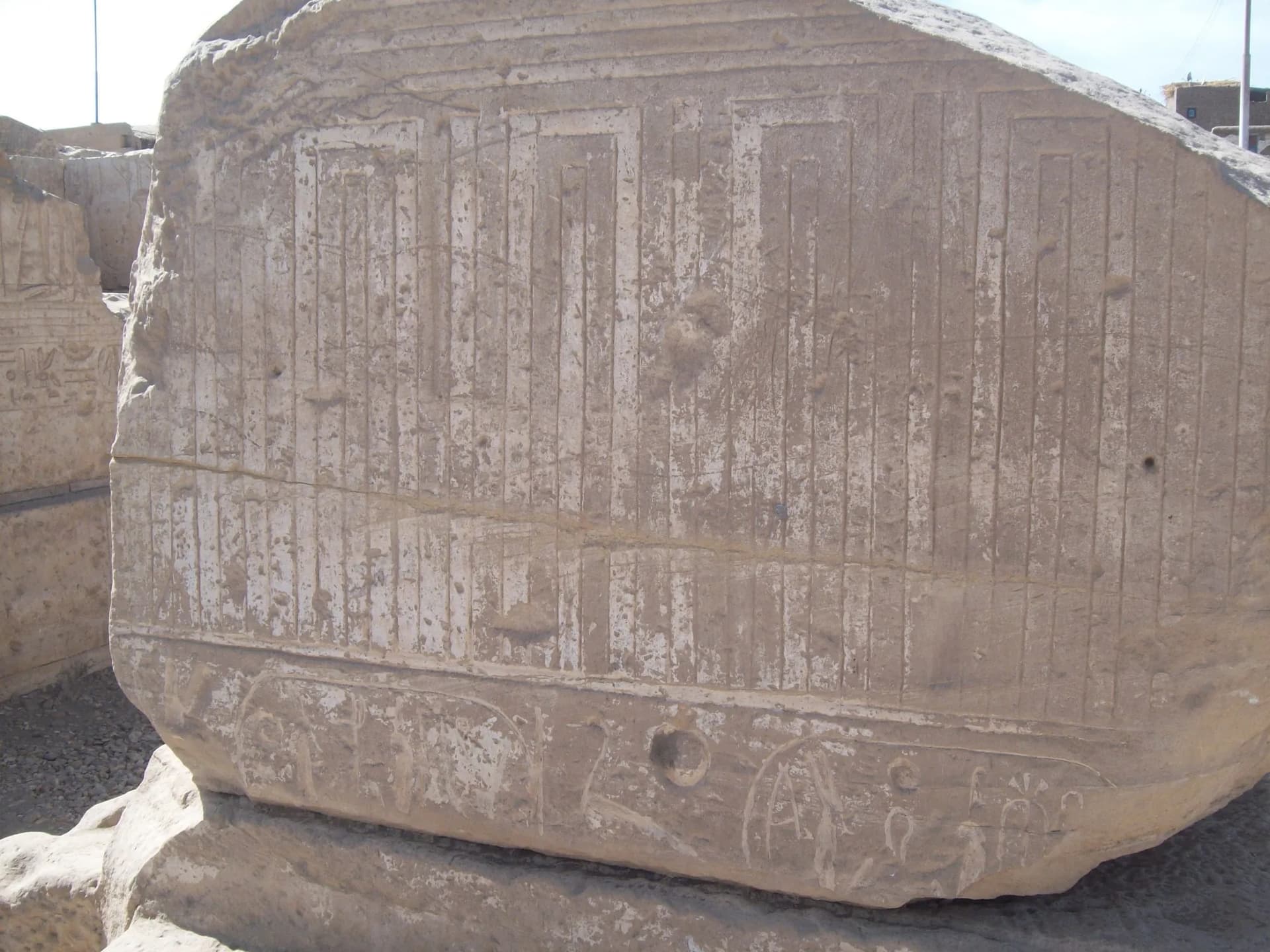
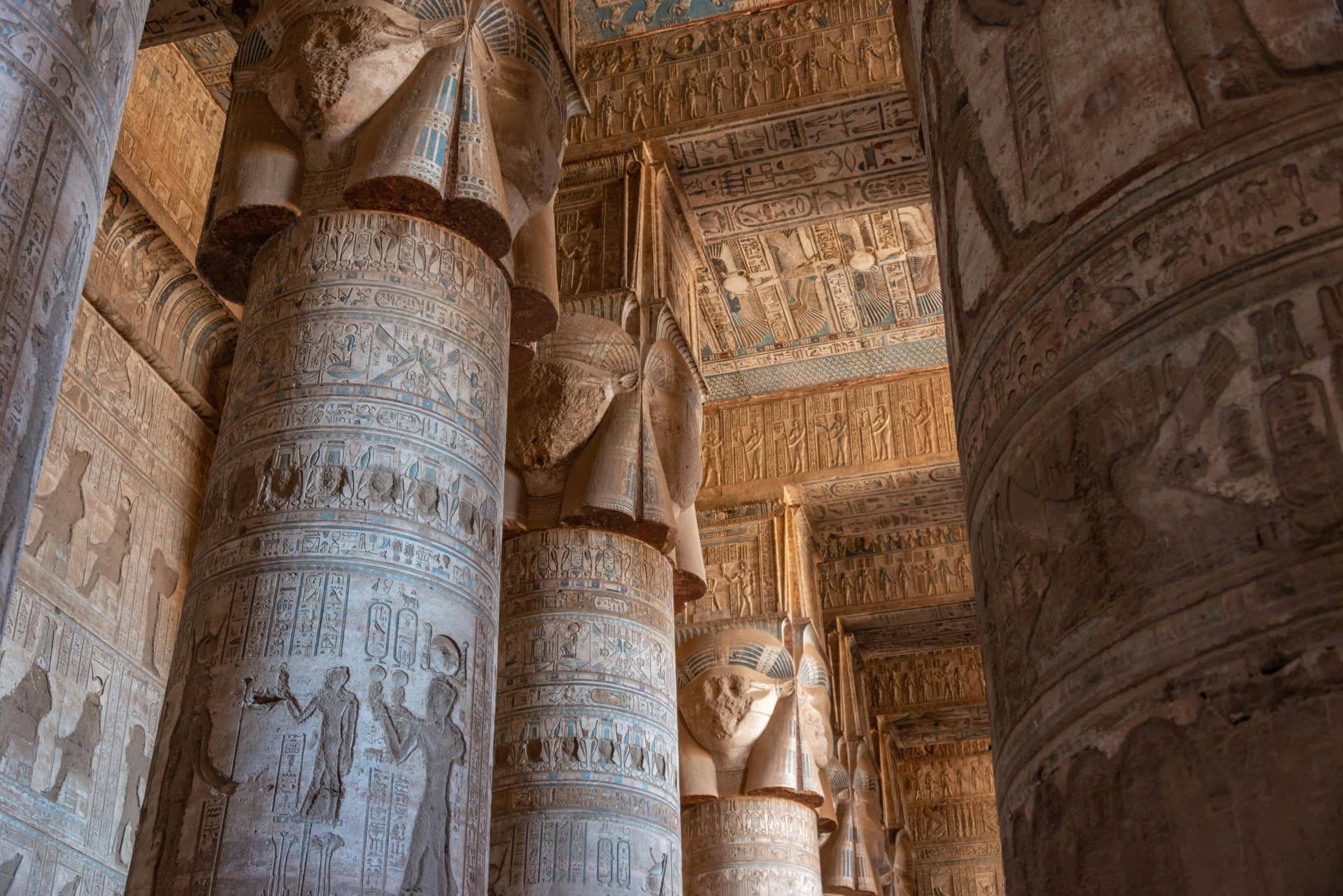
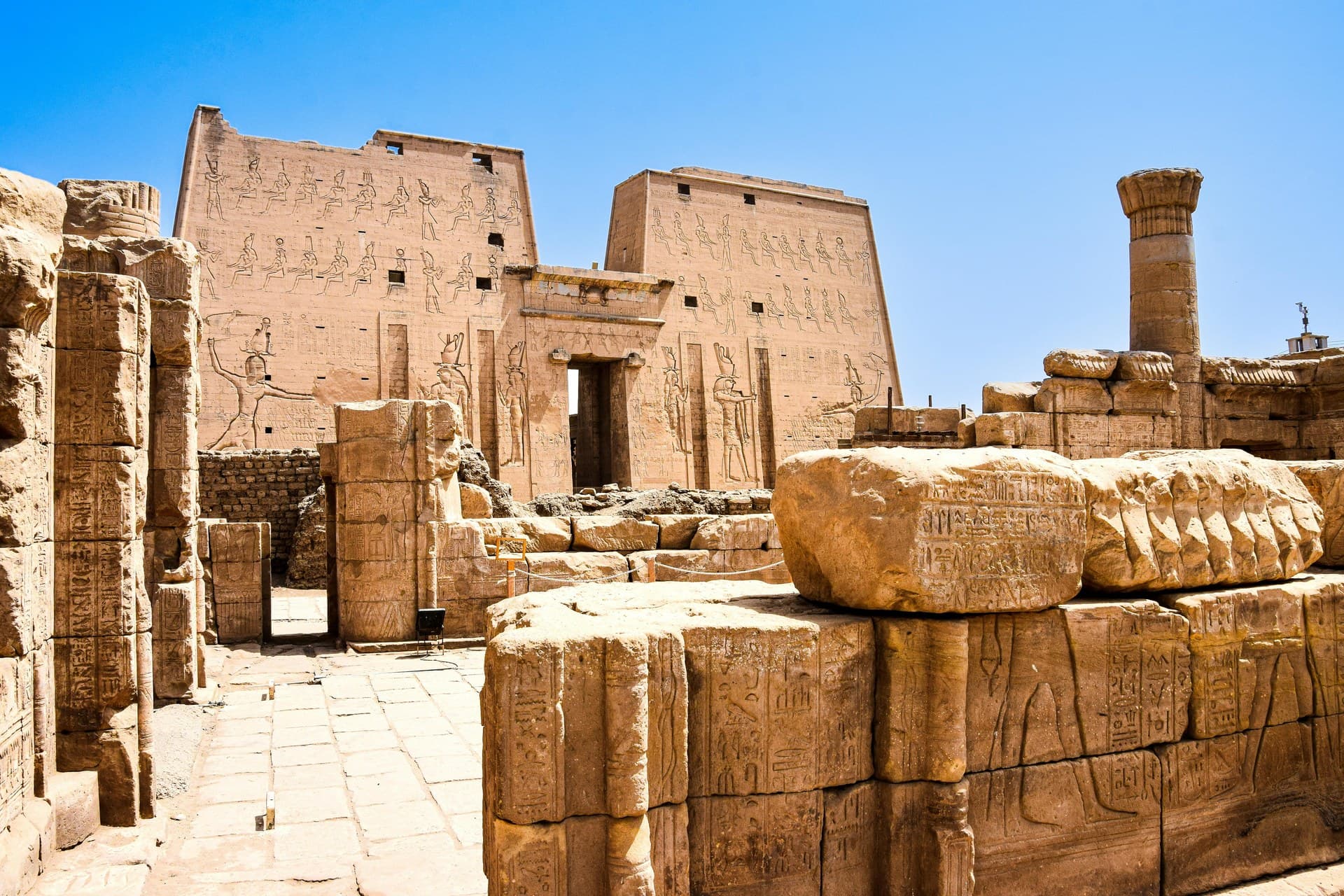
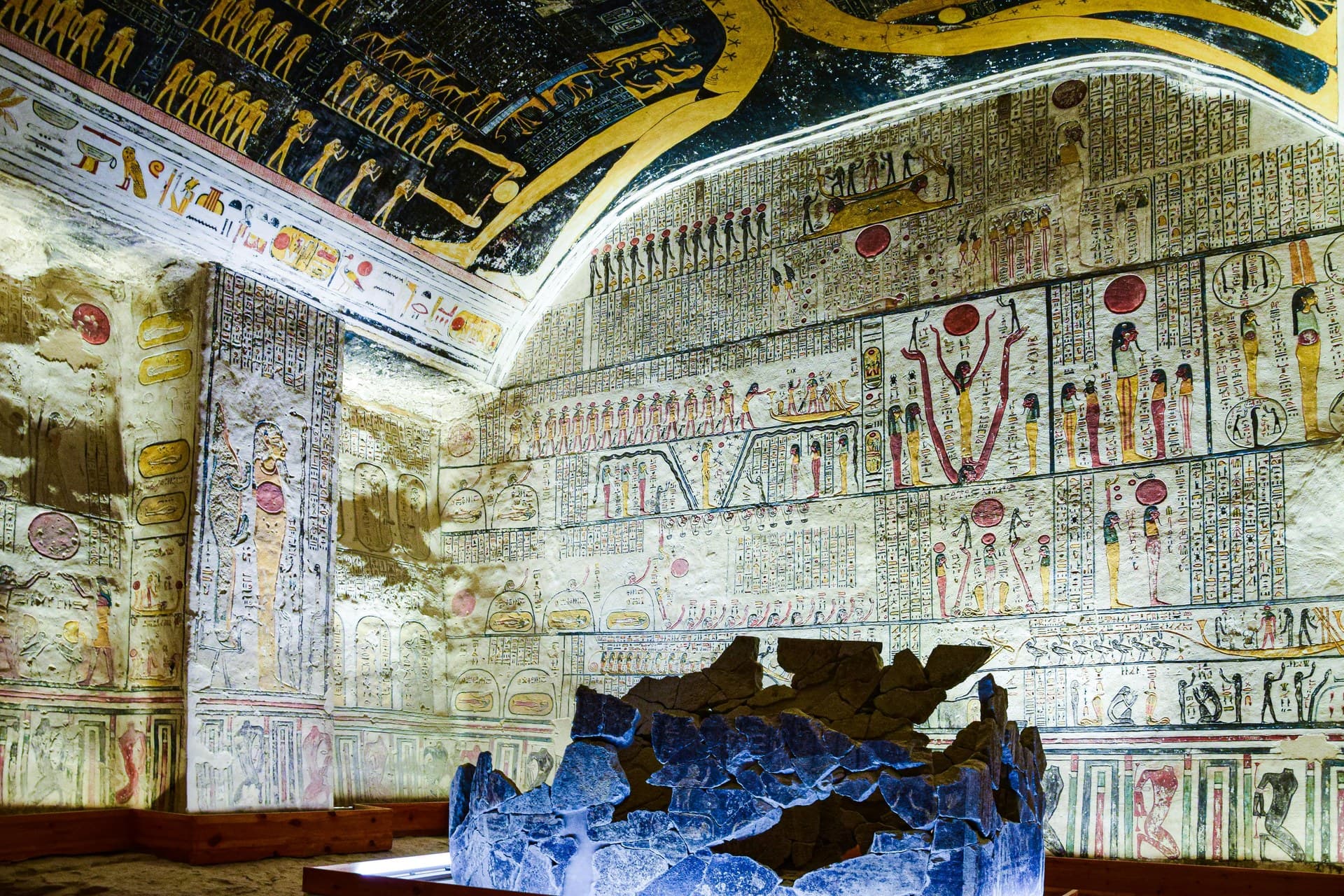
The carving. Egyptian relief is usually judged by Abydos and everything else is measured against it. The figures are modelled rather than outlined — cheekbones, collarbones, the fall of pleated linen, all cut in shallow raised relief so precise that it reads as sculpture rather than decoration. Seti I's reign produced the high point of the craft, and this is where you see it.
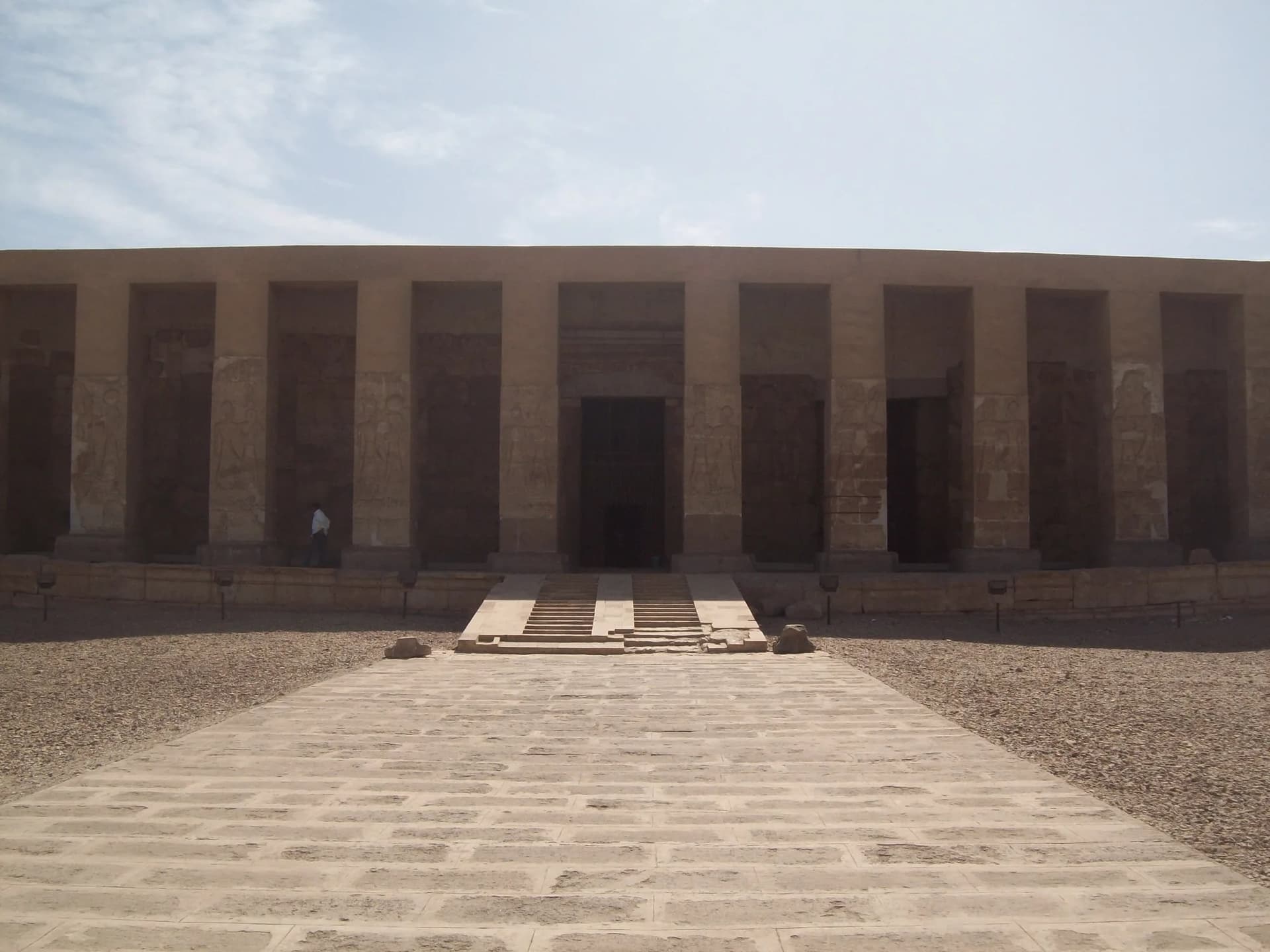
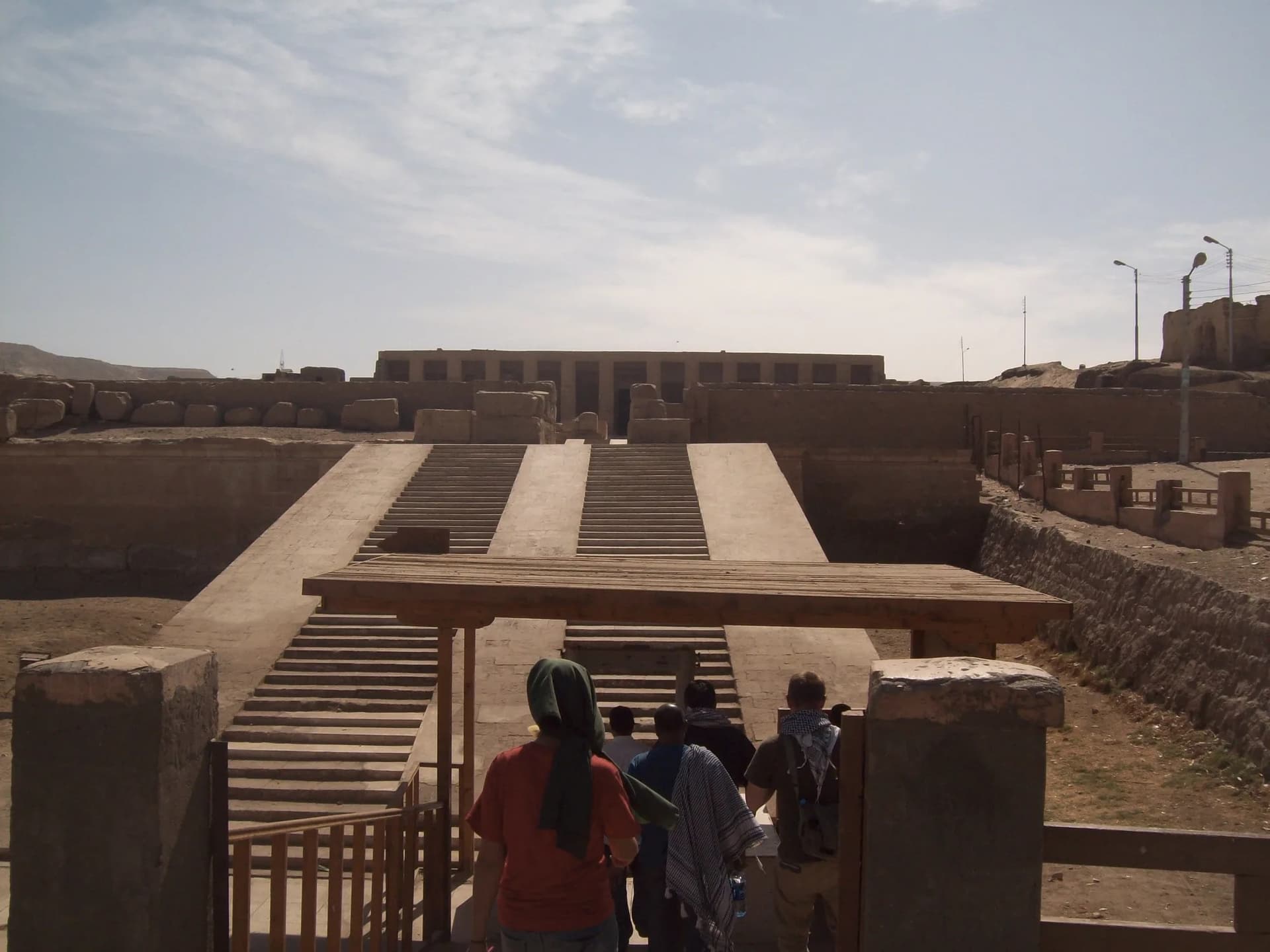
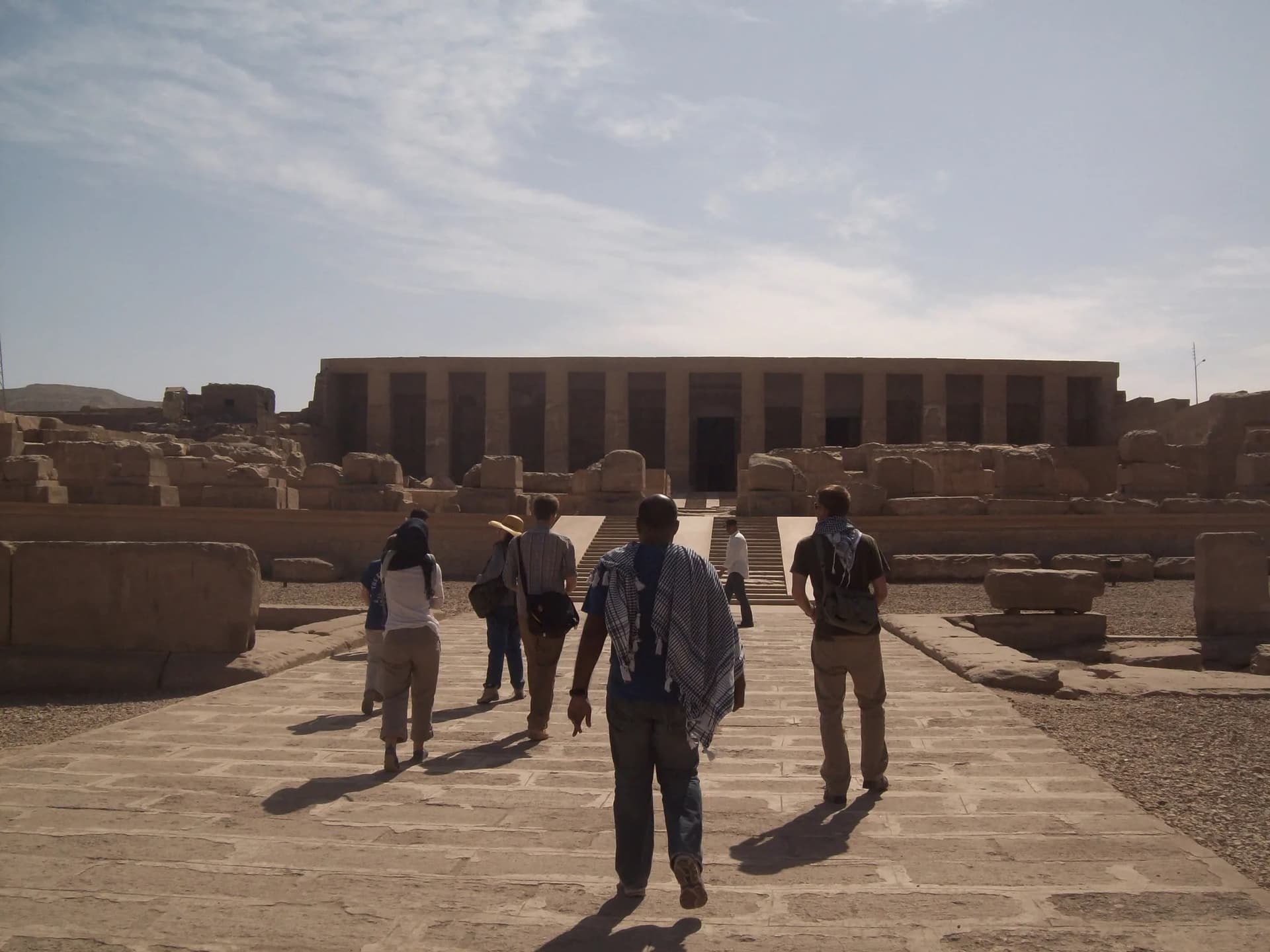
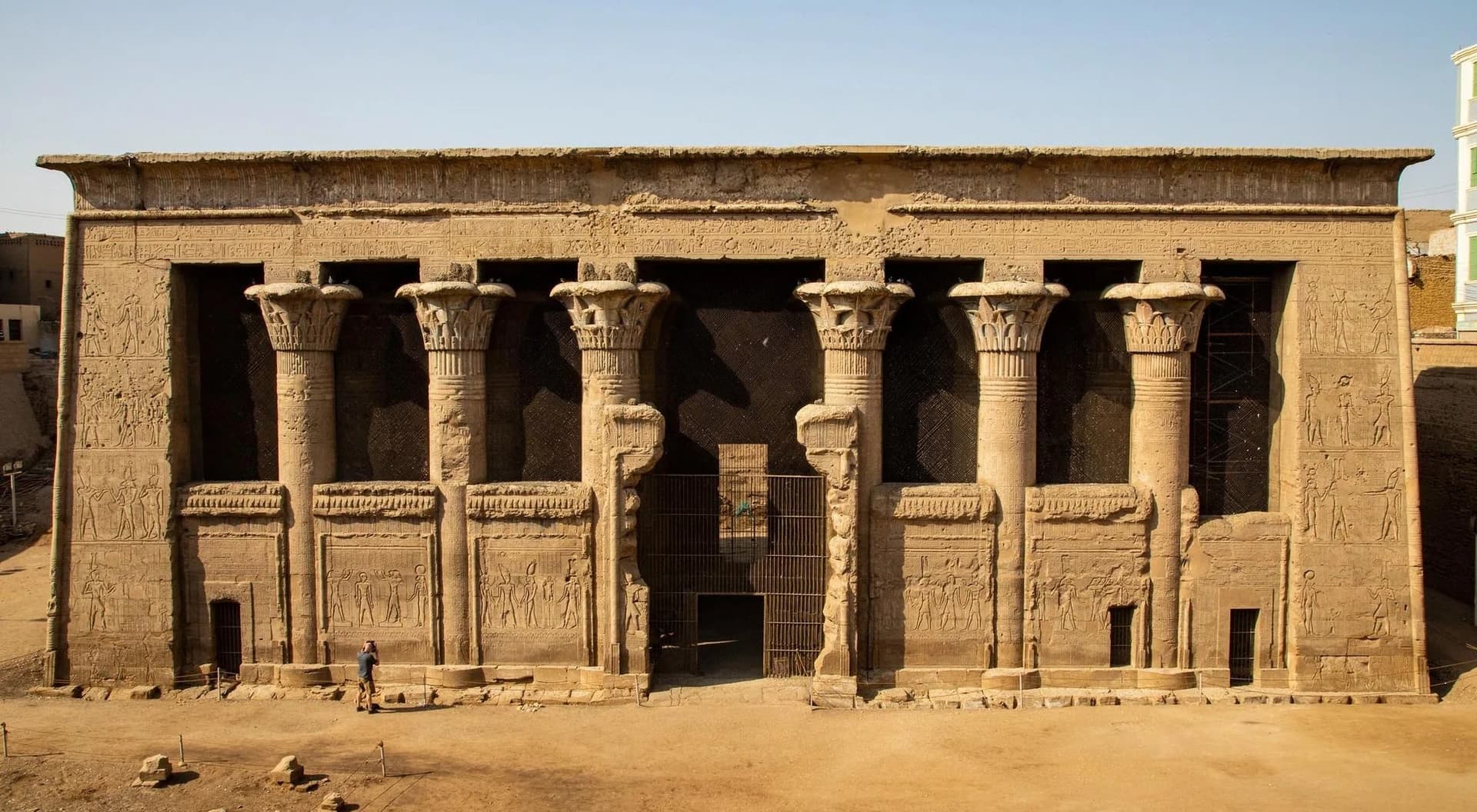
The building itself is unusual. Instead of the single axis of a normal Egyptian temple it has seven sanctuaries side by side, dedicated to Seti I himself, Ptah, Re-Horakhty, Amun-Ra, Osiris, Isis and Horus. The temple also turns an unexplained right angle, wrapping around something to the south.
And there is the King List. In a corridor off the main temple, Seti I and his young son Ramesses II are shown making offerings to a list of seventy-six of their predecessors, in order. It is one of the foundation documents of Egyptian chronology — and it is also a political document, because the rulers the 19th dynasty preferred to forget, Hatshepsut and the Amarna pharaohs among them, are simply left out.