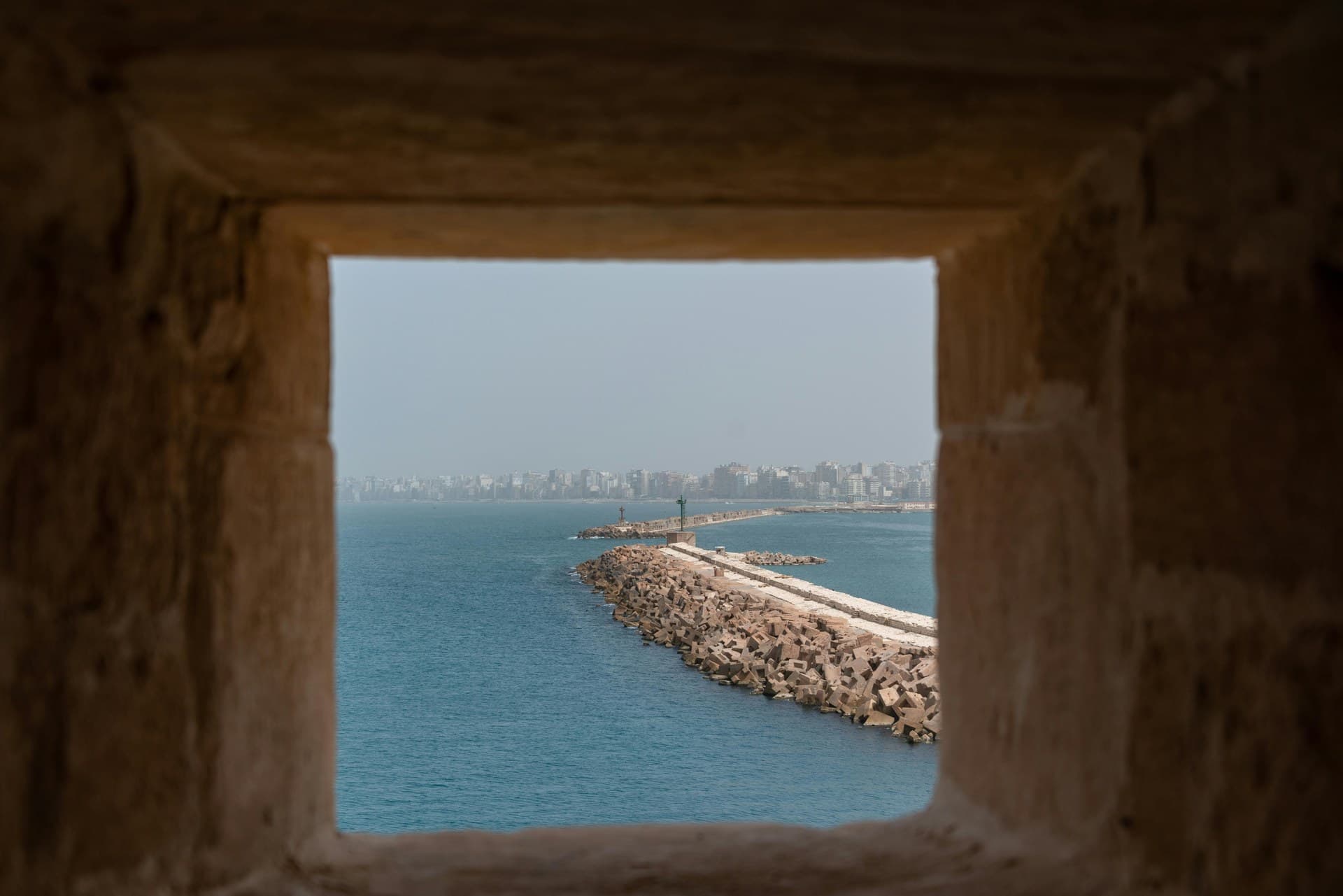
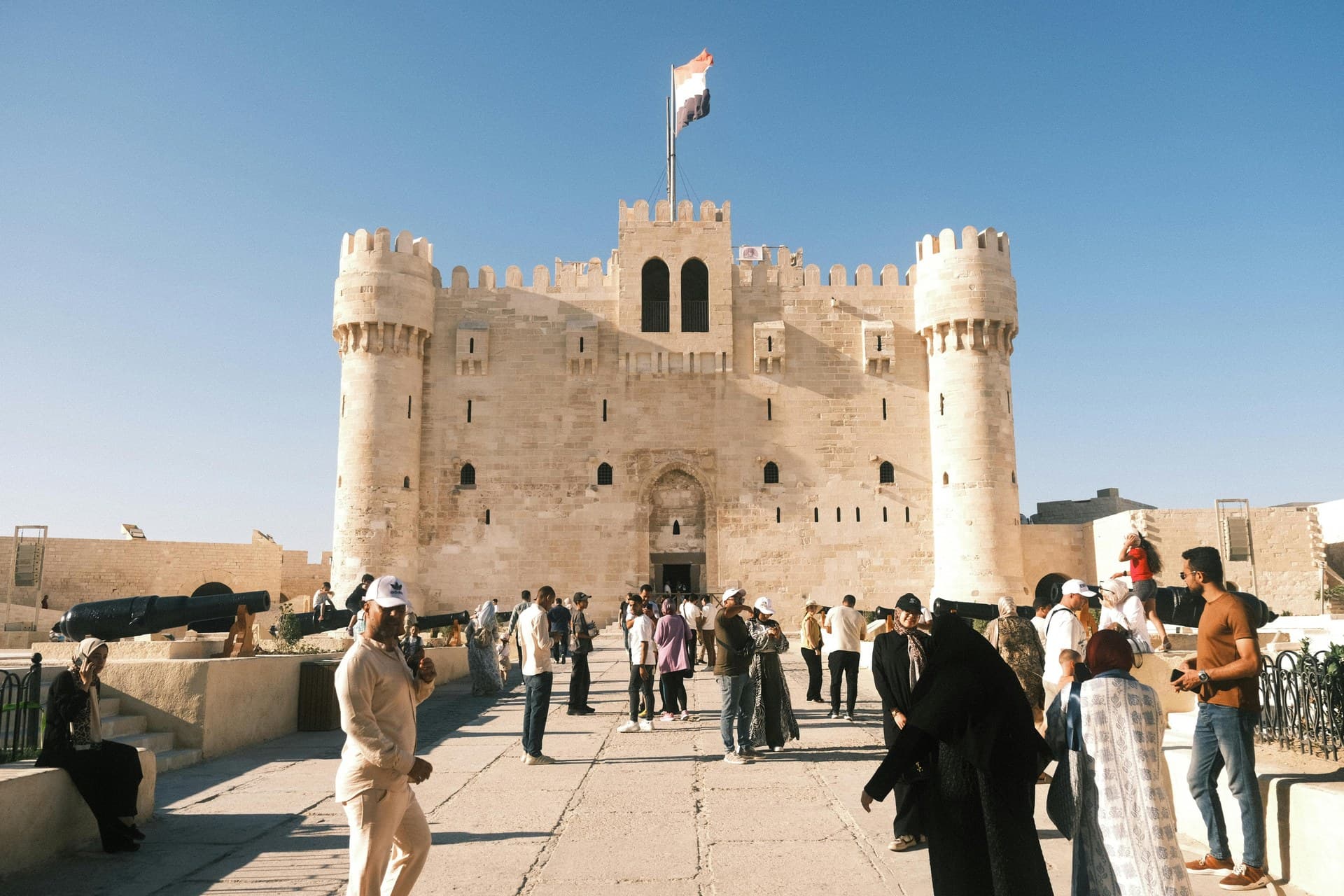
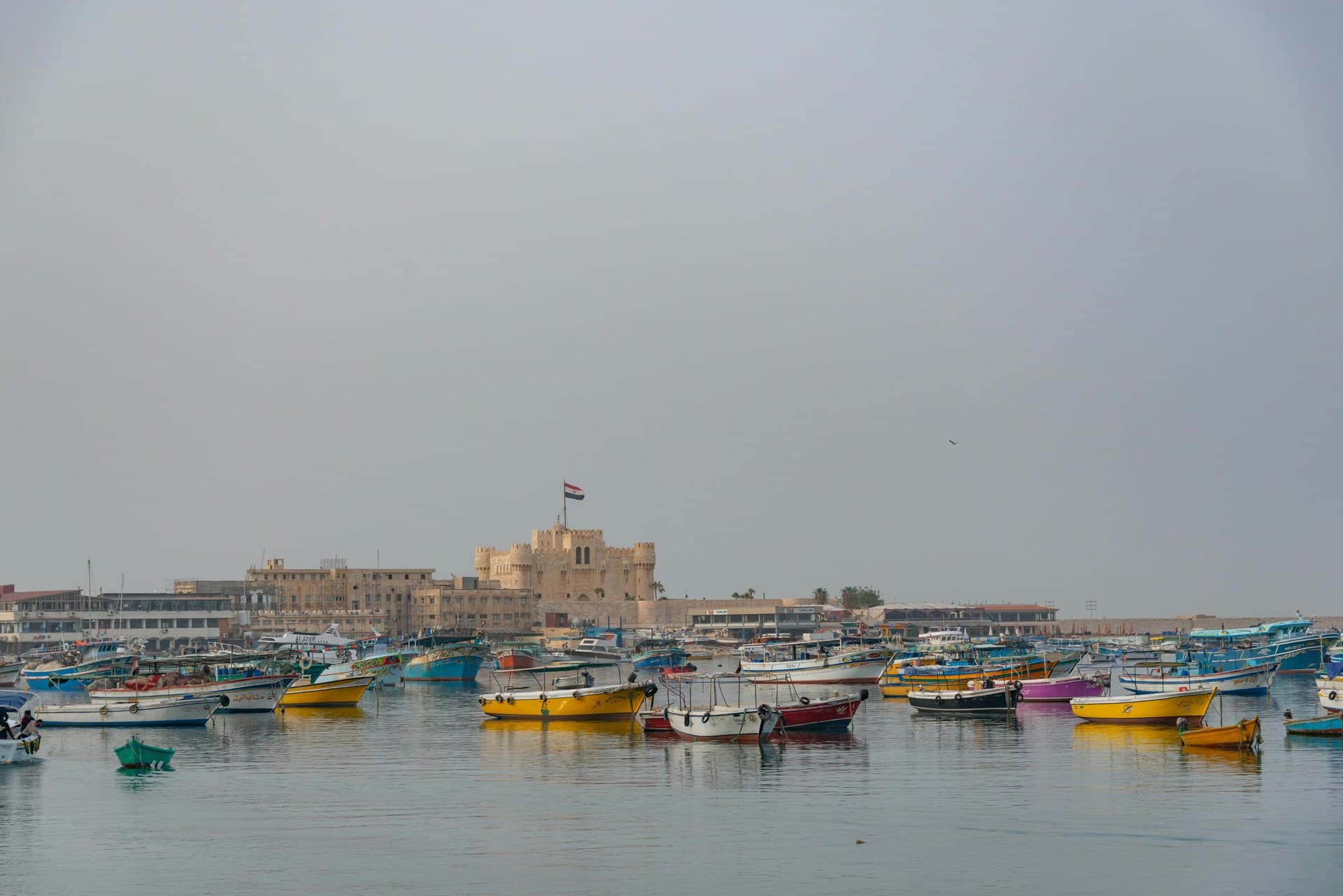
The location is superb. Sea on three sides, the whole curve of the Corniche visible from the ramparts, fishing boats working around the breakwater, and wind coming straight off the Mediterranean. After the heat of Upper Egypt it is a genuine change of climate.
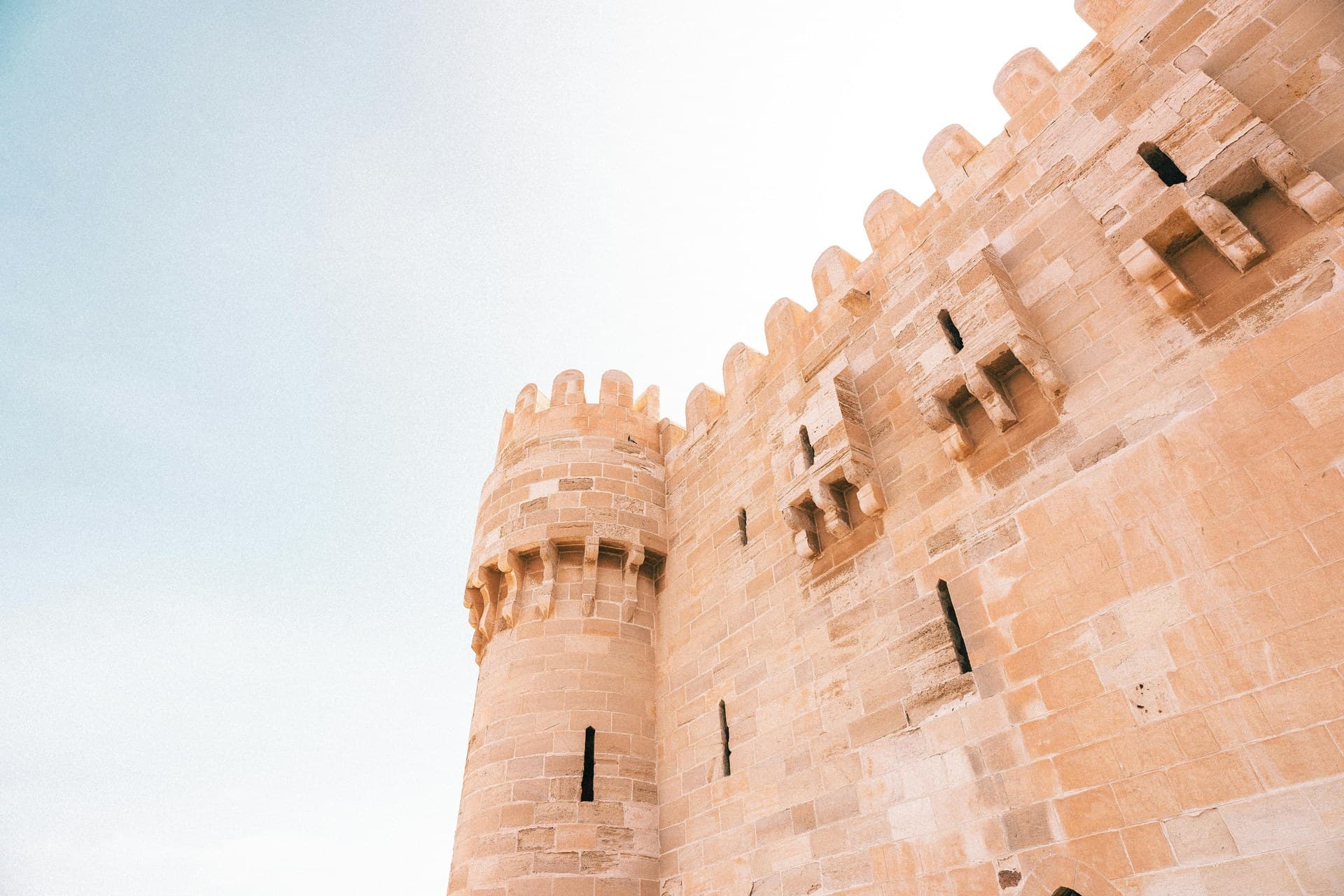
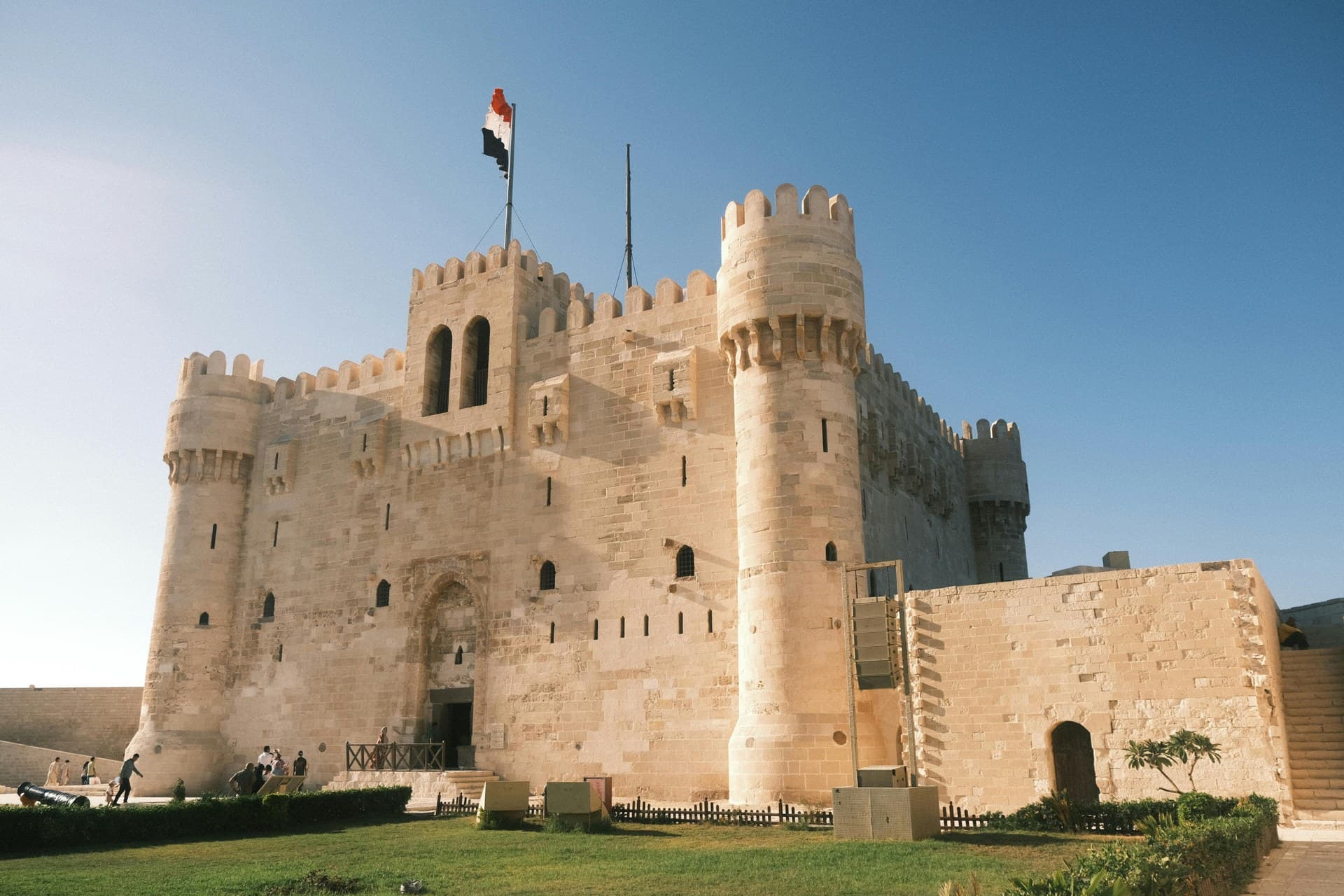
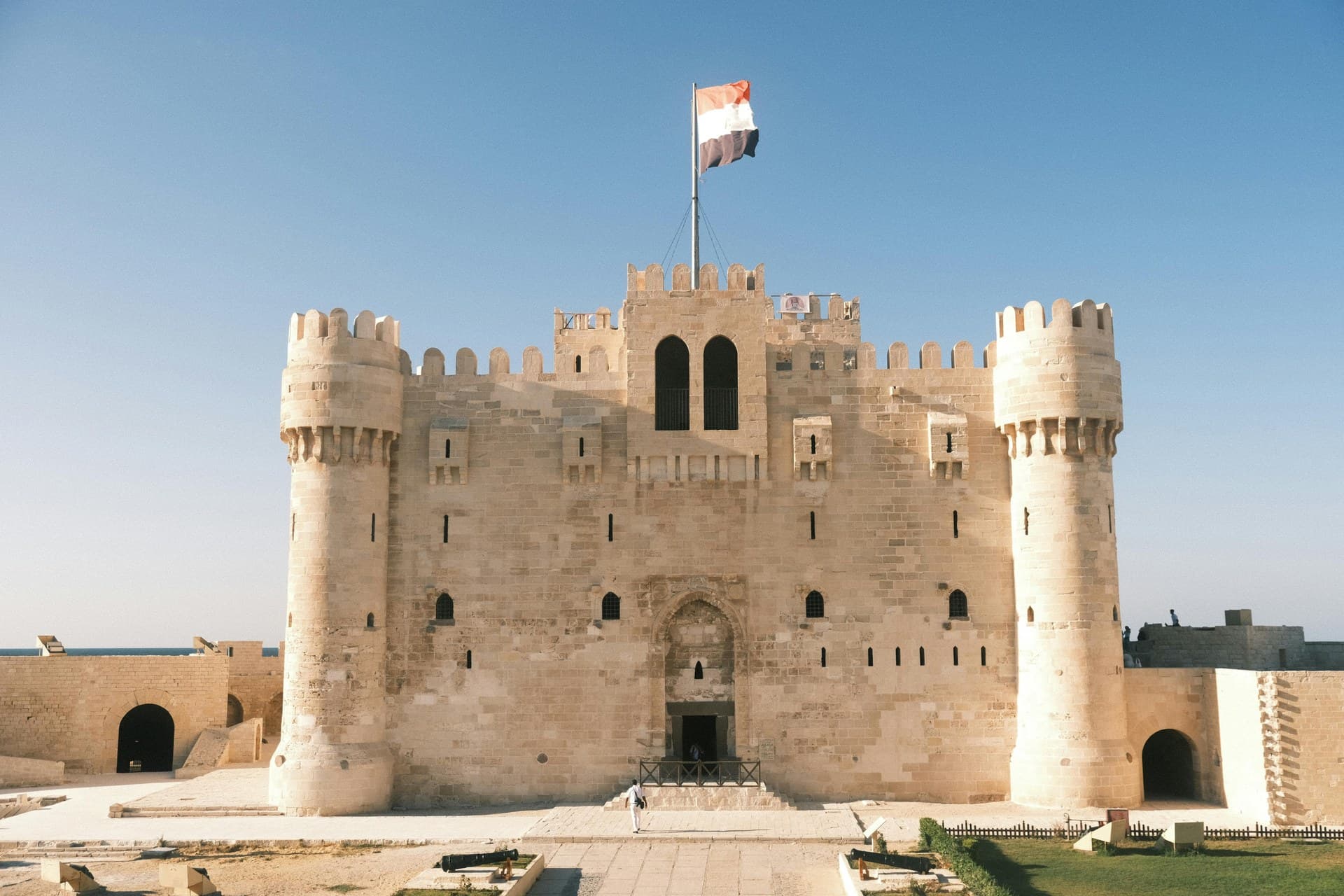
The lighthouse connection is real, not marketing. The Pharos stood here for well over a thousand years before earthquakes brought it down, and when Sultan Qaitbay built his fort in the 1480s he used the fallen material. Large blocks and red granite columns in the walls are widely accepted as lighthouse stone.
More of the Pharos is in the water. Underwater surveys in the harbour have mapped a large field of blocks, columns and statuary, some of it lighthouse debris and some from the sunken royal quarter. Diving on it is possible with local operators.
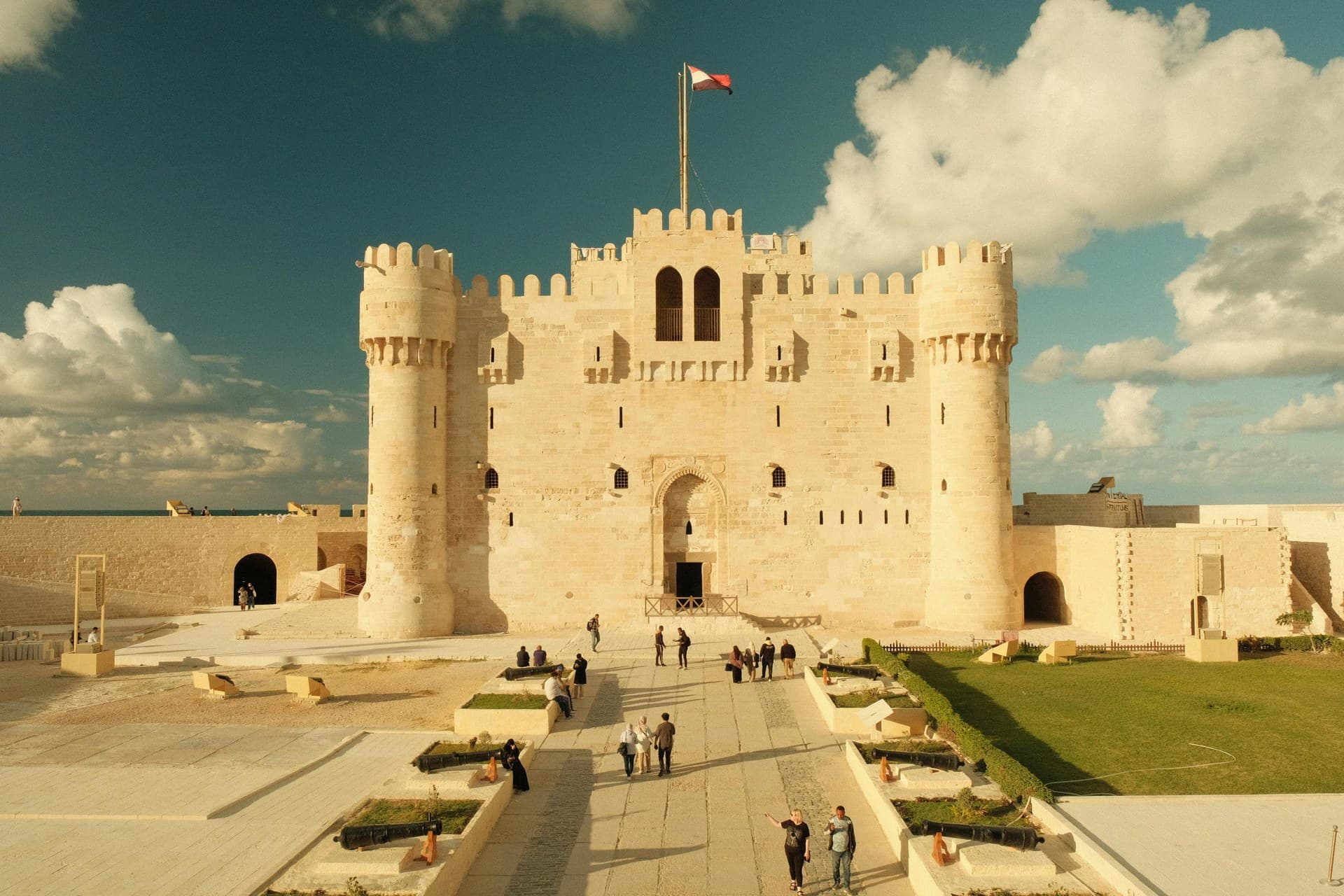
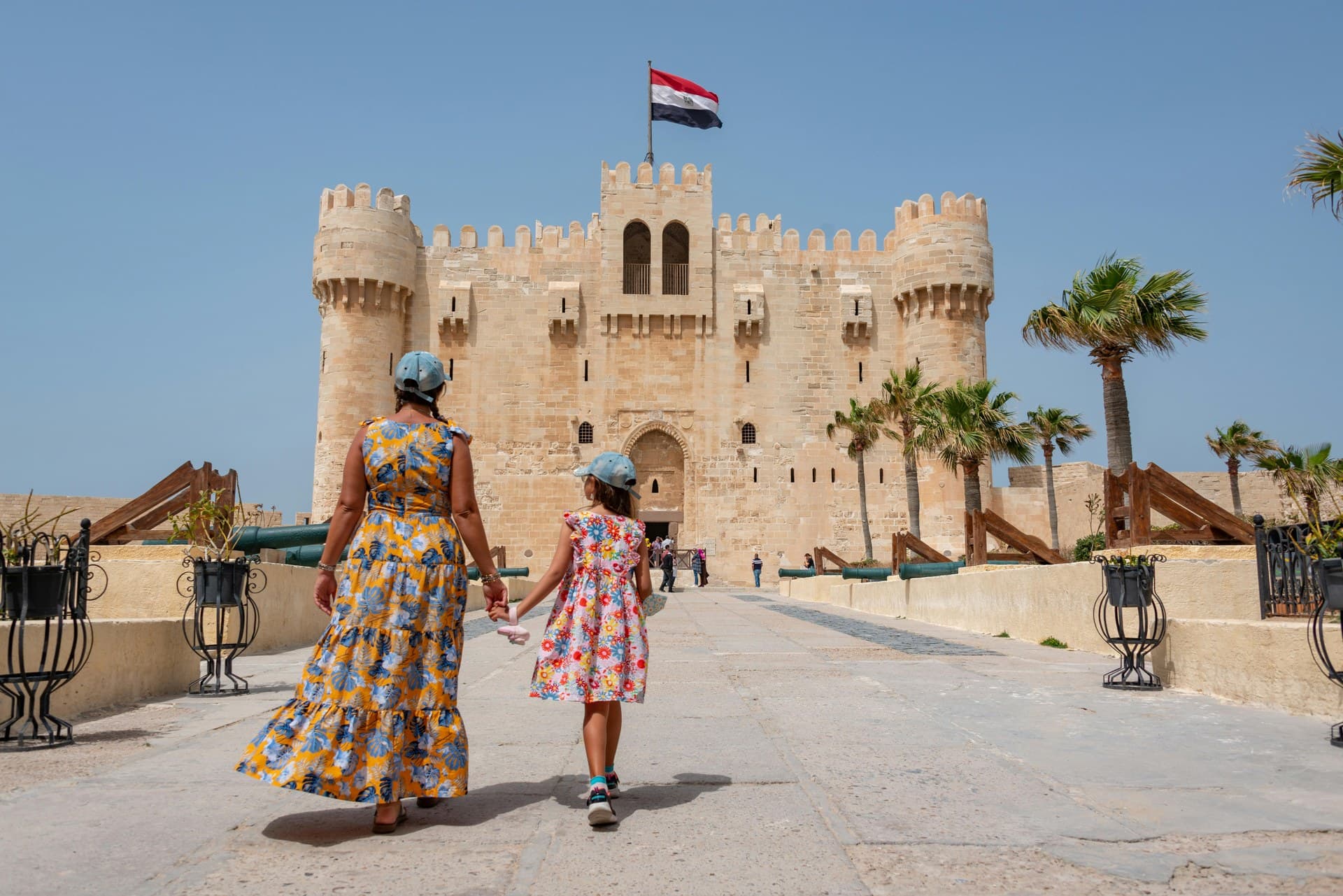
The fort itself is compact and easy to walk, with a small naval museum inside.