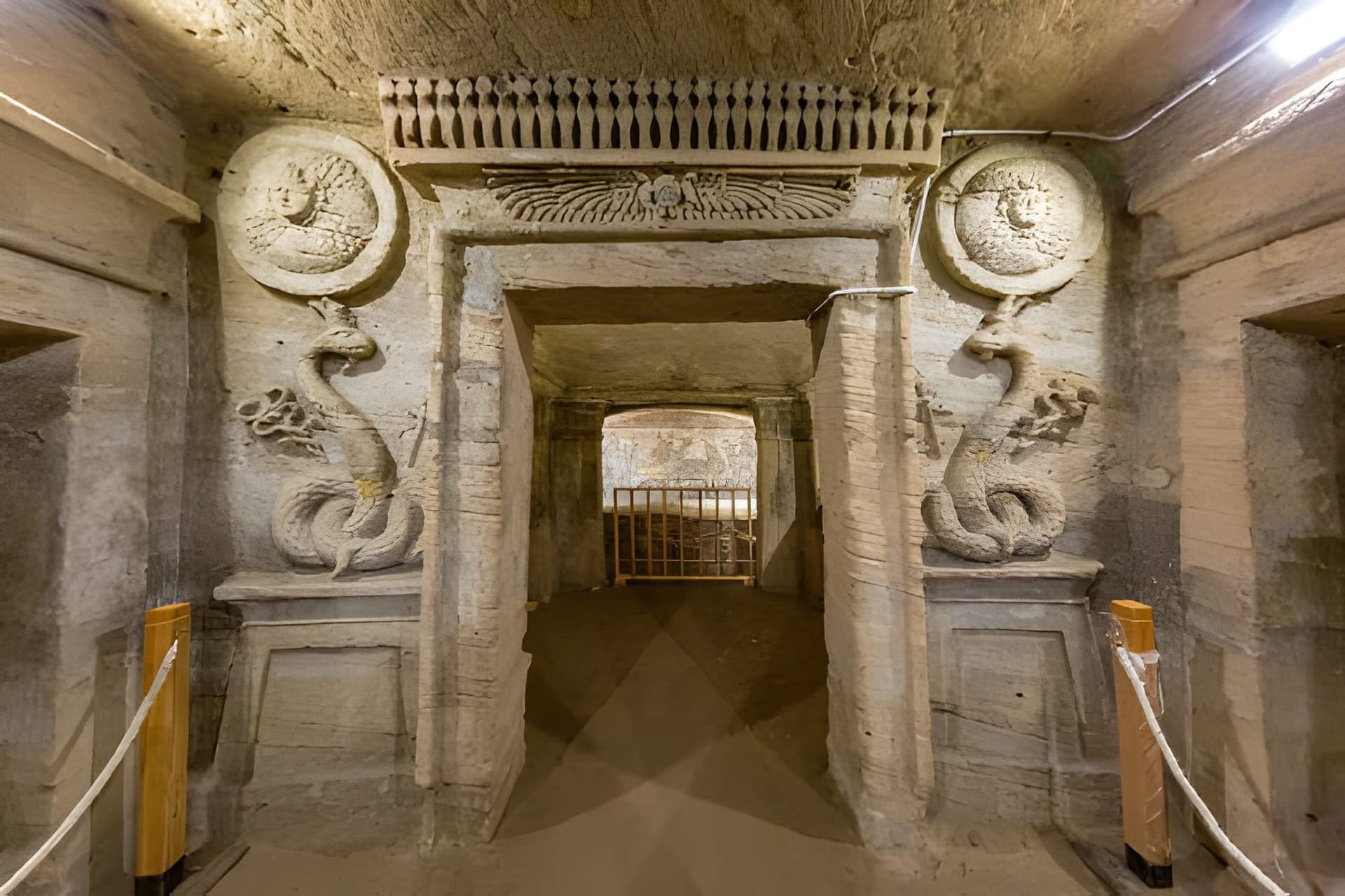
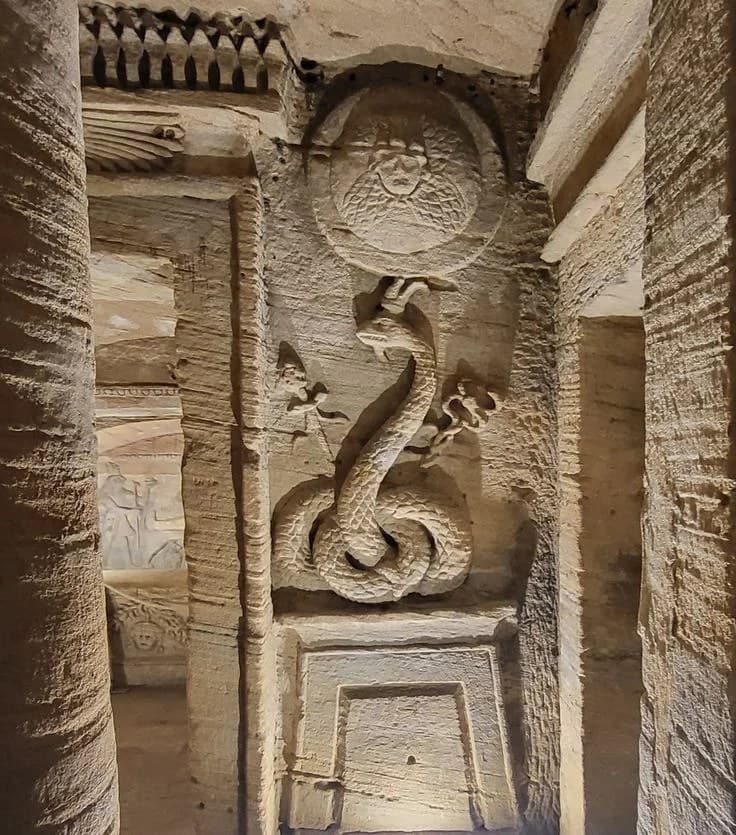
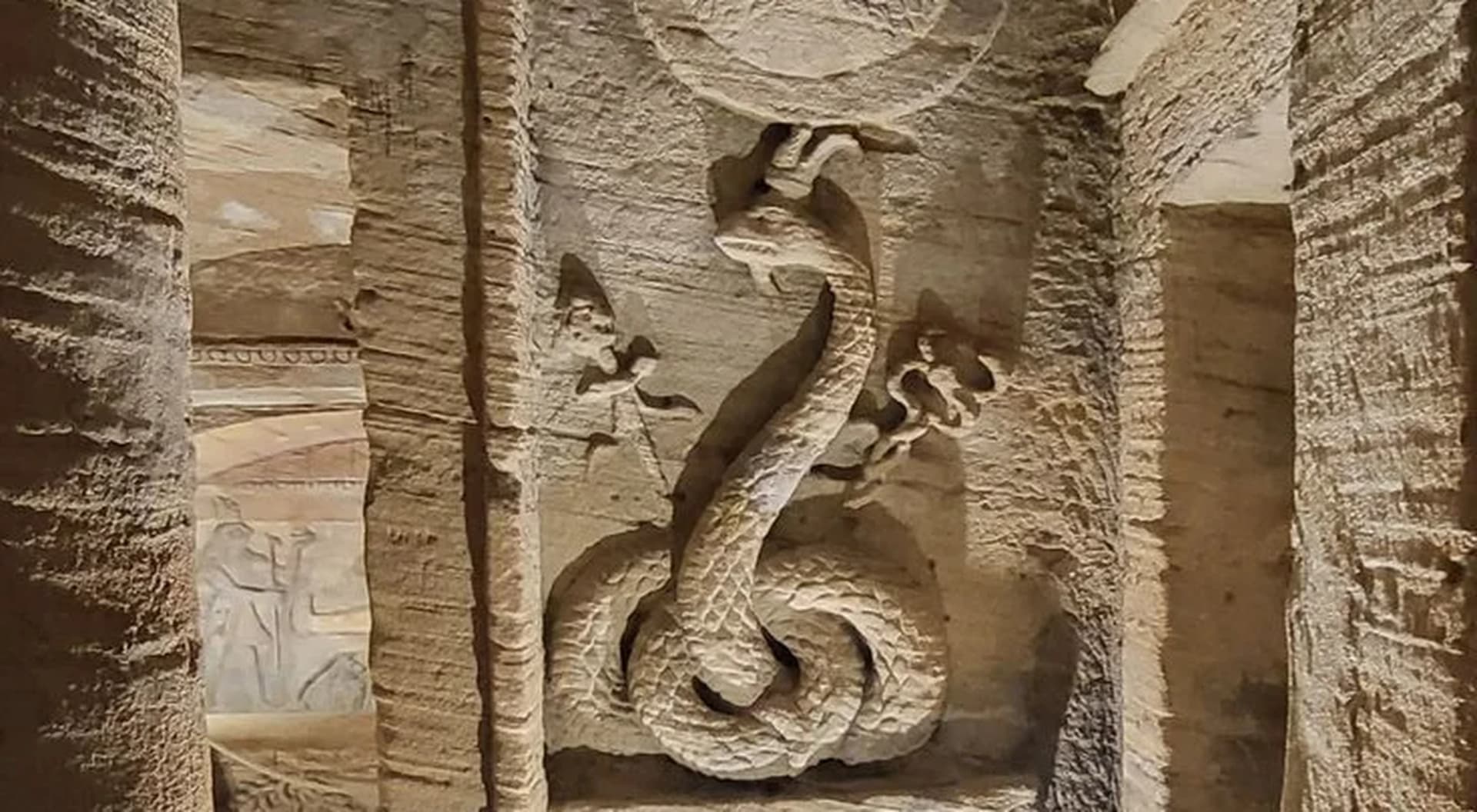
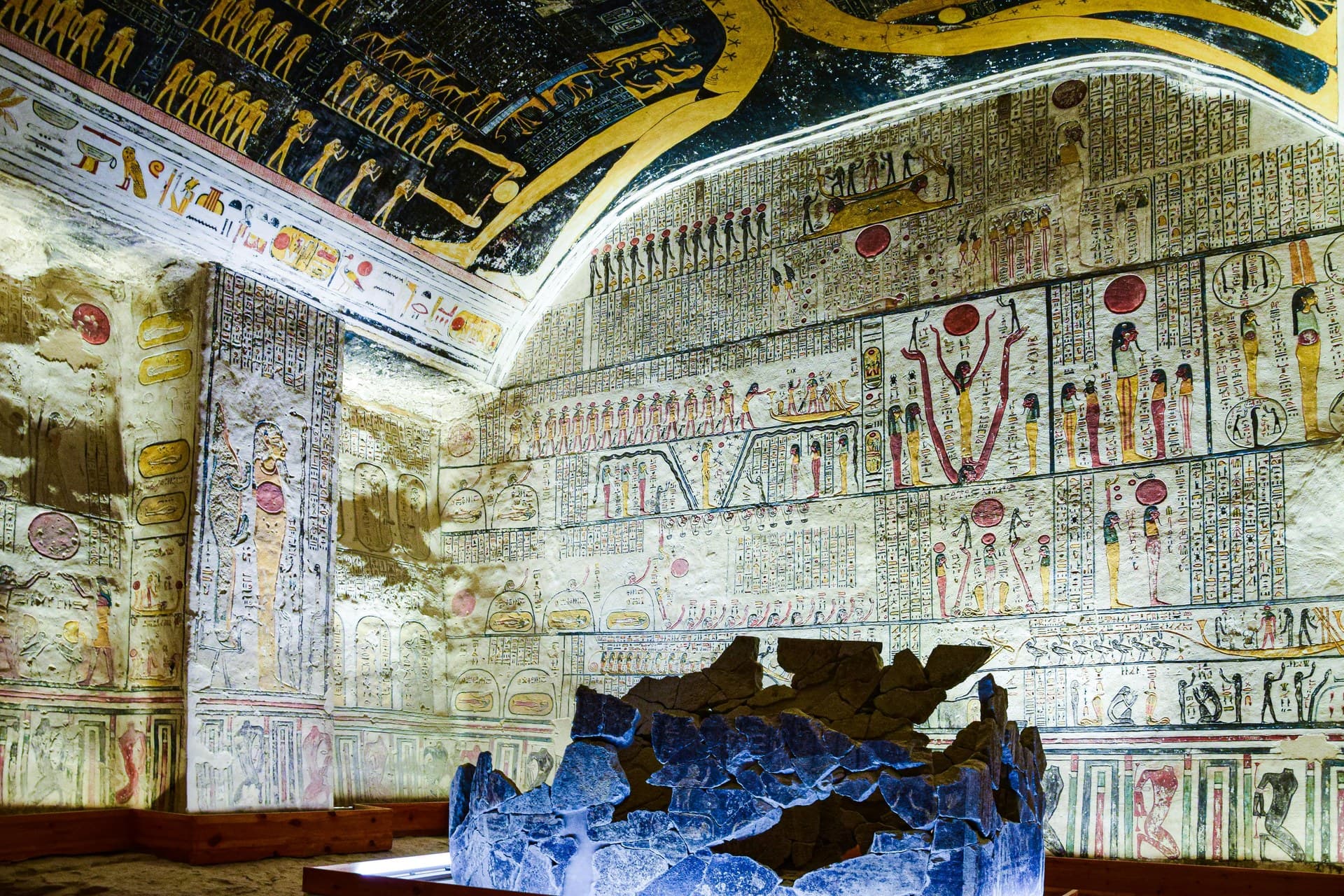
The tomb dates to around the second century AD and began as a private family burial, then expanded over time as more chambers were cut around it and it took in more bodies.
It came to light in 1900, and the traditional account is that a cart animal broke through into the shaft. Excavation followed immediately.
One adjoining space, usually called the Hall of Caracalla, contained a quantity of human and horse bones. The name attaches it to the massacre the emperor Caracalla is said to have carried out in Alexandria, though that connection is a tradition rather than an established fact.
The flooding of the lowest level is Alexandria's oldest enemy at work: the city has been subsiding for two thousand years and groundwater rises through the rock. A conservation project in recent years installed pumping to hold the water table down, which is what keeps the second level dry and open.
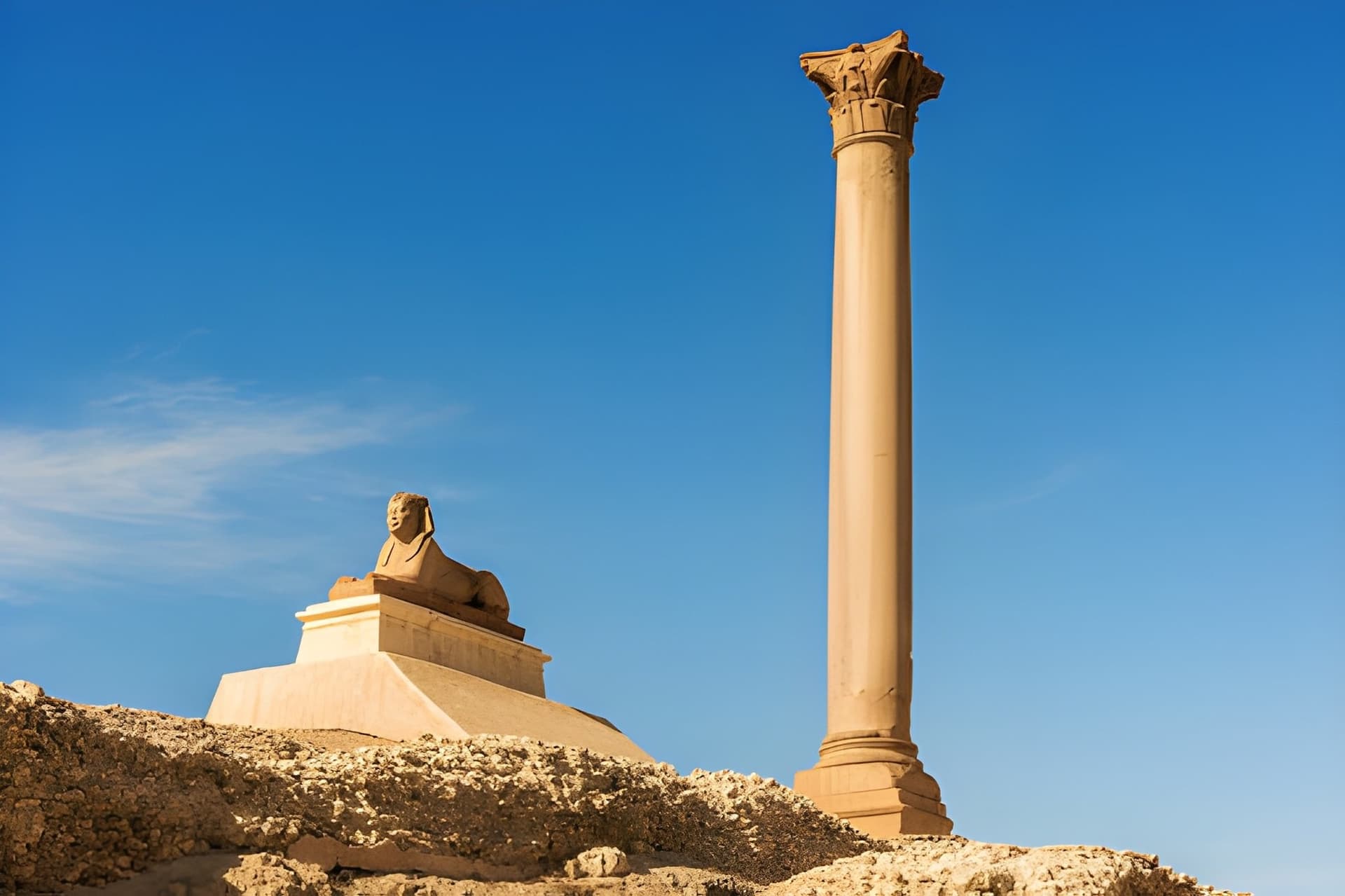
Kom el-Shoqafa is also shorthand for a larger truth about Alexandria: almost nothing of the ancient city survives above ground. The palaces and the Library are gone, under the sea or under the streets; what remains is what was cut downward into rock — cisterns, tombs, foundations. Alexandria's antiquity is underground.