The ancient library was founded under the early Ptolemies in the third century BC and was attached to the Mouseion, a research institution that drew scholars from across the Greek world. Eratosthenes measured the circumference of the earth while working here.
The roll call goes further: Euclid worked in Ptolemaic Alexandria, and the city's scholars mapped stars, edited Homer and dissected the workings of the human body while Rome was still a regional power. For about two centuries this was the gravitational centre of Greek science.
It did not burn down in one dramatic night. The collection declined over centuries through fire, funding cuts, political upheaval and neglect, and no single event accounts for its end.
The modern building came from an international architecture competition won by the Norwegian practice Snøhetta, then little known, whose tilted granite disc made the firm's name. The carved characters on the outer wall are drawn from writing systems across the world — the building's way of saying that writing itself, not any one language, is the subject.
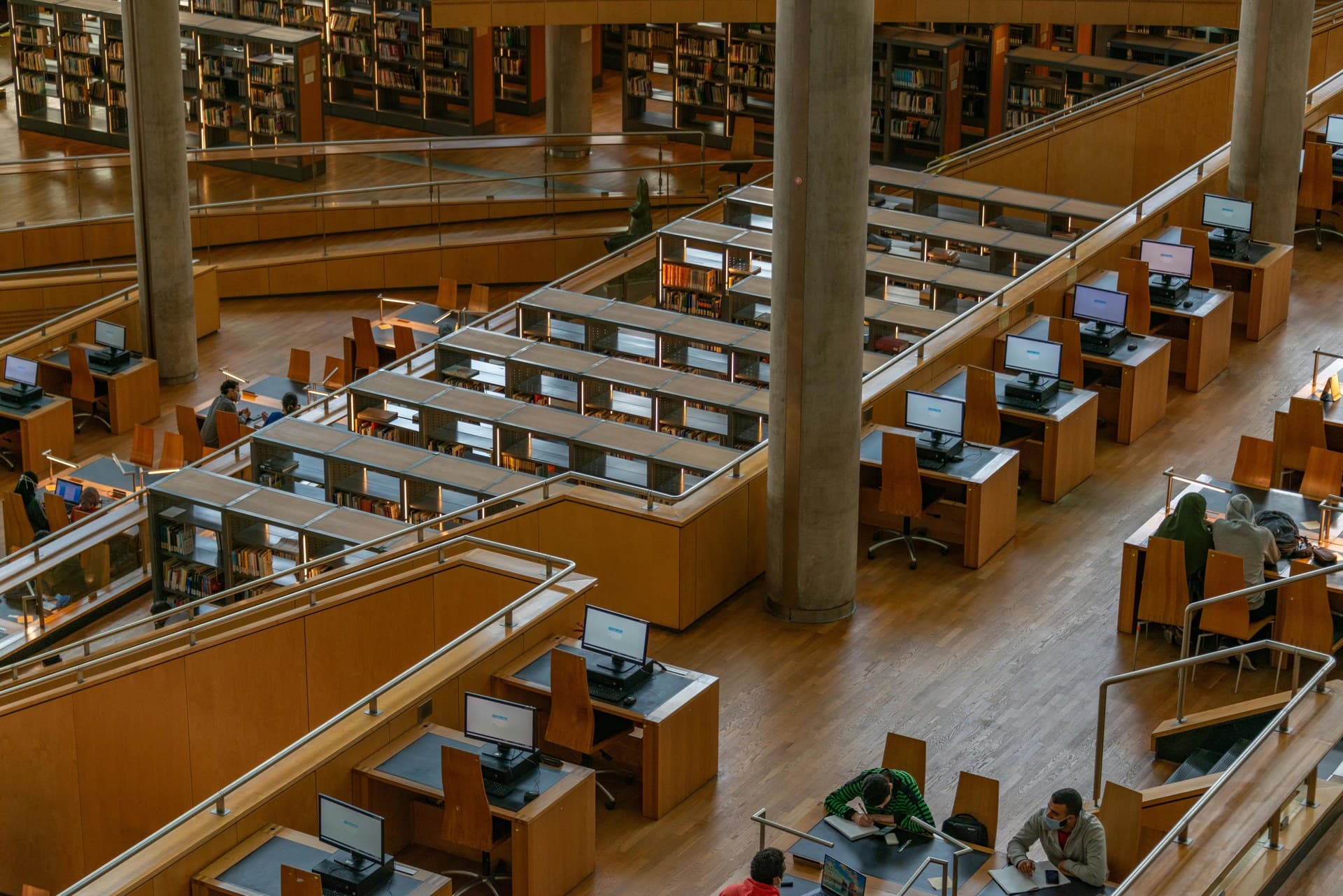
The modern library was built through an international project led by Egypt and UNESCO, and opened in 2002. It has shelf space for millions of volumes, and the collection has grown steadily since opening.