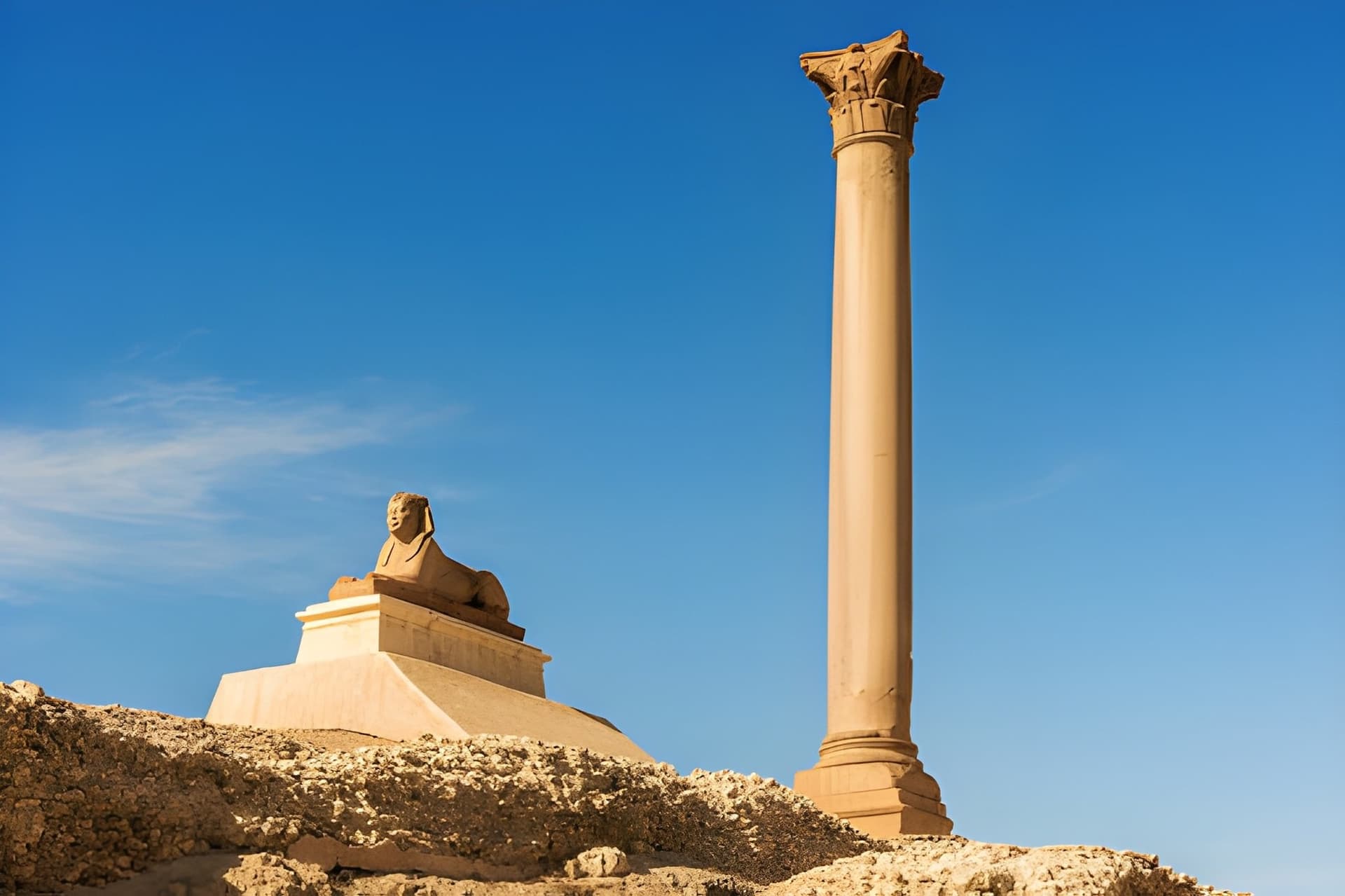
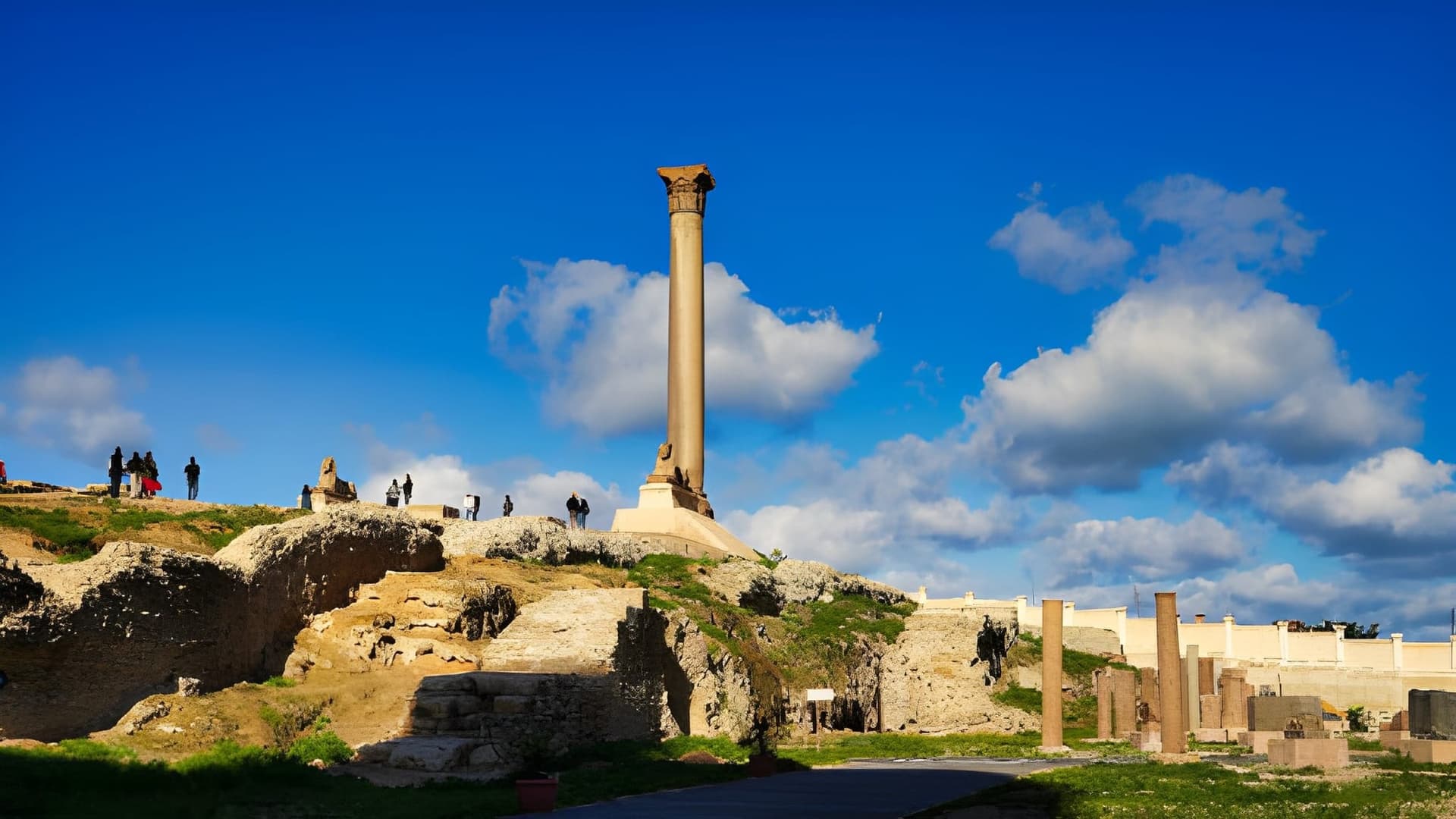
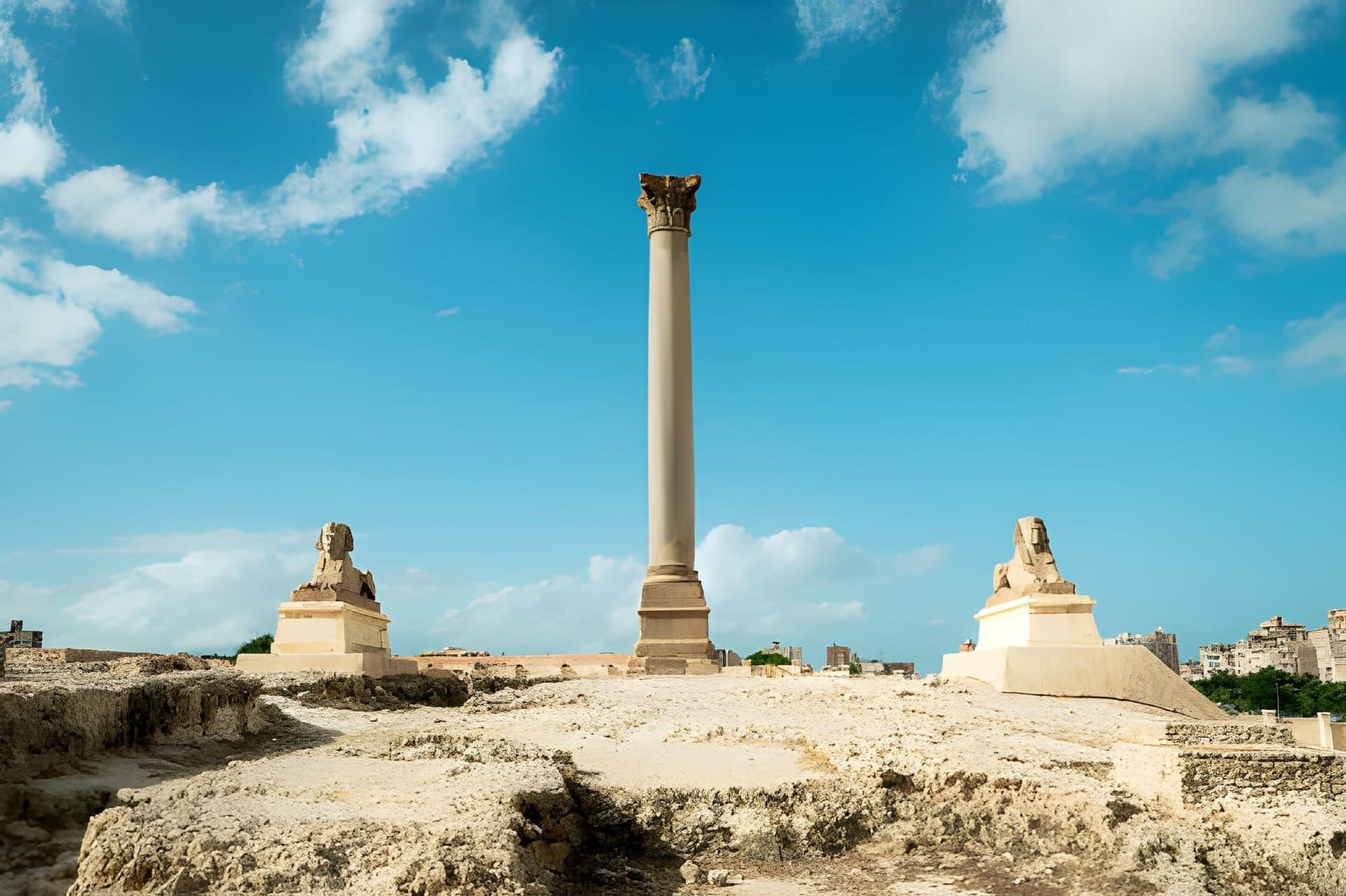
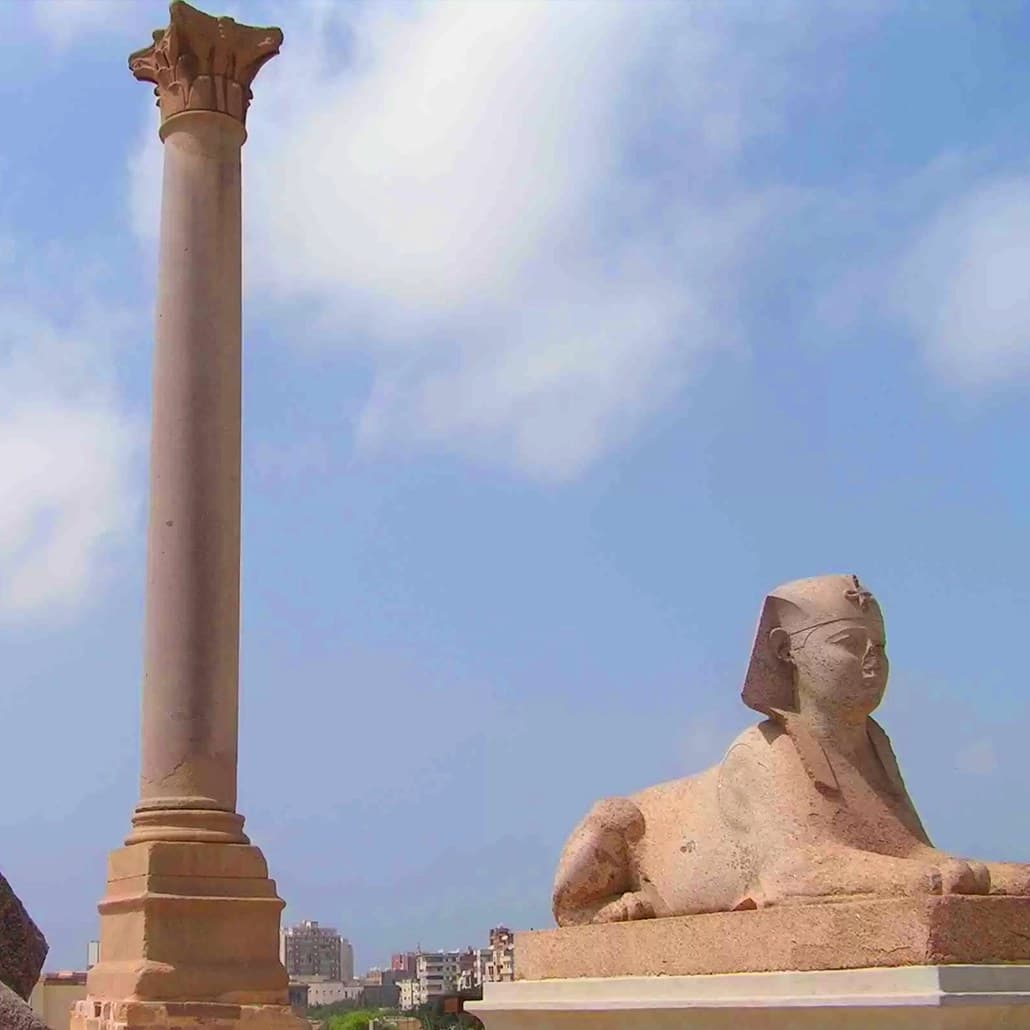
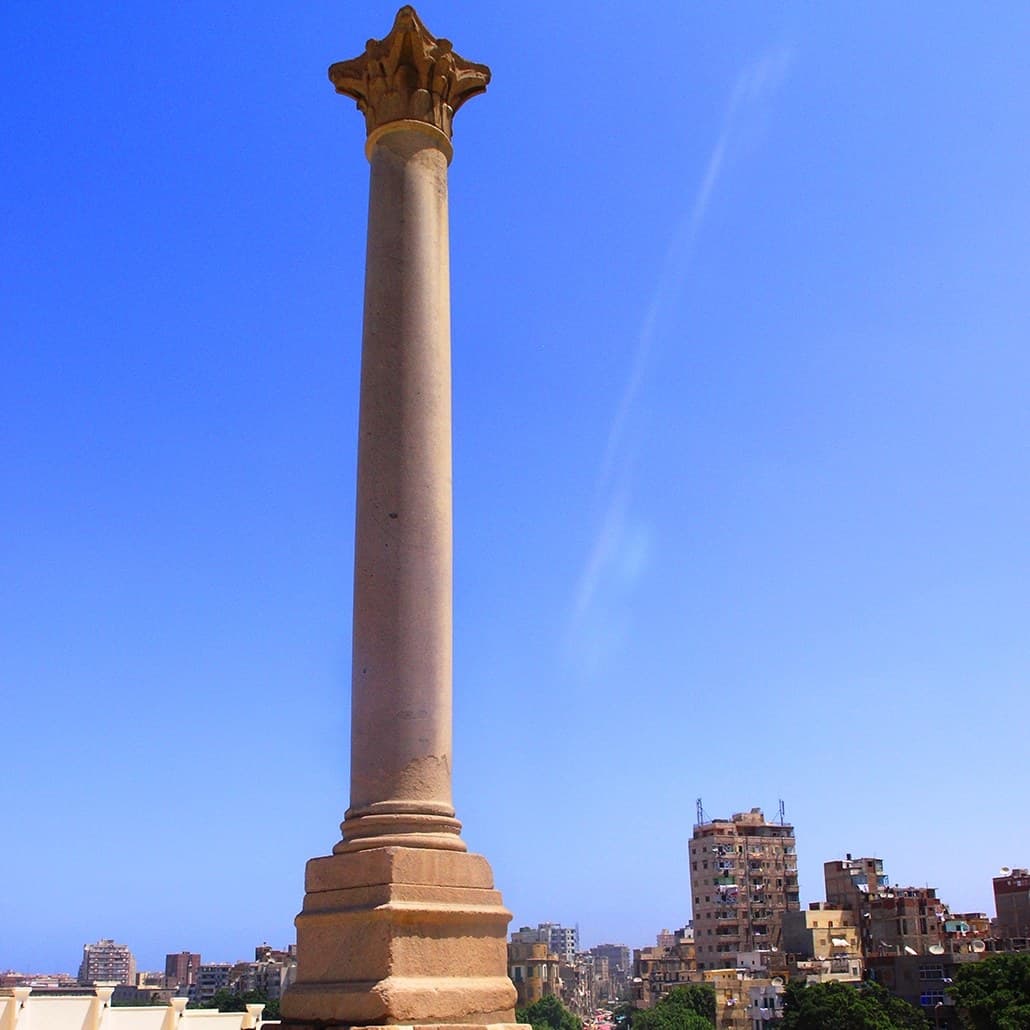
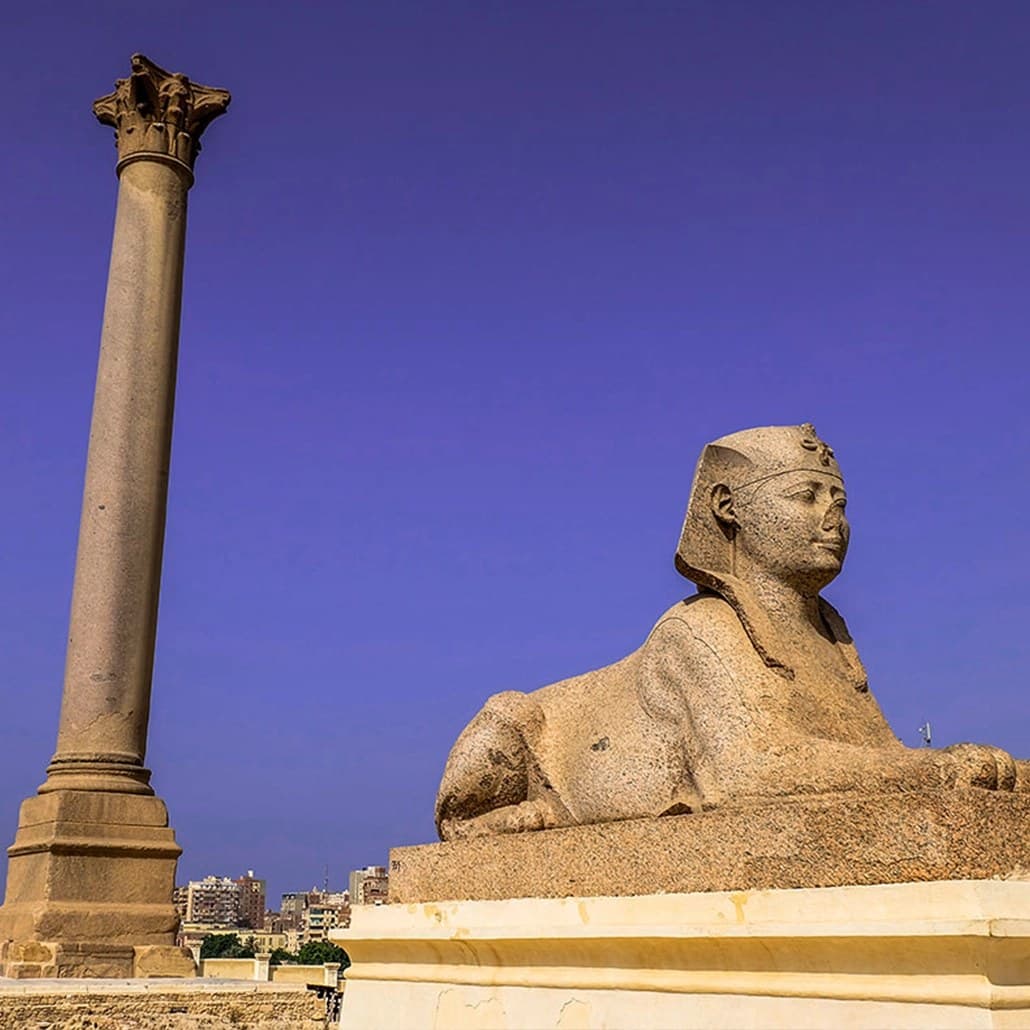
The Serapeum was founded under the Ptolemies for the cult of Serapis, a deliberately synthetic god combining Egyptian Osiris-Apis with Greek attributes, created to give the city's Greek and Egyptian populations a shared object of worship.
The founder was Ptolemy III Euergetes, who reigned from 246 to 222 BC. Bilingual foundation plaques in Greek and hieroglyphs, recovered when Alan Rowe excavated the hill in the 1940s, record the dedication in his name. The complex was rebuilt on a larger scale in the Roman period.
The column was raised around AD 300, according to the dedication cut into its base, in honour of Diocletian. It has stood on that spot ever since.
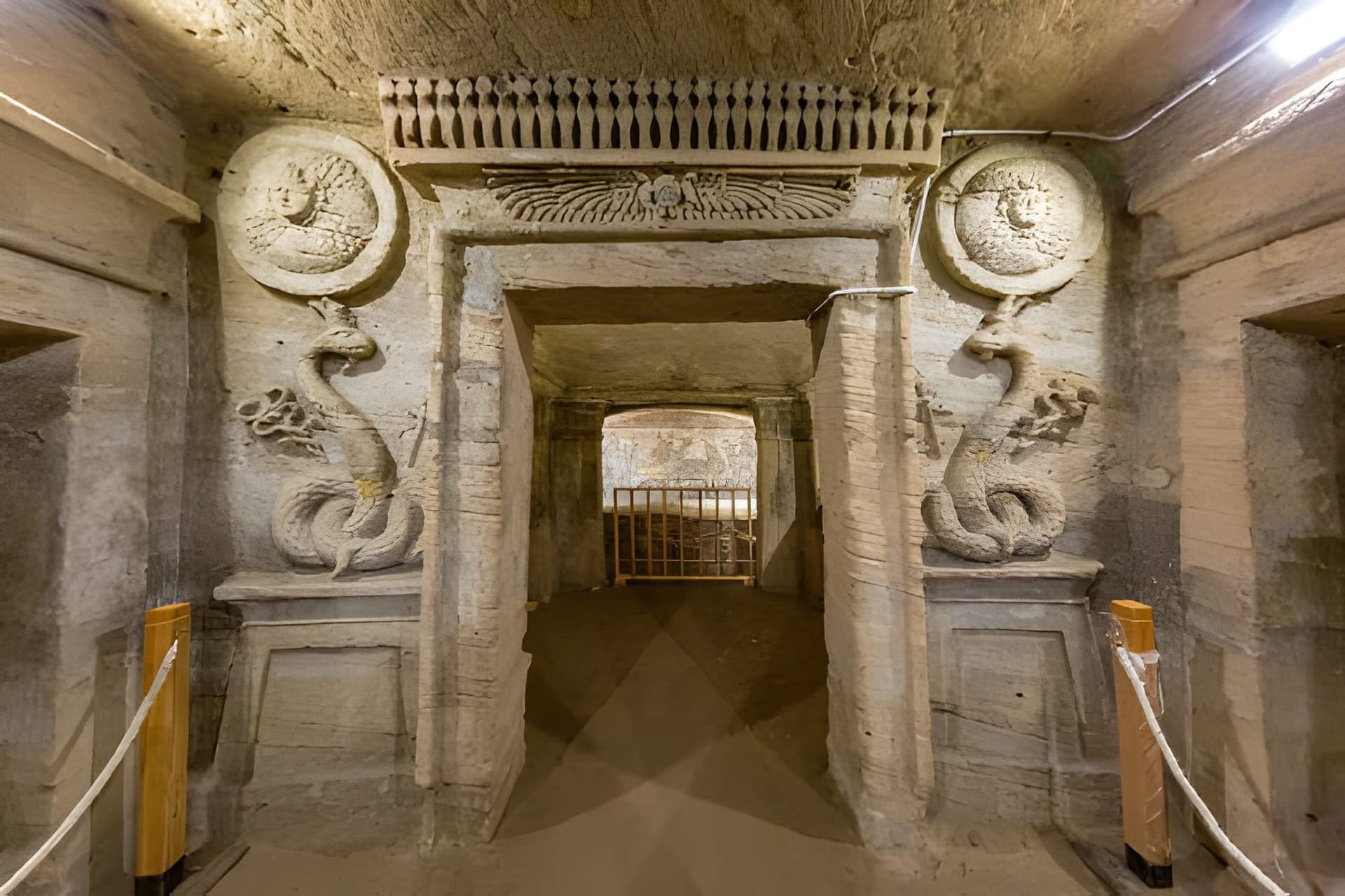
In AD 391 the temple was destroyed during the campaign against pagan cults in the city under the patriarch Theophilus. A church was raised on the ruins, and the ground was quarried and built over for centuries afterwards. The hill itself is not a heap of rubble, though: it is the natural rock ridge of old Rhakotis, buried under later occupation debris — which is why the galleries and cisterns beneath the platform could be cut into solid stone. The monument's own Arabic name is Amud el-Sawari, the pillar of columns.
The galleries under the platform were opened up in the 1890s by Giuseppe Botti, the first director of Alexandria's Greco-Roman Museum. What came out of them included a black stone statue of the Apis bull, of Roman date, now in the city's museum collection.