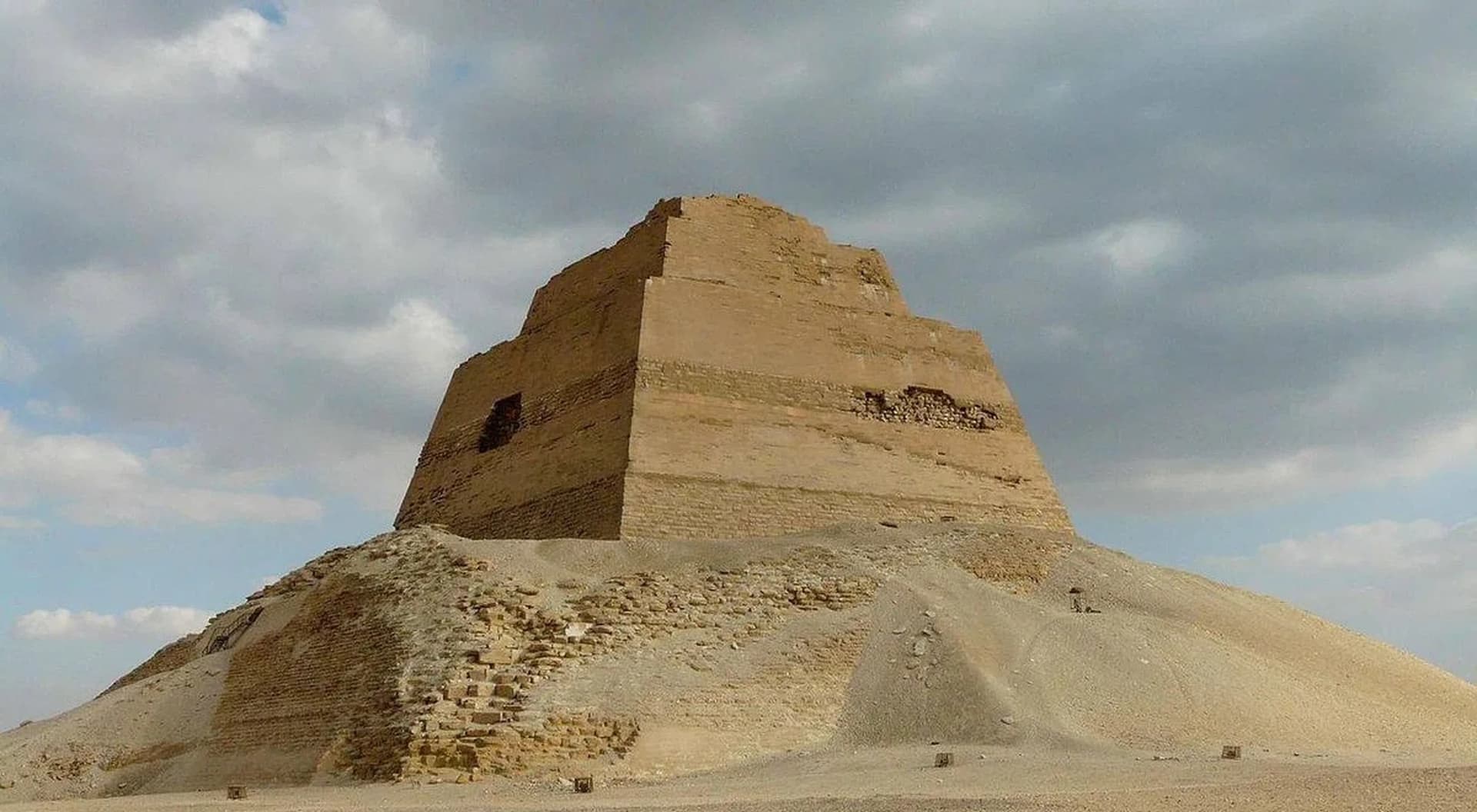
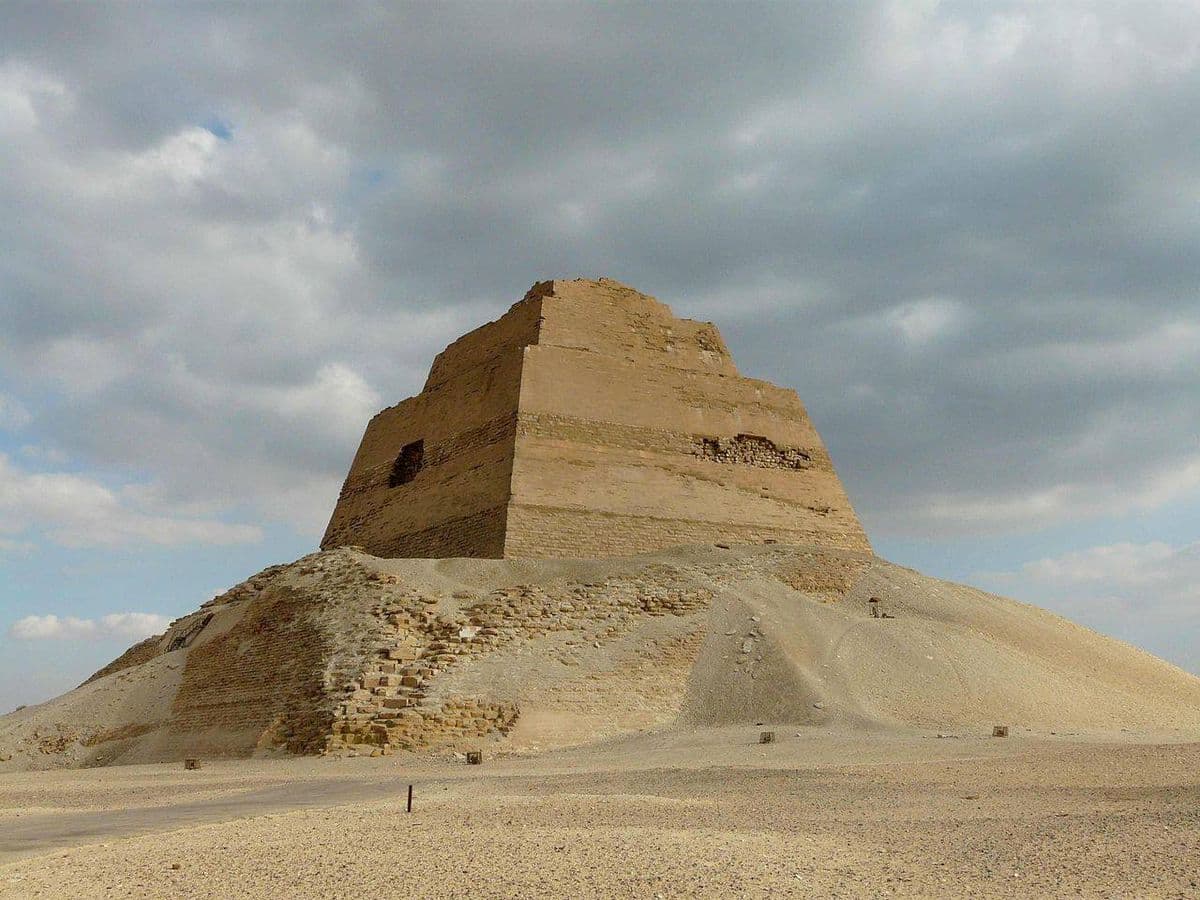
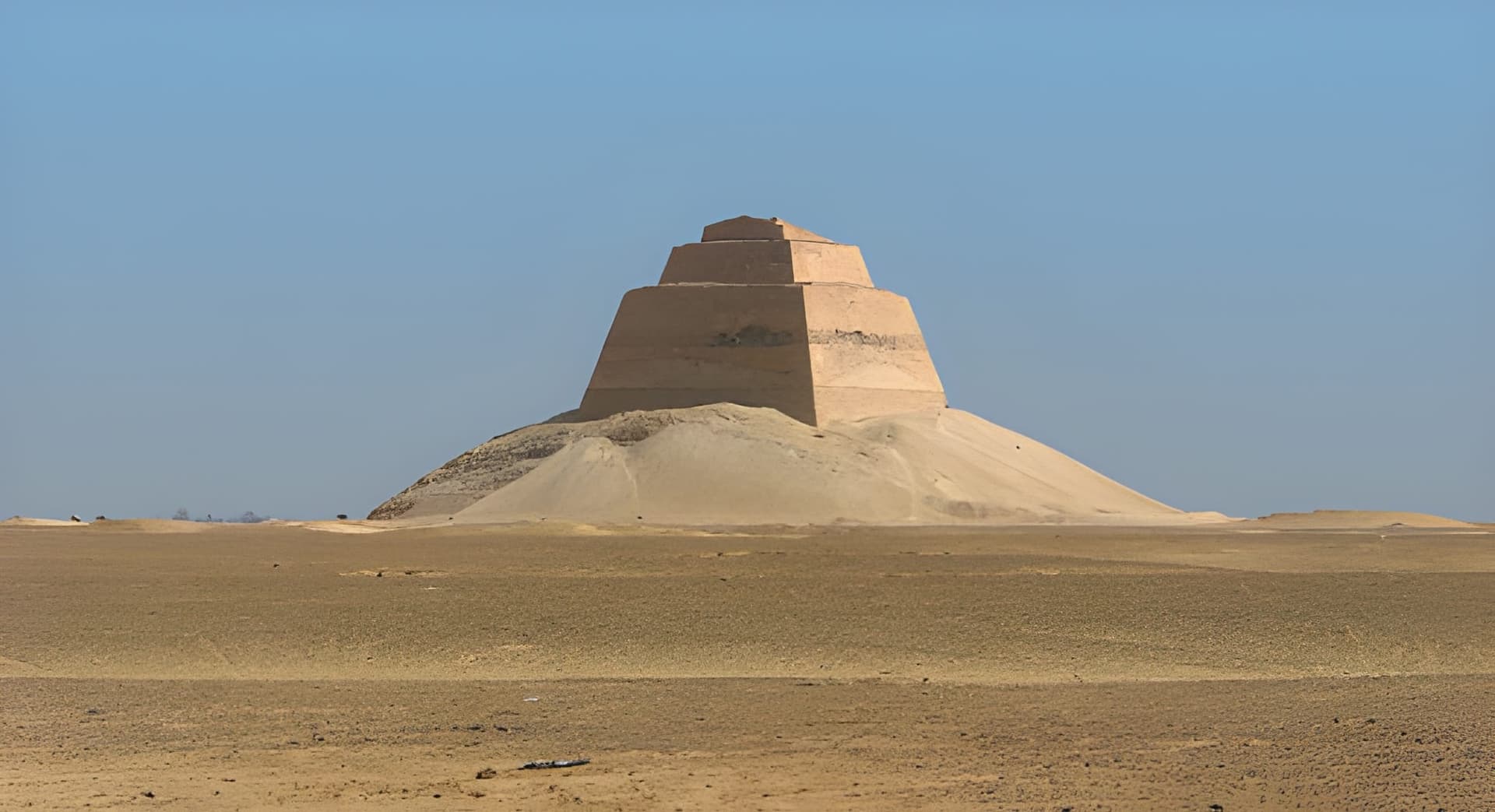
The pyramid is traditionally attributed to Huni, the last king of the 3rd dynasty, and completed by his successor Sneferu. Huni's name has never actually been found at Meidum, though, and many Egyptologists now credit the whole monument to Sneferu, first king of the 4th dynasty: the officials buried in the cemetery beside it, Nefermaat and Rahotep among them, served under Sneferu, and it is Sneferu whose name the ancient visitors' graffiti attach to the site.
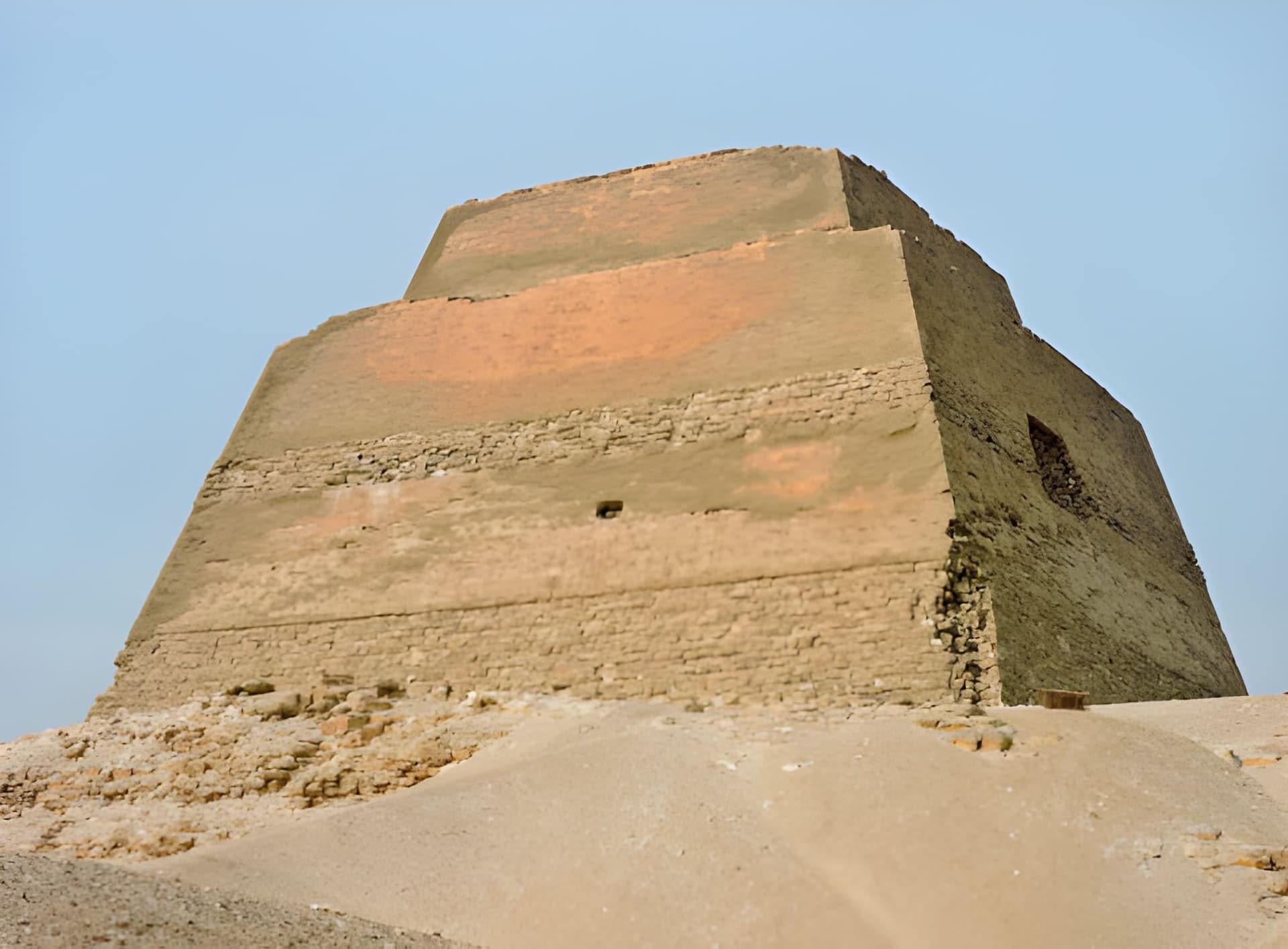
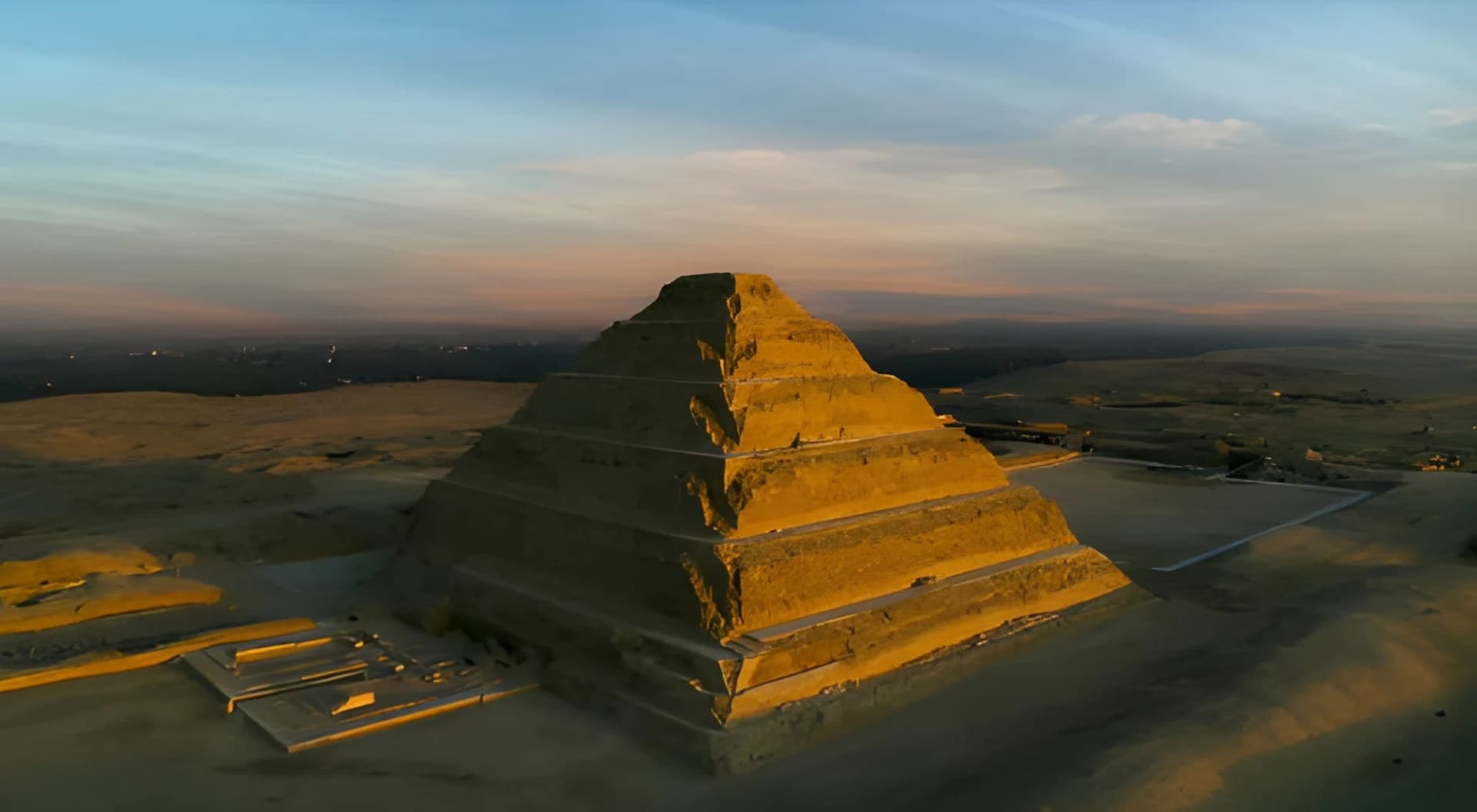
Excavation has shown three building campaigns, labelled E1, E2 and E3: a seven-stepped pyramid, an enlargement to eight steps, and finally the packing and casing meant to turn it into a true pyramid. Gaston Maspero entered the burial chamber in the early 1880s and found it empty apart from fragments of a wooden coffin. Flinders Petrie worked here in 1891 and again from 1909, mapping those building stages and clearing the passage and the cemetery around it.
Whether the casing collapsed during construction or long after the pyramid was finished is still argued. The mound around the base has produced no bodies of workmen, and the New Kingdom graffiti sit in a chapel that the debris mound later buried, which argues the casing came down well after the building was complete rather than while it was going up.
A small mortuary chapel stands against the east face, with two uninscribed round-topped stelae and a causeway running down from it. New Kingdom visitors left graffiti on its walls; one from the reign of Thutmose III admires the temple of King Sneferu, and it is the main ancient evidence tying the pyramid to him.
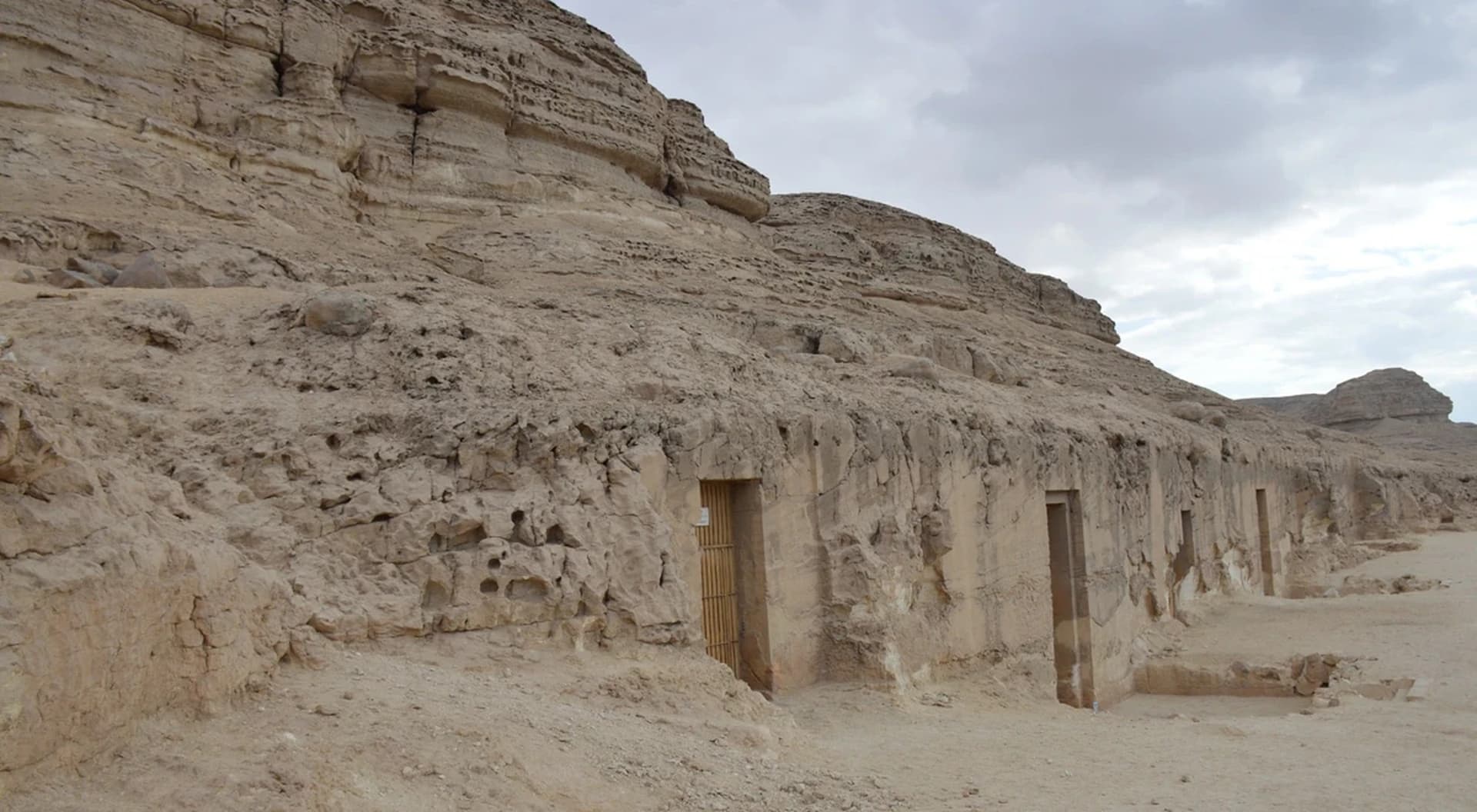
The mastaba tombs of the cemetery beside it produced two of the great works of the Old Kingdom: the painted frieze known as the Meidum Geese, from the tomb of Nefermaat and Itet, and the seated limestone statues of Rahotep and Nofret with their inlaid eyes. Both left the site long ago and are now in the national collections.