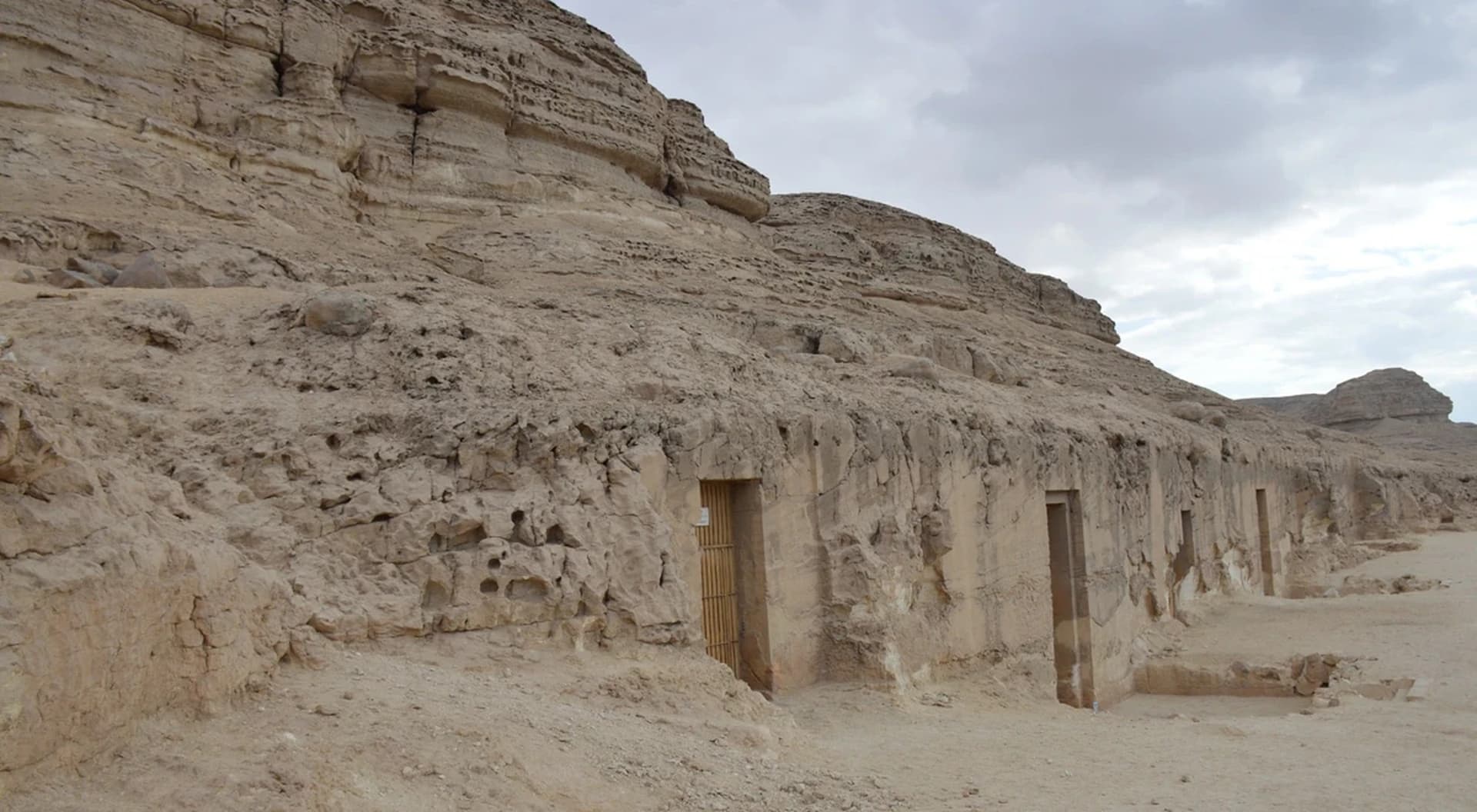
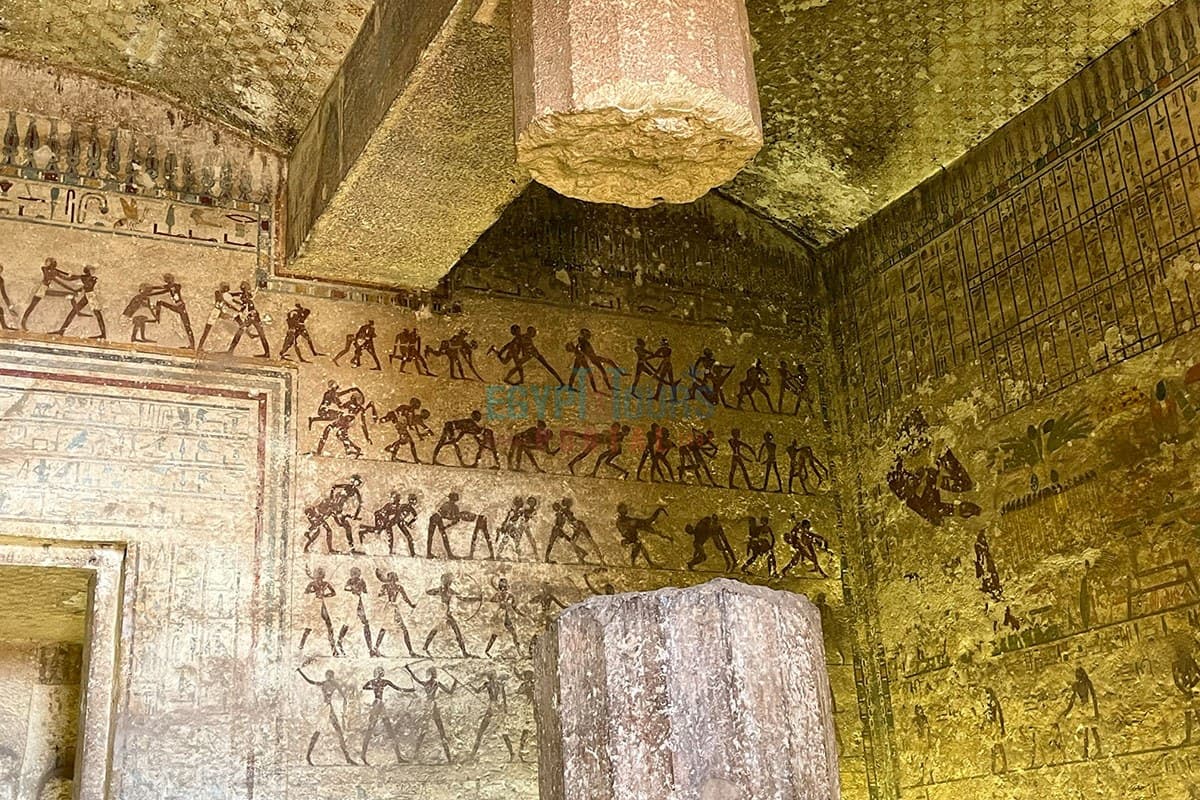
The tombs belong to the 11th and 12th dynasties, roughly four thousand years old, and were cut for nomarchs — the hereditary governors who ran the provinces with real independence before the crown reined them in.
Khnumhotep II's tomb is the best dated. His biographical inscription, among the longest private texts of the Middle Kingdom, records how his family gained the governorship, and the caption to the procession dates it to year six of Senusret II, with thirty-seven Aamu bringing black eye-paint. His is the last of the great painted tombs here; across Egypt the monumental provincial governors' tombs fade out within a generation, by the reign of Senusret III.
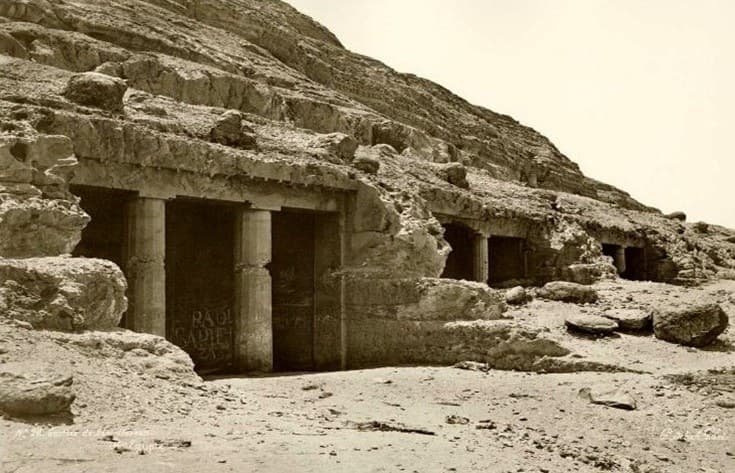
Their architecture borrows from the living: porticoes with fluted columns cut from the solid rock, sometimes called proto-Doric because they anticipate a Greek form by more than a thousand years.
Two kilometres south, cut into the side of a wadi in the same escarpment, is the Speos Artemidos, a rock-cut chapel of Hatshepsut dedicated to the lioness goddess Pakhet, carrying an inscription in which she describes repairing the damage left by the Hyksos.
Percy Newberry published the painted tombs for the Egypt Exploration Fund in 1893 and 1894, in the Archaeological Survey series, with F. Ll. Griffith contributing the later volumes on the hieroglyphs and technical detail in 1896 and 1900. One of the draughtsmen tracing the walls for Newberry was Howard Carter, then seventeen and new to Egypt. John Garstang followed, clearing hundreds of ordinary shaft burials on the slope below between 1902 and 1904 and recovering the wooden models of boats, granaries and workshops buried with them.