Attraction

Siwa Oasis

A remote oasis near the Libyan border with its own language, a salt-lake landscape, and the oracle that Alexander the Great came to consult.

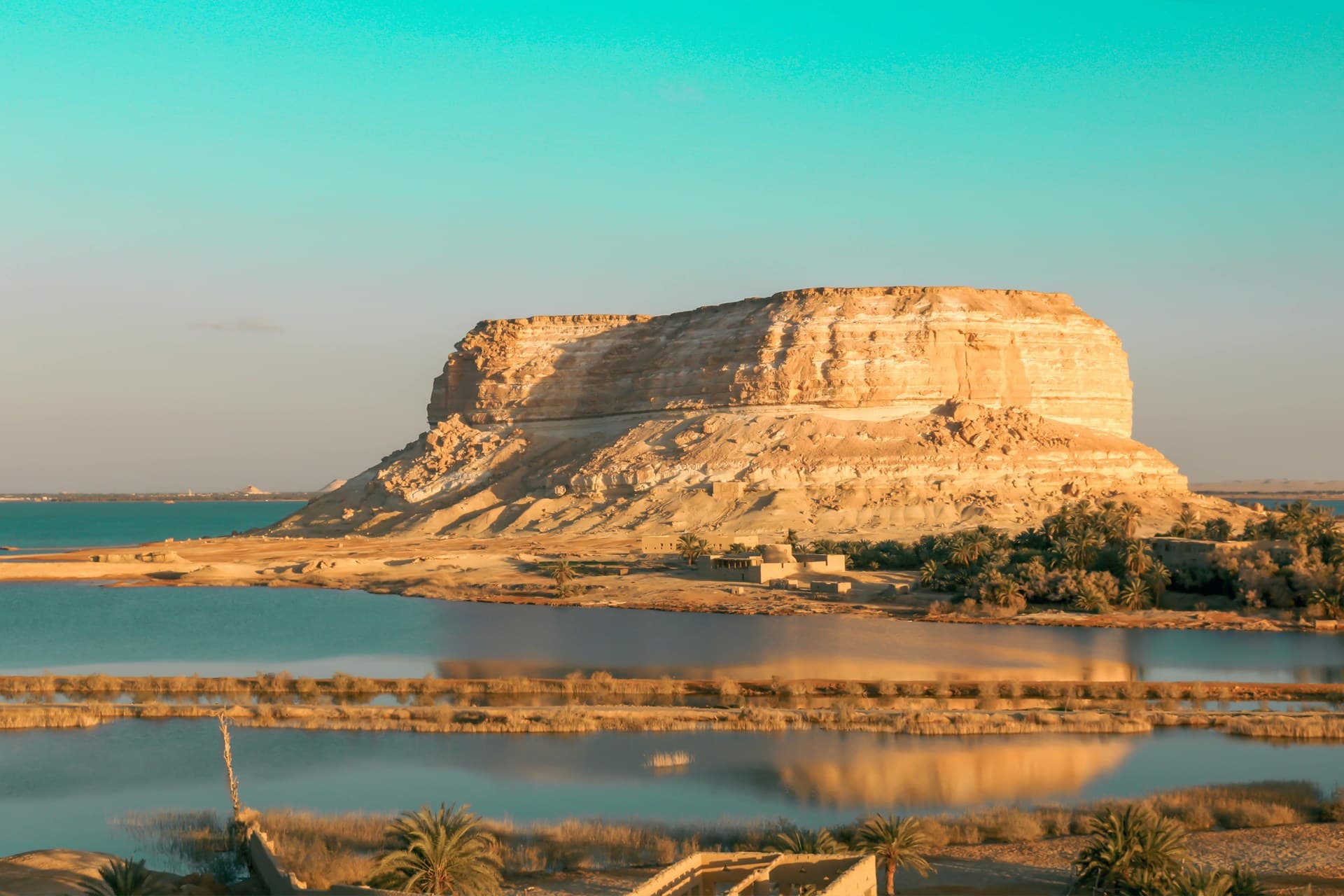
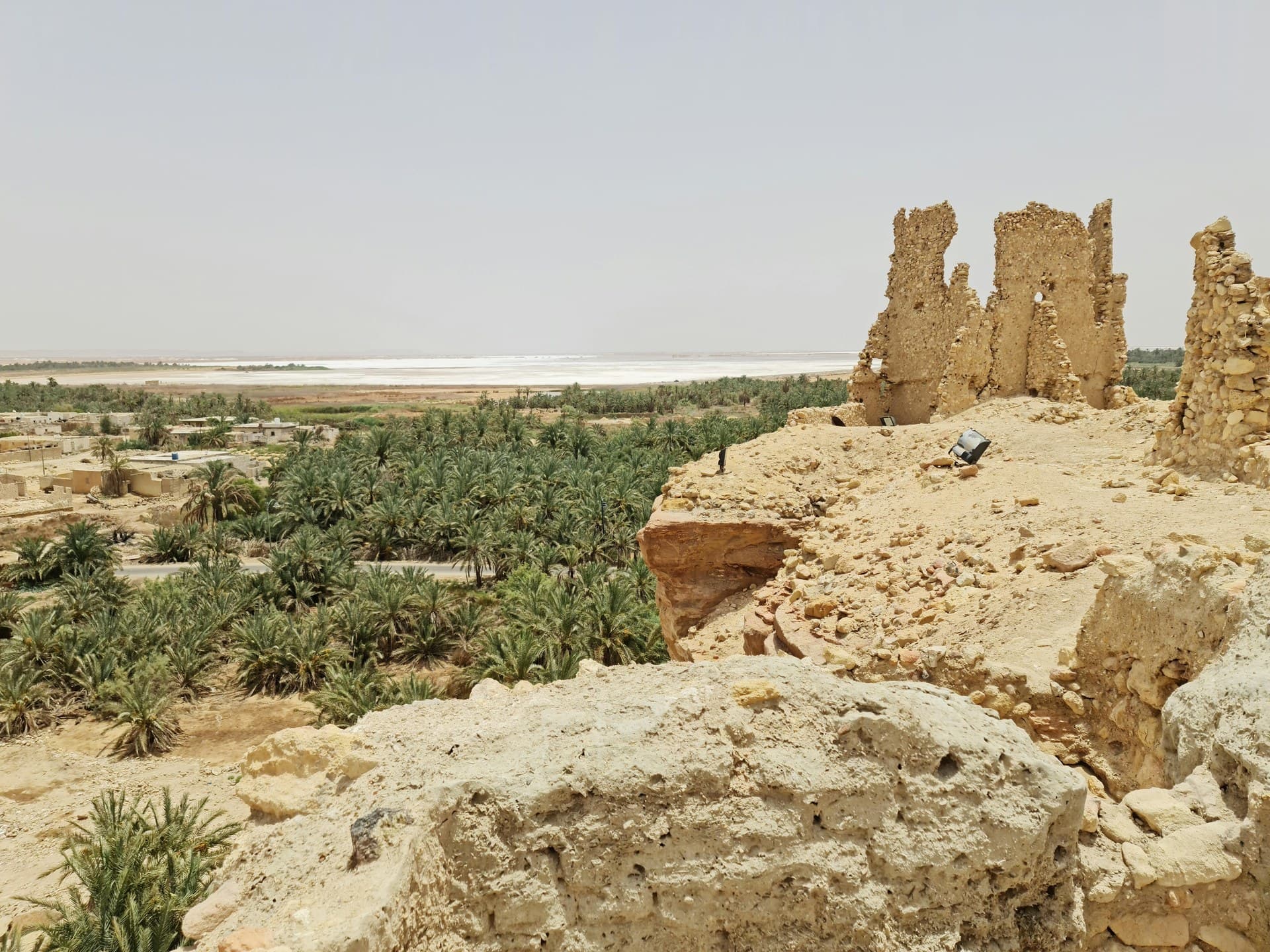
Date palms and salt lakes around the mud-brick ruins of Shali fortress at Siwa Oasis

Overview

Siwa lies deep in the Western Desert near the Libyan border, roughly ten hours from Cairo. It is the most isolated inhabited place in Egypt and it feels it.

The people are Amazigh — Berber — and speak Siwi, a language unrelated to Arabic. The architecture, the food and the social customs are distinct from the rest of the country.

Why visit Siwa Oasis

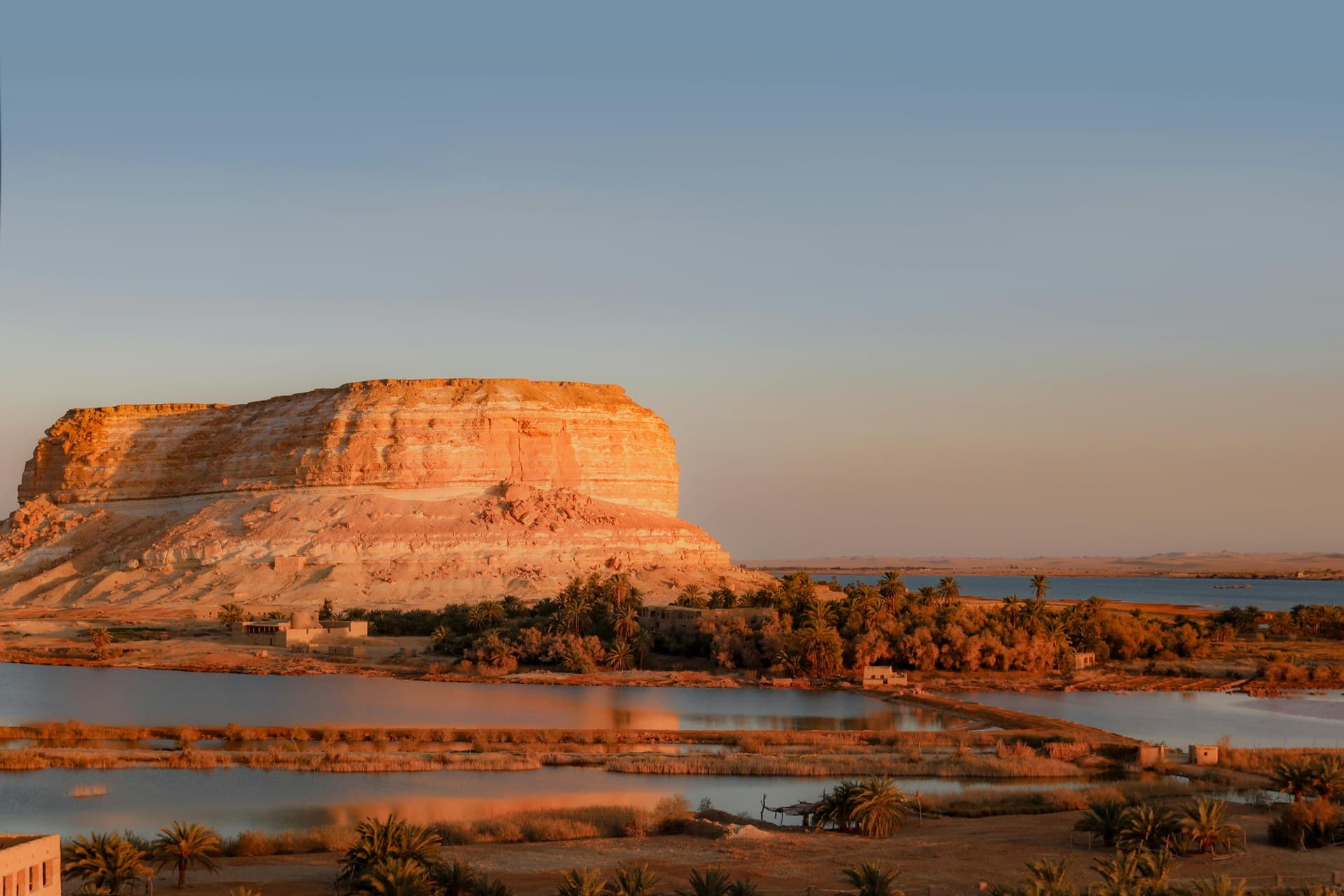
It is a genuinely different Egypt. Mud-and-salt buildings, palm groves fed by hundreds of springs, salt lakes of an unreal blue, and a way of life that the distance has protected. Until a paved road was built in the 1980s the journey took days by camel.

The Temple of the Oracle at Aghurmi is one of the more consequential ruins in the ancient world. Alexander the Great crossed the desert to consult it in 331 BC and left, according to the sources, having been greeted as the son of Amun. What was actually said has never been recorded.

Shali, the old fortified town, is a ruin of mud-brick towers built from kershef — salt-crusted mud — that melts in heavy rain. It rises above the modern town and you can walk up through it.

And there is the swimming. Cleopatra's Spring and dozens of others are natural pools you can get into, and the salt lakes are so saline you float without effort.

History of Siwa Oasis

Siwa's oracle was famous across the Mediterranean world well before Alexander. Consulting it required a desert crossing, which was part of its authority.

The most famous story attached to the oasis is a disappearance. Herodotus records that a Persian army sent by Cambyses to destroy the oracle vanished in the desert on the way — fifty thousand men, the story says, swallowed by a sandstorm. No confirmed trace has ever been found, which has kept both the legend and the search alive.

The oasis kept a large degree of independence for most of its history, being too remote to govern easily, and was only firmly incorporated into Egypt in the nineteenth century.

Shali was founded in the thirteenth century as a fortified refuge and was largely abandoned after days of unusually heavy rain in the 1920s dissolved much of it.

In the Second World War the remoteness briefly became strategic: the British Long Range Desert Group used Siwa as a forward base for raids across the sand seas — one more chapter in a long history of the desert protecting the place.
What to see at Siwa Oasis

  • The Temple of the Oracle at Aghurmi
  • The mud-brick ruins of Shali fortress
  • Cleopatra's Spring and the other natural pools
  • The salt lakes, blue-white and buoyant enough to float in
  • The Mountain of the Dead, with rock-cut tombs
  • Sunset from Fatnas Island, over the salt lake and the palm groves
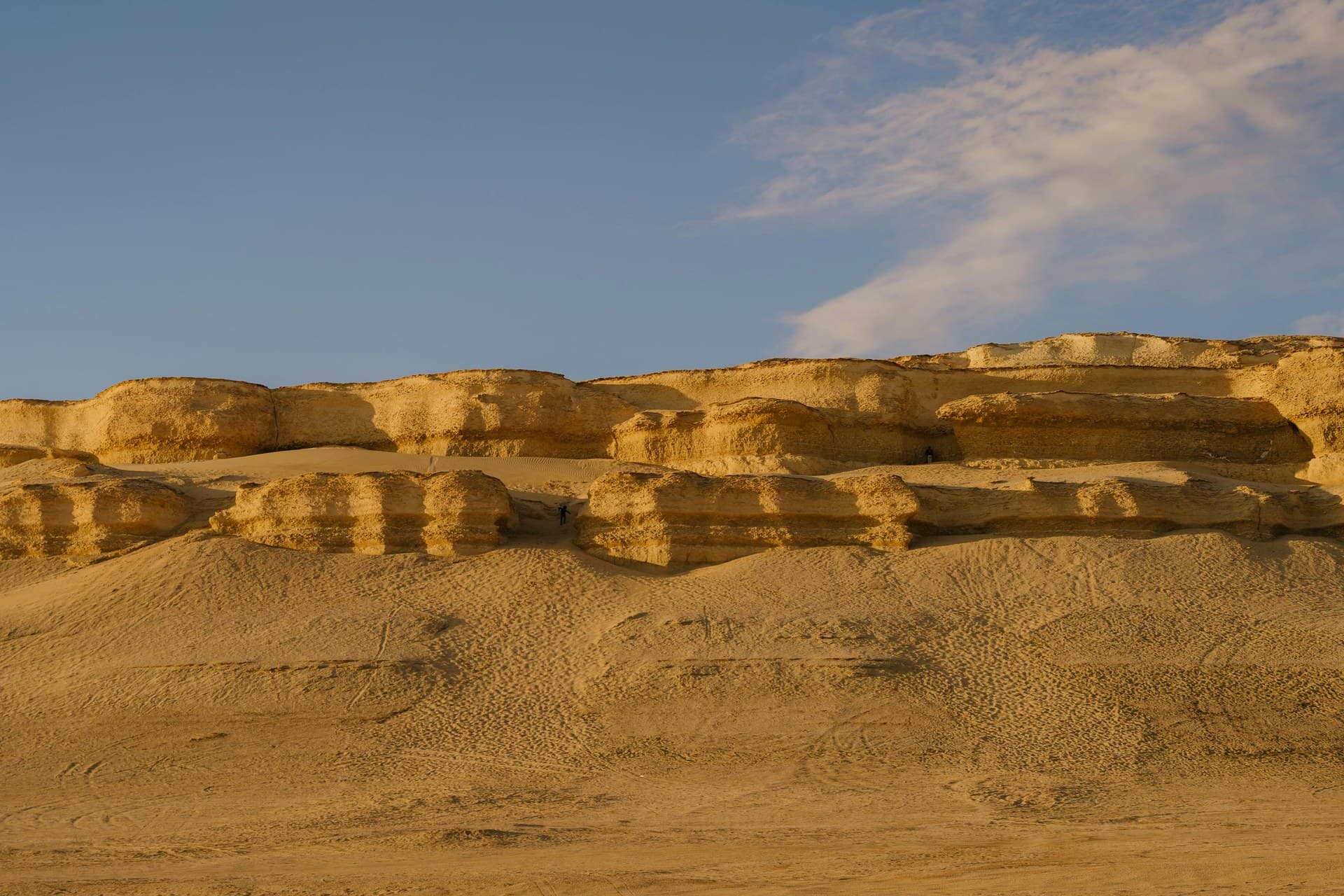
  • The Great Sand Sea, immediately west, for dune driving and sandboarding

Best time to visit Siwa Oasis

October to April. Summer is very hot; midwinter nights are cold.

Opening Hours and Tickets

Opening hours: Individual sites keep daytime hours; the oasis itself is open country.

Small separate admission fees at the Temple of the Oracle, the Mountain of the Dead and Shali. Desert trips are arranged locally and require a permit.

Opening hours and ticket prices may change. Please confirm the latest details before visiting.

How to get to Siwa Oasis

About 750 km west of Cairo near the Libyan border. Overnight bus or private car via Marsa Matruh; there is no airport.

Tours that include Siwa Oasis

Egypt and Jordan Itinerary 7 Days

Egypt and Jordan Itinerary 7 Days

Embark on an extraordinary 7-day adventure through two of the world’s most captivating destinations—Egypt and Jordan. Witness the timeless grandeur of the Pyramids of Giza, explore the treasures of the Grand Egyptian Museum, and wander through the ancient streets of Old Cairo. Then, cross into Jordan to marvel at the rose-red city of Petra, float in the mineral-rich waters of the Dead Sea, and stand atop Mount Nebo where history and faith intertwine. This journey blends cultural discovery, historical exploration, and modern comfort into one unforgettable experience.

Best 6 Days Egypt Itinerary

Best 6 Days Egypt Itinerary

Experience the timeless beauty of Egypt on this 6-day adventure through its most iconic destinations. Begin in Cairo with a guided exploration of the Pyramids of Giza, the enigmatic Sphinx, and the remarkable Grand Egyptian Museum. Continue to Luxor to uncover the grandeur of the East and West Banks, including the magnificent Karnak and Luxor Temples, the Valley of the Kings, and the Temple of Queen Hatshepsut. Conclude your journey in Aswan, where you’ll visit the serene Philae Temple, the impressive High Dam, and immerse yourself in the colorful culture of a Nubian Village.

08 Days Dubai and Egypt Vacation Package

08 Days Dubai and Egypt Vacation Package

Embark on an extraordinary 8-day adventure that blends the timeless heritage of Egypt with the futuristic allure of Dubai. Begin your exploration in Cairo, where the Great Pyramids of Giza, the Grand Egyptian Museum, and the Egyptian Museum reveal the splendor of ancient civilization. Then, fly to Dubai to experience a city that harmoniously merges tradition and innovation — from its historic souks and cultural landmarks to its glittering skyline and desert landscapes. This journey offers a perfect balance of history, luxury, and modern excitement, creating memories that will last a lifetime.

10 Days Egypt and Jordan Tours with Nile Cruise

10 Days Egypt and Jordan Tours with Nile Cruise

Experience the essence of two ancient civilizations on this 10-day Egypt and Jordan tour with a Nile Cruise. Journey through Egypt’s timeless wonders—from the Great Pyramids and the Sphinx to the temples of Luxor and Aswan—while enjoying the serene beauty of the Nile aboard a luxury cruise. Then, cross into Jordan to uncover the rose-red city of Petra, the Roman ruins of Jerash, and the tranquil waters of the Dead Sea. This itinerary blends history, culture, and comfort for travelers seeking an extraordinary adventure across two legendary lands.

15 Days Egypt and Morocco Tour Package

15 Days Egypt and Morocco Tour Package

Embark on a remarkable 15-day adventure that unites the timeless heritage of Egypt with the colorful charm of Morocco. This exclusive itinerary is designed for travelers who seek cultural depth, comfort, and personalized service. Begin your journey in Egypt, where you’ll stand before the Great Pyramids and Sphinx, cruise the Nile aboard a 5-star vessel, and explore the temples of Luxor and Aswan. Then, continue to Morocco to discover the imperial cities of Rabat, Fez, and Marrakech, each offering a unique blend of history, art, and architecture.

7 Days Egypt Tour in December

7 Days Egypt Tour in December

Embark on a 7-day adventure through Egypt during the pleasant month of December, when the weather is mild and the crowds are fewer. Discover the timeless wonders of Cairo, including the Great Pyramids of Giza and the Grand Egyptian Museum, before flying south to Aswan and Luxor. Cruise along the Nile aboard a five-star vessel, visiting ancient temples and marveling at the beauty of Egypt’s landscapes. This journey blends history, culture, and comfort for an unforgettable winter escape.

Travel Tips Before Visiting

It is a long way. Around ten hours by road from Cairo, or eight from Alexandria via Marsa Matruh. Do not attempt it as a short trip — three nights minimum. Bicycles are the local transport. The oasis is flat, the springs and sites sit a few kilometres apart, and cycling between the palm groves is one of the pleasures of the place. Local carts and tuk-tuks fill in for longer hops. Siwa is socially conservative. Dress modestly, including at the springs, and ask before photographing people. Women swimming in public springs should cover up; some springs offer women-only times — ask locally or at your lodge. Buy the dates and the olive oil. Siwa's are among the best in Egypt, the harvest arrives in autumn, and buying in the town market supports exactly the economy that keeps the oasis alive. Cash. Card acceptance is limited and ATMs are few. Book a desert trip through a Siwan operator. The Great Sand Sea requires a permit and local knowledge.