Attraction

Wadi Al-Hitan — Whale Valley

A desert valley in Fayoum holding the fossil skeletons of whales that still had legs — Egypt's first natural World Heritage Site.

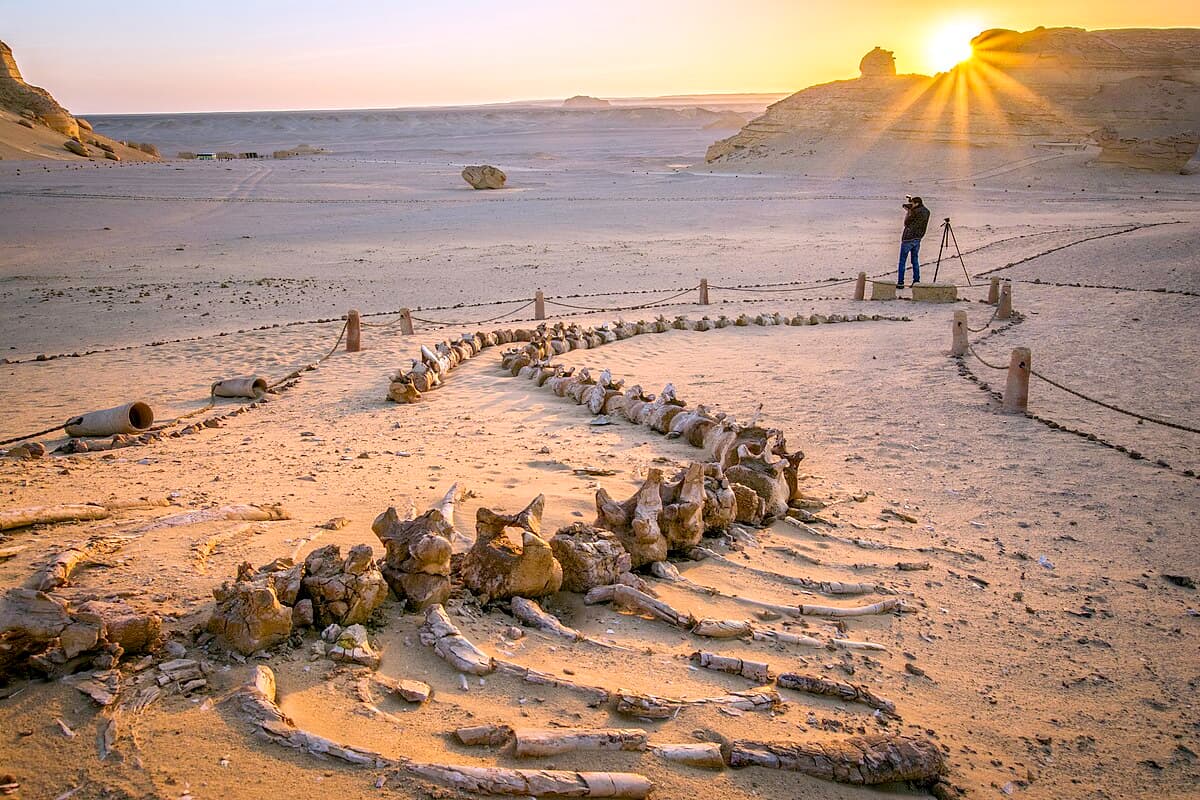
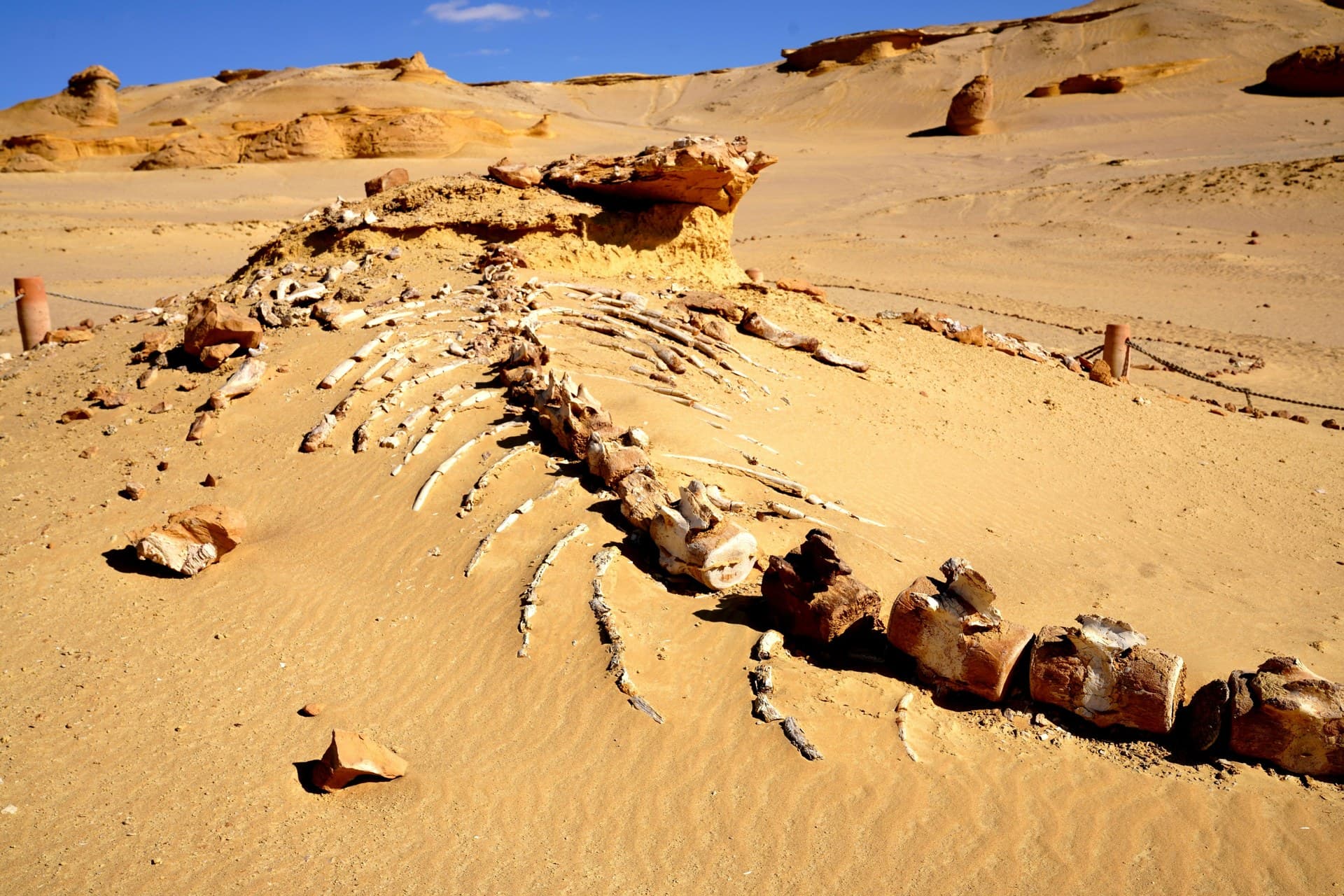
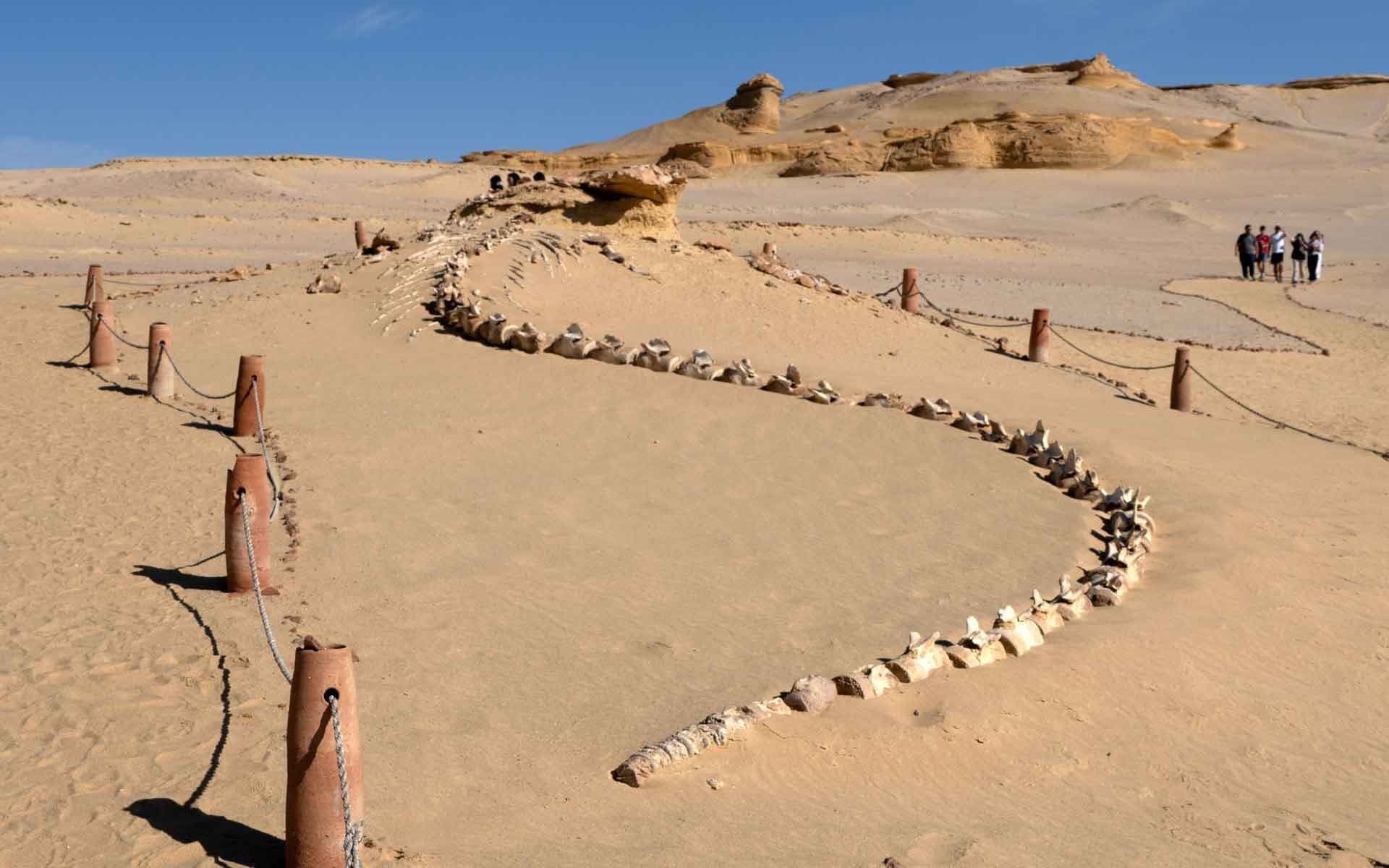
A fossilised whale skeleton laid out in the sand along the marked walking trail at Wadi Al-Hitan in the Western Desert
Natural landmarkThe Western Desert

Overview

Wadi Al-Hitan lies in the Western Desert in Fayoum governorate, beyond the lakes of Wadi El-Rayan, about 150 kilometres south-west of Cairo. The last stretch is off-road.

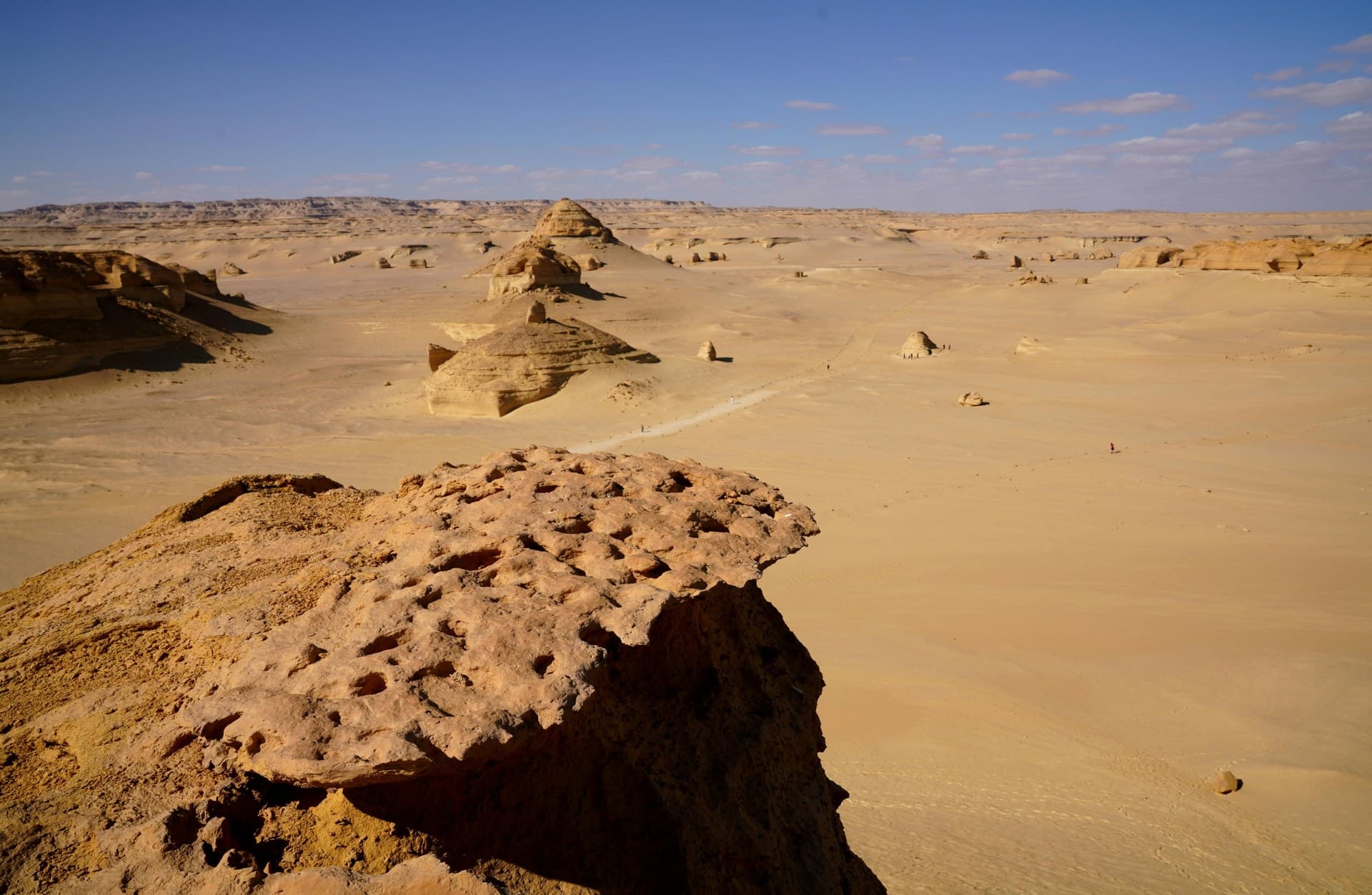
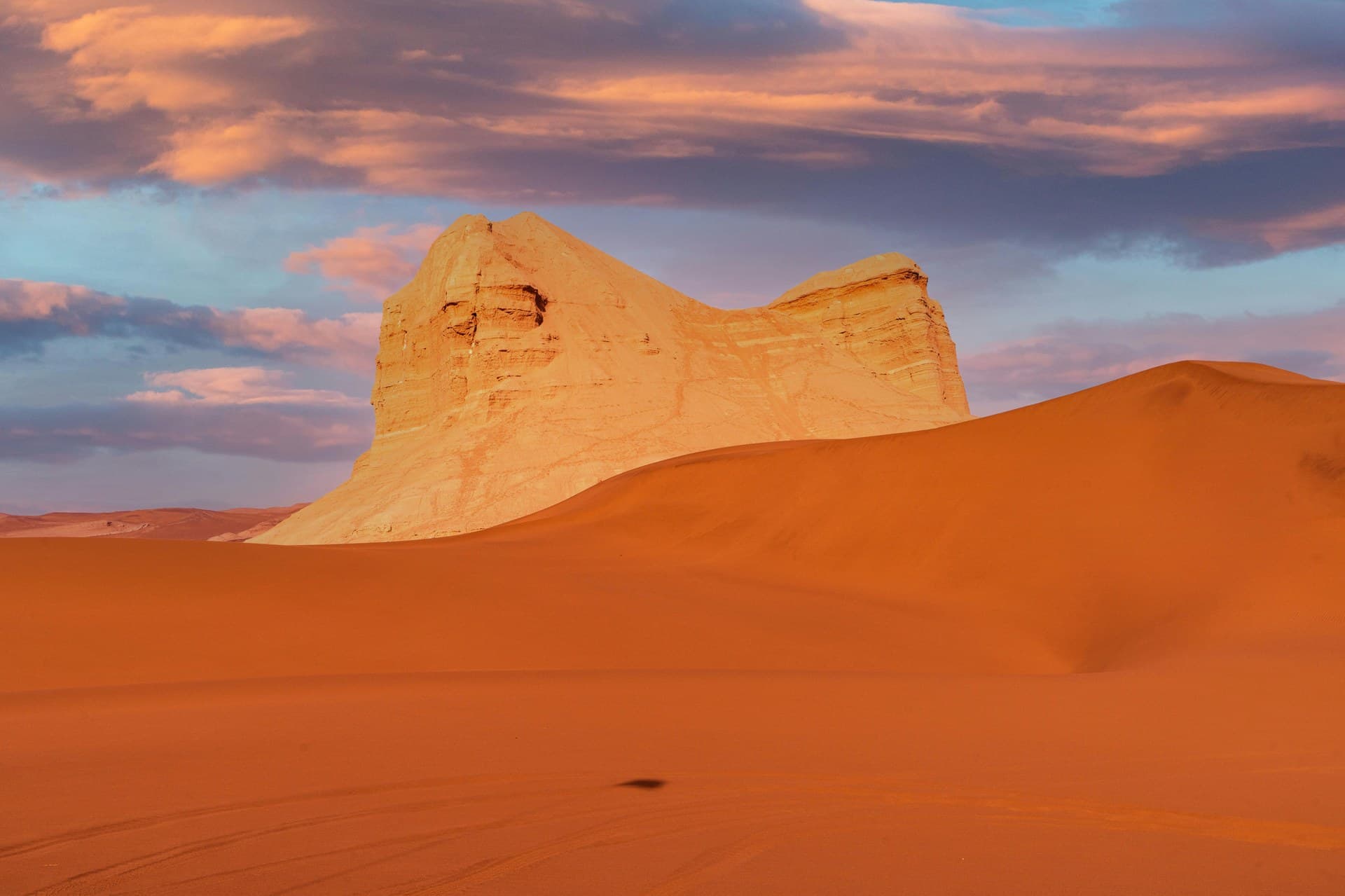
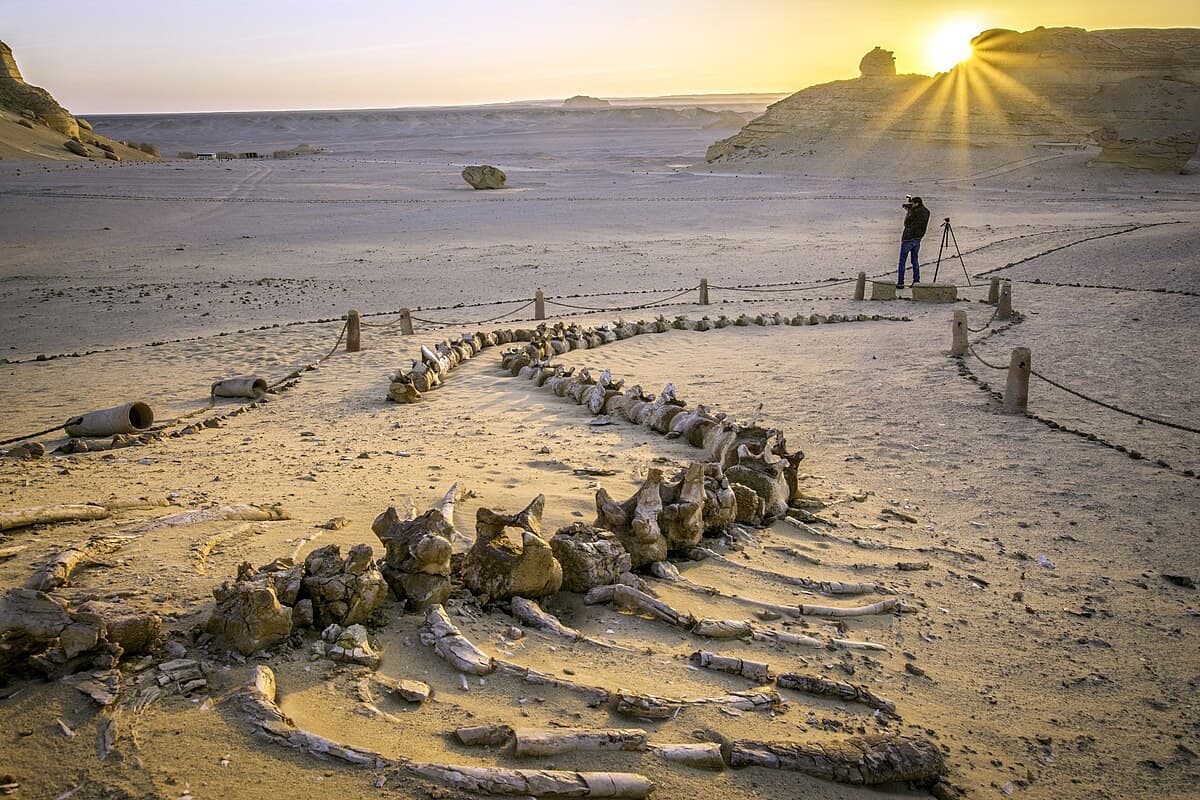
It is a shallow desert basin of yellow sandstone and wind-carved rock, with a marked walking trail through it. Along the trail, lying where they were found, are the fossil skeletons of whales.

Why visit Wadi Al-Hitan — Whale Valley

These are not just old bones. They are archaeocetes — Basilosaurus and Dorudon — from around forty million years ago, when this desert was the floor of the Tethys Sea. What makes them one of the most important fossil sites in the world is that they still have small hind limbs, with knees, ankles and toes, on animals that were already fully marine. The transition from a four-legged land mammal to a whale is documented here in a single valley, at a density found nowhere else.

It was inscribed by UNESCO in 2005 as Egypt's first natural World Heritage Site, and the presentation is unusually good for Egypt: the skeletons are left in place rather than removed, and the trail takes you past them in the open with almost nothing between you and the fossil.

The landscape alone would justify the drive. Wind-eroded sandstone hills, a floor scattered with fossil shells and shark teeth, complete silence, and the kind of emptiness that photographs badly and stays with you.

History of Wadi Al-Hitan — Whale Valley

The fossils were first noted by a British expedition at the start of the twentieth century, and serious excavation followed through the decades after. Hundreds of skeletons have been recorded within the protected area.

Basilosaurus itself carries a mistake in its name: the first bones, found in America, were taken for a giant marine reptile — 'king lizard' — before anatomists recognised a whale. The Egyptian valley's own contribution came later and was larger: complete skeletons, hind limbs and all, plus stomach contents showing that Basilosaurus ate the smaller Dorudon whose skeletons share the valley.

The whole Fayoum depression is a major palaeontological region. Nearby beds have produced early primates, elephant ancestors and sea cows, and the sequence of rocks records the Eocene shoreline retreating north.

The site's museum — the Fossils and Climate Change Museum, opened in 2016 and set low into the landscape — lays the star specimen out full length: an eighteen-metre Basilosaurus, the largest intact skeleton found here.
What to see at Wadi Al-Hitan — Whale Valley

  • Whale skeletons lying in the sand along the marked trail
  • Hind limbs on animals that had already returned to the sea
  • The eighteen-metre Basilosaurus laid out in the museum
  • Fossil mangrove roots, shark teeth and shells across the valley floor
  • Wind-carved sandstone formations across the basin
  • The on-site fossil and climate museum

Best time to visit Wadi Al-Hitan — Whale Valley

October to March, and start early. Avoid the middle of the day in any season.

Opening Hours and Tickets

Opening hours: Daylight hours. The protected area is not open at night except to permitted camping groups.

An entry ticket for the protected area is paid at the gate, and vehicles are charged separately. Camping requires a permit arranged in advance.

Opening hours and ticket prices may change. Please confirm the latest details before visiting.

How to get to Wadi Al-Hitan — Whale Valley

In the Wadi El-Rayan protected area in Fayoum governorate, about 150 kilometres south-west of Cairo. Reached by 4x4 with a driver or on an organised desert day trip.

Tours that include Wadi Al-Hitan — Whale Valley

Egypt and Jordan Itinerary 7 Days

Egypt and Jordan Itinerary 7 Days

Embark on an extraordinary 7-day adventure through two of the world’s most captivating destinations—Egypt and Jordan. Witness the timeless grandeur of the Pyramids of Giza, explore the treasures of the Grand Egyptian Museum, and wander through the ancient streets of Old Cairo. Then, cross into Jordan to marvel at the rose-red city of Petra, float in the mineral-rich waters of the Dead Sea, and stand atop Mount Nebo where history and faith intertwine. This journey blends cultural discovery, historical exploration, and modern comfort into one unforgettable experience.

Best 6 Days Egypt Itinerary

Best 6 Days Egypt Itinerary

Experience the timeless beauty of Egypt on this 6-day adventure through its most iconic destinations. Begin in Cairo with a guided exploration of the Pyramids of Giza, the enigmatic Sphinx, and the remarkable Grand Egyptian Museum. Continue to Luxor to uncover the grandeur of the East and West Banks, including the magnificent Karnak and Luxor Temples, the Valley of the Kings, and the Temple of Queen Hatshepsut. Conclude your journey in Aswan, where you’ll visit the serene Philae Temple, the impressive High Dam, and immerse yourself in the colorful culture of a Nubian Village.

08 Days Dubai and Egypt Vacation Package

08 Days Dubai and Egypt Vacation Package

Embark on an extraordinary 8-day adventure that blends the timeless heritage of Egypt with the futuristic allure of Dubai. Begin your exploration in Cairo, where the Great Pyramids of Giza, the Grand Egyptian Museum, and the Egyptian Museum reveal the splendor of ancient civilization. Then, fly to Dubai to experience a city that harmoniously merges tradition and innovation — from its historic souks and cultural landmarks to its glittering skyline and desert landscapes. This journey offers a perfect balance of history, luxury, and modern excitement, creating memories that will last a lifetime.

10 Days Egypt and Jordan Tours with Nile Cruise

10 Days Egypt and Jordan Tours with Nile Cruise

Experience the essence of two ancient civilizations on this 10-day Egypt and Jordan tour with a Nile Cruise. Journey through Egypt’s timeless wonders—from the Great Pyramids and the Sphinx to the temples of Luxor and Aswan—while enjoying the serene beauty of the Nile aboard a luxury cruise. Then, cross into Jordan to uncover the rose-red city of Petra, the Roman ruins of Jerash, and the tranquil waters of the Dead Sea. This itinerary blends history, culture, and comfort for travelers seeking an extraordinary adventure across two legendary lands.

15 Days Egypt and Morocco Tour Package

15 Days Egypt and Morocco Tour Package

Embark on a remarkable 15-day adventure that unites the timeless heritage of Egypt with the colorful charm of Morocco. This exclusive itinerary is designed for travelers who seek cultural depth, comfort, and personalized service. Begin your journey in Egypt, where you’ll stand before the Great Pyramids and Sphinx, cruise the Nile aboard a 5-star vessel, and explore the temples of Luxor and Aswan. Then, continue to Morocco to discover the imperial cities of Rabat, Fez, and Marrakech, each offering a unique blend of history, art, and architecture.

7 Days Egypt Tour in December

7 Days Egypt Tour in December

Embark on a 7-day adventure through Egypt during the pleasant month of December, when the weather is mild and the crowds are fewer. Discover the timeless wonders of Cairo, including the Great Pyramids of Giza and the Grand Egyptian Museum, before flying south to Aswan and Luxor. Cruise along the Nile aboard a five-star vessel, visiting ancient temples and marveling at the beauty of Egypt’s landscapes. This journey blends history, culture, and comfort for an unforgettable winter escape.

Travel Tips Before Visiting

You need a 4x4 and a driver who knows the route. The final section is soft sand and off the tarmac. This is not a trip for a saloon car. It is a walking site. The trail runs over open ground with no shade. Closed shoes, water, sun cover. Take nothing. Picking up a shell or a tooth is removing part of a World Heritage Site, and it is an offence. Stay for the last hour of light if you can. The valley goes gold, the formations throw long shadows, and the trail is at its best after the day trips have turned back towards Cairo. Go in winter. Summer heat in the open desert makes the walk genuinely unsafe in the middle of the day.