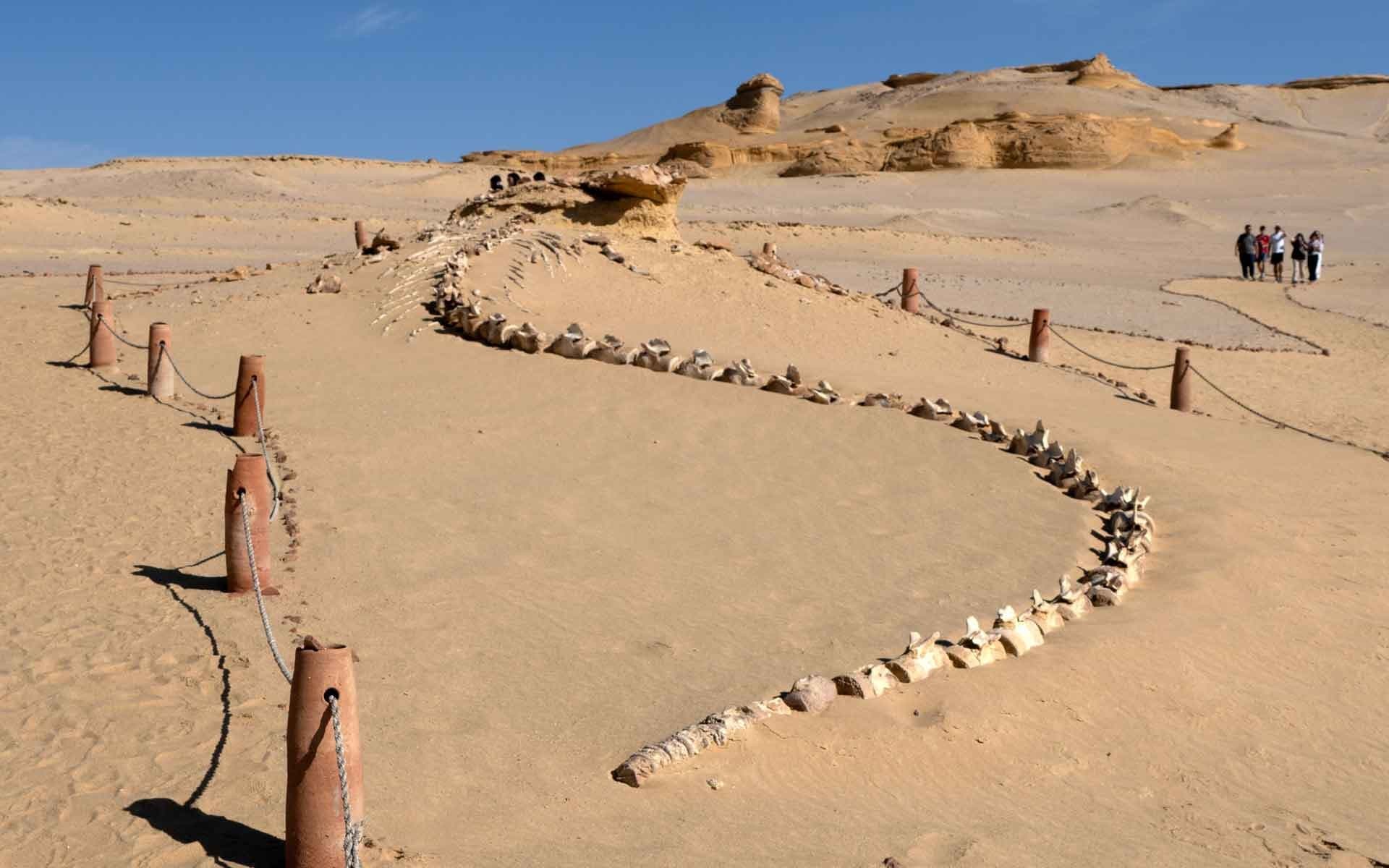
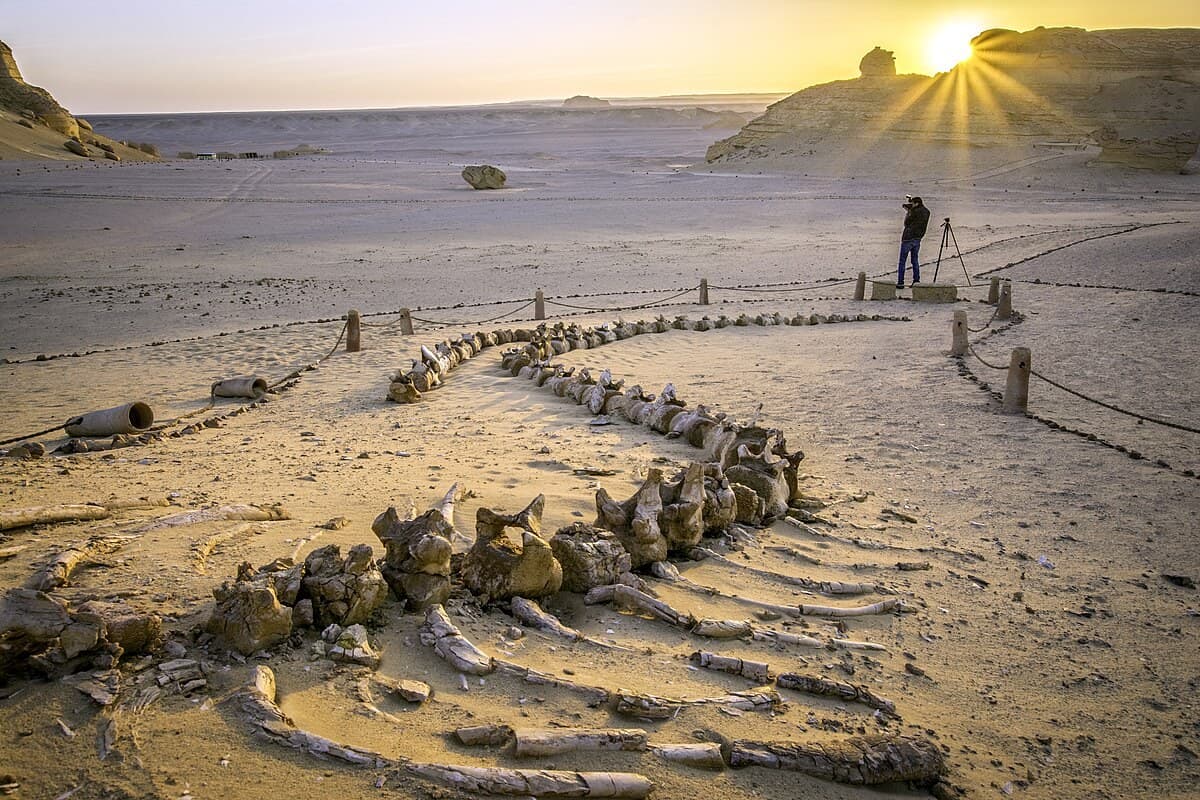
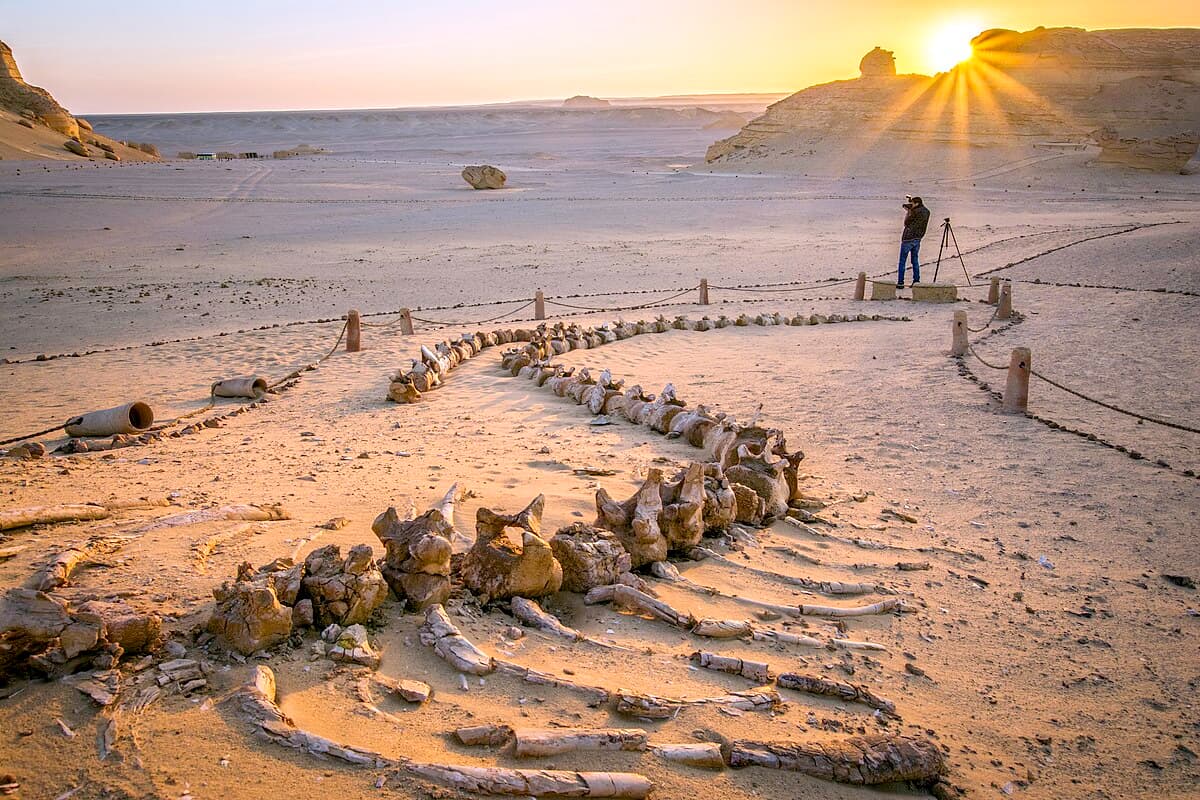
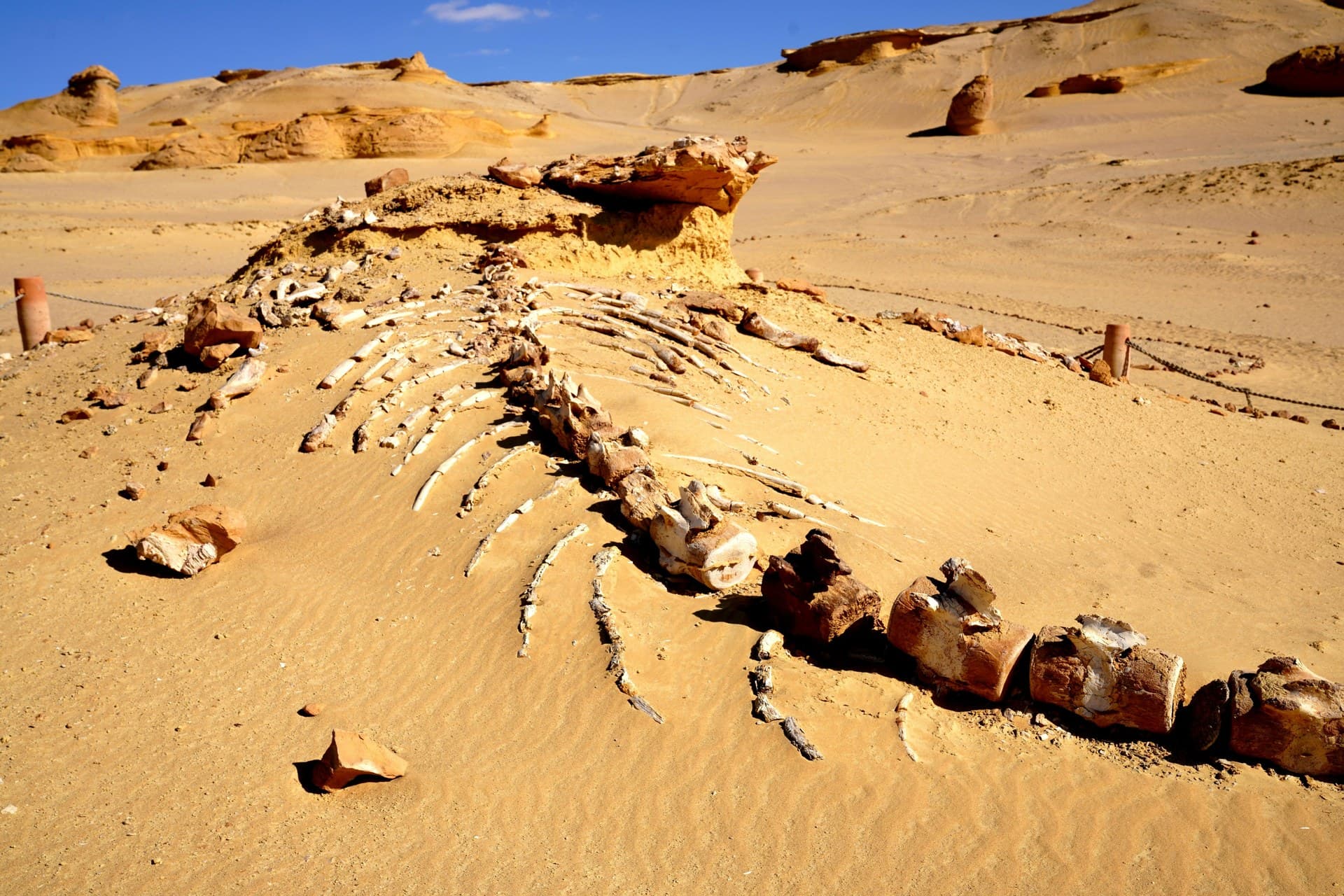
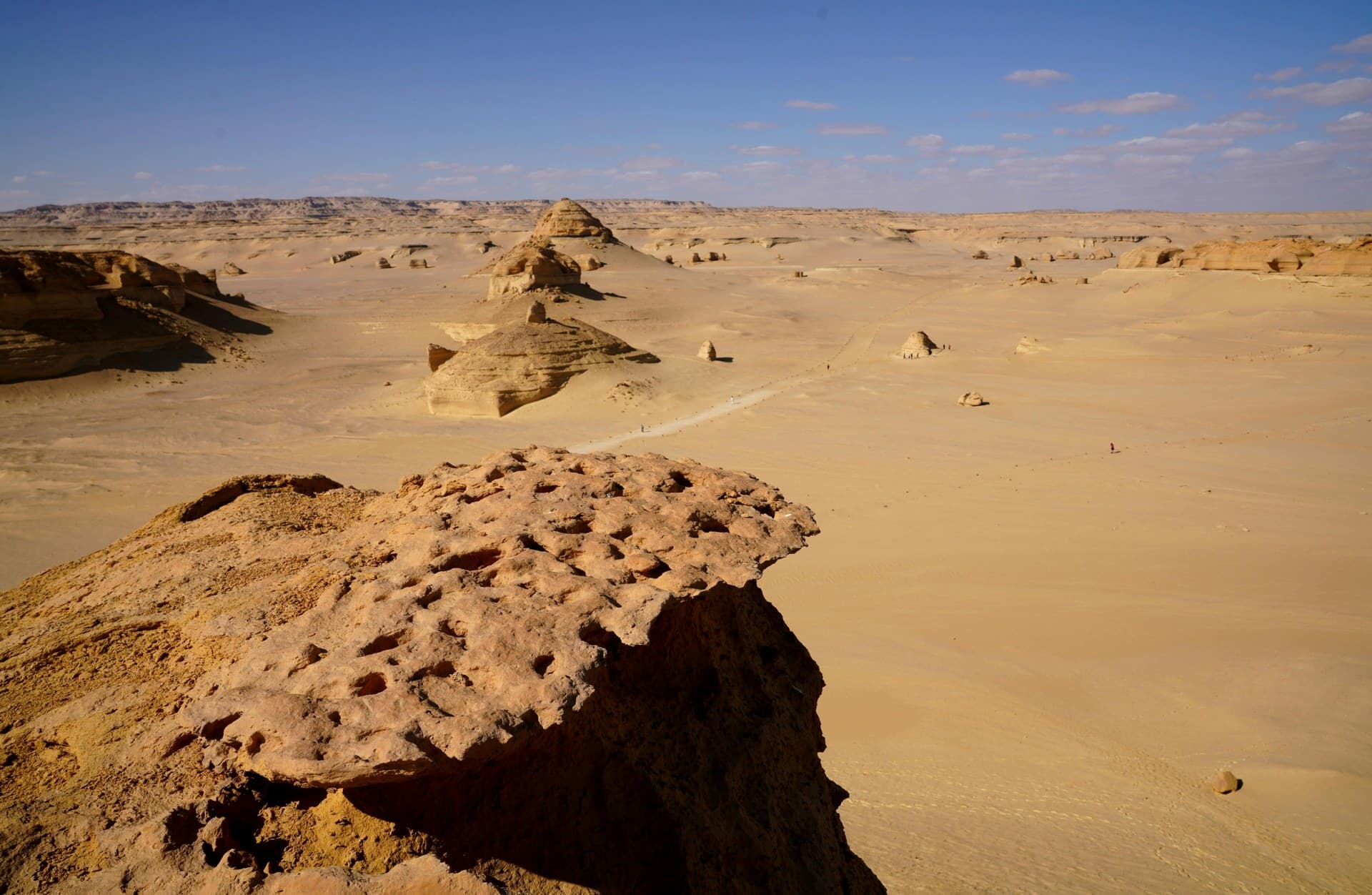
The fossils were first noted by a British expedition at the start of the twentieth century, and serious excavation followed through the decades after. Hundreds of skeletons have been recorded within the protected area.
Basilosaurus itself carries a mistake in its name: the first bones, found in America, were taken for a giant marine reptile — 'king lizard' — before anatomists recognised a whale. The Egyptian valley's own contribution came later and was larger: complete skeletons, hind limbs and all, plus stomach contents showing that Basilosaurus ate the smaller Dorudon whose skeletons share the valley.
The whole Fayoum depression is a major palaeontological region. Nearby beds have produced early primates, elephant ancestors and sea cows, and the sequence of rocks records the Eocene shoreline retreating north.
The site's museum — the Fossils and Climate Change Museum, opened in 2016 and set low into the landscape — lays the star specimen out full length: an eighteen-metre Basilosaurus, the largest intact skeleton found here.