Attraction

The Mosque of Ibn Tulun

The oldest mosque in Egypt surviving in its original form — a vast brick courtyard with a spiral minaret, and almost nobody in it.

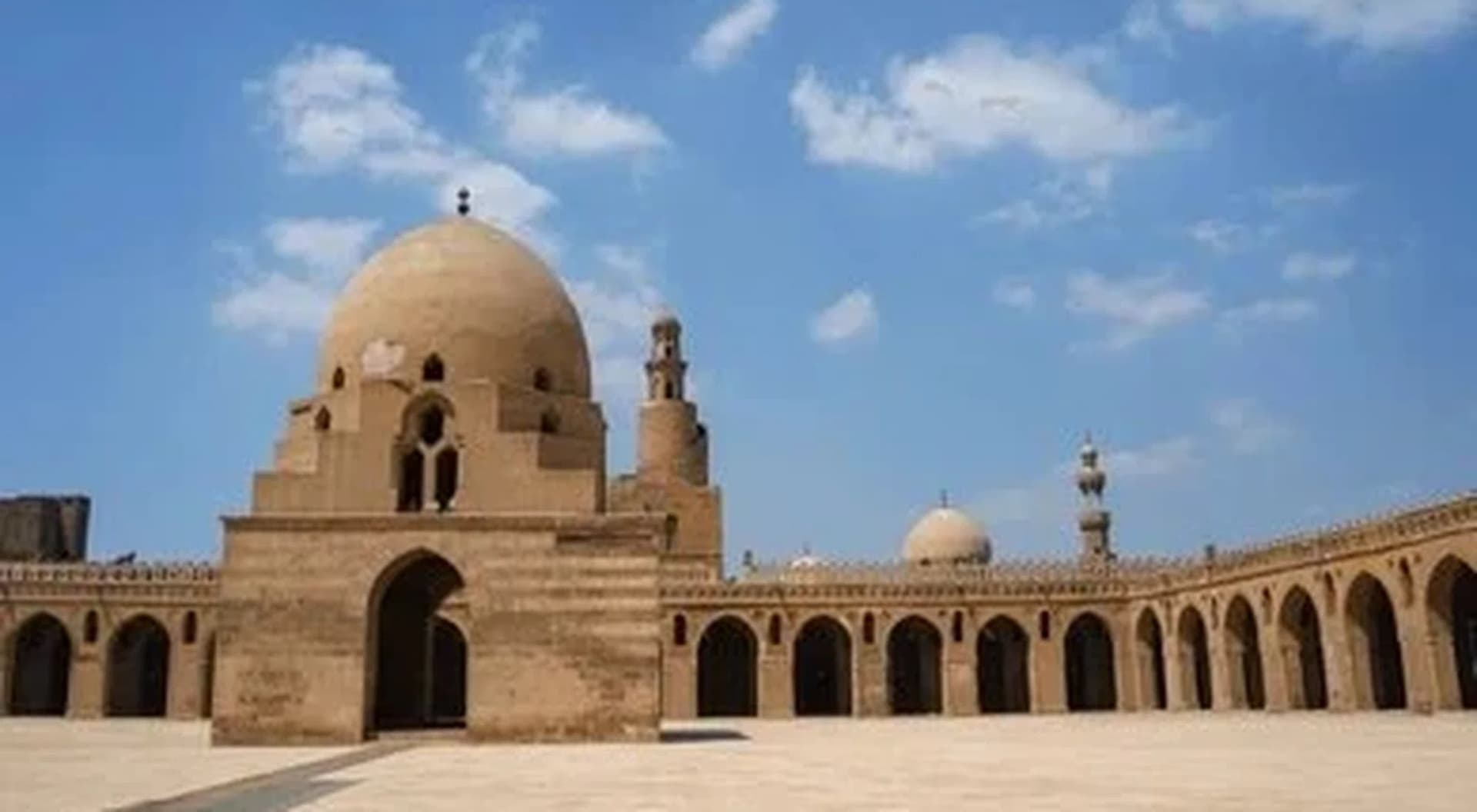
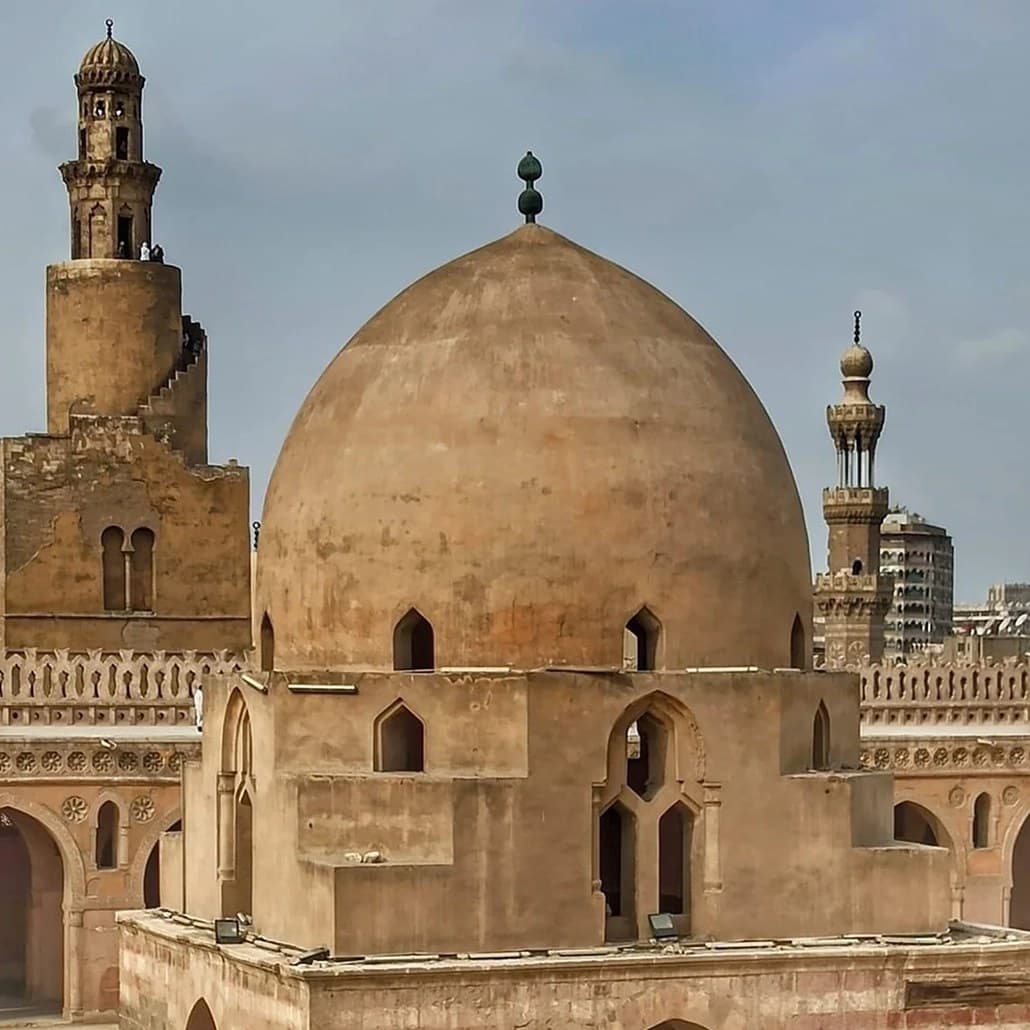
The great dome of the Mosque of Ibn Tulun with its spiral minaret rising beside it above the roofs of Cairo

Overview

Ibn Tulun sits in the Sayyida Zeinab district, south-west of the Citadel. From the street it is a blank fortified wall; you go in through a gate, cross an outer enclosure, and then the space opens.

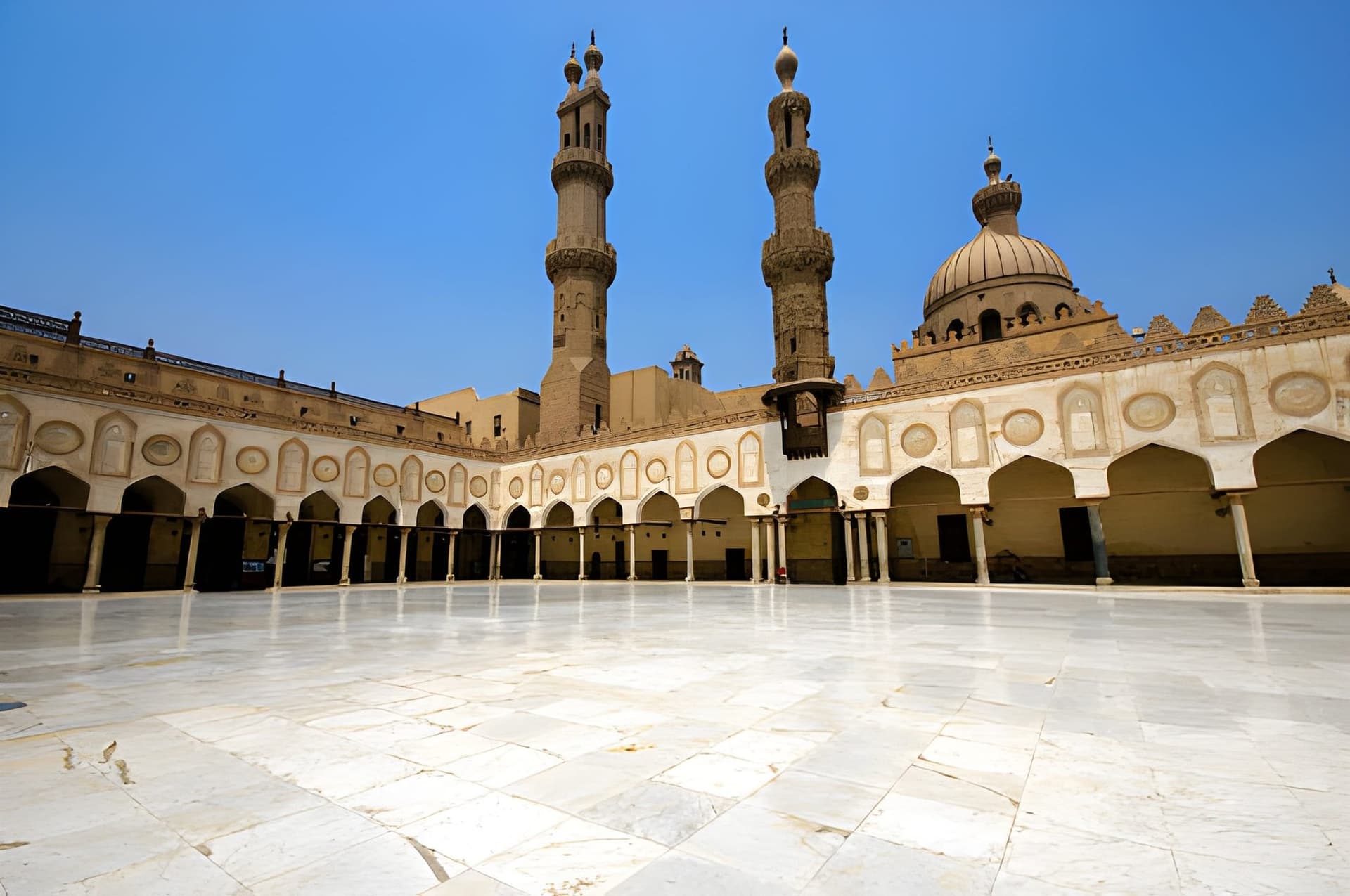
The courtyard is enormous — the mosque covers more ground than any other in Cairo — and on most days there will be a handful of people in it.

Why visit The Mosque of Ibn Tulun

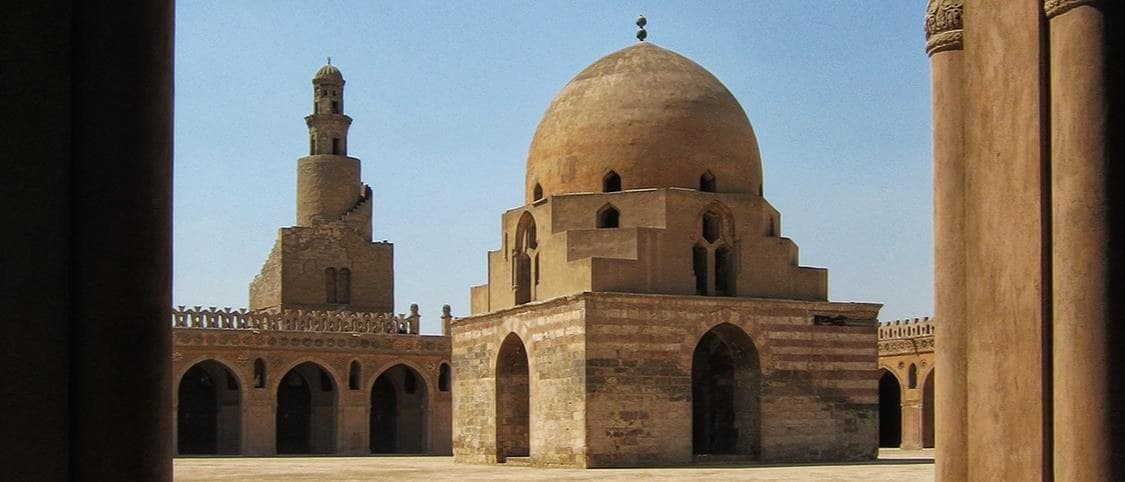
The scale and the silence. There is nothing in the courtyard except the domed ablution fountain in the middle and the arcades around the edge. No later infill, no clutter, no crowd. Of all the great buildings in Cairo this is the one that gives you room, and the effect of walking into it is why people who live in the city keep going back.

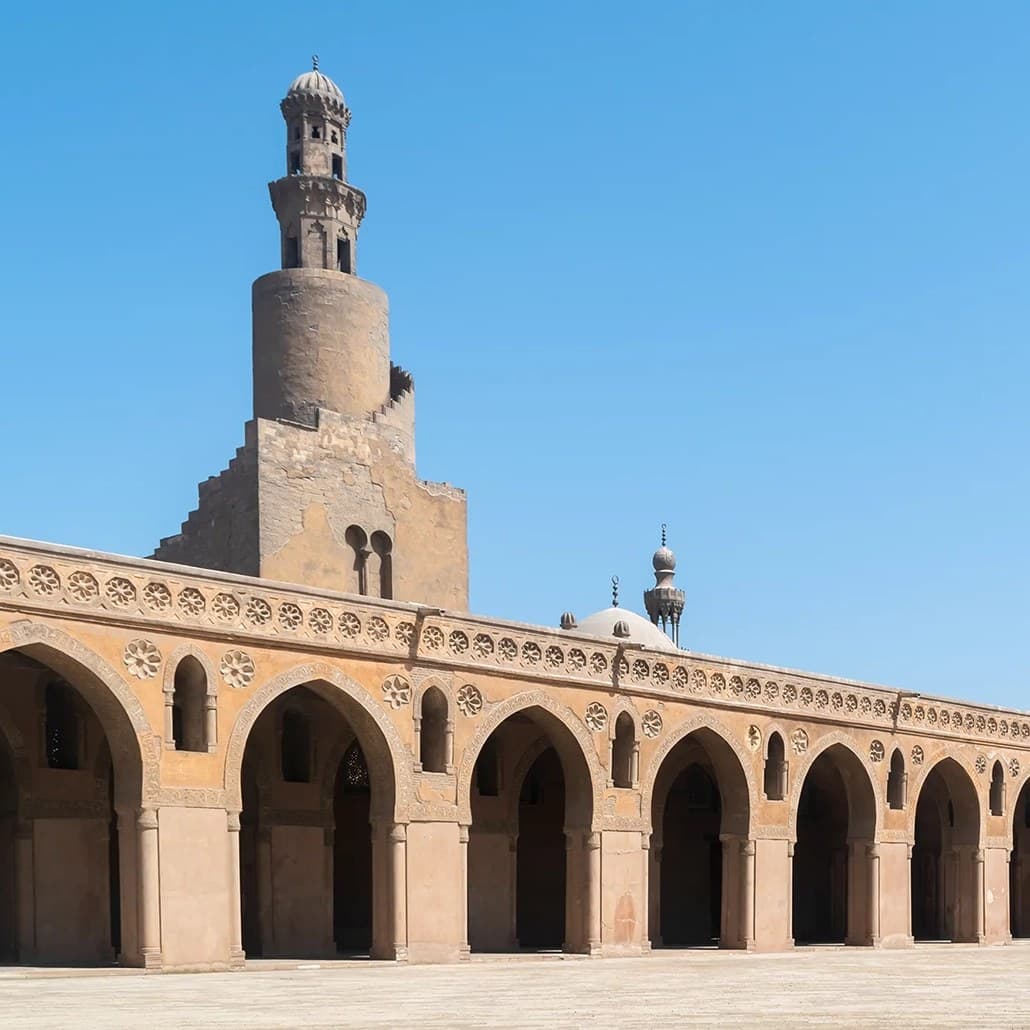
Then the minaret. It has an external staircase spiralling around the outside, which exists nowhere else in Egypt and is generally understood as a memory of the great minaret at Samarra in Iraq, where Ibn Tulun grew up. You can climb it, and the view takes in the Citadel, the Mosque of Muhammad Ali on its ridge, and the roofs of the old city.

The detail is worth slowing down for too: the crenellations along the parapet, cut so they read like rows of small standing figures, and the carved stucco on the arch soffits, which is Abbasid rather than Egyptian and unlike anything later in Cairo.

History of The Mosque of Ibn Tulun

Ahmad ibn Tulun was sent from Samarra as governor of Egypt for the Abbasid caliphate and made the province effectively independent. He built a new administrative city, al-Qata'i, and this was its congregational mosque, completed between 876 and 879.

Almost all of al-Qata'i was destroyed afterwards. The mosque is essentially the only thing left of it, which makes it the oldest mosque in Cairo still standing substantially as it was built. Older structures survive in the city — the Nilometer on Rawda Island, the Roman walls of the Fortress of Babylon — but no other mosque of this age has come down so nearly intact.

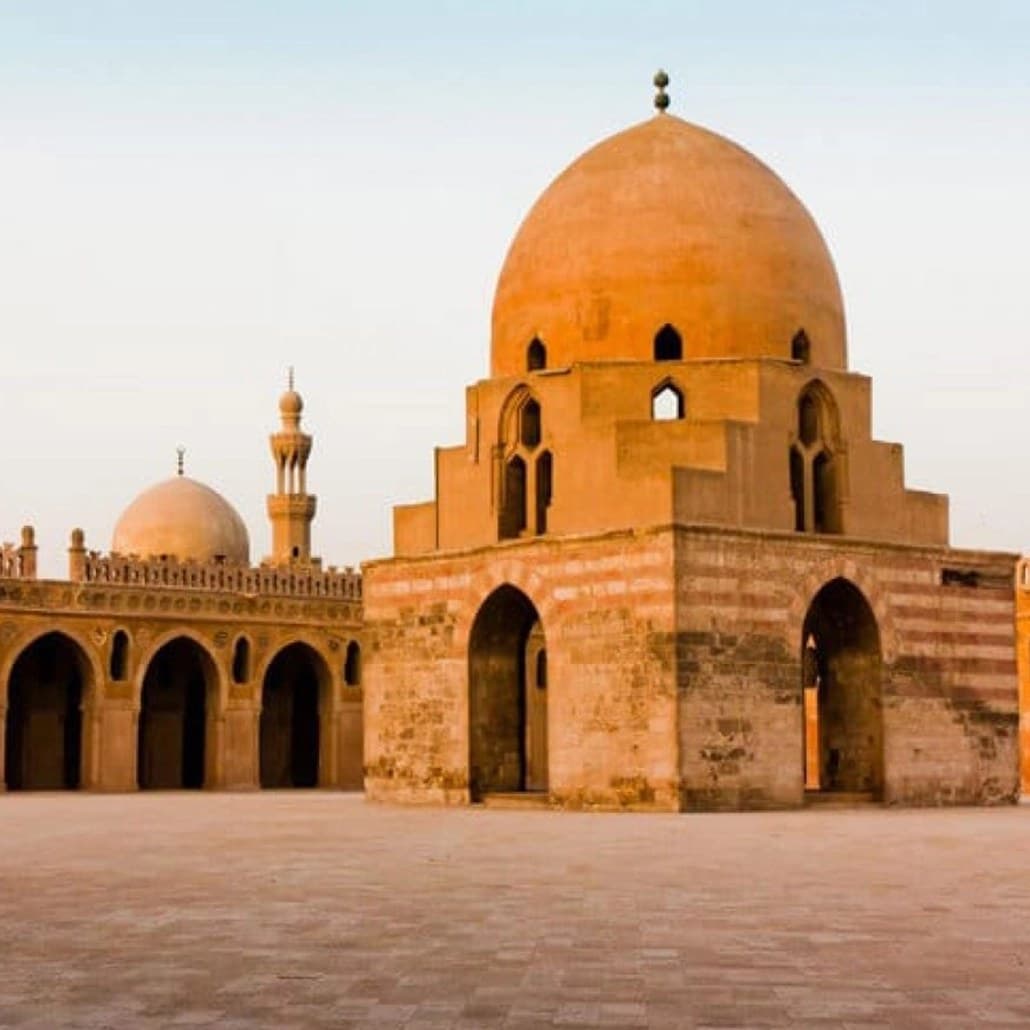
It is built of fired brick covered in carved stucco, not the cut stone that later Cairo used, and it is fronted on three sides by an outer enclosure — the ziyada — that holds the streets back from the mosque walls. There is no ziyada behind the qibla wall, which originally abutted Ibn Tulun's own palace, the Dar al-Imara. The domed fountain in the centre of the courtyard is a Mamluk replacement, added when Sultan Lajin restored the whole building at the end of the thirteenth century.

The arcades are carried on brick piers rather than on columns salvaged from older buildings, and the arches they support are pointed — more than two centuries before the pointed arch became standard in Gothic Europe. A carved wooden frieze of Qur'anic text ran below the arcade ceilings.

By the late thirteenth century the mosque had fallen out of regular use. Sultan Lajin, who the chroniclers say hid in the derelict building while a fugitive, restored it in 1296, and the minaret now standing is usually assigned to that campaign rather than to Ibn Tulun's own builders. Systematic repair came only with the Comité de Conservation des Monuments de l'Art Arabe, set up in 1881.
What to see at The Mosque of Ibn Tulun

  • The spiral minaret with its external staircase, and the view from the top
  • The open courtyard, roughly 92 metres square — Ibn Tulun covers more ground than any other mosque in Cairo
  • Abbasid carved stucco on the arcade arches
  • The crenellations along the parapet, cut like rows of figures
  • The Gayer-Anderson Museum, built into two houses against the outer wall
  • Arcade windows filled with pierced stucco grilles, few patterns repeating
  • Pointed arches on brick piers, not columns taken from older buildings

Best time to visit The Mosque of Ibn Tulun

Early morning or the last two hours of daylight, for the light across the courtyard and for the heat.

Opening Hours and Tickets

Opening hours: Open to visitors during daylight hours, with access restricted around prayer times.

There is generally no charge to enter the mosque; tips are expected for shoe storage and for the minaret. The Gayer-Anderson Museum next door has its own ticket.

Opening hours and ticket prices may change. Please confirm the latest details before visiting.

How to get to The Mosque of Ibn Tulun

In the Sayyida Zeinab district, south-west of the Citadel. A short taxi ride from central Cairo; walkable from Sultan Hassan and the Citadel area.

Nearby Attractions

Tours that include The Mosque of Ibn Tulun

Luxury Cairo, Luxor and Aswan Package

Luxury Cairo, Luxor and Aswan Package

An upscale private journey that combines Cairo highlights, a polished Luxor stay, and a refined Aswan finish.

Classic Cairo and Luxor Private Tour

Classic Cairo and Luxor Private Tour

A first-time Egypt itinerary that balances Cairo icons with Luxor's major temple sites over one well-paced private journey.

06 Days Cairo to Luxor Tour

06 Days Cairo to Luxor Tour

Experience the essence of Egypt in just six days on this immersive journey from Cairo to Luxor. Begin in the capital, where you’ll stand before the legendary Pyramids of Giza, explore the Grand Egyptian Museum, and wander through the historic Citadel and the lively Khan El Khalili Bazaar. Then, fly south to Luxor to uncover the monumental temples of Karnak and Luxor, glide above the ancient city in a hot air balloon, and walk through the Valley of the Kings. This thoughtfully designed itinerary combines expert guidance, seamless travel, and a perfect balance of history and culture for an unfor

07 Days Cairo and Nile Cruise Package

07 Days Cairo and Nile Cruise Package

Experience the ultimate combination of ancient history and modern comfort on this 7-day Cairo and Nile Cruise adventure. Begin in Cairo, where you’ll stand before the legendary Pyramids of Giza and explore the treasures of the Egyptian Museum. Then, fly south to Aswan to embark on a luxurious 3-night cruise along the Nile River, visiting the magnificent temples of Philae, Kom Ombo, Edfu, and Luxor. With private guided tours, seamless transfers, and premium accommodations, this journey offers an unforgettable exploration of Egypt’s timeless wonders for families, couples, and solo travelers alik

8 Day Cairo and Nile Cruise Tour

8 Day Cairo and Nile Cruise Tour

Embark on an extraordinary 8-day adventure through Egypt, where the ancient marvels of Cairo meet the serene beauty of the Nile. This journey blends history, culture, and comfort as you explore the Pyramids of Giza, the Grand Egyptian Museum, and the magnificent temples of Luxor and Aswan. Experience the magic of the Nile aboard a 5-star cruise, uncovering the secrets of pharaohs and gods along the way.

Cairo Museum, Citadel and Khan El Khalili Day Tour

Cairo Museum, Citadel and Khan El Khalili Day Tour

A private Cairo day tour built around museum time, Islamic Cairo viewpoints, and a classic market finish.

Travel Tips Before Visiting

Do the Gayer-Anderson Museum at the same time. It is two joined Ottoman-era houses attached to the mosque wall, entered right beside it, and one of the best-preserved domestic interiors in Cairo. It carries the name of Major R. G. Gayer-Anderson, a British army doctor who lived in the houses in the 1930s, furnished them with his own collection and left the whole thing to Egypt. Climb the minaret if it is open. Access is not guaranteed and depends on staff and on any works at the site. The stair is exposed on the outside and the handrail on the upper section is minimal, but the view is the best in this part of the city. Shoes off, modest dress, hair covered for women. Shoes come off at the door, and there is matting underfoot in the covered arcades. Bring a scarf rather than counting on one being lent to you. Go early or late. The courtyard is unshaded stone and it bakes at midday. It is a working mosque. Prayer comes before sightseeing; if a congregation is gathering, wait in the ziyada and cross the courtyard afterwards. Walk the arcades, not just the courtyard. The stucco carving and window grilles are on the walls behind the piers, where most visitors never go.