Empain arrived in Egypt in 1904 on a railway concession in the Delta and stayed to found the Cairo Electric Railways and Heliopolis Oases Company, which created the suburb from scratch on desert land and ran the line that connected it to central Cairo.
His group had equipped and operated the first lines of the Paris Métro, and it was his Belgian banking and holding interests that capitalised the new venture. The company put up the Heliopolis Palace Hotel of 1910 — now the presidential palace, Ittihadiya — and built the basilica of Our Lady of Heliopolis, where Empain was buried after his death in 1929.
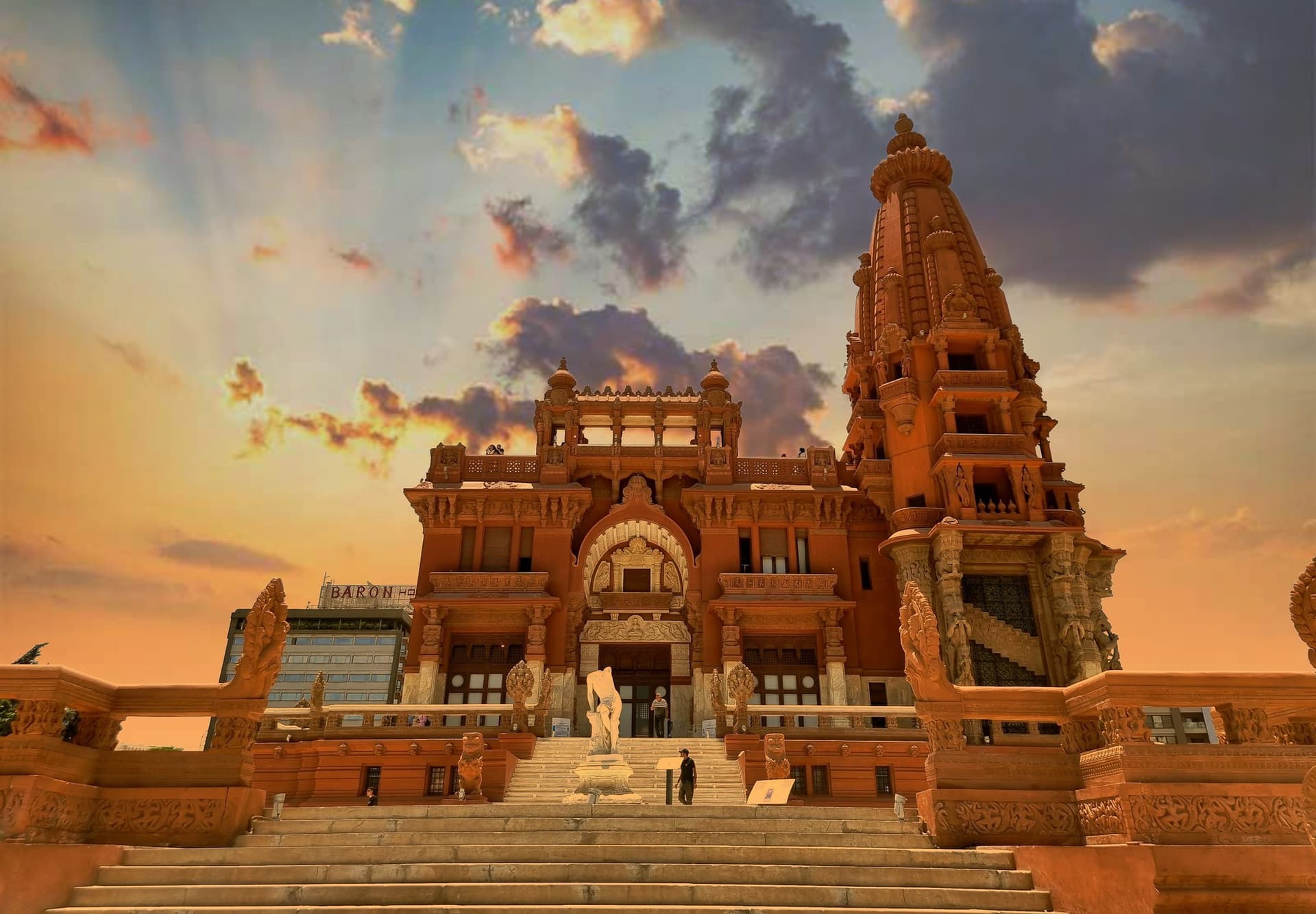
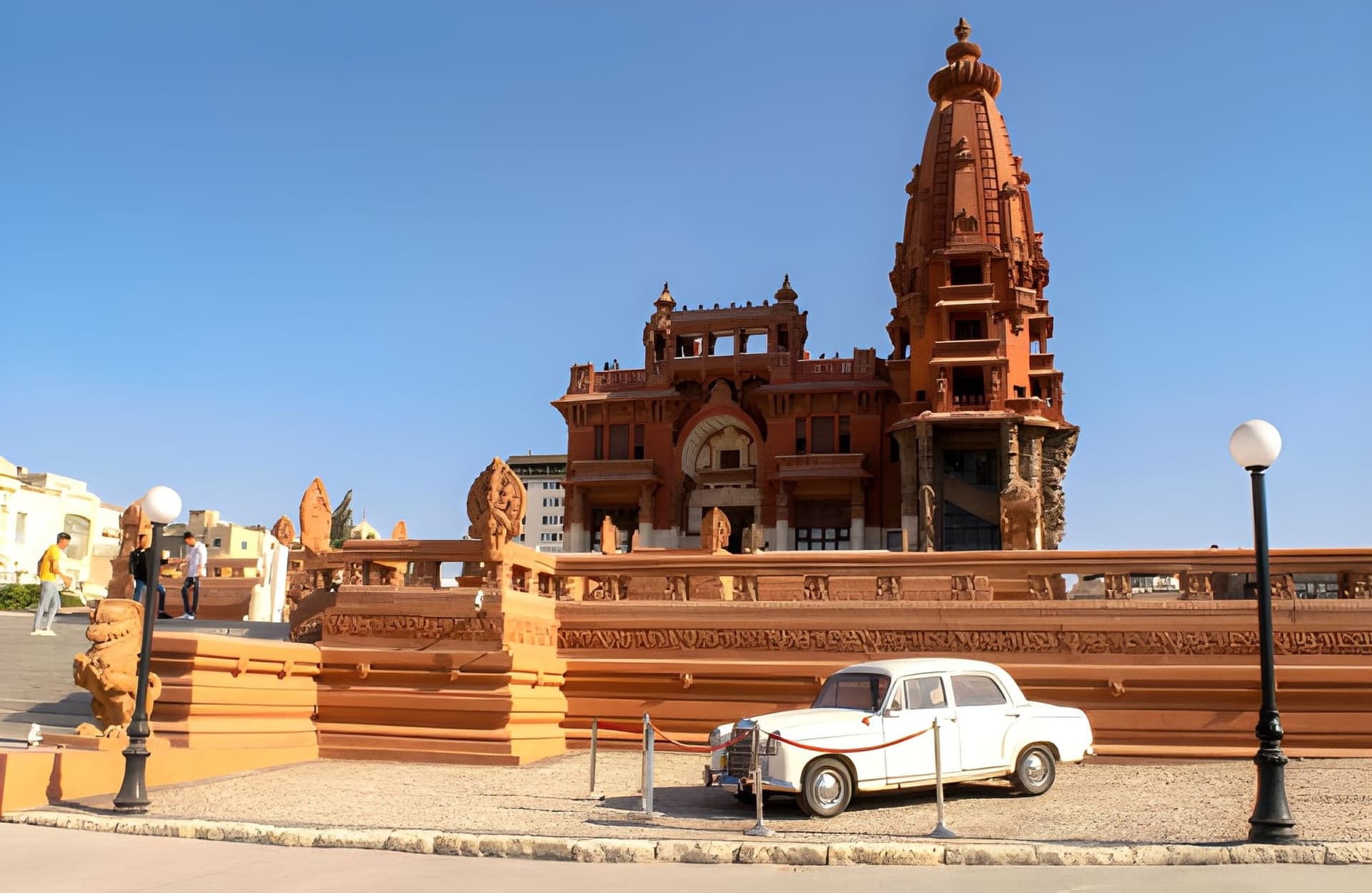
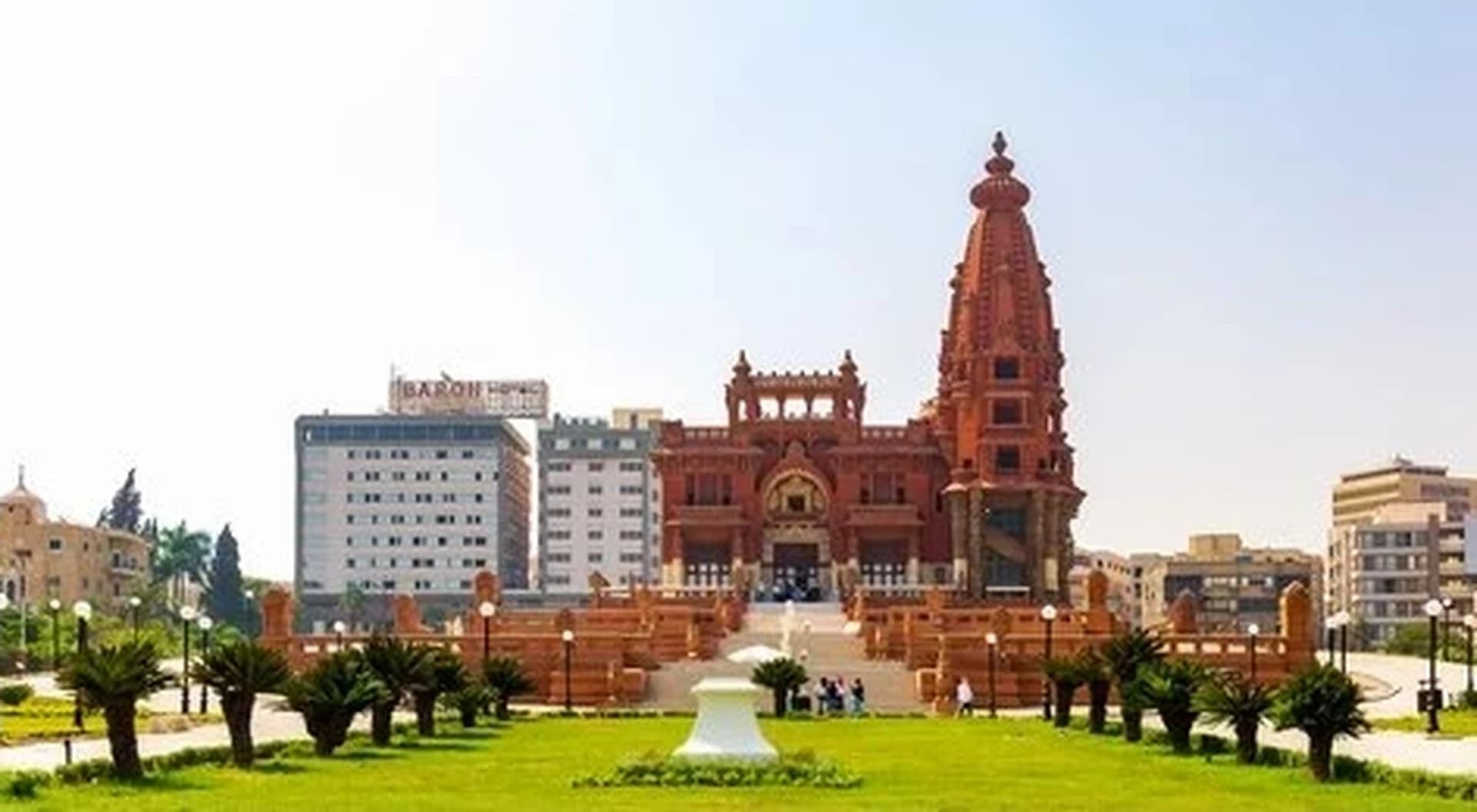
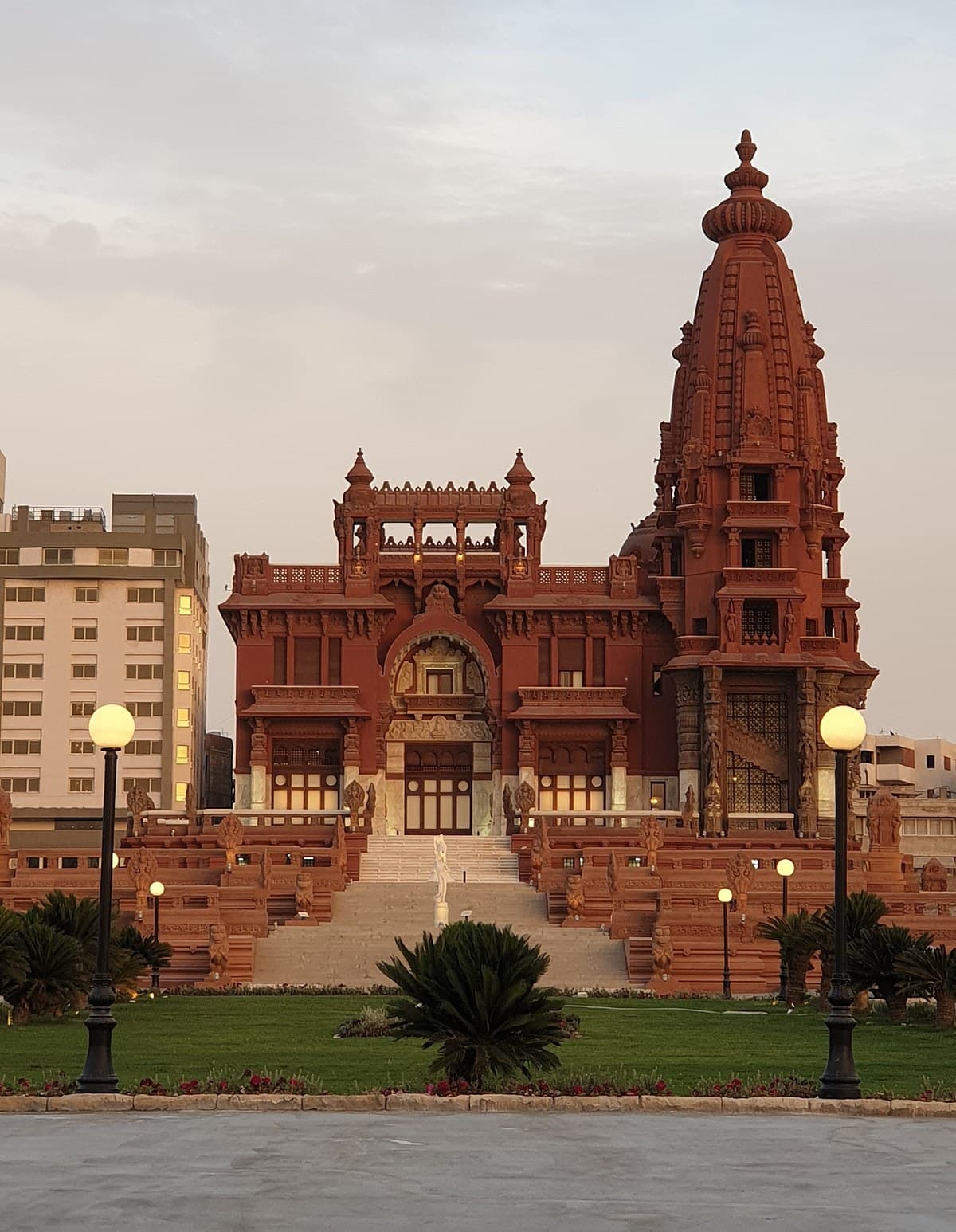
The palace was designed by the French architect Alexandre Marcel, who worked in a range of borrowed historical styles, and built in the years around 1907 to 1911 in reinforced concrete, which was then a new material.
Marcel also designed the Japanese Tower and the Chinese Pavilion at Laeken in Brussels for King Leopold II. Here he worked from Hindu temple architecture with Angkor in the mix, and had the interiors decorated by the French artist Georges-Louis Claude.
After the family left, the building passed through owners and long vacancy. It became a magnet for ghost stories, urban explorers and rumour, none of which needs to be believed to enjoy the place. The Egyptian state acquired it, restored it over several years, and opened it as a museum in 2020.