The trap in most Egypt itineraries is churn: a new hotel every second night, dawn flights, and days built as checklists. None of that is required to see Egypt properly. The country's geography is actually kind to a slower plan — the greatest concentration of sights sits along one river, and the river is the most comfortable road in the country.
The cruise is the comfortable backbone
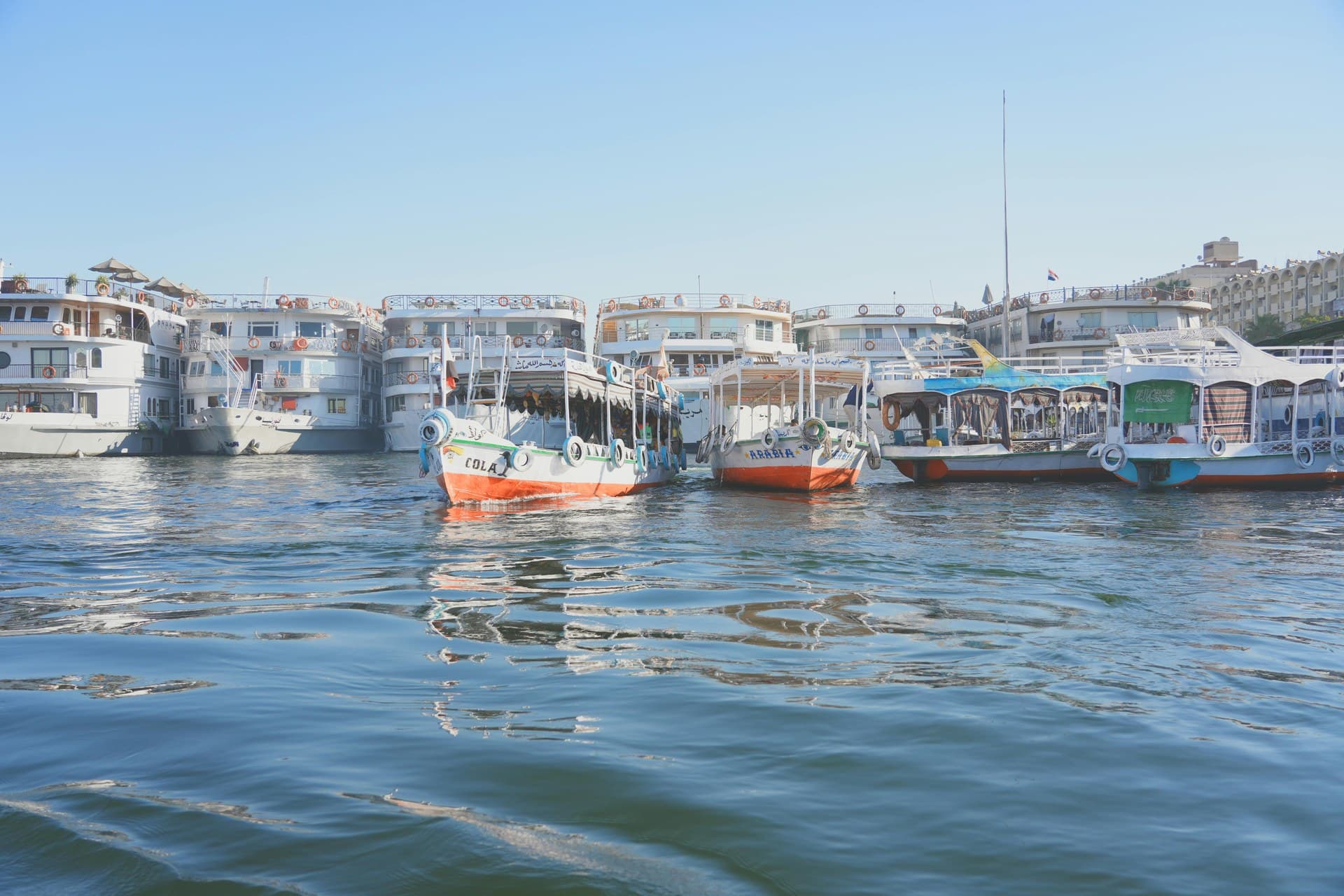
A Nile cruise solves the churn problem in one decision. You unpack once, the temples arrive on the boat's schedule, and every excursion has a fixed, restful counterweight: the deck, a chair, and Egypt going past at walking pace. Between Luxor and Aswan that rhythm — two or three hours ashore, then hours of nothing required — suits an unhurried trip better than any land itinerary can.
Boats differ, and the differences matter more for older travellers: cabin deck versus stairs, distance from gangway to lounge, whether there is a lift. Some boats have one; many do not. The 5-star fleet is where those comforts concentrate — but the honest move is to tell us what matters physically and let that choose the boat, rather than choosing on photographs.
What the ground is actually like
Nobody puts this in brochures, so here it is plainly — the challenge at Egyptian sites is rarely distance and almost always surface:
- Giza: sand, rock and gentle gradients around the Pyramids; entering a pyramid's interior is a steep, low, cramped crouch and is entirely optional — the outside is the spectacle.
- Karnak and the big temples: long but flat, on packed earth and stone. Benches are scarce; shade exists but must be sought. The distances reward a slow pace and a mid-visit rest.
- Valley of the Kings: smooth walkways between tombs, then ramps and stairs of varying steepness inside them. Tombs vary a lot — a guide can steer you to spectacular ones with easier descents.
- Philae: a short boat transfer with dockside steps at both ends, then mostly level ground on the island itself.
- Abu Simbel: the site is manageable; the cost is the schedule — it is a very early start from Aswan however you do it. Decide deliberately whether it earns that from you.
Season and pace
Go between October and April, full stop. Winter mornings are cool, middays warm rather than hot, and the whole day is usable instead of just its edges. Within any day, the sustainable ration is one anchor site, taken early, with the afternoon kept honestly free — the itineraries that exhaust people are the ones that treat that free afternoon as waste.
Why private pacing pays
The single biggest comfort upgrade in Egypt is not a hotel category — it is removing the group. A private guide starts when you want, sits when you want, shortens a visit without a committee vote, and swaps a checklist for a conversation. Our private tour package and the longer 10-day private tour are both built exactly this way, and both flex around the pace you actually want rather than the one printed on a schedule.
And keep one evening for the gentlest hours Egypt sells: a felucca sail at Aswan — an hour of wind and water with nothing asked of you — and a seated evening at the Pyramids sound and light show, which does its sightseeing while you sit still.