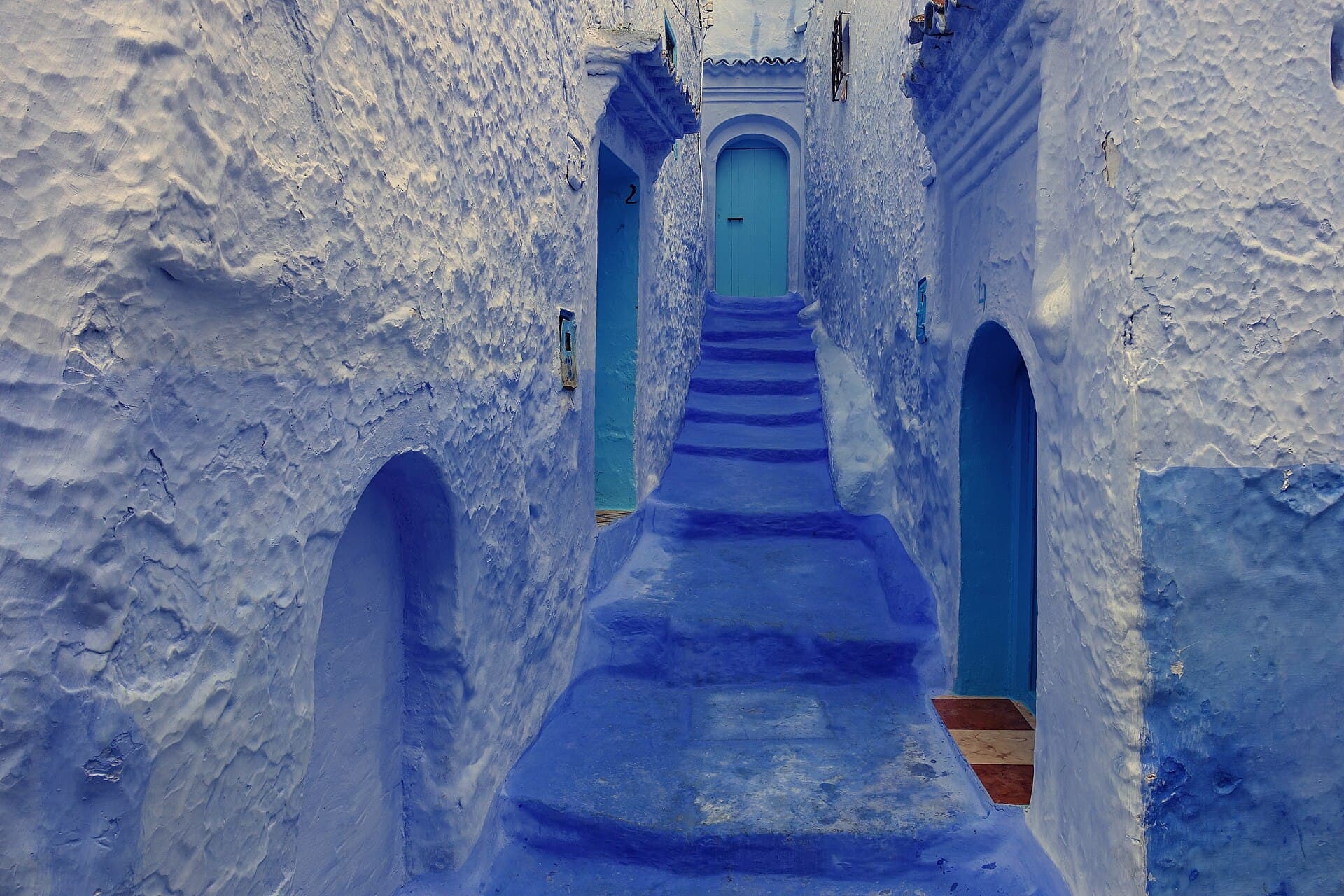
Morocco's half of these trips comes in two flavours. The classic runs the imperial cities — Rabat, Fez, Marrakech, with Casablanca as the gateway and stops like Volubilis' Roman ruins or the Atlas foothills on the road between. The northern version instead loops Tangier, Tetouan, Chefchaouen's blue lanes and Fez. Egypt's half is the familiar decision: Cairo plus Luxor, the overland run down to Aswan, or the full cruise.
| Tour | Days | Egypt gives you | Morocco gives you |
|---|---|---|---|
| Trip to Morocco and Egypt | 10 | Cairo plus Luxor, with a dawn balloon | Casablanca and a full day in Marrakech |
| Egypt & Morocco Holiday | 12 | Cairo, Luxor and Aswan overland — Philae and a Nubian village | Rabat, Volubilis, Fez, the Middle Atlas road and Marrakech |
| Morocco and Egypt Itinerary | 13 | The same Cairo–Luxor–Aswan core | The north: Tangier, Tetouan, Chefchaouen, Fez and Rabat |
| Egypt & Morocco Tour Package | 15 | Cairo plus the full Luxor-to-Aswan Nile cruise | Rabat, Fez, the Atlas road, Marrakech and Casablanca |
| Morocco, Egypt & Jordan Tour | 19 | Cairo and the Nile cruise, mid-trip | The imperial cities first — then Jordan's Petra, Jerash and Dead Sea to finish |
Routes above are read from each tour's stored programme. Note the one structural difference: the triple starts in Morocco and ends in Jordan, with Egypt as the centrepiece.
How the two halves balance
In practice, Egypt is the half that awes and Morocco the half that charms. Egypt's days are built around monuments; Morocco's are built around places you wander — medinas, tanneries, mountain roads, a blue town photographed from a rooftop café. The combination works because the two halves use different muscles; neither steals the other's thunder.
If Morocco's half is what you are weighing, the choice between the imperial-city classic and the northern loop is really a choice between icons and atmosphere: Marrakech and Fez carry the famous names, while Chefchaouen and Tangier carry the photographs. The thirteen-day shape is the one for the second kind of traveller.