Attraction

The Meidum Pyramid

A pyramid that did not work — a three-stepped tower standing in a heap of its own outer casing, and the missing step between Saqqara and Giza.

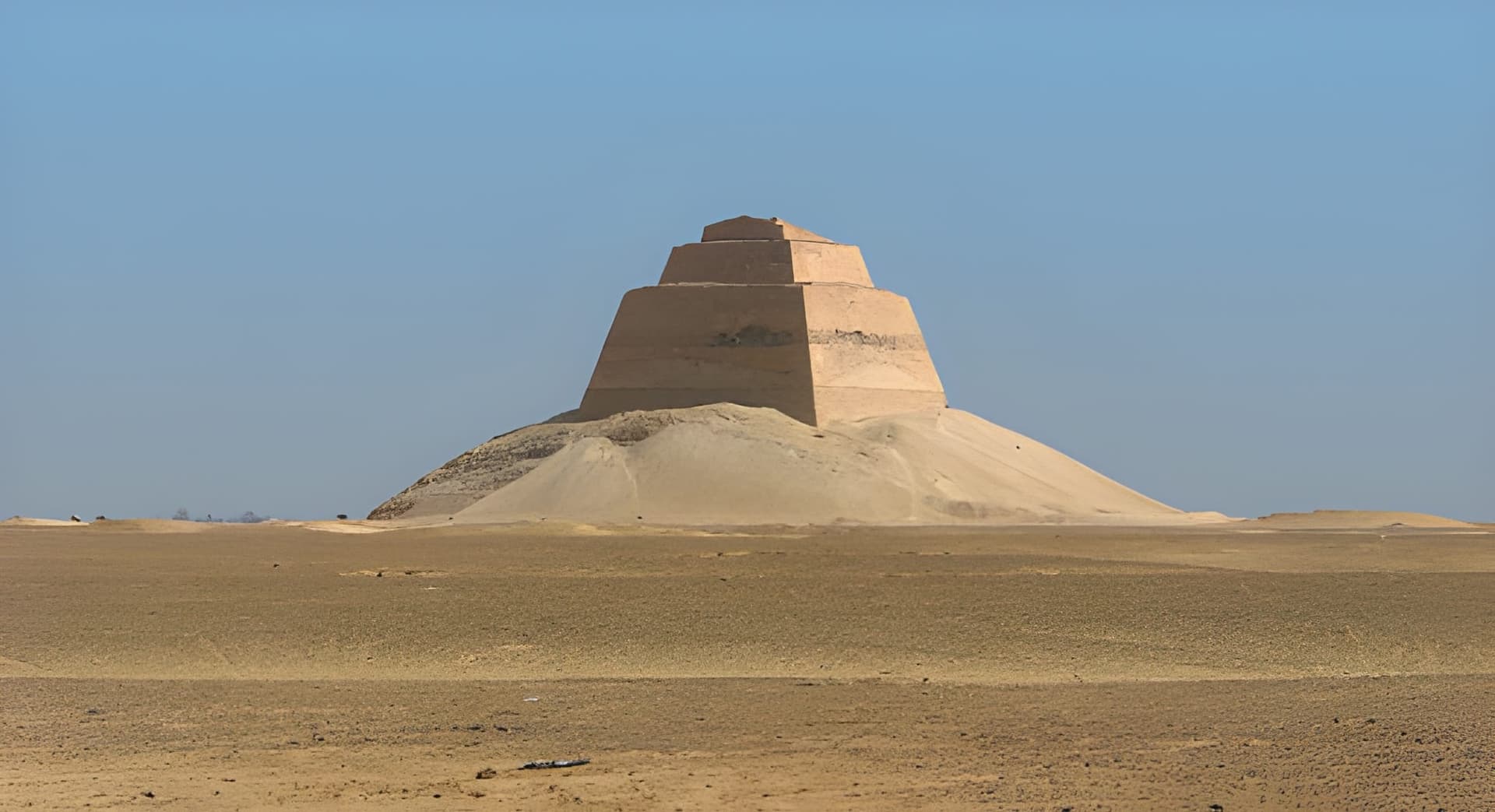
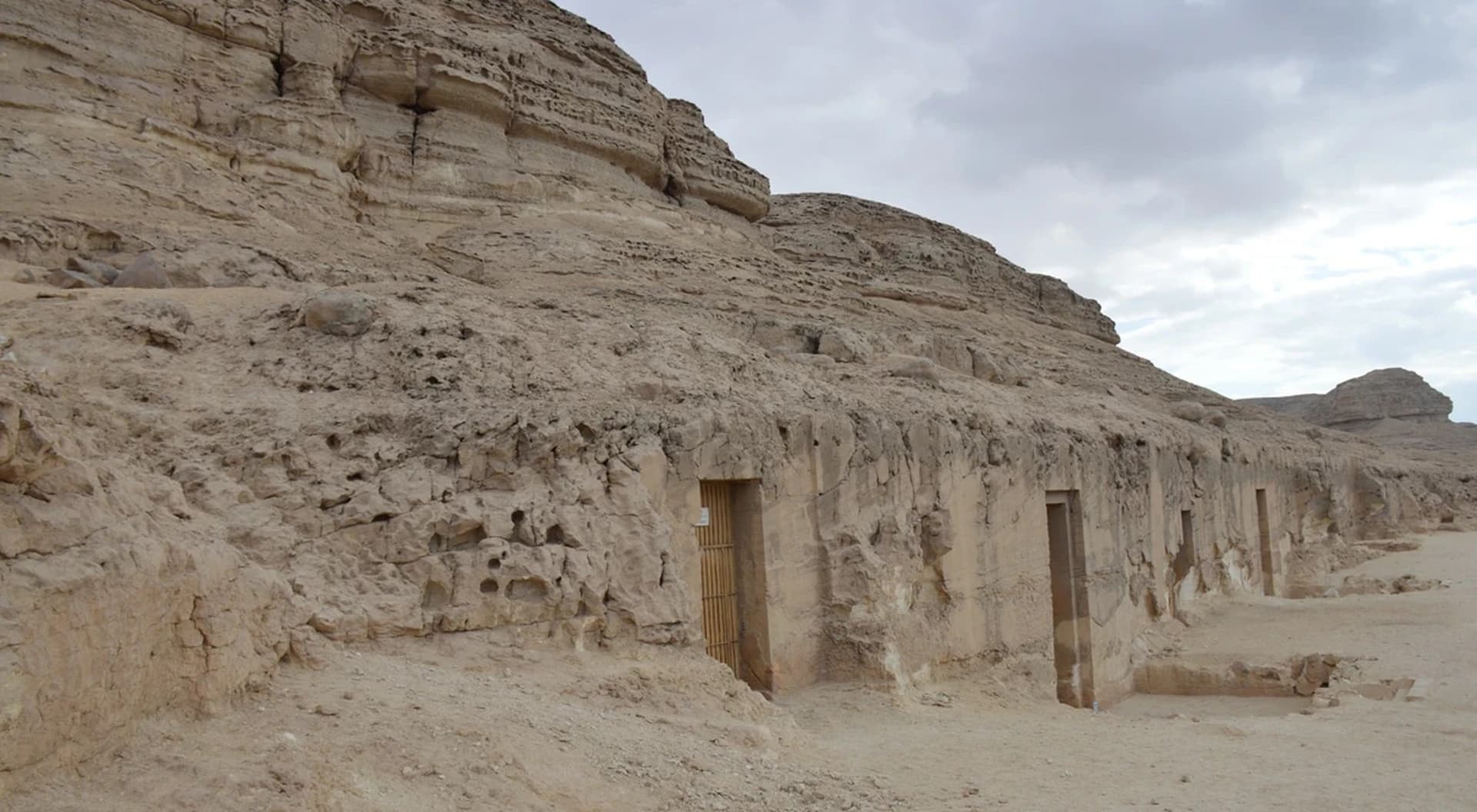
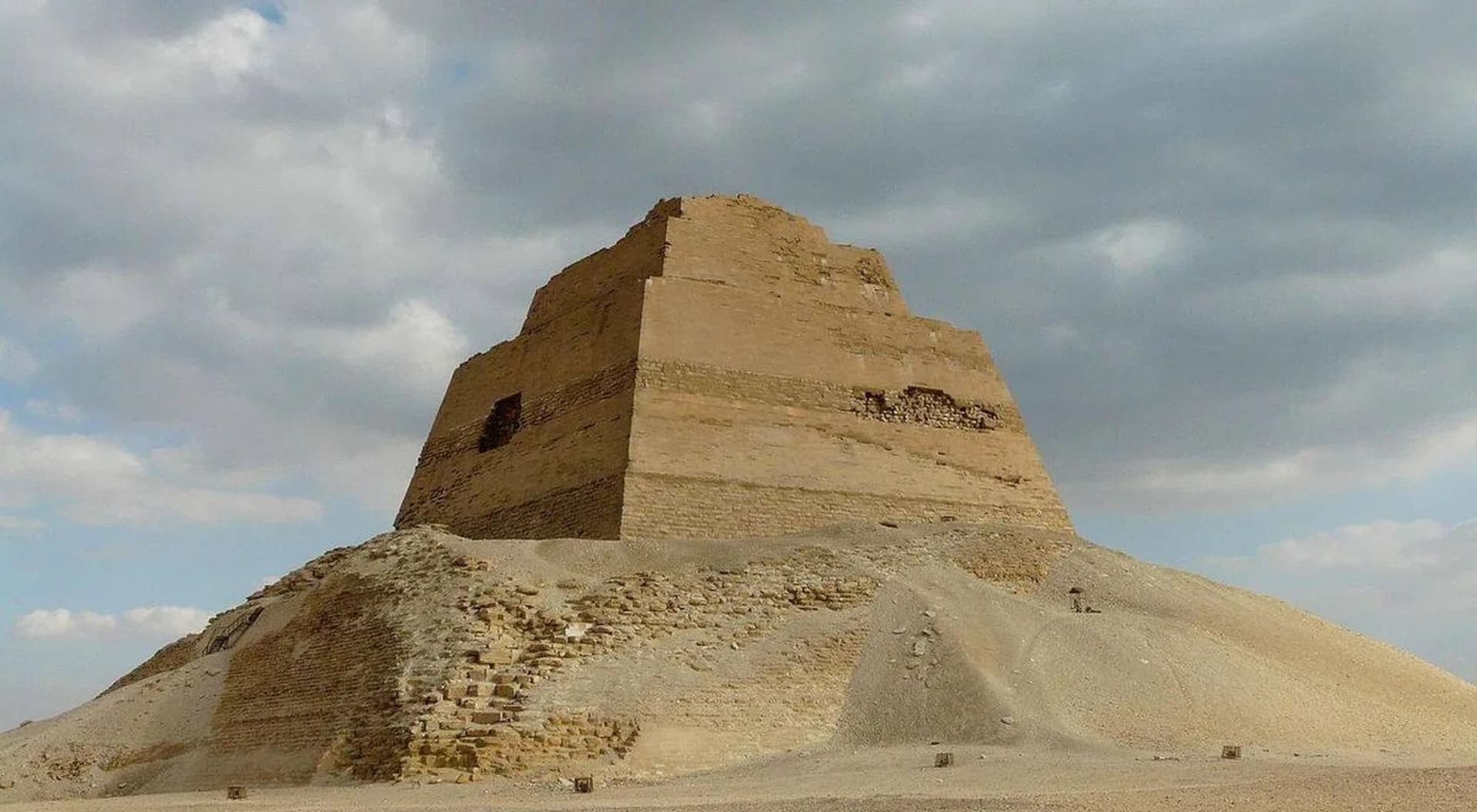
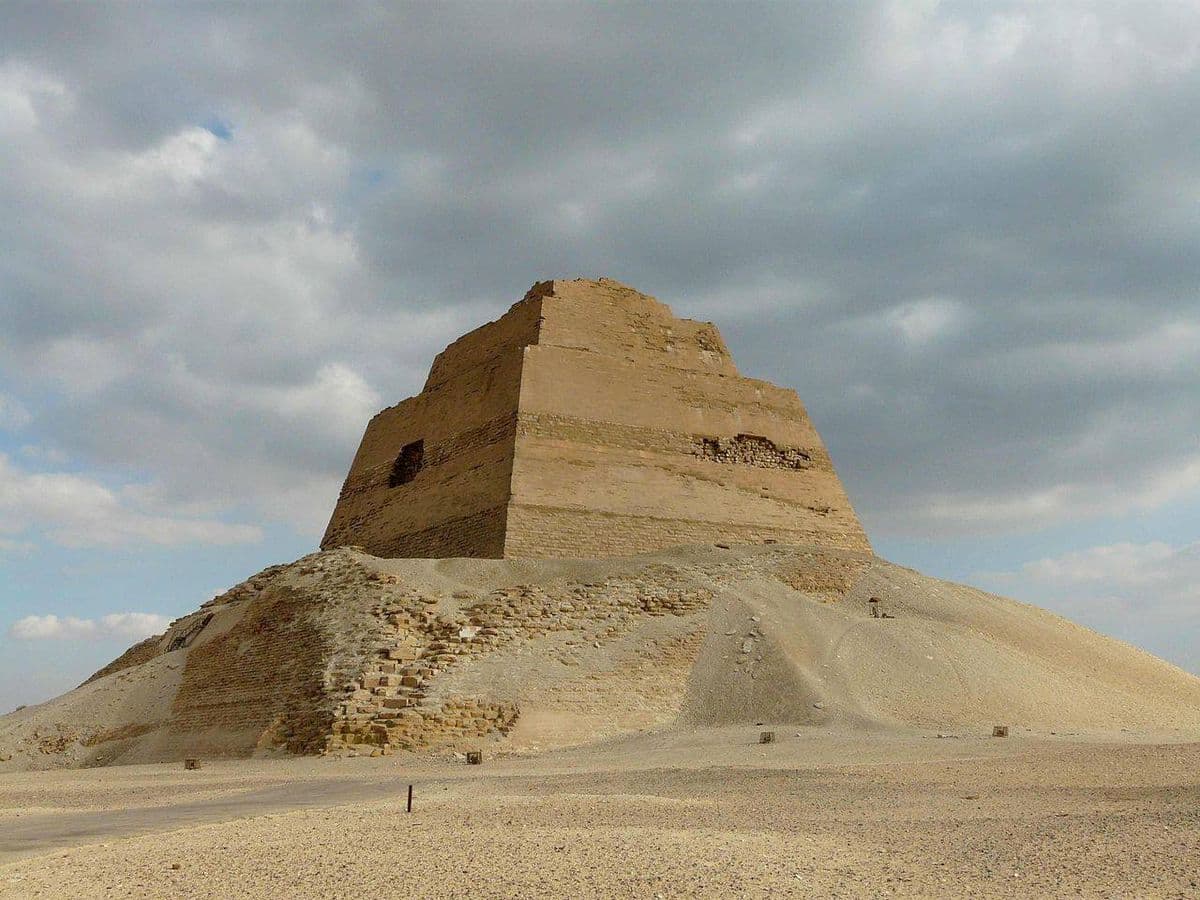
The three-stepped tower of the Meidum pyramid rising out of the mound of its own collapsed casing in the desert
Archaeological siteMiddle Egypt

Overview

Meidum stands on the desert edge near Beni Suef, about a hundred kilometres south of Cairo on the Fayoum road. You can see it from a long way off, and it looks like nothing else in Egypt.

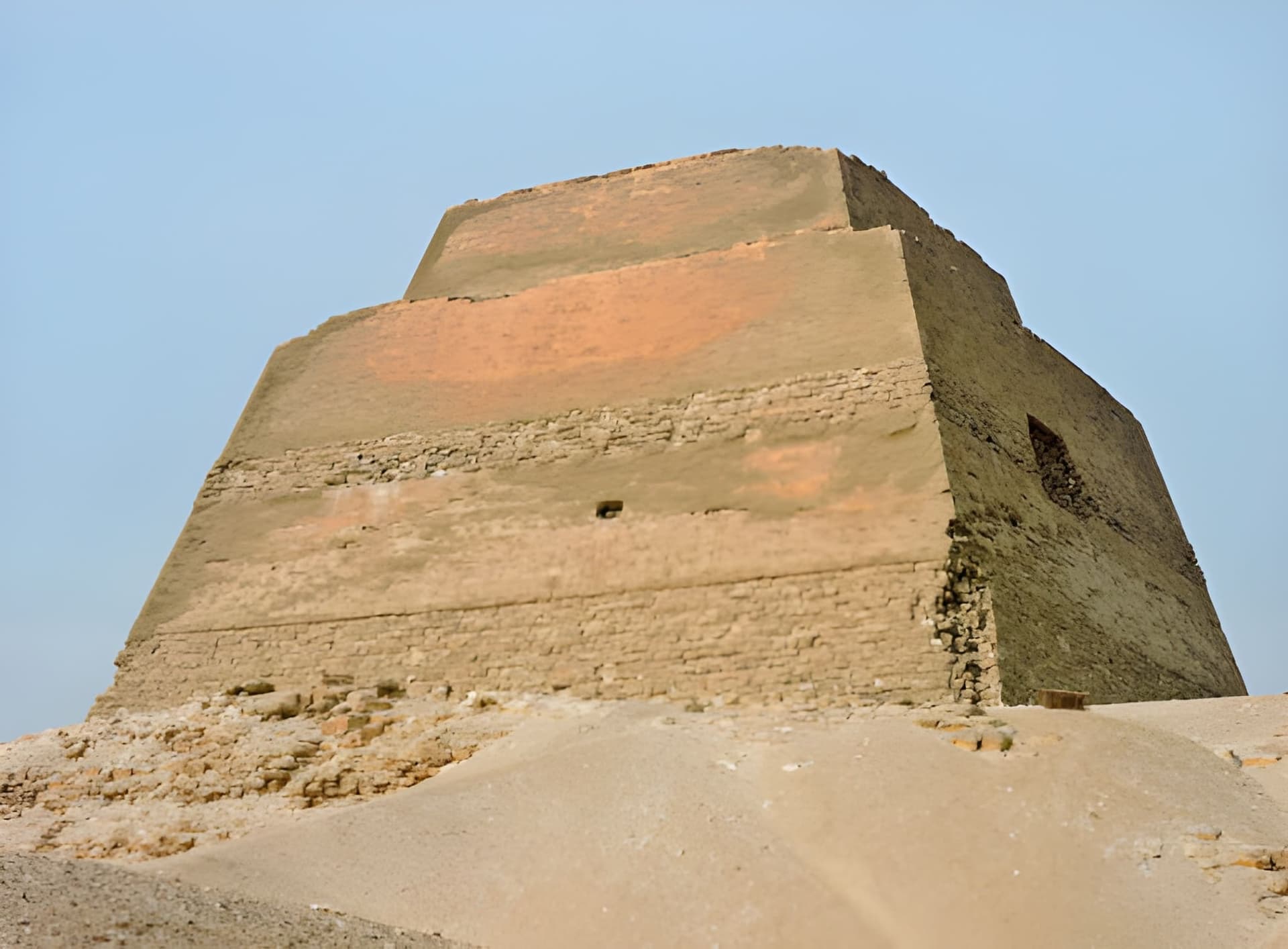
What is left is a squared three-stepped tower, rising out of an enormous skirt of loose stone — the remains of the smooth outer casing that once covered it.

Why visit The Meidum Pyramid

It is the experiment that made Giza possible. Meidum was begun as a step pyramid in the tradition of Djoser at Saqqara, then converted: the steps were packed out and a smooth casing laid over them to make a true, straight-sided pyramid. Something in that conversion failed. The casing came away and slid, and what should have been a geometric solid is now a core standing in a debris field.

Standing under it, you can read the whole problem. The stepped core was built in inward-leaning courses that hold themselves together; the added outer skin was laid on horizontal beds against a smoothed face, with nothing keying it to the core. You are looking at a structural lesson being learned in real time.

The same king went on to build the Bent Pyramid at Dahshur — which changes angle halfway up, apparently in response to a problem — and then the Red Pyramid, which is the first true pyramid that stayed standing. Meidum, Bent, Red, then Giza: four buildings, one lifetime, and the invention of the pyramid.

History of The Meidum Pyramid

The pyramid is traditionally attributed to Huni, the last king of the 3rd dynasty, and completed by his successor Sneferu. Huni's name has never actually been found at Meidum, though, and many Egyptologists now credit the whole monument to Sneferu, first king of the 4th dynasty: the officials buried in the cemetery beside it, Nefermaat and Rahotep among them, served under Sneferu, and it is Sneferu whose name the ancient visitors' graffiti attach to the site.

Excavation has shown three building campaigns, labelled E1, E2 and E3: a seven-stepped pyramid, an enlargement to eight steps, and finally the packing and casing meant to turn it into a true pyramid. Gaston Maspero entered the burial chamber in the early 1880s and found it empty apart from fragments of a wooden coffin. Flinders Petrie worked here in 1891 and again from 1909, mapping those building stages and clearing the passage and the cemetery around it.

Whether the casing collapsed during construction or long after the pyramid was finished is still argued. The mound around the base has produced no bodies of workmen, and the New Kingdom graffiti sit in a chapel that the debris mound later buried, which argues the casing came down well after the building was complete rather than while it was going up.

A small mortuary chapel stands against the east face, with two uninscribed round-topped stelae and a causeway running down from it. New Kingdom visitors left graffiti on its walls; one from the reign of Thutmose III admires the temple of King Sneferu, and it is the main ancient evidence tying the pyramid to him.

The mastaba tombs of the cemetery beside it produced two of the great works of the Old Kingdom: the painted frieze known as the Meidum Geese, from the tomb of Nefermaat and Itet, and the seated limestone statues of Rahotep and Nofret with their inlaid eyes. Both left the site long ago and are now in the national collections.
What to see at The Meidum Pyramid

  • The stepped core standing in the mound of its own casing
  • The descending passage and the corbel-roofed burial chamber inside
  • The mastaba field beside the pyramid
  • Mastaba 17, north-east of the pyramid, with an uninscribed granite sarcophagus still in its burial chamber
  • The mortuary chapel against the east face and the causeway running down from it
  • A tower-in-a-mound silhouette that no other Egyptian pyramid has
  • How lightly visited the site is compared with Giza or Dahshur

Best time to visit The Meidum Pyramid

October to April. Morning light picks out the stepped core against the debris slope.

Opening Hours and Tickets

Opening hours: Daytime hours with seasonal variation.

A single admission ticket at the entrance. Going inside the pyramid may carry a separate charge — ask at the gate.

Opening hours and ticket prices may change. Please confirm the latest details before visiting.

How to get to The Meidum Pyramid

On the desert edge near Beni Suef, about 100 kilometres south of Cairo on the Fayoum road. Reached with a driver, roughly ninety minutes each way from central Cairo.

Tours that include The Meidum Pyramid

Egypt and Jordan Itinerary 7 Days

Egypt and Jordan Itinerary 7 Days

Embark on an extraordinary 7-day adventure through two of the world’s most captivating destinations—Egypt and Jordan. Witness the timeless grandeur of the Pyramids of Giza, explore the treasures of the Grand Egyptian Museum, and wander through the ancient streets of Old Cairo. Then, cross into Jordan to marvel at the rose-red city of Petra, float in the mineral-rich waters of the Dead Sea, and stand atop Mount Nebo where history and faith intertwine. This journey blends cultural discovery, historical exploration, and modern comfort into one unforgettable experience.

Best 6 Days Egypt Itinerary

Best 6 Days Egypt Itinerary

Experience the timeless beauty of Egypt on this 6-day adventure through its most iconic destinations. Begin in Cairo with a guided exploration of the Pyramids of Giza, the enigmatic Sphinx, and the remarkable Grand Egyptian Museum. Continue to Luxor to uncover the grandeur of the East and West Banks, including the magnificent Karnak and Luxor Temples, the Valley of the Kings, and the Temple of Queen Hatshepsut. Conclude your journey in Aswan, where you’ll visit the serene Philae Temple, the impressive High Dam, and immerse yourself in the colorful culture of a Nubian Village.

08 Days Dubai and Egypt Vacation Package

08 Days Dubai and Egypt Vacation Package

Embark on an extraordinary 8-day adventure that blends the timeless heritage of Egypt with the futuristic allure of Dubai. Begin your exploration in Cairo, where the Great Pyramids of Giza, the Grand Egyptian Museum, and the Egyptian Museum reveal the splendor of ancient civilization. Then, fly to Dubai to experience a city that harmoniously merges tradition and innovation — from its historic souks and cultural landmarks to its glittering skyline and desert landscapes. This journey offers a perfect balance of history, luxury, and modern excitement, creating memories that will last a lifetime.

10 Days Egypt and Jordan Tours with Nile Cruise

10 Days Egypt and Jordan Tours with Nile Cruise

Experience the essence of two ancient civilizations on this 10-day Egypt and Jordan tour with a Nile Cruise. Journey through Egypt’s timeless wonders—from the Great Pyramids and the Sphinx to the temples of Luxor and Aswan—while enjoying the serene beauty of the Nile aboard a luxury cruise. Then, cross into Jordan to uncover the rose-red city of Petra, the Roman ruins of Jerash, and the tranquil waters of the Dead Sea. This itinerary blends history, culture, and comfort for travelers seeking an extraordinary adventure across two legendary lands.

15 Days Egypt and Morocco Tour Package

15 Days Egypt and Morocco Tour Package

Embark on a remarkable 15-day adventure that unites the timeless heritage of Egypt with the colorful charm of Morocco. This exclusive itinerary is designed for travelers who seek cultural depth, comfort, and personalized service. Begin your journey in Egypt, where you’ll stand before the Great Pyramids and Sphinx, cruise the Nile aboard a 5-star vessel, and explore the temples of Luxor and Aswan. Then, continue to Morocco to discover the imperial cities of Rabat, Fez, and Marrakech, each offering a unique blend of history, art, and architecture.

7 Days Egypt Tour in December

7 Days Egypt Tour in December

Embark on a 7-day adventure through Egypt during the pleasant month of December, when the weather is mild and the crowds are fewer. Discover the timeless wonders of Cairo, including the Great Pyramids of Giza and the Grand Egyptian Museum, before flying south to Aswan and Luxor. Cruise along the Nile aboard a five-star vessel, visiting ancient temples and marveling at the beauty of Egypt’s landscapes. This journey blends history, culture, and comfort for an unforgettable winter escape.

Travel Tips Before Visiting

You can normally go inside. The entrance is partway up the north face, then a long, low, steep descending passage. It is cramped and hot, and anyone with knee, back or claustrophobia problems should skip it. The climb to the entrance is on loose stone. Proper shoes, not sandals. Bring a torch. The descending passage and the chamber are barely lit, and the last stretch is a wooden ladder up a vertical shaft into the burial chamber. There is nothing on site. No cafe, no shop, very little shade. Bring water. Go for the story. Visually it is one object. What makes it worth the drive is what it explains about Dahshur and Giza.