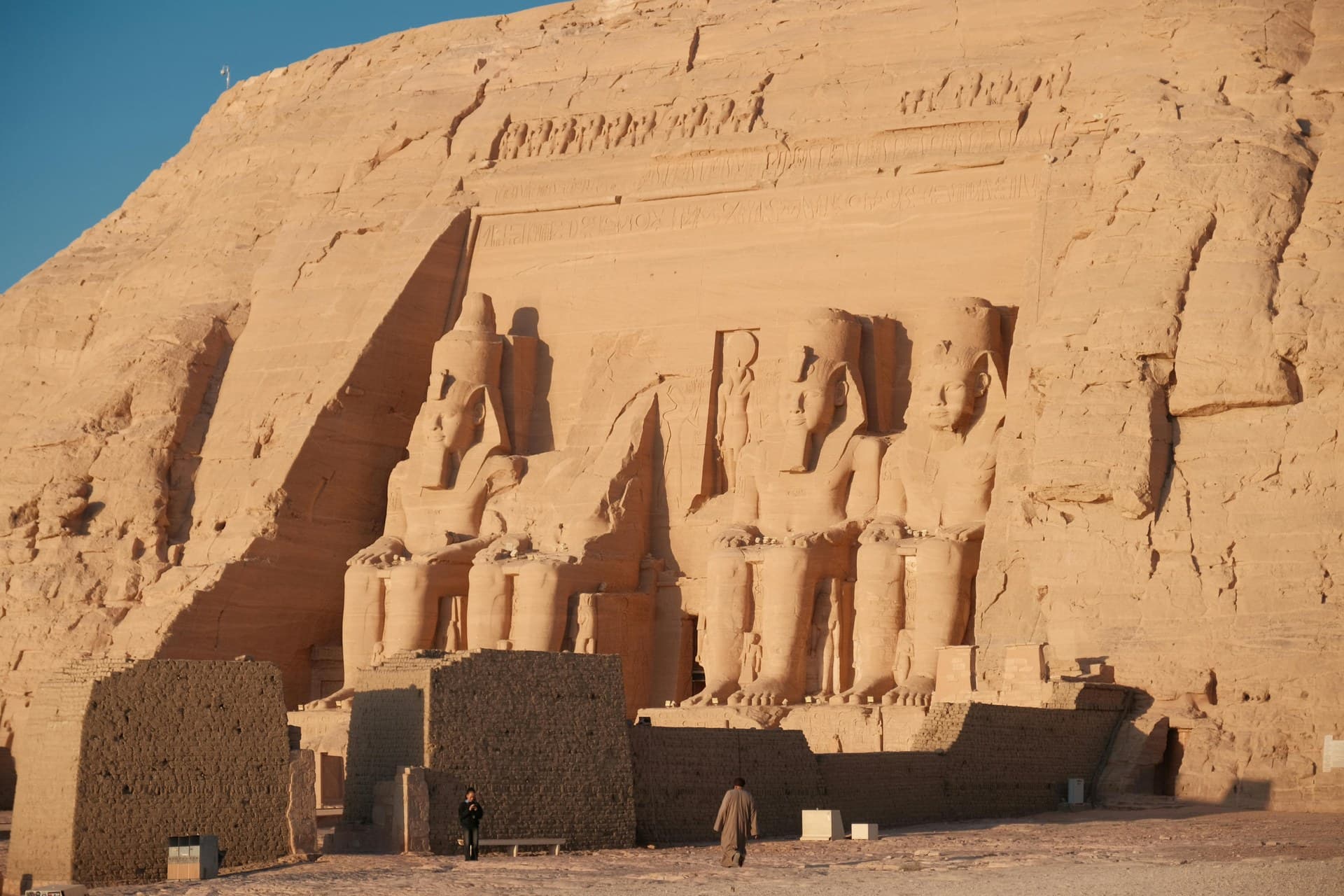
The mechanism is the marvel. The Great Temple of Abu Simbel was cut into its cliff on a precise axis, so that on two mornings a year the dawn sun penetrates some sixty metres through the entrance hall to reach the sanctuary at the back — where four figures sit side by side: Ptah, Amun-Ra, the deified Ramesses II himself, and Ra-Horakhty. The beam lights the last three. Ptah, a god associated with the underworld and darkness, was placed so that the sun never quite reaches him — an omission so consistent it can only be the design.
Tradition connects the two dates with the king's birthday and coronation; the truth is unrecorded, and the alignment speaks for itself. One modern footnote is worth knowing: when the whole temple was cut apart and lifted above the rising lake in the 1960s, the engineers reproduced the alignment almost perfectly — the event is often said to have shifted by a single day in the move. Whatever was intended in the 13th century BC, the appointment has survived the relocation of the entire temple.
What the day is actually like
It is dark, it is cold, and it is crowded — and most people who go say it was worth all three. Visitors gather in the small hours; as the sky lightens, the crowd files towards the temple, and the beam does its work in the first hour after sunrise. Outside, the two festival days have grown a celebration around themselves — music and performances in front of the temples — which turns Egypt's remotest major site, briefly, into its liveliest.
Getting there for dawn takes planning. The road run from Aswan leaves even earlier than the standard Abu Simbel day tour's already-early start. The elegant solution is a Lake Nasser cruise timed to the date — the boats moor near the site, which converts a brutal alarm into a short walk. Our comparison of the three ways to reach Abu Simbel applies double on festival days.
Should you plan a trip around it?
Honestly: only if the astronomy itself is the draw. The festival days bring the temple's biggest crowds and tightest logistics, and the sight the other 363 mornings — the facade at sunrise, the halls nearly empty — is its own reward. But for travellers whose trip can land on the date, standing in a Bronze Age building at the moment it does exactly what its architects intended is one of the most singular experiences Egypt offers. Book everything months ahead; the dates do not move, and neither does the demand.